
What a Japan Tour Costs from New York, Flights Included
Japan's tours are cheap and the flights are not. From JFK the floor is €1,543 (≈$1,677) — but the median complete trip is €3,393 (≈$3,688).
By Adam, founding editor · Updated 1 September 2026
- ✓Cheapest complete Japan trip from JFK: €1,543 (≈$1,677) per person
- ✓Median of all 39 priced combinations: €3,393 (≈$3,688) — a gap of €1,850 (≈$2,011)
- ✓New York is 2nd of 8 US gateways on the floor, 7th on the median
- ✓The flight costs more than the tour on the cheapest combination
Japan inverts the usual arithmetic of a guided trip. The land package is often the cheap half and the flight is the expensive one, which is the opposite of how Europe works and it changes how you should plan. We priced 39 Japan tours against live return fares from JFK in July 2026 for October departures. The cheapest complete trip came to €1,543 (≈$1,677) per person, which sounds remarkable until you see the median: €3,393 (≈$3,688). That is a gap of more than two to one between the floor and the middle of the market, the widest of any destination we price, and understanding why is worth more than any booking trick.
Why the floor and the middle are so far apart
The cheapest complete Japan trip from New York was €1,543 (≈$1,677): an eight-day itinerary on Sado Island combining conservation volunteering, cultural immersion and a temple stay, run by World Unite Japan KK at €616 (≈$670), plus a €927 (≈$1,008) return fare from JFK. Note the shape of that — the flight is €311 (≈$338) more than the tour.
The median across all 39 combinations was €3,393 (≈$3,688). The distance between those two numbers is the story. In Italy the cheapest complete trip is roughly fifty-five per cent of the median; in Japan it is forty-five per cent, and the absolute gap is €1,850 (≈$2,011). That happens because the cheap end of Japan's tour market is genuinely unusual — volunteering placements, temple stays, rural homestays, single-region trips on islands most visitors never reach — while the middle of the market is the Tokyo–Hakone–Kyoto–Osaka run that most people actually want, and which costs two or three times as much in land alone.
So treat €1,543 (≈$1,677) as real but specific. It is not a discounted version of the classic Japan trip; it is a different holiday. If what you have in mind is bullet trains, Kyoto temples and a night in a ryokan, budget from the median and work down.
One more figure worth carrying: New York's median fare to Japan was €1,094 (≈$1,189), the second-highest of the eight American gateways we sampled. Only Chicago was worse. The full table is in the Japan tour cost index from US airports.
Fourteen hours over the pole, and what it costs
New York to Tokyo is around 6,750 miles and the nonstops run thirteen and a half to fourteen and a half hours westbound, routing over the Arctic rather than the Pacific. In October you can generally fly JFK to Haneda on Japan Airlines, All Nippon Airways or American, with Delta and United serving Narita or Haneda on comparable patterns. Newark adds United's own nonstop.
This is a long enough flight that the aircraft and the seat matter more than on a transatlantic hop, and it is one of the few routes where paying up for premium economy has a defensible argument. It is also long enough that arrival-day planning is not optional: westbound you land in the afternoon having lost a calendar day, and the first evening is a write-off. Build it in.
On price, New York sits awkwardly. Its €1,094 (≈$1,189) median fare is well above the west coast's €831 (≈$903), for the straightforward reason that San Francisco and Los Angeles are two and a half thousand miles closer to Tokyo and carry far more transpacific capacity. Unlike the transatlantic market, where New York's competition drives fares down, the Pacific is a route where the west coast simply owns the geography.
There is a genuine consolation. On the *cheapest* combination New York came second of the eight airports, at €1,543 (≈$1,677) against San Francisco's €1,496 (≈$1,626) — a gap of only €47 (≈$51). So while typical New York fares to Japan are high, the bottom of the market is competitive. If you are flexible on dates and willing to take an unusual itinerary, JFK will not hold you back much. If you want the classic trip on fixed dates, you will feel the €263 (≈$286) fare premium over the west coast.
The Japan tours in these New York totals
Prices are tour-only — add flights for the real total. You book the tour itself on TourRadar.
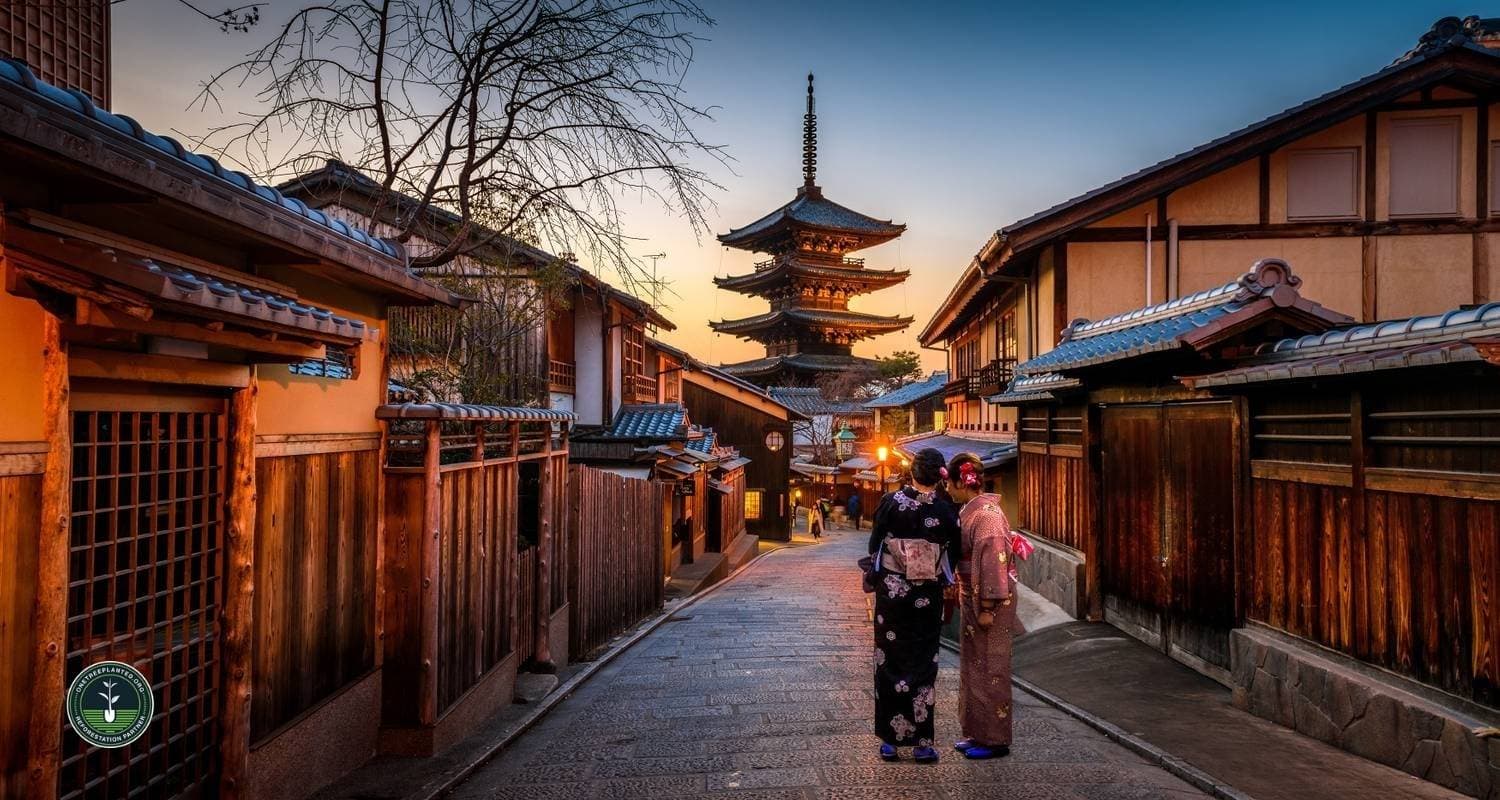
Japan Classic 10 Day - One Life Adventures
10 days · One Life Adventures
4.8· 2,287 reviews✓ Instant confirmationtour from €2,433
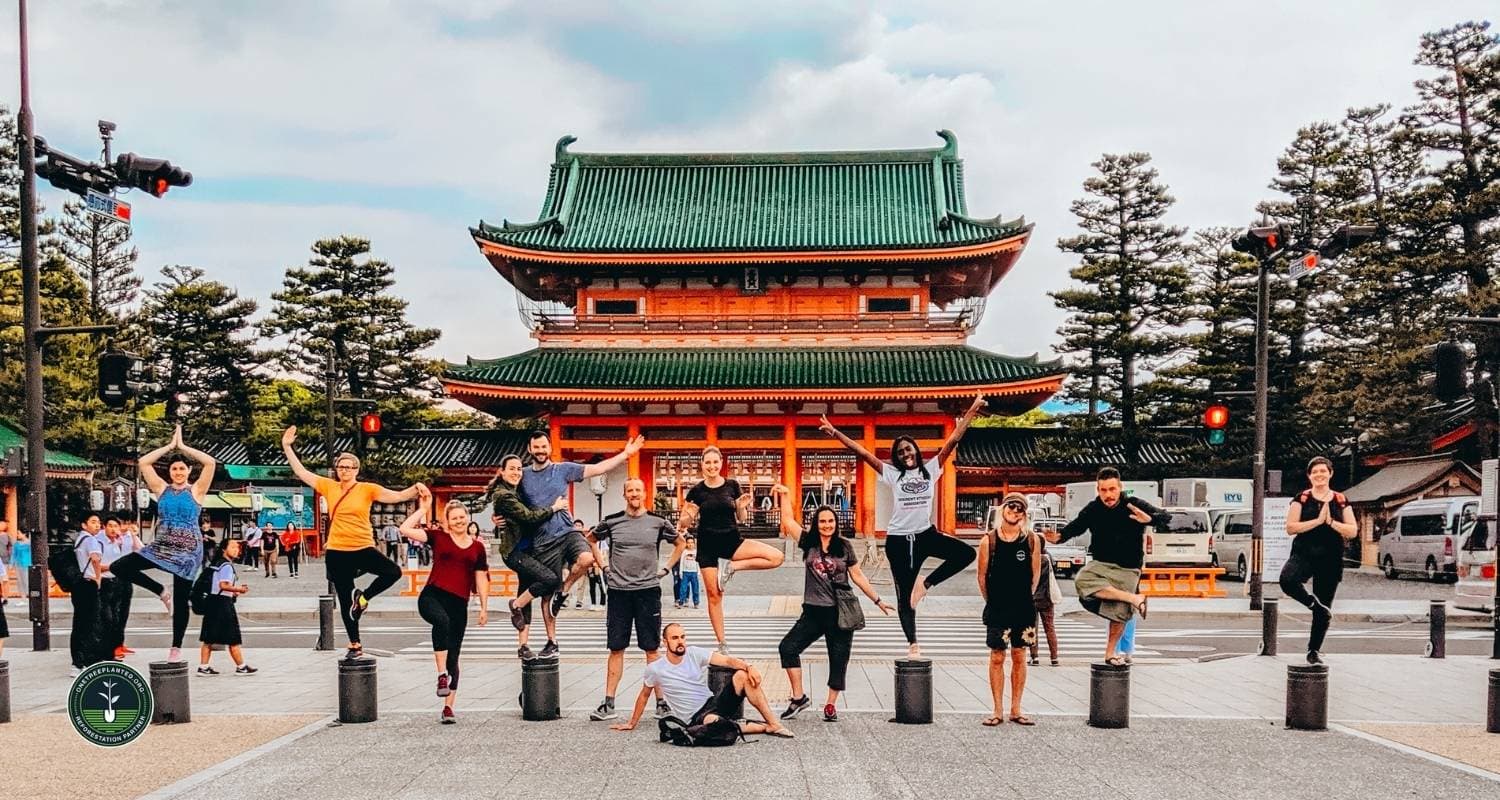
Japan Classic 14 Day - One Life Adventures
14 days · One Life Adventures
4.9· 970 reviews✓ Instant confirmationtour from €3,105
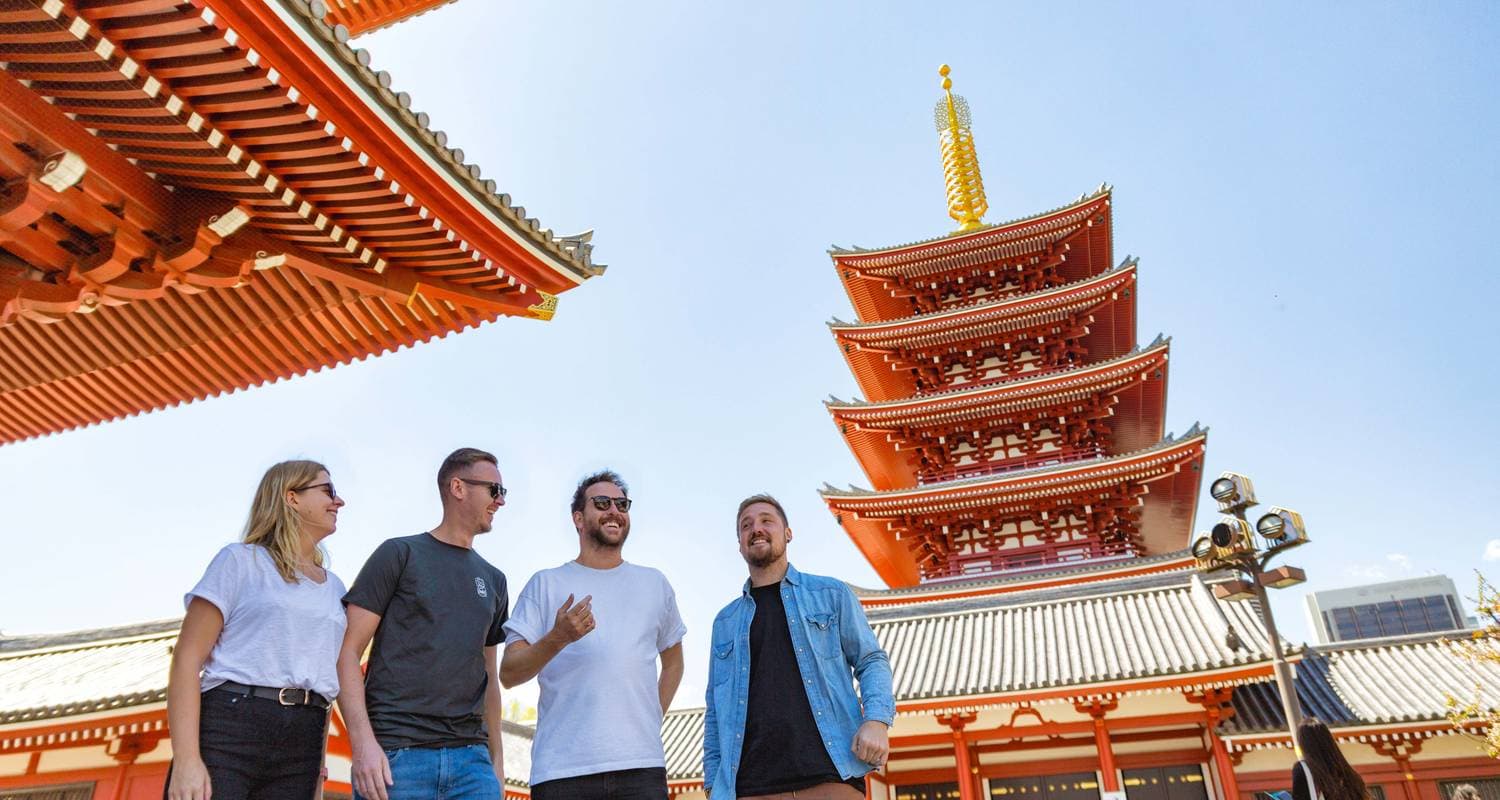
Japan Adventure 13 Day
13 days · INTRO Travel
4.9· 404 reviews✓ Instant confirmationtour from €2,851
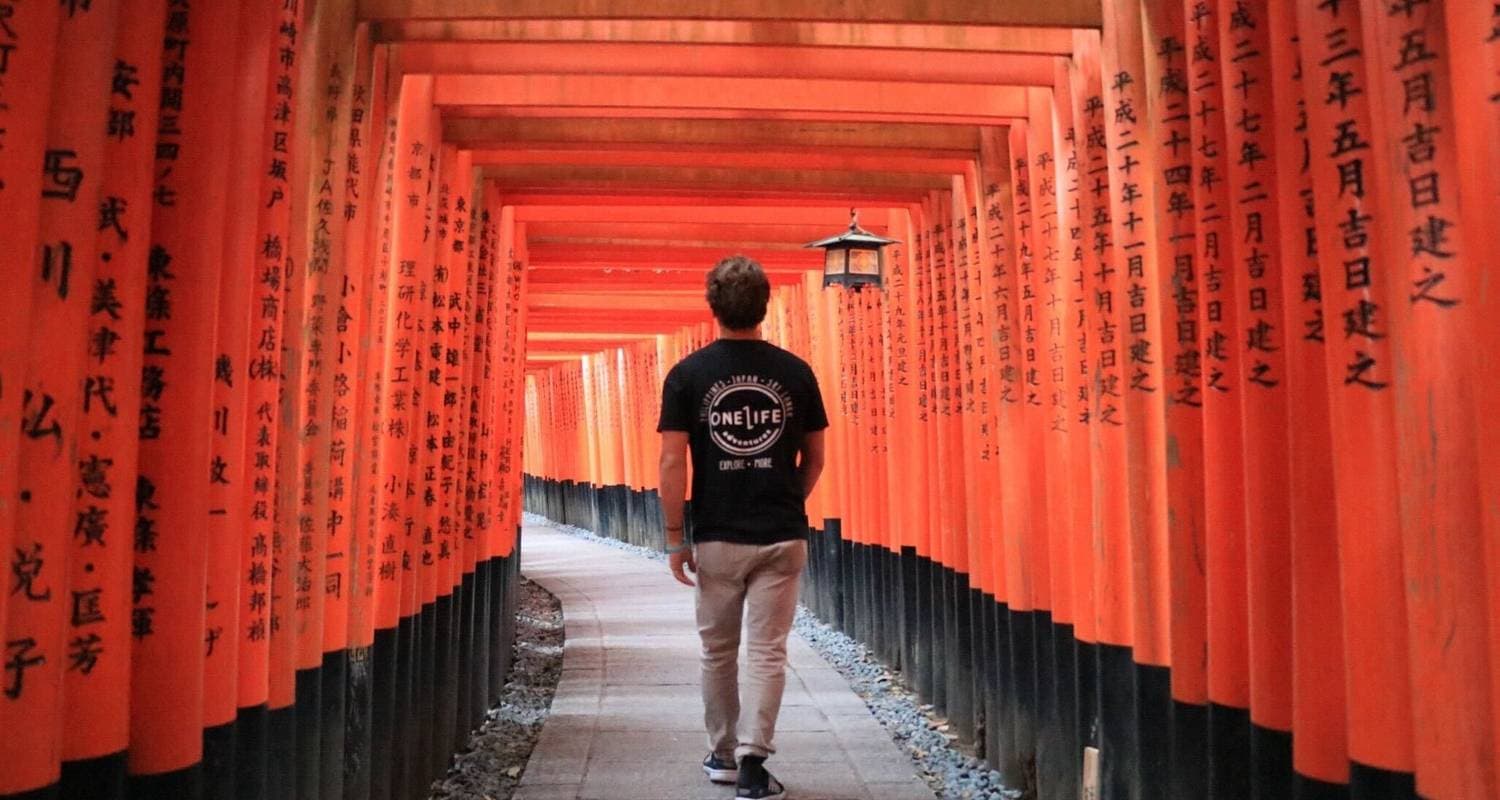
Japan Essentials 9 Day - One Life Adventures
9 days · One Life Adventures
4.8· 353 reviews✓ Instant confirmationtour from €1,697
9D Splendid Japan-Private 3 Star Hotels-Osaka to Tokyo
9 days · Stunning Tours
4.5· 343 reviews✓ Instant confirmationtour from €3,494
13-Day Japan Tour: Tokyo, Mount Fuji, Kyoto, Nara, Osaka & Beyond
13 days · The Dragon Trip
4.4· 166 reviews✓ Instant confirmationtour from €2,935
What Japanese tours actually charge for
Below €1,200 (≈$1,304) in land price you are generally looking at single-region or special-interest trips — the Sado Island programme that anchors our cheapest total, temple stays on Koya-san, walking sections of the Kumano Kodo, rural homestays in Tohoku. These are excellent and they are not the standard first-timer's Japan.
Between €1,200 (≈$1,304) and €2,800 (≈$3,043) is the classic circuit: Tokyo, Hakone or Fuji, Kyoto, Nara, often Hiroshima and Miyajima, usually ten to fourteen days, moving by shinkansen. This band is where the median lives and where most people should plan. Whether rail is included matters enormously to the comparison — a fortnight of unlimited shinkansen travel is a substantial cost, and operators split roughly evenly on whether they bundle it.
Above €2,800 (≈$3,043) you are buying ryokan nights with kaiseki dinners, private guiding, tea ceremony and craft workshops, and smaller groups. Japan rewards this more than most destinations because so much of what makes it distinctive is mediated — the temple, the meal and the garden all improve substantially with someone who can explain them.
Two cost notes specific to Japan. First, food is cheaper than visitors expect: an excellent bowl of ramen costs less than a mediocre sandwich in Rome, so a tour that includes fewer meals is not the false economy it would be in Europe. Second, the accommodation tax is small but real, and cash still matters more in rural Japan than its reputation for technology suggests. Budget €45 (≈$49) a day for meals not included, local transport and entry fees on a mid-range trip. The rail question deserves its own arithmetic, because it is the largest hidden variable in Japanese tour pricing. A two-week nationwide rail pass costs roughly €500 (≈$543) at current rates, and a one-week pass around €320 (≈$348). If one operator bundles it and another does not, a €400 (≈$435) price gap between two apparently similar fourteen-day itineraries can vanish completely once you add the pass back to the cheaper one. Worse, the pass is not always the right purchase: on an itinerary that stays largely within the Tokyo–Kyoto corridor, buying individual shinkansen tickets is often cheaper than a nationwide pass, and a tour that includes named tickets rather than a pass may be quietly better value.
Seasonality in Japan is sharper than in Europe and works on both halves of the price at once. Cherry blossom, from late March into mid-April, is the annual peak: fares rise, land prices rise, and hotel availability collapses. The autumn colour through November is nearly as beautiful and materially cheaper. The two periods to avoid outright are Golden Week at the start of May and the New Year holidays, when domestic travel makes trains and hotels scarce rather than merely expensive — a problem money does not solve.
One further New York consideration: because JFK's Japan fares are high but its cheap-end pricing is competitive, this is a route where flexibility pays unusually well. Moving a departure by four or five days can swing the fare by €300 (≈$326) or more, which is a larger effect than most people achieve by changing tour tier. If your dates are genuinely open, price several weeks before settling on one.
The Japan tour cost guide sets out the land side in more detail.
New York against the other US gateways for Japan
By cheapest complete Japan trip the eight airports ranked: San Francisco €1,496 (≈$1,626), New York €1,543 (≈$1,677), Los Angeles €1,617 (≈$1,758), Dallas–Fort Worth €1,769 (≈$1,923), Miami €1,776 (≈$1,930), Boston €1,828 (≈$1,987), Seattle €2,030 (≈$2,207), Chicago €2,068 (≈$2,248).
By median complete trip the order shifts sharply, and New York's position collapses: San Francisco €3,124 (≈$3,396), Los Angeles €3,139 (≈$3,412), Dallas–Fort Worth €3,178 (≈$3,454), Miami €3,246 (≈$3,528), Seattle €3,283 (≈$3,568), Boston €3,329 (≈$3,618), New York €3,393 (≈$3,688), Chicago €3,479 (≈$3,782). Second-best on the floor, second-worst in the middle.
That divergence is the practical headline for New Yorkers. Your access to the cheap end of the Japan market is fine; your access to the typical Japan trip is expensive. If your dates are fixed and you want the Tokyo-to-Kyoto classic, you are paying €269 (≈$292) more at the median than a San Franciscan for the same holiday.
It is also worth noticing how much bigger these numbers are than the European equivalents. The Japan spread across America is €572 (≈$622) on the cheapest trip; the Italy spread is €216 (≈$235). Airport choice is a minor consideration for a European tour and a major one for an Asian tour — which means positioning to another gateway, usually dismissible, deserves a serious look here. A cheap domestic fare to San Francisco or Los Angeles ahead of a transpacific departure can be worth real money, provided it is on a single ticket. For comparison in the other direction, see what an Italy tour costs from New York, where JFK is the best airport in the country.
Bringing a New York to Japan total down
Consider a west-coast positioning leg, and mean it. This is the one route in our index where the arithmetic reliably works: the median fare gap between JFK and SFO is €263 (≈$286), and Japan trips are long enough that losing a few hours to a domestic connection barely dents the holiday. Single ticket only, so the airline carries the misconnect.
Travel in the shoulder either side of the autumn colour. Late October and November are beautiful in Japan and priced below the cherry-blossom peak, when fares and land prices rise together. Avoid Golden Week entirely in the spring, and be aware that domestic travel over the New Year period makes rail and hotels harder rather than merely dearer.
Check whether rail is included before you compare two tours. A fortnight of shinkansen travel is a substantial line item, and two tours that look €400 (≈$435) apart can be identical once you add it back. This is the single most common mistake in Japan tour comparison.
Go long. The €927 (≈$1,008) fare is fixed whatever you do, so a fortnight costs far less per day than a week. Japan also happens to reward it: the classic circuit is genuinely rushed under ten days.
Do not assume the cheapest tour is a cheaper version of the popular one. Japan's budget tier is a different kind of trip — rural, specialised, often superb, but not Tokyo and Kyoto. Choose it because you want it, not because it is €1,850 (≈$2,011) below the median.
Then price the flight and the tour together, because on a route where the fare is the larger half, comparing land prices in isolation tells you almost nothing about what a trip will cost.
Ready to price your trip?
Enter your origin airport and month — we'll search live flight and tour prices and give you one bundled total per person.
Find combosFAQs
How much does a Japan tour cost from New York?
The cheapest complete trip we priced was €1,543 per person — €616 of tour plus a €927 return fare from JFK, for an eight-day Sado Island programme in October 2026. The median across all 39 combinations was €3,393, and that is the figure to plan against if you want the classic Tokyo-to-Kyoto circuit.
Why is there such a big gap between the cheapest and typical Japan tour?
Because the cheap end is a different kind of holiday. Japan's budget tier is rural and specialised — volunteering placements, temple stays, island itineraries — while the median is the Tokyo, Hakone, Kyoto and Osaka circuit most first-timers want, which costs two to three times as much in land alone. The €1,850 gap is not a discount.
Is it cheaper to fly to Japan from the west coast?
Yes, and meaningfully so. The median fare from San Francisco or Los Angeles is €831 against New York's €1,094 — the west coast is two and a half thousand miles closer to Tokyo with far more transpacific capacity. On the cheapest complete trip the gap narrows to €47, so flexible travellers feel it much less than those with fixed dates.
How long is the flight from New York to Tokyo?
Thirteen and a half to fourteen and a half hours nonstop westbound, routing over the Arctic. Japan Airlines, All Nippon Airways, American, Delta and United all serve it from JFK or Newark. You lose a calendar day going out, so treat the arrival evening as a write-off when planning the itinerary.
Do Japan tours include the bullet train?
Some do and some do not, and it is the most common trap when comparing prices. A fortnight of unlimited shinkansen travel is a substantial cost, so two tours that appear €400 apart can be identical once rail is added back. Always check what the transport line covers before comparing land prices.
Watching a trip?
Once a month: where all-in prices actually dropped, from your airport. No spam, unsubscribe anytime.
Related destinations
- Japan Multi-Day Tours with Flights from €1,900Kyoto temple mornings, Tokyo neon nights, shinkansen in betw…
- Vietnam Multi-Day Tours with Flights from €650Sail Halong Bay, drift through Hoi An by lantern-light, wake…
- Thailand Multi-Day Tours with Flights from €1,050Bangkok temples, Chiang Mai elephants, Krabi limestone karst…
- South Korea Multi-Day Tours with Flights from €1,881Seoul palaces and street food, the DMZ day trip to the North…
Related tour styles
Best for these travellers
- Tours for Couples with Flights IncludedGuided multi-day trips that work for two — small-group socia…
- Solo Travel Tours with Flights IncludedGuided multi-day tours built around solo travellers: small g…
- Tours for Seniors with Flights IncludedMulti-day guided tours for over-55 travellers: gentler pacin…
Pick by trip length
Plan this trip from your city
- Multi-Day Tours from New York with Flights IncludedMulti-day tours from New York with flights included — one US…
- Multi-Day Tours from Los Angeles with Flights IncludedPackage tours from Los Angeles with flights included — one U…
- Multi-Day Tours from Toronto with Flights IncludedPearson is Canada's biggest long-haul hub, and with a weak l…
- Multi-Day Tours from London with Flights IncludedBuilt for London travellers: LHR for long-haul, LGW for Euro…
Deeper reading
- What a Japan Tour Costs from Los Angeles, Flights IncludedLos Angeles has the deepest transpacific network in America.…
- What a Japan Tour Costs from Chicago, Flights IncludedChicago is the most expensive American door to Japan — €572 …
- What a Japan Tour Costs from San Francisco, Flights IncludedNo American airport reaches Japan more cheaply. The cheapest…
- How Much Does a Japan Tour Actually Cost?Japan is the high-floor destination — even the lean trips st…
- The Perfect 14-Day Japan Itinerary (Day by Day)Two weeks down the golden route — Tokyo neon, Hakone hot spr…