Tours for Families with Kids, Flights from €1,250 per Person
Guided multi-day tours for families with kids: gentle pacing, age minimums from 5 or 9, and private or fixed-departure group options in one bundled price.
Edited by Multiday.tours editor
- ✓Minimum age: 5 on soft trips, 8-9 on active ones
- ✓Adult land price: 1,250-5,500 EUR per 7-14 day trip
- ✓Child discount: 15-30 percent off adult land price (ages 5-11)
- ✓Flights: 350-1,200 EUR per person depending on origin (full fare for kids 2+)
- ✓Groups: 14-22 travellers, 2-6 families, mixed ages
- ✓Family-of-four bundled budget: 6,000-20,000 EUR depending on destination
Family tours are booming, and the reason is simple: steering four people through a foreign country is fiddly enough that handing the job to a specialist quickly earns its keep. On Multiday.tours we list dedicated family departures from Intrepid Family, G Adventures Family Journeys, Exodus Family Adventures, Thomson Family Adventures, Families Worldwide and Kids Active, paired with Kiwi.com flights from your home airport. Budget around 1,250 to 2,800 EUR per adult for a seven-day trip, with kids knocked 10 to 25 percent off the land price, plus 350 to 1,200 EUR a head for flights, depending on where you set out from. Minimum ages start at five on the gentler trips and nine on the more active ones.
Family departures with the most reviews
Prices are tour-only — add flights for the real total. You book the tour itself on TourRadar.

Pharaohs Nile Cruise Adventure - Grand GEM Visit – Return Flights Included
8 days · Beyond The Nile Tours
4.7· 1,530 reviews✓ Instant confirmationtour from €1,794
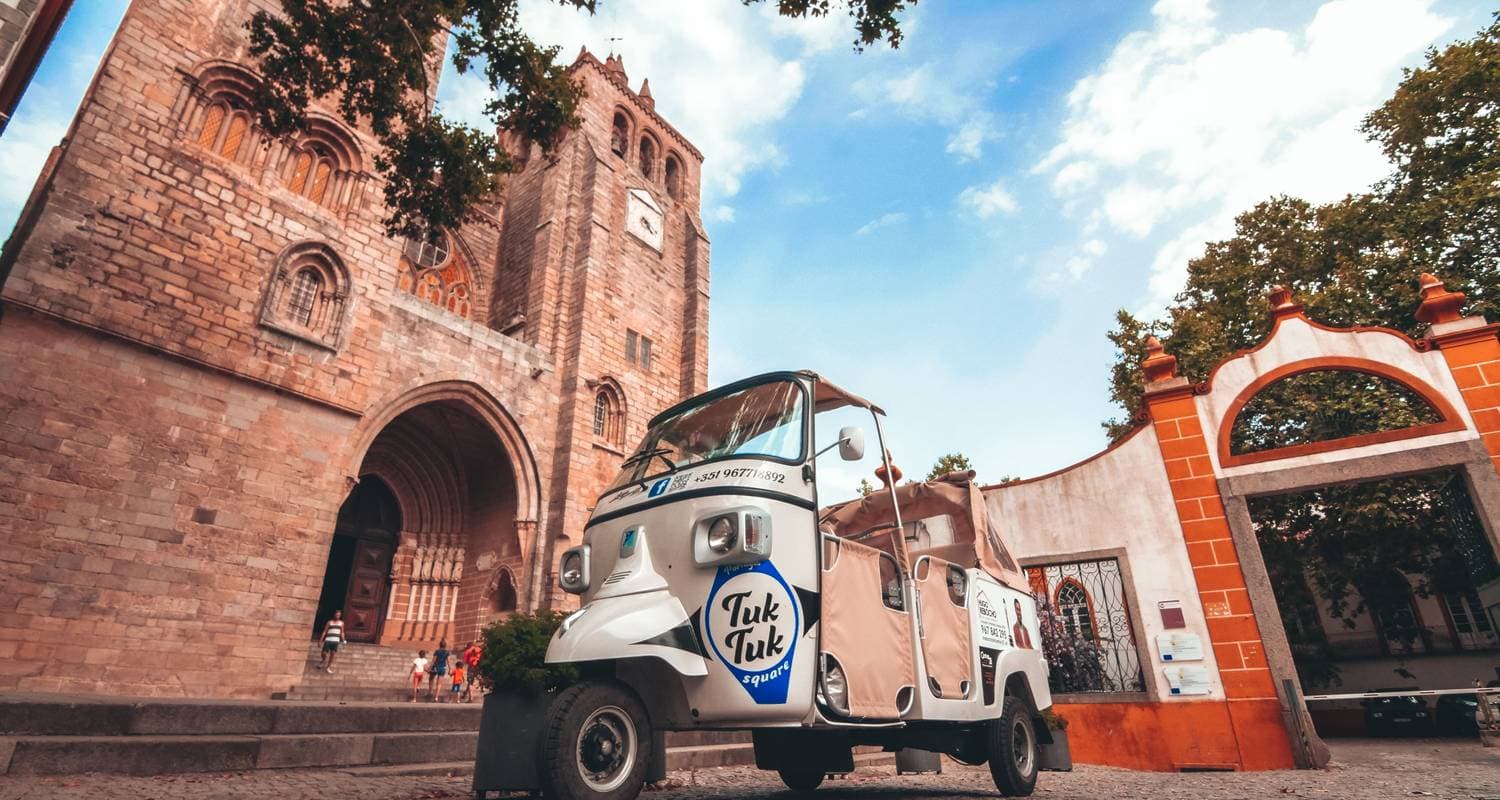
Portugal in Depth
11 days · Globus
5.0· 1,222 reviews✓ Instant confirmationtour from €2,529
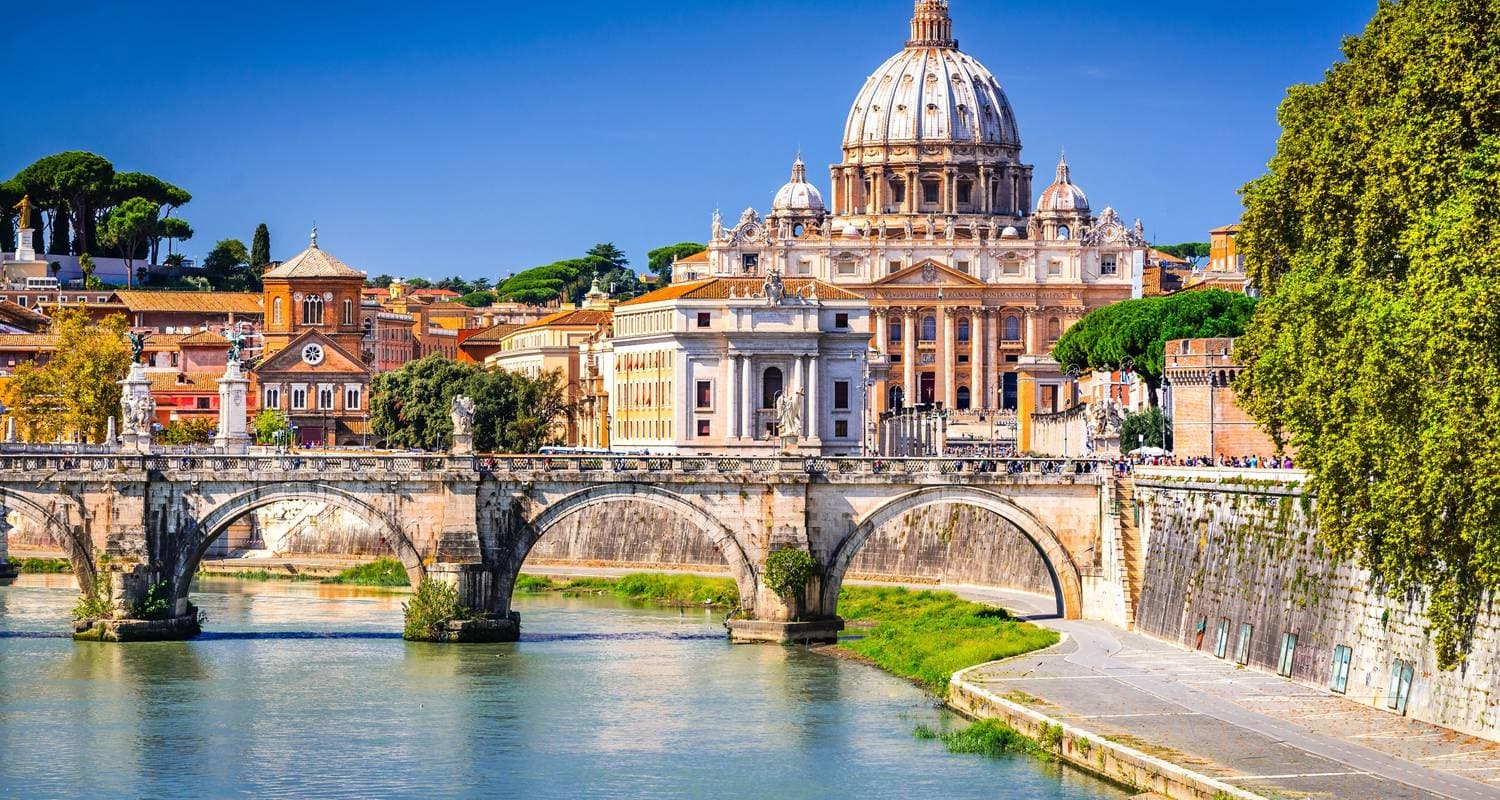
Europe Escape
12 days · Expat Explore Travel
4.5· 868 reviews✓ Instant confirmationtour from €3,284

National Parks Tour 3 Days Small Group Camping Tour from Las Vegas
3 days · Bindlestiff Tours
4.9· 798 reviews✓ Instant confirmationtour from €805

3 Day Southwest USA National Parks Tour from Las Vegas
3 days · Bindlestiff Tours
4.9· 798 reviews✓ Instant confirmationtour from €1,067

Spectacular Alaska!
10 days · Globus
5.0· 718 reviews✓ Instant confirmationtour from €5,326
How family tours differ from regular guided tours
Three things really set them apart. First, the pace. A family itinerary has no 6am alarms, no four-museum marathons and shorter drives, typically two to three hours at most, always broken up with stops. Second, the activity mix. Pompeii on an adult tour is a three-hour walk through the architecture. Pompeii on a family tour is a 90-minute visit wrapped around a treasure hunt, with a pasta-making class in the afternoon. Same ruins, very different delivery. Third, the hotels: family rooms that sleep three or four, a pool, and somewhere the kids can roam safely.
Age minimums fall into two bands. Soft-adventure and culture trips, think Italy, Costa Rica, Iceland and Morocco's short loops, usually take children from five. More active trips, such as cycling weeks in the Dolomites, trekking in Peru and Morocco's desert extensions, set the bar at eight or nine. A few operator-specific teen trips start at twelve or thirteen.
The daily drives are the quietest feature and often the one that matters most. A family Egypt tour builds everything around 90-minute transfers plus a felucca or cruise rather than a five-hour coach slog to Luxor. A family Japan tour uses the shinkansen, not only because kids adore bullet trains (they do) but because a 2.5-hour rail leg with a bento box beats a long coach transfer every time.
Operators built specifically for families
Intrepid Family Adventures has the widest choice, with around 40 dedicated departures and a steady minimum age of five on short-haul trips. You will usually find five to ten kids in a group of 14 to 20, and the leaders are hand-picked for the family product.
G Adventures Family Journeys runs around 30 trips with slightly smarter hotels and a stronger lean towards Latin America and Asia. The minimum is typically seven, and there is a handful of 'young adult' family trips set at twelve for parents of teens rather than under-tens.
Exodus Family Adventures is more active than either: cycling in the Alps, walking weeks in the Dolomites, kayaking in Croatia, with minimums of eight or twelve depending on the trip. Thomson Family Adventures, US-based but happy to take European travellers, digs deeper into culture, with pottery workshops in Oaxaca and homestay days in Thai villages. Minimums usually sit at seven.
Families Worldwide is the UK specialist and does nothing but family travel. Its leaders tend to come from teaching or outdoor-education backgrounds, and the whole thing feels more hand-held than Intrepid or Exodus. Kids Active is the one for high-energy 9-to-14-year-olds: surf weeks in Portugal, ski weeks in the Alps, activity multi-centres in Italy. Not for children who want to look at things, but for children who want to do things.
Pricing and what kids actually cost
Family pricing is the adult base price plus a kid discount, and that discount matters more than the headline figure. Most operators take 15 to 30 percent off the adult land rate for children, with the bigger cuts going to kids aged 5 to 11 and smaller ones, around 5 to 15 percent, to teens aged 12 to 17. It reflects what triple and quad rooms save the operator behind the scenes.
Here is how it adds up for a family of four on a 10-day trip. Adult land price 2,400 EUR. Kid land price, minus 20 percent, 1,920 EUR. Two adults plus two kids comes to 8,640 EUR. Flights add 450 to 800 EUR a head depending on origin, route and timing, so call it 2,400 EUR for the family. That lands the full bundle at 11,000 to 11,500 EUR, which is exactly where a 10-day Costa Rica, Morocco or Italy family trip sits.
For seven days, a family of four should budget 6,000 to 9,000 EUR bundled. For a 14-day long-haul to South Africa, Thailand or Japan, the same family lands at 14,000 to 20,000 EUR.
Flights cost full adult fare for kids over two, with a token discount, usually 10 percent, for under-12s on some carriers. Babies under two fly on a parent's lap at 10 to 15 percent of the adult fare. School-holiday surcharges are real wherever you live: the peak weeks pile 30 to 60 percent onto flight prices, so the value play is to travel in term time if you can, or to target whichever weeks fall outside your country's busiest school breaks. Check your own school calendar before you fix dates.
Best destinations for a first family multi-day tour
Costa Rica is the single best answer for most families. Active without being a slog, safe, wildlife round every corner and well set up for mixed-age groups. You get zip-lining, night walks, turtle-watching and a beach finale in 10 days, with minimums usually five or six. Iceland is the short-haul equivalent: geothermal theatrics, waterfalls, puffins and a glacier lagoon, all with drives kept under three hours and the midnight sun to win over the teenagers.
Italy wins because it is structured and genuinely fun. Pizza-making, Pompeii, a gladiator school in Rome, gelato on tap — the culture arrives in formats that land with kids anywhere from six to sixteen. Thailand is excellent for families with older children (10 and up): elephants done ethically, cooking classes and a beach segment to reward the temple days. It is doable with under-eights too, though the flight is long and the heat is fierce.
South Africa is a strong pick because big animals captivate almost any age. A Kruger-and-Cape-Town loop serves up safari, penguins, sharks and a flat-topped mountain in 10 days. Morocco works nicely too: operators set the minimum at seven for the desert itineraries because of the night in the Sahara, but younger kids are fine on the Marrakech-to-Essaouira coastal version.
What to dodge for a first family trip is the long single-country culture grind with kids under ten. A 14-day India heritage tour, a 12-day Egypt itinerary with five archaeological sites, or a 10-day China history loop will all flatten young children by day four.
Age-bracket mapping and what works at each stage
Five to nine. Short active bursts and plenty of animals. Costa Rica wildlife, Iceland with puffins and geothermal pools, a family-adapted Kenya safari, Italy with pizza-making and beach. Keep to 7 to 10 day trips at this age, because anything longer wears out the children and you with them. Each day should pair one organised activity with an hour of nothing-in-particular, and travel legs should top out at two or three hours. Minimum five with most operators, sometimes six.
Ten to fourteen. This is when history starts to stick. Egypt lands properly now: the pyramids, the Valley of the Kings and a Nile cruise all register as real experiences rather than 'another old thing'. Add Peru with a Short Inca Trail, Japan with bullet trains, food markets and pop culture, Jordan with Petra and Wadi Rum, or South Africa with a heavier safari focus. This bracket has the widest choice and the easiest group chemistry, because kids this age still want to be travelling with their parents and are old enough to throw themselves into it.
Fifteen to eighteen. Teenagers want adventure or beach, and often both. Nepal's Poon Hill trek, Iceland's Laugavegur hiking weeks, a Tanzania safari followed by Zanzibar, Costa Rica surfing-and-wildlife, or a volunteering trip through G Adventures' Planeterra partners. Pure culture trips are the enemy at this age. Some teens fare better on an adult small-group tour than a family-labelled one, so check the age range on the specific departure, and if your teenager looks set to be the only one in their bracket, switch to small-group.
Ready to price your trip?
Enter your origin airport and month — we'll search live flight and tour prices and give you one bundled total per person.
Find combosFAQs
What is the minimum age to bring a child on a family tour?
Five is the usual minimum on soft-adventure and culture trips: Italy, Costa Rica, Iceland and Morocco's short loops. More active trips set it at eight or nine, including cycling weeks in the Alps, Peru's Short Inca Trail and the Moroccan desert itineraries. Intrepid Family starts at five for most short-haul trips, G Adventures Family Journeys at seven, and Exodus Family Adventures usually at eight or twelve depending on how active the trip is. Private family tours will take toddlers, but you pay 40 to 60 percent more per family for the privilege.
What does a 10-day family tour with flights cost for a family of four?
For a mid-range destination like Costa Rica, Morocco or Italy, budget 11,000 to 13,000 EUR bundled. That assumes adult land prices of 2,200 to 2,600 EUR, child discounts of 15 to 25 percent, and flights at 500 to 700 EUR a head, which is a mid-range figure that shifts with your home airport. Go long-haul to Thailand, South Africa or Japan and the same family lands at 14,000 to 18,000 EUR. For shorter seven-day trips in Iceland or Italy, 6,500 to 9,000 EUR total is realistic. School-holiday flight surcharges add 1,000 to 2,500 EUR for a family of four, so picking dates outside your country's peak school breaks is the single biggest lever you have.
Which destination is best for a first family multi-day tour?
Costa Rica, for most families, for three reasons. The activities are varied enough that no single day drags. The wildlife is dense enough that every day pays off without leaning on kids staying interested in cultural sites. And the set-up for family groups is well established, with operators running dozens of departures a year. If long-haul does not appeal, Iceland is the short-haul equivalent: dramatic, safe and built around two-to-three-hour drives. Italy is the best culture-led alternative, because pizza-making and Pompeii both work right across an 8-to-15 age range.
How do teenagers and younger kids get along on the same tour?
Usually fine, occasionally tricky. It comes down almost entirely to the age mix on your specific departure. If your 14-year-old is the lone teen among a pack of 6-to-9-year-olds, expect boredom. If two or three teens are on the same trip, they tend to band together by day two and have a brilliant time. Before booking, ask the operator for the current age spread on your chosen date; most will happily tell you. If the mix looks wrong, switch dates, switch trips, or consider an adult small-group tour for a teen of 15 or over.
How do we handle a long-haul flight with kids?
Fly overnight outbound where you can: the kids sleep on the plane and you land with the jet-lag window falling at your destination rather than back home. Pay for seat selection to keep the family together on budget carriers; legacy carriers usually seat families together automatically, but confirm at check-in. Pack a backpack per child with snacks, one fresh toy or book, and a tablet loaded with downloads. For flights over seven hours, book a rest day at the arrival hotel before the tour starts; operators add it for 80 to 160 EUR per family room, and it saves day one from being lost to tired children.
What should we actually pack for a family multi-day tour?
A small day-pack per child with a water bottle, sunhat, sunglasses and snacks. Sturdy closed-toe walking shoes plus a pair of sandals each. Layers for changeable weather, with a light waterproof shell as the non-negotiable. A basic first-aid kit (antihistamines, paracetamol, plasters, rehydration sachets) and any prescription meds in their original packaging. For under-tens, a familiar comfort item for the hotel room. Leave the big bulky toys at home and bring small travel games and a pack of cards instead. The operator's kit list is trip-specific and worth reading, because what you need for a cycling week is not what you need for a beach-and-wildlife tour.
Related destinations
- Iceland Multi-Day Tours with Flights from €1,100Drive the Ring Road, walk on a glacier, chase the Northern L…
- Italy Multi-Day Tours with Flights from €1,750Rome, Florence and Venice in ten days, or a full Grand Tour …
- Thailand Multi-Day Tours with Flights from €1,050Bangkok temples, Chiang Mai elephants, Krabi limestone karst…
Related tour styles
Best for these travellers
- Solo Travel Tours with Flights IncludedGuided multi-day tours built around solo travellers: small g…
- Tours for Seniors with Flights IncludedMulti-day guided tours for over-55 travellers: gentler pacin…
- Tours for Couples with Flights IncludedGuided multi-day trips that work for two — small-group socia…