
Egypt Multi-Day Tours with Flights from €1,300
Sail the Nile, stand at the pyramids, sleep out under the White Desert stars. Tour and flight, sorted in two clicks.
Edited by Multiday.tours editor
- ✓8-day Cairo + Nile cruise tours from €900 before flights
- ✓Return flights from most European hubs to Cairo €220-€450 in shoulder season
- ✓Best months: October, November, February, March
- ✓10-day itineraries are the sweet spot for first-timers
- ✓Small-group tours include Egyptologist guide and entry fees
- ✓Red Sea and White Desert add-ons available on 14-day trips
Few trips deliver as much wonder per euro as a week in Egypt, and 2026 is a fine year to go. The classic shape is gloriously simple: a couple of nights at the pyramids of Giza, then a slow, lamp-lit cruise up the Nile past temples that have been standing for three thousand years. A typical 8-day small-group tour with a guide, a domestic flight, three nights afloat and most meals starts from around €900 per person. Add a return flight from a European hub and you are looking at roughly €1,300 to €1,800 all-in for a proper bucket-list week. Below you will find honest price ranges, sample 7, 10 and 14-day routes, the months worth aiming for, and which style of trip suits which traveller — so you can lock in the right tour and the right flight without juggling ten browser tabs.
The tours doing the heavy lifting here
Prices are tour-only — add flights for the real total. You book the tour itself on TourRadar.
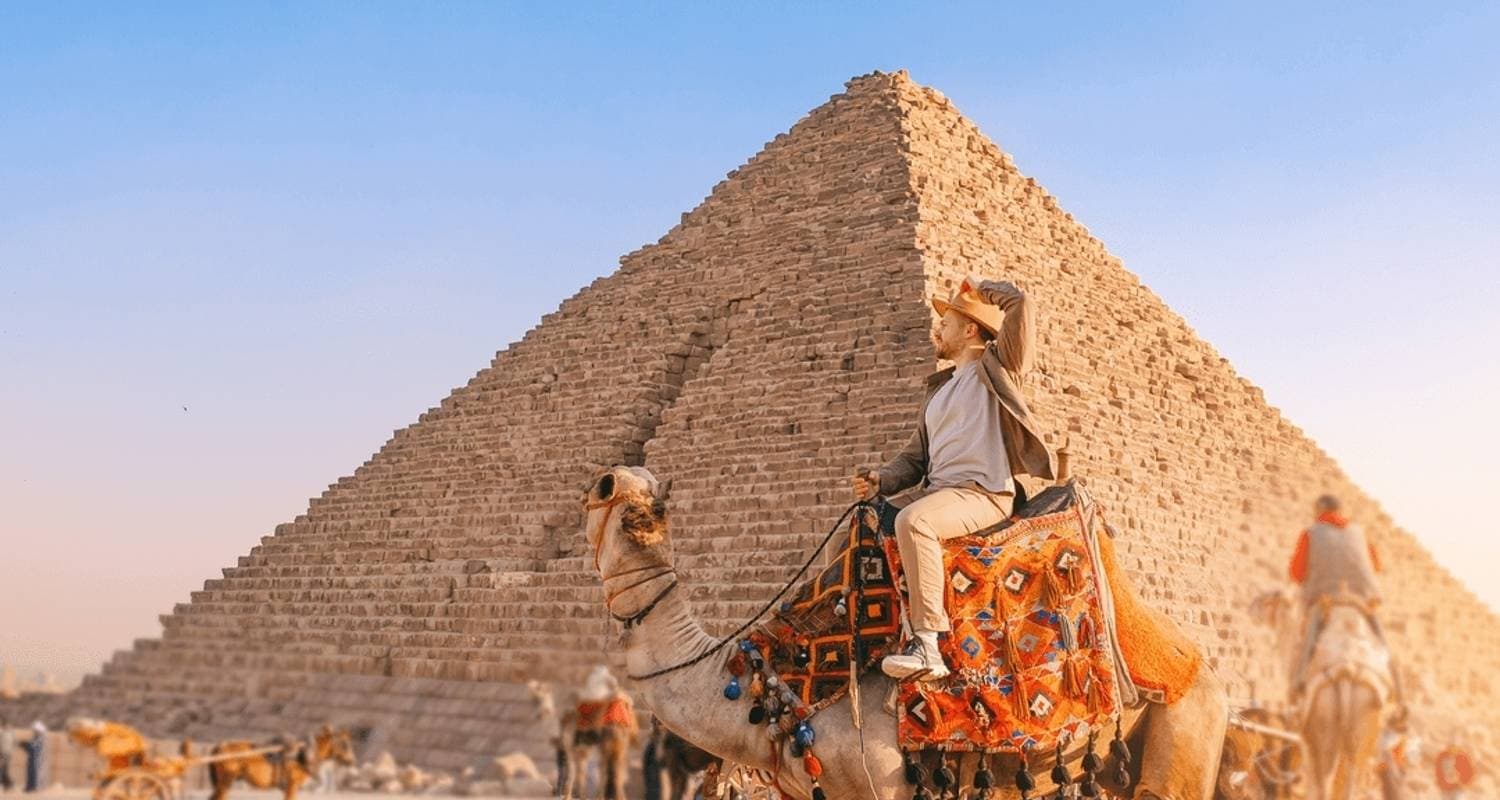
Pharaohs Nile Cruise Adventure - Grand GEM Visit – Return Flights Included
8 days · Beyond The Nile Tours
4.7· 1,530 reviews✓ Instant confirmationtour from €1,794
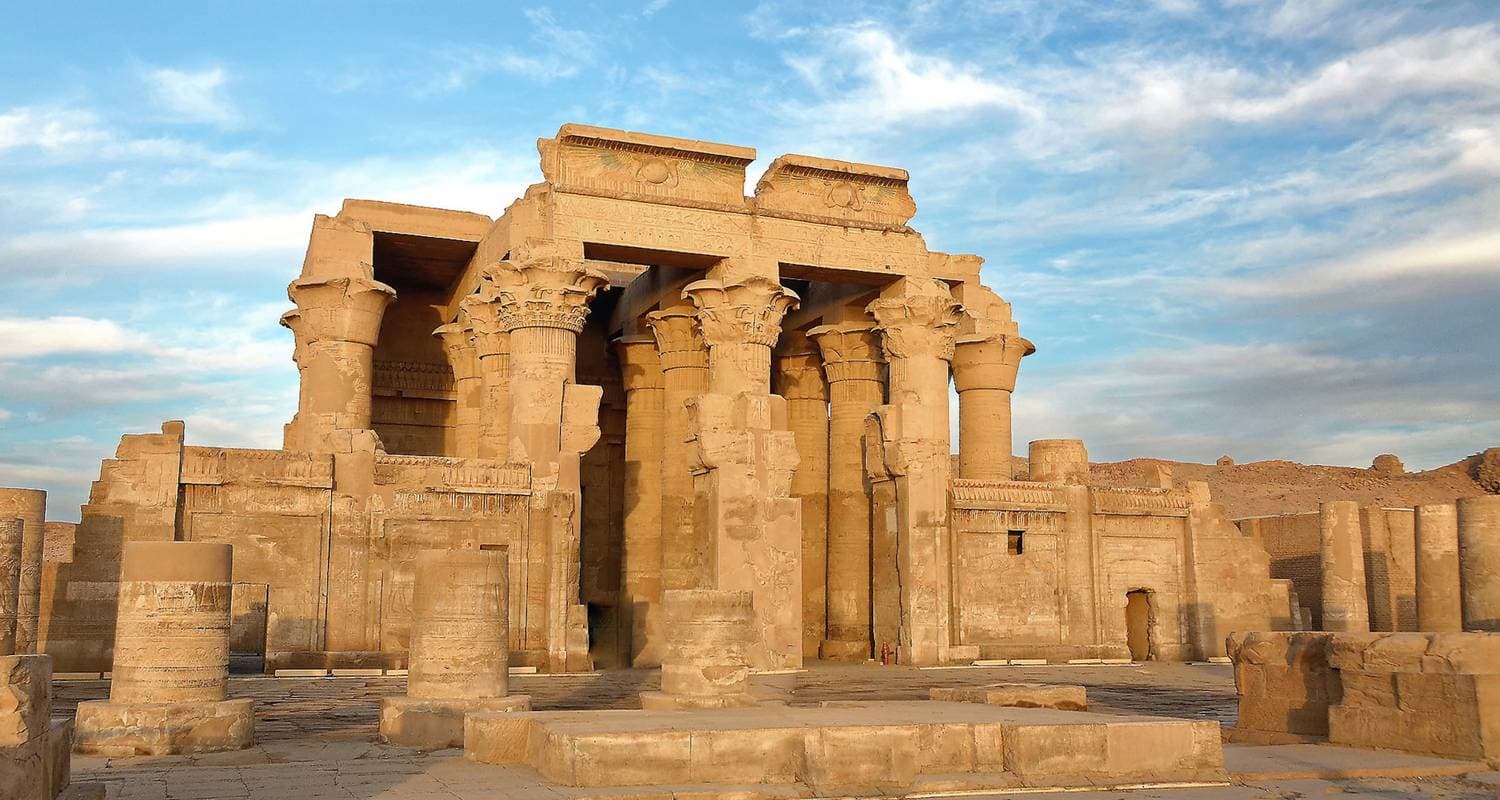
Nile Jewel - 5* Cruise
9 days · Timeless Tours
4.7· 1,096 reviews✓ Instant confirmationtour from €1,350

Egypt Explorer - Felucca cruise & Red Sea
10 days · Timeless Tours
4.6· 531 reviews✓ Instant confirmationtour from €1,240

Best Of Egypt - 5* Cruise
10 days · Timeless Tours
4.7· 463 reviews✓ Instant confirmationtour from €1,416
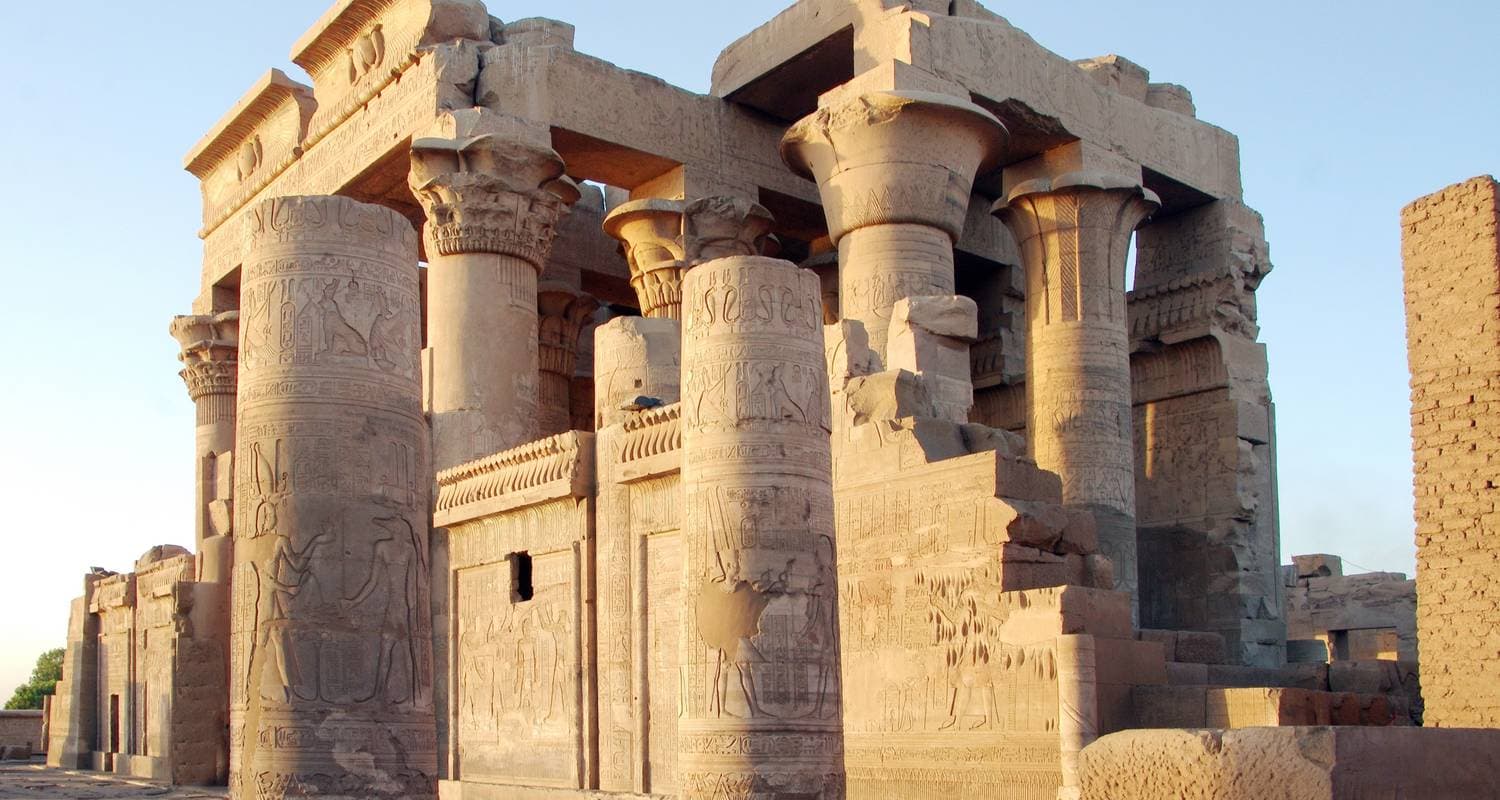
Nile Adventure - Felucca cruise
9 days · Timeless Tours
4.6· 404 reviews✓ Instant confirmationtour from €1,138

Pyramids & Nile Cruise - Domestic Flights Included
7 days · Beyond The Nile Tours
4.7· 344 reviews✓ Instant confirmationtour from €1,150
What a week of Egypt tours actually looks like
A standard 7-day trip opens in Cairo with two nights at the pyramids of Giza and the gleaming Grand Egyptian Museum, then a short hop south to Luxor where the river takes over. Most weeks run Luxor to Aswan, stitching together Karnak, the Valley of the Kings, Edfu and Kom Ombo, before a sunrise flight carries you back to Cairo.
The cruise is the heart of it. Budget boats run around €700-€900 for three all-inclusive nights, mid-range dahabiyas sit at €1,100-€1,500, and the truly grand ships like the Oberoi Zahra sail past €2,500. Most bundled weeks land somewhere in the €900-€1,400 band with guide, entry fees and the internal flight folded in.
Temple days are walking days — reckon on 8-12 km over uneven stone — and the heat is no joke, so pack real shoes rather than sandals. Breakfast and your cruise meals are almost always covered; lunches and dinners in Cairo are yours to choose, and a good one runs €10-€20.
10 and 14 day Egypt tour packages: what you add
If you can spare the time, ten days is the one to book. You keep the Cairo-Luxor-Aswan spine and add either Abu Simbel — yes, it means a 3am alarm, and yes, it is worth every bleary minute — or a couple of slower nights snorkelling at Hurghada or Dahab on the Red Sea. Expect €1,500-€2,100 with flights.
Fourteen days is for travellers who want desert as well as river. Carve out a 2-3 night 4x4 run into the surreal White Desert from Bahariya, detour to the date-palm oasis at Siwa, or seek out the quieter temples at Dendera and Abydos that most groups breeze past. A few operators bolt on a Jordan extension with Petra and Wadi Rum, which lifts the total to €2,400-€3,200 but hands you two of the Middle East's defining experiences in a single trip.
If you only get one crack at Egypt, make it ten days. Seven feels tight once two long travel days are accounted for, and fourteen without any desert is really just more time on the beach.
Small-group vs private vs budget: picking the right Egypt tour
Small-group tours of 12-16 people are the default, and the best value going. Intrepid, G Adventures, On The Go and TruTravel all run dependable Egypt itineraries from around €900-€1,500 before flights, and every one comes with a full-time Egyptologist — which genuinely changes how a place like Karnak lands when someone can read the walls for you.
Go private if there are two or more of you and you would rather set your own rhythm. Reckon on €1,800-€3,000 per person for 8-10 days with a private guide, driver and mid-range hotels. You skip the 7am bus calls and can linger in the cool of the tombs long after the groups have moved on.
Budget and younger-crowd trips (TruTravel, Topdeck, some G Adventures 18-to-Thirtysomethings) drop a hotel star or two and start around €700-€900 before flights — a fine call if you are under 35 and want the social side. At the other extreme, the river cruises run by Uniworld or AmaWaterways sit at €3,500+: small ship, balcony cabin, proper dining and a gentler pace.
Best time to visit Egypt and what it costs you
Egypt really only has two seasons that matter: cool and hot. October to April is the window you want, with daytime highs in Luxor around 25-30°C and balmy evenings up on the cruise deck.
December and January are the peak — prices climb 20-30%, Abu Simbel fills up, and cruises want booking 4-6 months out. February and March are the quiet sweet spot: still warm, far thinner crowds, and flights from Europe under €250 return if you move early.
May through September turns fierce. Luxor regularly tips 42°C and temple visits become a 6am affair. The upside is that tour prices fall 30-40% and the Red Sea stays gloriously swimmable. July and August in Upper Egypt are strictly for travellers who truly do not mind the heat.
Ramadan shifts each year (roughly late February to late March in 2026). Sites stay open, but some restaurants close through daylight and the mood softens by day and lifts after dark — no reason to stay away, just worth having in mind.
Getting there: flights to Cairo from wherever you start
Cairo (CAI) is the main gateway, and it's well-connected from every major market — though almost no one flies it nonstop from across an ocean, so plan on one stop unless you're coming from Europe or the Gulf.
From the US, Egypt is a genuinely popular long-haul trip, and the routings are easy. EgyptAir flies nonstop from New York JFK and Washington Dulles (around 11 hours). From everywhere else — the West Coast, the South, the Midwest — you connect once through a European or Gulf hub (London, Frankfurt, Istanbul, Doha, Dubai). Expect roughly US$900-$1,400 return from the East Coast, US$1,100-$1,700 from the West Coast or Texas, and reckon on 14-18 hours door to door with the layover. Turkish via Istanbul and the Gulf carriers (Qatar, Emirates) tend to price keenest from inland cities.
From Australia there's no short way: Sydney and Melbourne route through a single Gulf or Asian hub — Doha on Qatar, Dubai on Emirates, Abu Dhabi on Etihad, or Singapore — for a total of 20-24 hours flying. Reckon on roughly A$1,800-$2,800 return, with the Gulf carriers usually the smoothest single-stop option.
From Canada, Toronto and Montreal connect once through a European or Gulf hub (Air Canada to London, Frankfurt or Istanbul, or a European carrier onward); budget roughly C$1,300-$2,000 return and 14-17 hours via the layover.
From the UK and Europe, you've the shortest hop of anyone. EgyptAir runs direct from a handful of European hubs in season; more reliably you connect through London, Paris, Frankfurt, Istanbul or Rome. Door to door from Western Europe is 6-9 hours, and return fares from most capitals sit at €220-€400 in the shoulder months of February, October and November, climbing to €400-€700 over Christmas and Easter.
Some trips begin or end in Luxor (LXR) or Hurghada (HRG) rather than Cairo, which can save a backtrack whatever your origin. When you bundle here, the flight prices live from your own home airport in your own currency, right beside the tour price, so you can size up the whole trip before you commit to either piece.
Practical stuff: visa, safety, money
US, UK, EU, Australian and Canadian passport holders all need a visa, and it's the same painless drill for everyone: the e-visa costs US$25 and clears in under a week online, or you pick one up on arrival at Cairo airport for the same price. Your passport needs at least six months left on it beyond your entry date.
Egypt is generally safe for travellers in 2026. Foreign ministries advise exercising normal precautions across Cairo, Luxor, Aswan and the Red Sea resorts, with avoid-only notices limited to parts of North Sinai and the Western Desert border zones, where no tour goes anyway.
The currency is the Egyptian pound (EGP). Cards work in hotels and bigger restaurants, but keep cash on you for tips, taxis and the souks. Tipping — baksheesh — is constant and expected: budget €30-€50 per person for the week on top of the guide's tip, which is usually €40-€60 at the end.
Don't drink the tap water; most tours hand out bottled water on the bus and cruise anyway. Upset stomachs are common, so pack Imodium and rehydration sachets and you'll likely sail through.
Ready to price your trip?
Enter your origin airport and month — we'll search live flight and tour prices and give you one bundled total per person.
Find combosCommon questions
Is Egypt safe for tourists in 2026?
Yes, for the places tours actually go. Cairo, Giza, Luxor, Aswan, Abu Simbel and the Red Sea resorts all sit under exercise-normal-precautions advice from most European foreign ministries. The avoid notices cover only parts of North Sinai and the remote Western Desert, neither of which features on any standard route. Police presence around the big sites is high. The main nuisance is the petty stuff — pushy souvenir sellers, the odd taxi trying it on — while violent crime against tourists is very rare.
How much does a 10-day Egypt tour cost with flights?
Reckon on roughly €1,500-€2,100 per person all-in from most European cities. That covers a small-group tour at €1,000-€1,400 (guide, Nile cruise, internal flight, hotels and most breakfasts), return flights to Cairo at €250-€450, tips of €60-€100, the visa at around €23, and €250-€400 of spending money for lunches, dinners and souvenirs. Go private and you'll add €500-€1,200; trade up to a luxury Nile cruise and the total can comfortably double.
Do I need to book a Nile cruise separately or is it included?
Almost every multi-day Egypt trip folds the Nile cruise straight into the headline price. The standard is three nights Luxor to Aswan (or the reverse) on a mid-range ship with full board. Fancy a dahabiya — a smaller sailing boat carrying 8-16 guests — or a luxury ship like the Oberoi? You book the tour as normal and pay an upgrade of €300-€1,500 per person. Standalone cruises without the land portion do exist, but they rarely save you anything.
When is the cheapest time to visit Egypt?
May, June and September. Tour prices fall 25-40% against the December-January peak, and flights from Europe can dip under €200 return. The catch is the heat: Luxor sits at 38-42°C and temple visits slide to first light. If you cope well with warm weather, the shoulder months of late April and early October hand you near-peak conditions for 15-20% less. Ramadan (late February to late March in 2026) is quieter and cheaper again, though some restaurants close through daylight.
Can I do Egypt as a solo traveller?
Egypt is one of the finest places anywhere to travel solo, provided you book onto a small-group tour. You get instant company for dinners and excursions and reassuring numbers at the busier sites. Most operators ask a single supplement of €250-€500 for your own cabin on the cruise, or waive it if you're happy to share. Going it entirely alone is doable, but it comes with relentless hassle at the sites — a guided tour quietly takes almost all of that off your plate.
What should I pack for an Egypt tour?
Real walking shoes — trainers, not sandals — for temple days spent crossing uneven stone, with 8-12 km on the clock. Light, long-sleeved cotton or linen does double duty against the sun and for stepping into mosques. A wide-brim hat, high-SPF sunscreen and sunglasses are non-negotiable. Throw in a refillable water bottle, basic stomach medication (Imodium and rehydration sachets), a small torch for the dim of the tombs, and roughly €100-€150 in small Euro or USD notes for the visa, tips and souk finds. Dress is easy on the cruise but keep it modest at religious sites.
Related destinations
- Morocco Multi-Day Tours with Flights from €700Nights in the Merzouga dunes, mornings lost in the Fes medin…
- Peru Multi-Day Tours with Flights from €1,900Machu Picchu at sunrise, the Sacred Valley, an Amazon lodge.…
- Iceland Multi-Day Tours with Flights from €1,100Drive the Ring Road, walk on a glacier, chase the Northern L…
Related tour styles
- Small Group Tours with Flights IncludedShared departures of 10-16 travellers. Expert guides, fixed …
- Adventure Tours with Flights IncludedTrek, cycle, paddle and climb on guided multi-day trips. Rea…
- Family Tours with Flights IncludedGuided multi-day family tours built for kids and parents. Fi…
- Christmas & New Year Tours with Flights IncludedSkip the seasonal clamour at home. December departures to so…
Pick by trip length
Plan this trip from your city
- Multi-Day Tours from New York with Flights IncludedMulti-day tours from New York with flights included — one US…
- Multi-Day Tours from Los Angeles with Flights IncludedPackage tours from Los Angeles with flights included — one U…
- Multi-Day Tours from Sydney with Flights IncludedLeaving Australia means a long-haul flight whether you like …
- Multi-Day Tours from Toronto with Flights IncludedPearson is Canada's biggest long-haul hub, and with a weak l…
- Multi-Day Tours from London with Flights IncludedBuilt for London travellers: LHR for long-haul, LGW for Euro…
Deeper reading
- The Perfect 10-Day Egypt Itinerary (Route, Day by Day)Ten days is the Egypt sweet spot: the pyramids, a slow Nile …
- How Much Does an Egypt Tour Cost? The Honest All-In NumberA week to ten days in Egypt runs roughly €1,300–€2,800 (≈$1,…
- The Best Time to Visit Egypt (Month-by-Month, 2026)Month-by-month weather, tour prices and crowd levels for Cai…
- What a Nile Cruise Actually Costs (Ships, Routes, Add-Ons)Nile cruise prices range 8x between budget dahabiya and prem…
- Is TourRadar Legit? What Actually Happens After You BookShort answer: yes. Longer answer: it's a marketplace, your t…
- What an Egypt Tour Costs from New York, Flights IncludedForty Egypt tours priced with a real JFK fare attached. The …
- What an Egypt Tour Costs from Los Angeles, Flights IncludedForty Egypt tours priced with a real LAX fare attached. The …