
Japan Multi-Day Tours with Flights from €1,900
Kyoto temple mornings, Tokyo neon nights, shinkansen in between. Cherry blossom in spring, maple red in November — one bundled price.
Edited by Multiday.tours editor
- ✓10-day Japan tours from €1,900 before flights; 14-day trips €3,000-€6,100
- ✓Return flights Europe-Tokyo €700-€1,200 shoulder, up to €1,400 at sakura peak
- ✓Best months: mid-November (autumn koyo) and late March-early April (sakura)
- ✓84 Japan tours tracked, median trip length 10 days
- ✓Shinkansen Tokyo-Kyoto 2h15m, 513 km — fastest link on the planet
- ✓Operators: One Life Adventures, Stunning Tours, The Dragon Trip, G Adventures, Walk Japan
Japan is not a budget trip, and pretending otherwise only wastes your time. Land-only, most travellers spend somewhere around €2,850 a head, though lean group trips start from around €1,900 and a proper unhurried fortnight climbs to €3,700-€6,000. The choice of company is genuinely broad, from backpacker-friendly outfits like One Life Adventures and INTRO Travel, through mid-market names such as G Adventures and The Dragon Trip, up to Stunning Tours with their private 3-star hotels and tiny groups. Nearly every trip traces the Tokyo-Kyoto-Osaka golden triangle, usually folding in Hakone, Hiroshima, Mount Fuji and Nara along the way. Return flights land at roughly US$750-$1,100 from the US West Coast, A$1,100-$1,700 from Australia and €700-€1,200 from Europe. Reckon on €2,600-€4,500 all-in for a well-run 10 to 14 days with a guide, a JR Pass (sometimes), most breakfasts and every shinkansen hop between cities thrown in.
The tours doing the heavy lifting here
Prices are tour-only — add flights for the real total. You book the tour itself on TourRadar.
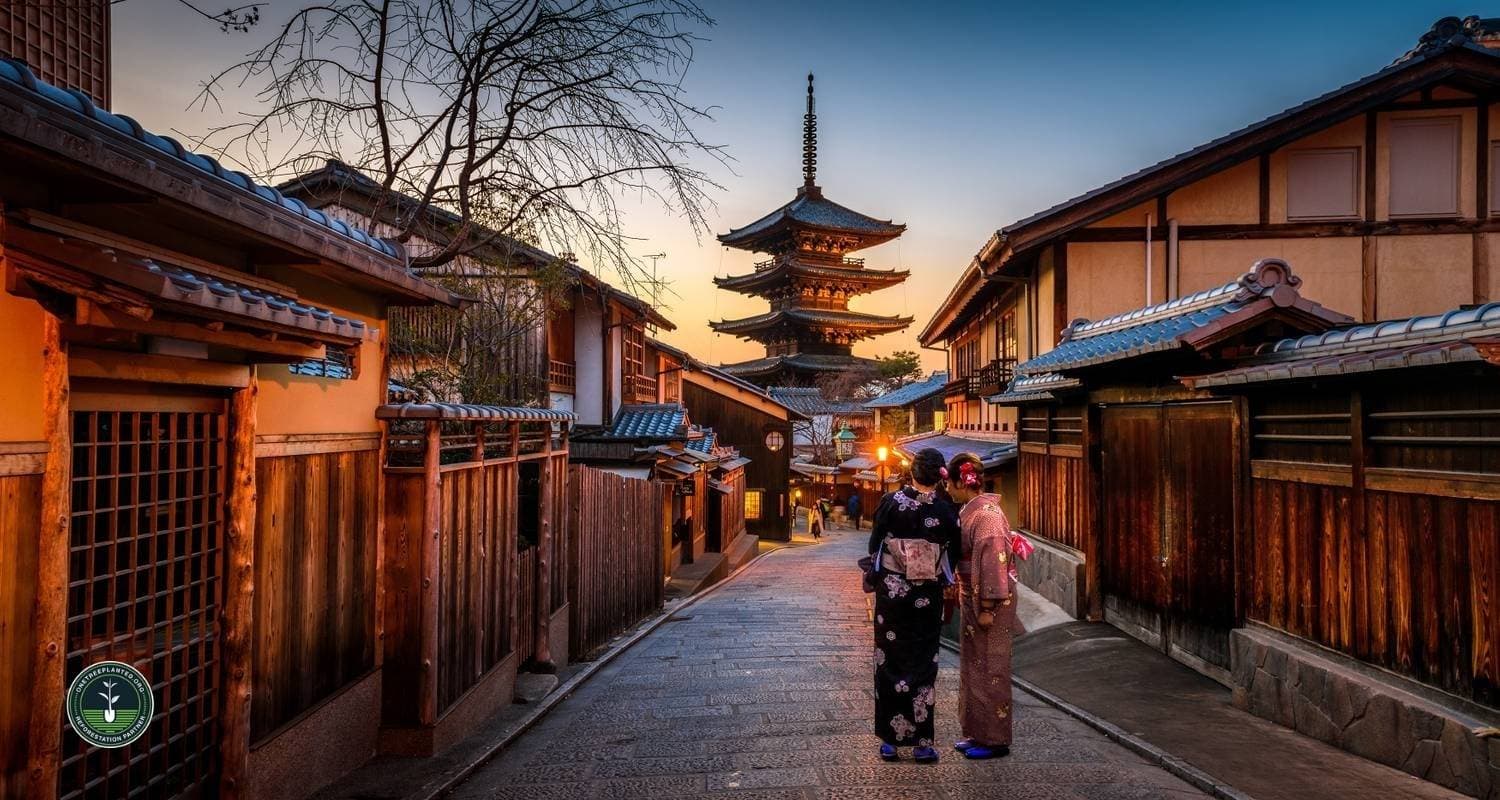
Japan Classic 10 Day - One Life Adventures
10 days · One Life Adventures
4.8· 2,287 reviews✓ Instant confirmationtour from €2,433
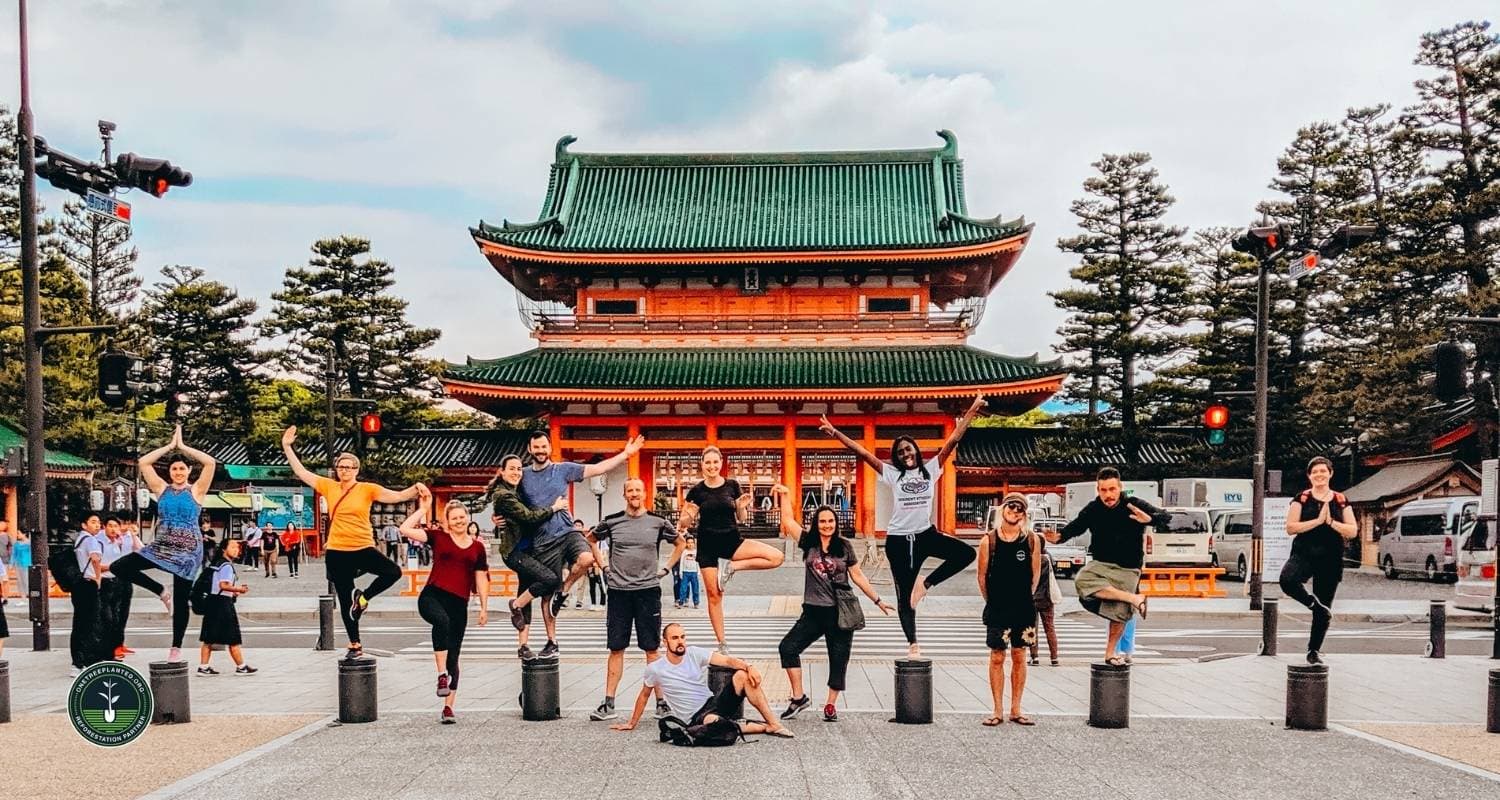
Japan Classic 14 Day - One Life Adventures
14 days · One Life Adventures
4.9· 970 reviews✓ Instant confirmationtour from €3,105
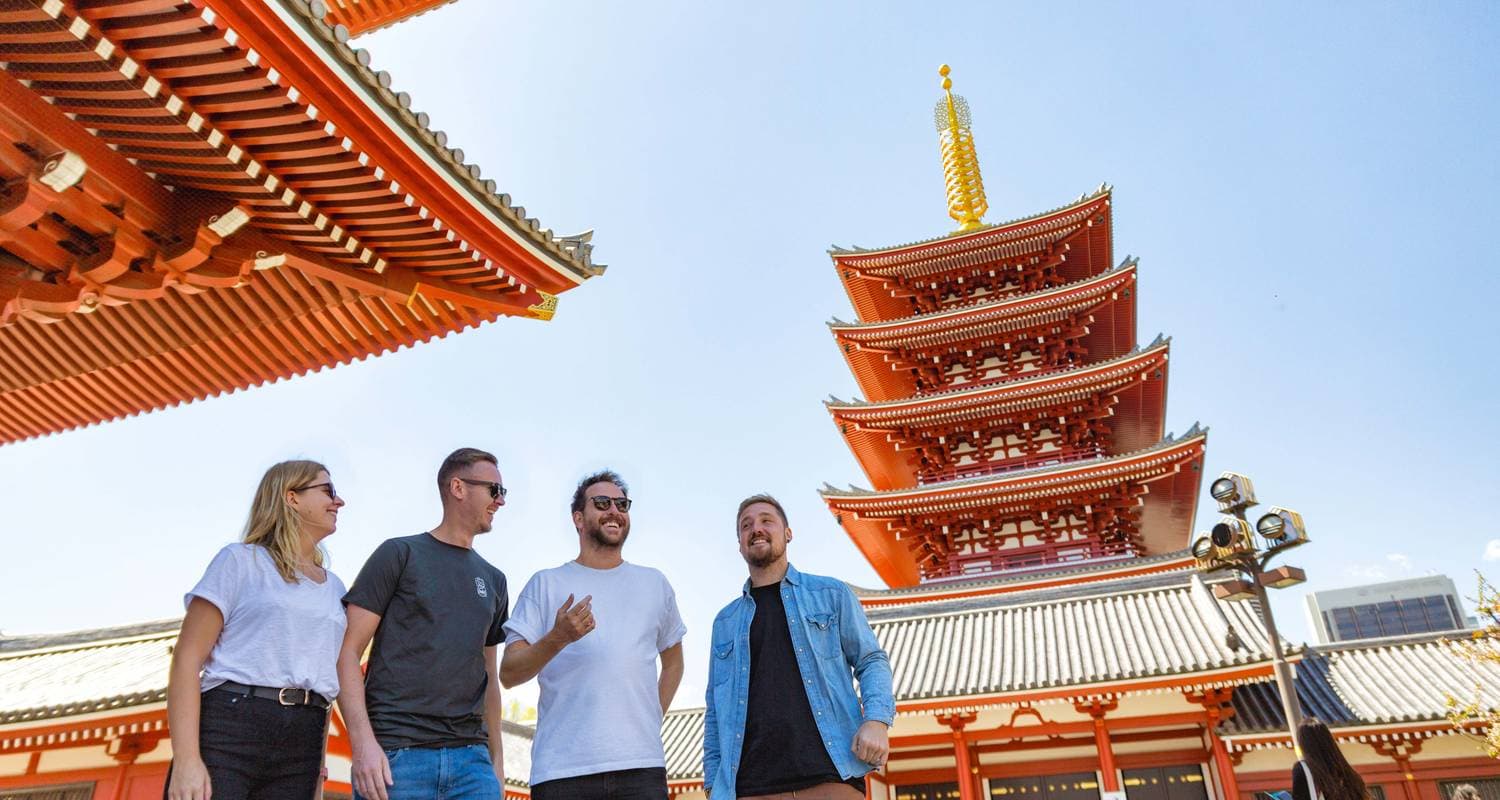
Japan Adventure 13 Day
13 days · INTRO Travel
4.9· 404 reviews✓ Instant confirmationtour from €2,851
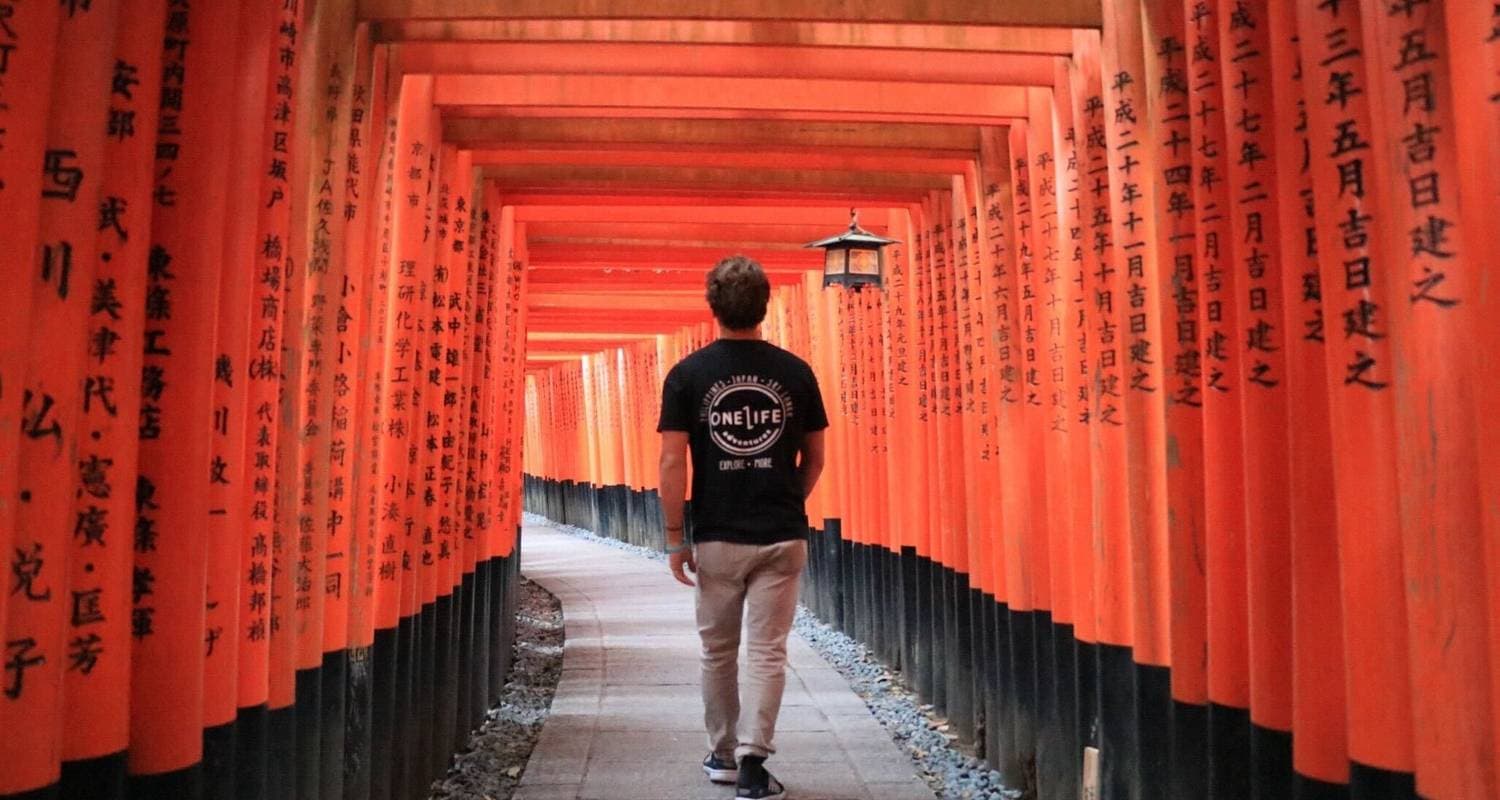
Japan Essentials 9 Day - One Life Adventures
9 days · One Life Adventures
4.8· 353 reviews✓ Instant confirmationtour from €1,697
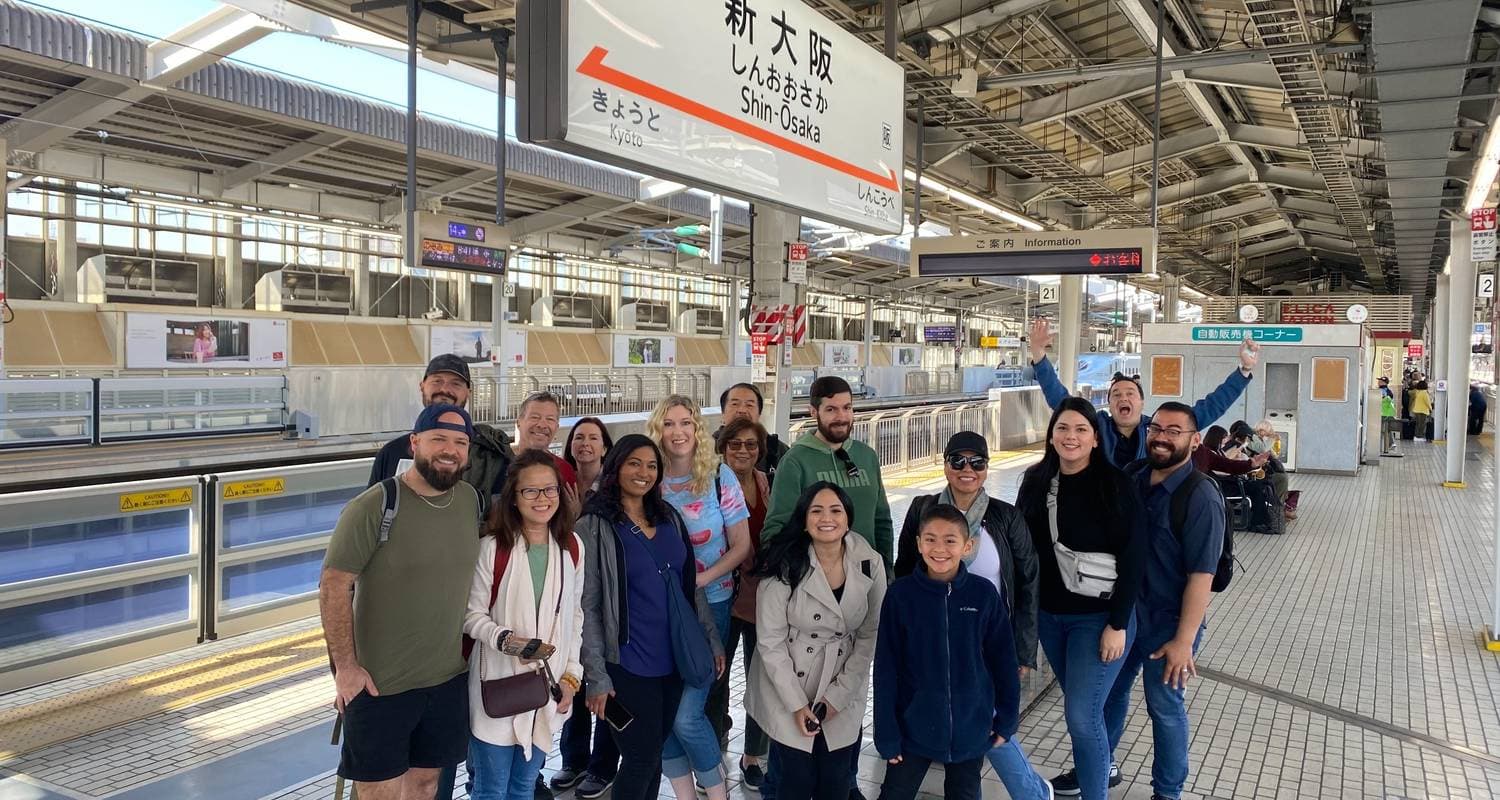
9D Splendid Japan-Private 3 Star Hotels-Osaka to Tokyo
9 days · Stunning Tours
4.5· 343 reviews✓ Instant confirmationtour from €3,494
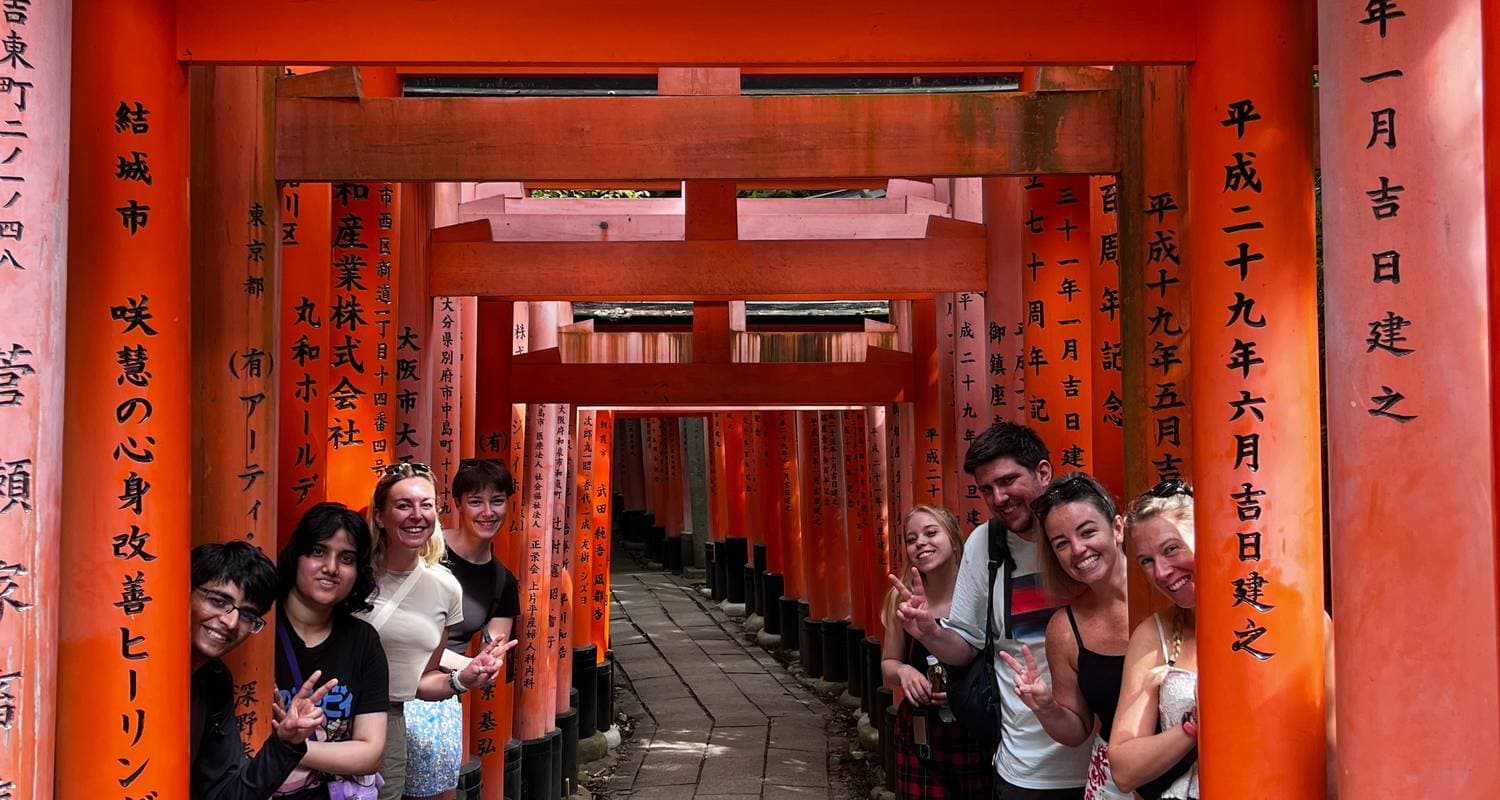
13-Day Japan Tour: Tokyo, Mount Fuji, Kyoto, Nara, Osaka & Beyond
13 days · The Dragon Trip
4.4· 166 reviews✓ Instant confirmationtour from €2,935
The classic 10-14 day Japan tour: what you actually do
The route nearly everyone takes runs Tokyo to Osaka, or the reverse, with Kyoto as the cultural heart in the middle. One Life Adventures' Japan Classic 10 Day, from around €2,430, strings together Tokyo, Hakone, Kyoto, Hiroshima and Osaka. The Dragon Trip's 13-day version, from around €2,935, throws in Mount Fuji, Nara and Miyajima. And if you want private 3-star hotels and a small group, Stunning Tours' 14-day Panoramic sits at the top end, from around €6,070.
The bullet-train geography is worth picturing. Tokyo to Kyoto is 513 km in 2h15m, Kyoto to Hiroshima another 380 km in 1h40m, then Hiroshima back up to Osaka, 350 km in 1h25m. A standard 10-day loop racks up 1,200 to 1,500 km of shinkansen, and every kilometre of it is a pleasure.
The JR Pass used to be a no-brainer, but the October 2023 price hike changed the sums. The 7-day pass now runs around ¥50,000, roughly €300, while a single Tokyo-Kyoto-Hiroshima-Osaka-Tokyo loop comes to about ¥44,000 in point-to-point tickets. The pass only earns its keep if you also day-trip out to Nikko, Kanazawa or Hakone by shinkansen, so run your route through Hyperdia or the JR Pass calculator before you commit. For a fortnight it still usually wins; for a 10-day city-focused trip in 2026 it is a coin flip, which is why most small-group operators now quote it as optional.
Sakura vs koyo: timing, pricing, and what actually matters
Cherry blossom, sakura, arrives late March into early April, with peak bloom in Tokyo and Kyoto usually falling between March 25 and April 5. It is the most fiercely chased travel window on the planet, and the prices show it: tours jump 25-40% over the March rate, flights from Europe push €1,000-€1,400 return, and Kyoto ryokan want booking 6 to 9 months out. If your heart is set on sakura, start eyeing 2027 dates today.
Autumn koyo, when the maples turn red and gold, runs mid-November into early December. Kyoto peaks around November 20-30, Tokyo a week behind. Prices sit 15-25% below sakura, the crowds are a fraction of April's, and the Kyoto temples arguably look even better against fiery maple than pink blossom. So here is the honest steer: if your dates are flexible, go in mid-November. Autumn is the quietly brilliant season, and the weather is kinder than people expect, crisp 12-18°C days with dry, clear light made for photography.
Book sakura trips 9 to 12 months ahead and koyo trips 4 to 6 months ahead. Either way, it is Kyoto's beds that fill first, not the flights, so the rooms are what you are really racing for. Operators like INTRO Travel and The Dragon Trip sell out their peak departures by the previous autumn.
Style choice: backpacker to boutique, pick your operator
Few countries give you this much room to pick your travelling style, so it pays to choose deliberately.
At the budget end, One Life Adventures and INTRO Travel run hostel-and-capsule itineraries aimed at the 18-35 crowd, around €2,400-€3,100 for 10 to 13 days land only. Good social energy, shared rooms, plenty of unstructured time to wander. The Dragon Trip costs much the same but skews a touch older.
Step up to G Adventures or Intrepid and you are into the €3,000-€4,500 band, with 3-star hotels and meals more generously included. G Adventures' Highlights of Japan is a dependable 10-day way in.
Stunning Tours is the one to watch: private departures in groups of just 2 to 4 with 3-star hotels, from around €3,300 for 8 days up to €6,100 for 14. Not private-guide money, but far more flexible than sharing a 16-seat coach.
If hiking is the point, Walk Japan is the name to know. Their Nakasendo Way and Kumano Kodo trips run 7 to 9 days, around €3,000-€3,500, walking between traditional inns with your luggage carried ahead. Inside Japan Tours (also excellent) and Oku Japan do similar self-guided and small-group cultural trips, often with ryokan and onsen nights woven in, while Exodus runs its Japan Explorer in the mid-market range.
And for a taste of home life, Nagomi Visit sets up single home dinners with Japanese families in Tokyo, Kyoto and Osaka for around €35 a head. Not a full tour, but the finest cultural add-on you can book.
Best time to visit Japan and what each season actually costs you
Four genuine seasons, four genuinely different trips.
Spring sakura, late March into early April, is the priciest and most crowded. Peak bloom lasts only 7 to 10 days and shifts a little each year, so book flexible dates if you can; the Japan Meteorological Corporation starts forecasting from January. Expect 10-18°C and the odd shower.
Summer, June to August, turns hot and sticky across Honshu and Kyushu. Tokyo and Kyoto hit 32-36°C with 75-85% humidity, and temple days grow punishing by 11am. The upside: tours drop 20-30%, the Mount Fuji climbing season runs July into early September, and Hokkaido stays cool at 22-26°C. The rainy season, tsuyu, lands mid-June to mid-July on the main islands; it is not relentless, but keep an indoor plan or two up your sleeve.
Autumn koyo, mid-November into early December, is the sweet spot: reliably dry, 12-18°C by day, far quieter than spring, with maple colour pouring through the Kyoto temples and the Japanese Alps. If you only go once, go in November.
Winter, December to February, is criminally overlooked. Tokyo and Kyoto turn dry, cold (2-10°C) and gloriously quiet outside New Year week. The Jigokudani snow monkeys near Nagano are at their best, and Niseko on Hokkaido and Hakuba in the Japanese Alps run world-class ski seasons into March; reckon on €150-€250 a night for a lodge and €60-€80 for a day's lift pass. Winter trips come in 10-20% under spring prices.
Flights to Japan: airports, carriers, and real fares from your city
There are three ways in. Tokyo Narita (NRT) is the old international workhorse, 60 to 90 minutes from central Tokyo by train. Tokyo Haneda (HND) sits much closer to the city, 30 to 40 minutes, and is handling more and more long-haul routes; given the choice, take Haneda. Osaka Kansai (KIX) is your best bet if the tour kicks off in Kyoto or Osaka, since Kyoto is barely 75 minutes from KIX but a good 3 hours-plus from Tokyo.
From the US, Japan is closer than most people think, and from the West Coast it is one of the easier long-haul trips going. ANA, JAL, United and Delta fly non-stop from Los Angeles, San Francisco and Seattle to Tokyo in 10 to 11 hours, with one-stops from the rest of the country. Round-trip fares from the West Coast run about US$750-$1,100 in the shoulder season, US$650-$900 in winter, and US$1,100-$1,600 around the sakura and Golden Week peaks. From New York, Chicago or the East Coast, reckon on 13 to 14 hours non-stop and US$900-$1,400. This is a natural Pacific trip from the US, and a far shorter haul than Europe faces.
From Australia, Tokyo is one of the more comfortable long-hauls you can do. Qantas, JAL and ANA fly Sydney, Melbourne and Brisbane direct to Tokyo in around 9 to 10 hours, with Jetstar on some routes for less. Round-trip fares run roughly A$1,100-$1,700 most of the year, climbing to A$1,800-$2,500 over the sakura window and the Australian school holidays. The overnight northbound flight lands you in Tokyo in the morning, which is kind on the body clock.
From Canada, Air Canada flies Vancouver and Toronto direct to Tokyo (around 10 hours from Vancouver, 13 from Toronto), with ANA and JAL on the Vancouver run. Reckon on C$1,100-$1,800 return depending on season and origin.
From the UK and Europe, ANA and JAL fly direct from London Heathrow, Paris CDG, Frankfurt, Munich, Brussels, Milan and Vienna, 11 to 13 hours eastbound. Return fares from Western European capitals run €700-€900 in winter, €850-€1,100 in the shoulder, and €1,000-€1,400 around sakura and Golden Week. From smaller European cities you will connect through Helsinki, Amsterdam, Paris or Istanbul; Finnair and KLM are usually the cheapest one-stops at €650-€900.
Flying open-jaw saves you doubling back. If your tour runs Tokyo to Osaka, fly into NRT or HND and home out of KIX; multi-city tickets often price the same as a round-trip. Whatever your home airport, the live bundle prices the flight from there in your own currency and shows you the full per-person total before you commit to either the tour or the flight.
Curious what those totals look like in practice from the US? We priced 303 real October tour-and-flight combinations from eight American airports — Japan tour costs from eight US airports, priced.
Ready to price your trip?
Enter your origin airport and month — we'll search live flight and tour prices and give you one bundled total per person.
Find combosCommon questions
How much does a 14-day Japan tour cost with flights in 2026?
Reckon on €3,500-€5,500 a head all-in from most European cities for a 14-day small-group tour with flights. The land tour itself is €2,400-€3,700 (One Life Adventures at the lean end, Stunning Tours' private departures at the plush end), then €800-€1,200 for return flights to Tokyo or Osaka, €250-€400 for the meals not included, and €100-€150 for extras like JR Pass top-ups or a ryokan upgrade. Hiking-focused trips with Walk Japan or Inside Japan run €4,500-€6,500 all-in.
Is the JR Pass still worth it in 2026?
It comes down to your route. Since the October 2023 price hike, with the 7-day pass now around €300, a standard Tokyo-Kyoto-Hiroshima-Osaka-Tokyo loop at roughly ¥44,000 in point-to-point tickets barely breaks even. The pass clearly pays off if you tack on day trips to Nikko, Kanazawa, Nagano or Hakone, or if you go for a fortnight on a 14-day pass at around €490. For a 10-day trip mostly shuttling between three cities, just buy point-to-point shinkansen tickets on Smart-Ex instead.
Cherry blossom or autumn — which should I pick?
If you genuinely have no preference, pick autumn. Mid-November koyo hands you red-and-gold Kyoto temples, crisp 12-18°C days, half the crowds of sakura season, and tours 15-25% cheaper. Sakura is properly spectacular, but peak bloom is a 7 to 10 day window that wanders each year, prices leap 30-40%, and you need to book 9 to 12 months out. If you can stay flexible on dates and fancy a gamble on the forecast, chase the blossom. If you want dependable weather and better value, November wins hands down.
Is Japan easy for vegetarians and people with dietary needs?
Trickier than you would imagine. Dashi, the bonito fish stock, hides in almost every broth, sauce and noodle dish, so strict vegetarians and vegans have to stay alert even around tofu and vegetable plates. The lovely exception is Buddhist shojin-ryori, properly vegan and served at the temple-stay lodgings of Koyasan and at specialist Kyoto restaurants. In Tokyo and Kyoto the vegan and gluten-free scene has grown fast, with HappyCow listing more than 200 spots. Beyond the big cities it gets tough, so carry the phrase cards, or book an operator who handles dietary requests up front; Inside Japan and Walk Japan both do this well.
Is Japan a good solo destination for first-timers?
One of the very best. Trains are signposted in English, crime is close to non-existent, hotels and ryokan are well used to solo travellers, and a culture of quiet self-sufficiency means eating alone never feels awkward. Two challenges remain: language, since English thins out beyond the tourist areas (lean on Google Translate's camera mode for menus), and the loneliness that creeps in on longer trips. A small-group tour with One Life Adventures, INTRO Travel or G Adventures sorts the second for that busy first week, and you can stitch on 3 or 4 solo days in Tokyo or Osaka afterwards.
What should I pack for a Japan tour?
Slip-on shoes top the list, by a distance. You will be off with your shoes at ryokan, temples, some restaurants and most homestays, several times a day, so pack easy-on easy-off footwear and a stock of clean socks. Temples and shrines have no strict dress code, but modest clothing (covered shoulders, no beachwear) is appreciated. Bring a light rain jacket since Japan can rain in any season, a small cloth handkerchief because public bathrooms rarely stock paper towels, and a portable charger. Leave the formalwear at home; even fine dining here leans smart-casual. And set aside €100-€200 for a transport IC card, a Suica or Icoca, loaded on day one.
Related destinations
- Vietnam Multi-Day Tours with Flights from €650Sail Halong Bay, drift through Hoi An by lantern-light, wake…
- Thailand Multi-Day Tours with Flights from €1,050Bangkok temples, Chiang Mai elephants, Krabi limestone karst…
- India Multi-Day Tours with Flights from €640Golden Triangle, Rajasthan forts, Kerala backwaters and Vara…
Related tour styles
Pick by trip length
Plan this trip from your city
- Multi-Day Tours from New York with Flights IncludedMulti-day tours from New York with flights included — one US…
- Multi-Day Tours from Los Angeles with Flights IncludedPackage tours from Los Angeles with flights included — one U…
- Multi-Day Tours from Sydney with Flights IncludedLeaving Australia means a long-haul flight whether you like …
- Multi-Day Tours from Toronto with Flights IncludedPearson is Canada's biggest long-haul hub, and with a weak l…
- Multi-Day Tours from London with Flights IncludedBuilt for London travellers: LHR for long-haul, LGW for Euro…
Deeper reading
- The Best Time to Visit Japan (Month-by-Month, 2026)Sakura late March-early April and koyo mid-November are the …
- Guided Tour vs Independent Travel — Which is Right for You?Guided wins for some destinations and traveller profiles. In…
- How to Choose a Guided Tour: A Practical Buyer's GuideWhat to ask before you book. Group size, pace, inclusions, o…
- The Perfect 14-Day Japan Itinerary (Day by Day)Two weeks down the golden route — Tokyo neon, Hakone hot spr…
- How Much Does a Japan Tour Actually Cost?Japan is the high-floor destination — even the lean trips st…
- Is TourRadar Legit? What Actually Happens After You BookShort answer: yes. Longer answer: it's a marketplace, your t…
- What a Japan Tour Costs from New York, Flights IncludedJapan's tours are cheap and the flights are not. From JFK th…
- What a Japan Tour Costs from Los Angeles, Flights IncludedLos Angeles has the deepest transpacific network in America.…
- What a Japan Tour Costs from Chicago, Flights IncludedChicago is the most expensive American door to Japan — €572 …
- What a Japan Tour Costs from San Francisco, Flights IncludedNo American airport reaches Japan more cheaply. The cheapest…