
Iceland Multi-Day Tours with Flights from €1,100
Drive the Ring Road, walk on a glacier, chase the Northern Lights. Honest prices, straight timing advice, one bundled trip.
Edited by Multiday.tours editor
- ✓7-day Ring Road tours from €1,400 before flights
- ✓Return flights from most European hubs to Keflavík €120-€280 off-peak
- ✓Aurora season mid-September to mid-April, best odds Feb-March
- ✓Self-drive packages from €900 in summer
- ✓Ice caves only accessible November to March
- ✓Plan on €80-€120/day extra for food and drinks
Iceland looks expensive on paper, and it is — but the sums shift the moment you bundle. A 7-day small-group Ring Road tour runs €1,400-€1,900 per person with guide, transport and most of your nights covered, and flights from a European capital to Keflavík land at €120-€280 return outside the Christmas crush, so the whole adventure often comes in under €1,800 all-in. And what an adventure: a single loop of Route 1 hands you thundering waterfalls, a lagoon full of drifting icebergs, fishing villages tucked into the fjords, and, in the right season, the sky catching fire overhead. Below we lay out which trips cover just the Golden Circle versus the full Ring Road, when the Northern Lights are a real bet rather than a gamble, and how 7, 10 and 14-day routes differ. If you want one clean week in Iceland with nothing left to plan, start here.
The tours doing the heavy lifting here
Prices are tour-only — add flights for the real total. You book the tour itself on TourRadar.
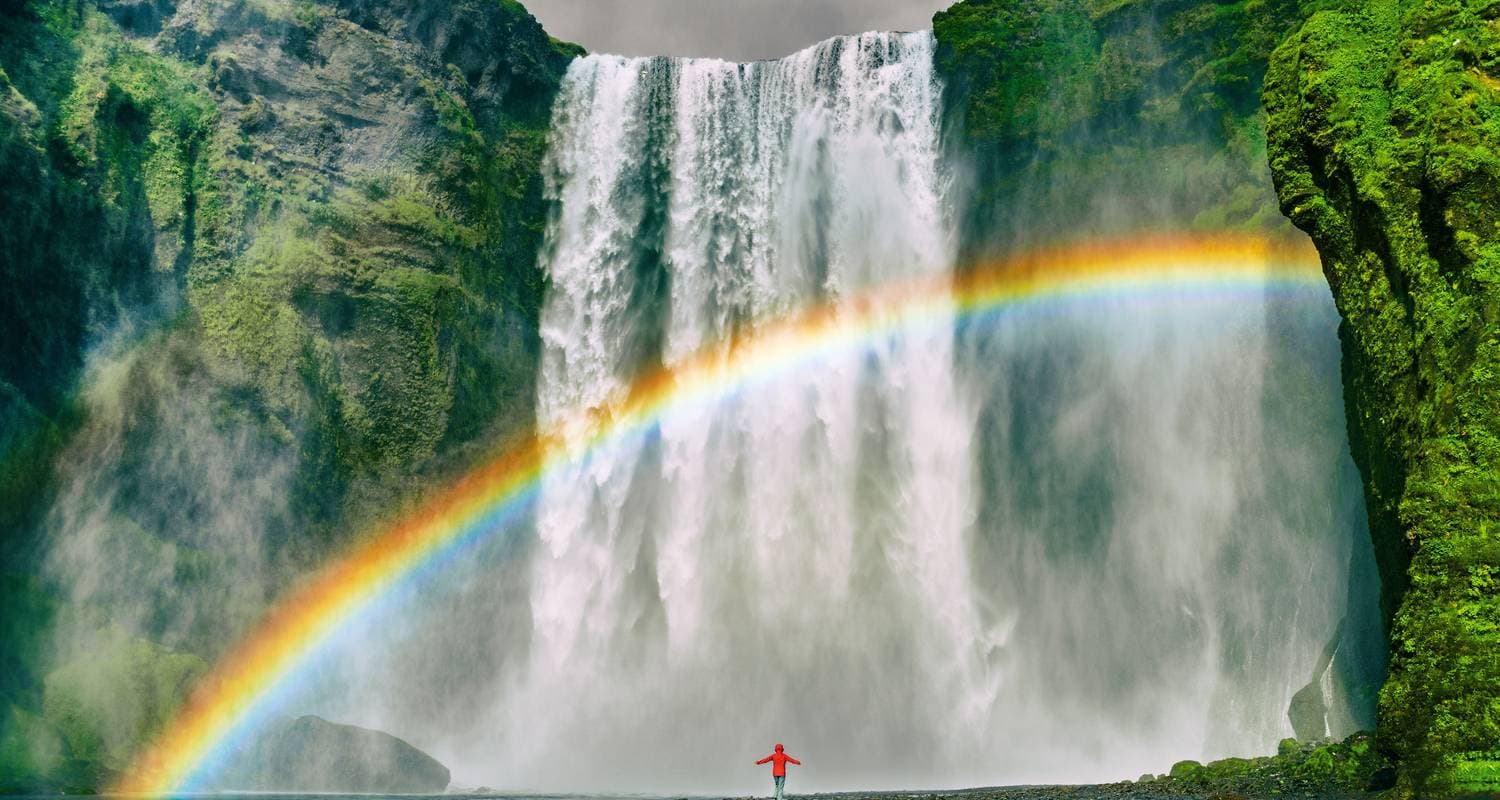
6 Day - Around Iceland Adventure
6 days · Arctic Adventures
4.6· 540 reviews✓ Instant confirmationtour from €1,926
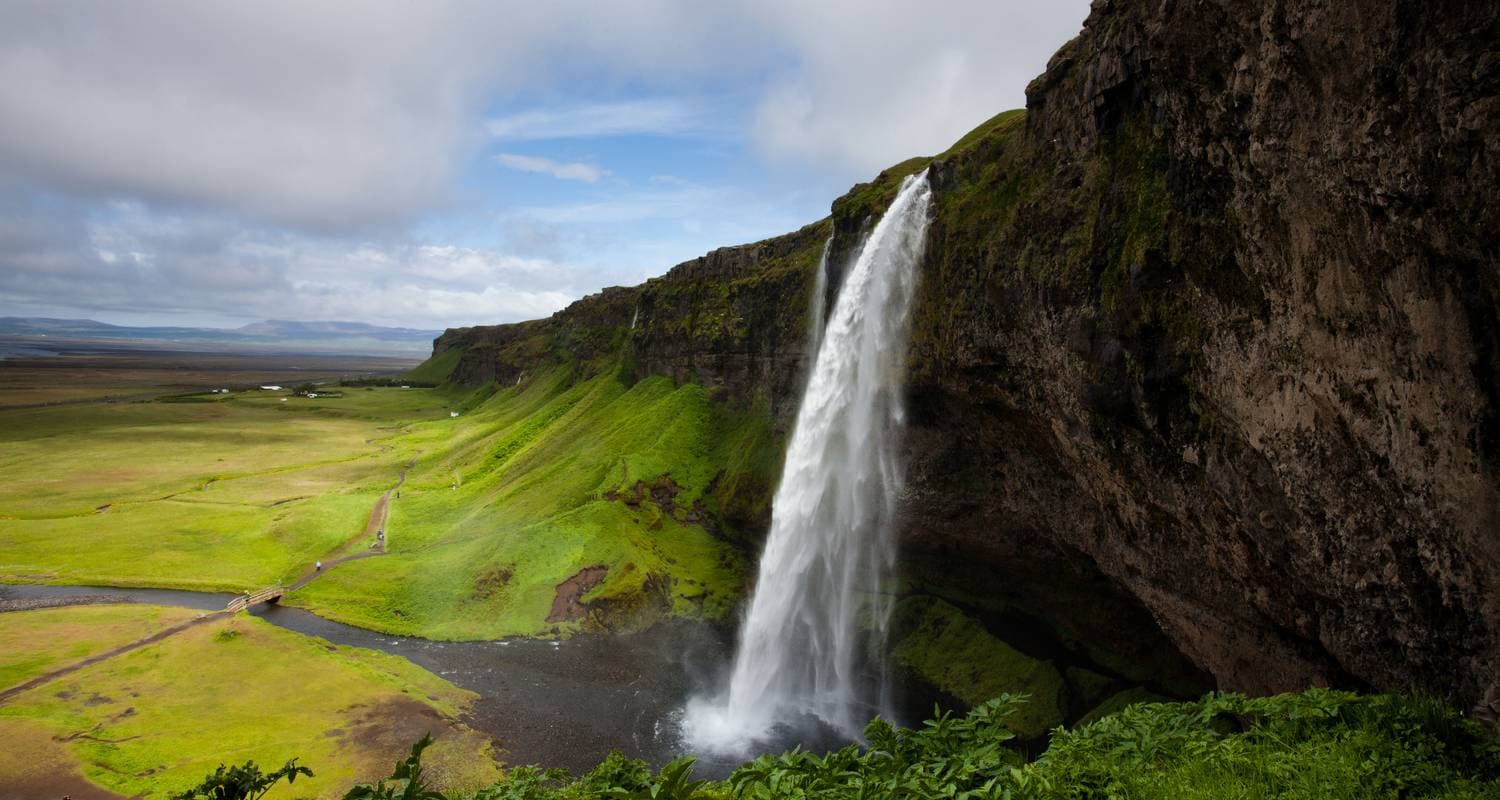
7 Day - Complete Iceland
7 days · Arctic Adventures
4.6· 208 reviews✓ Instant confirmationtour from €2,108
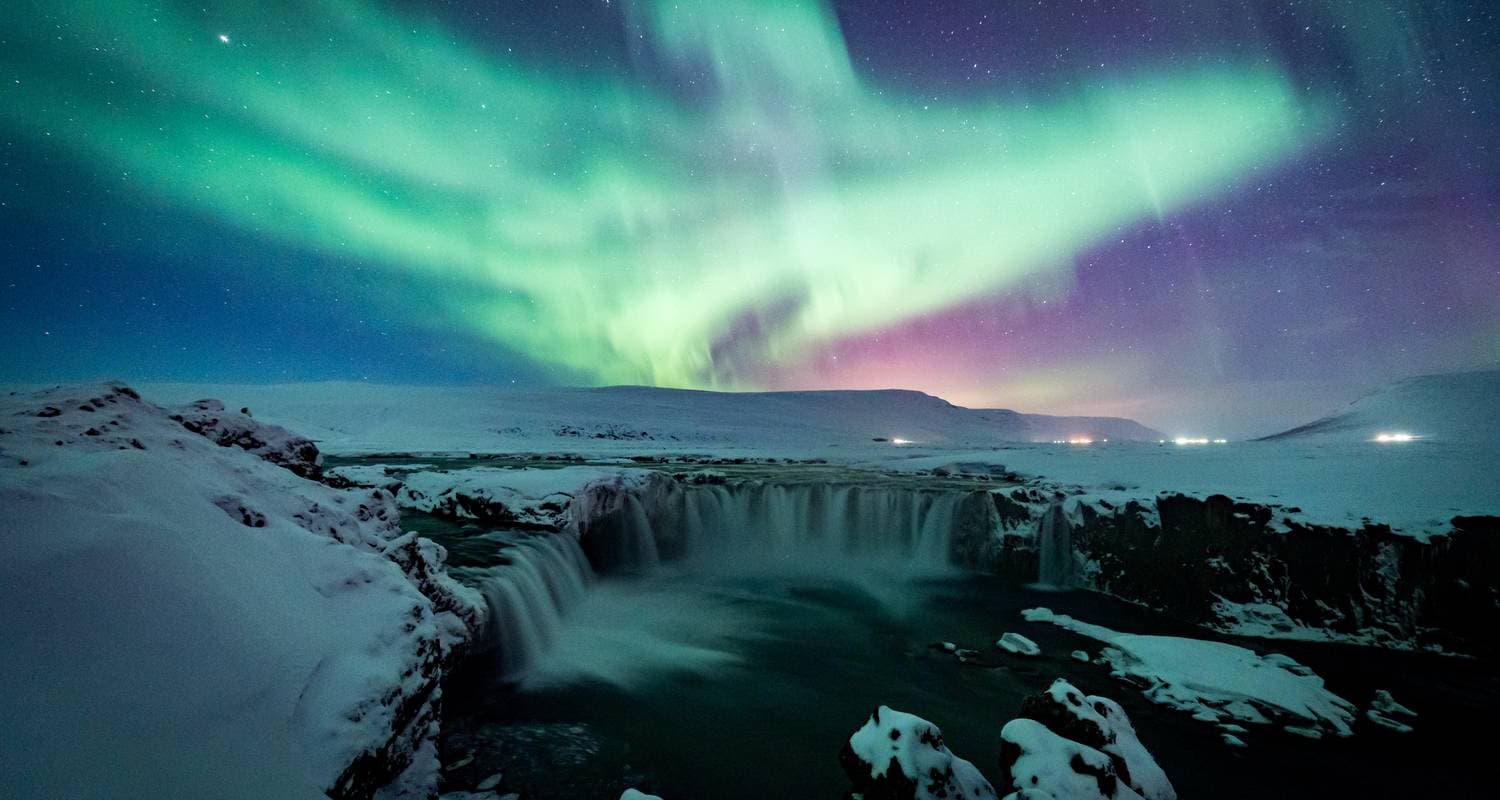
Land of the Northern Lights - 5 days
5 days · On The Go Tours
4.4· 182 reviews✓ Instant confirmationtour from €1,716
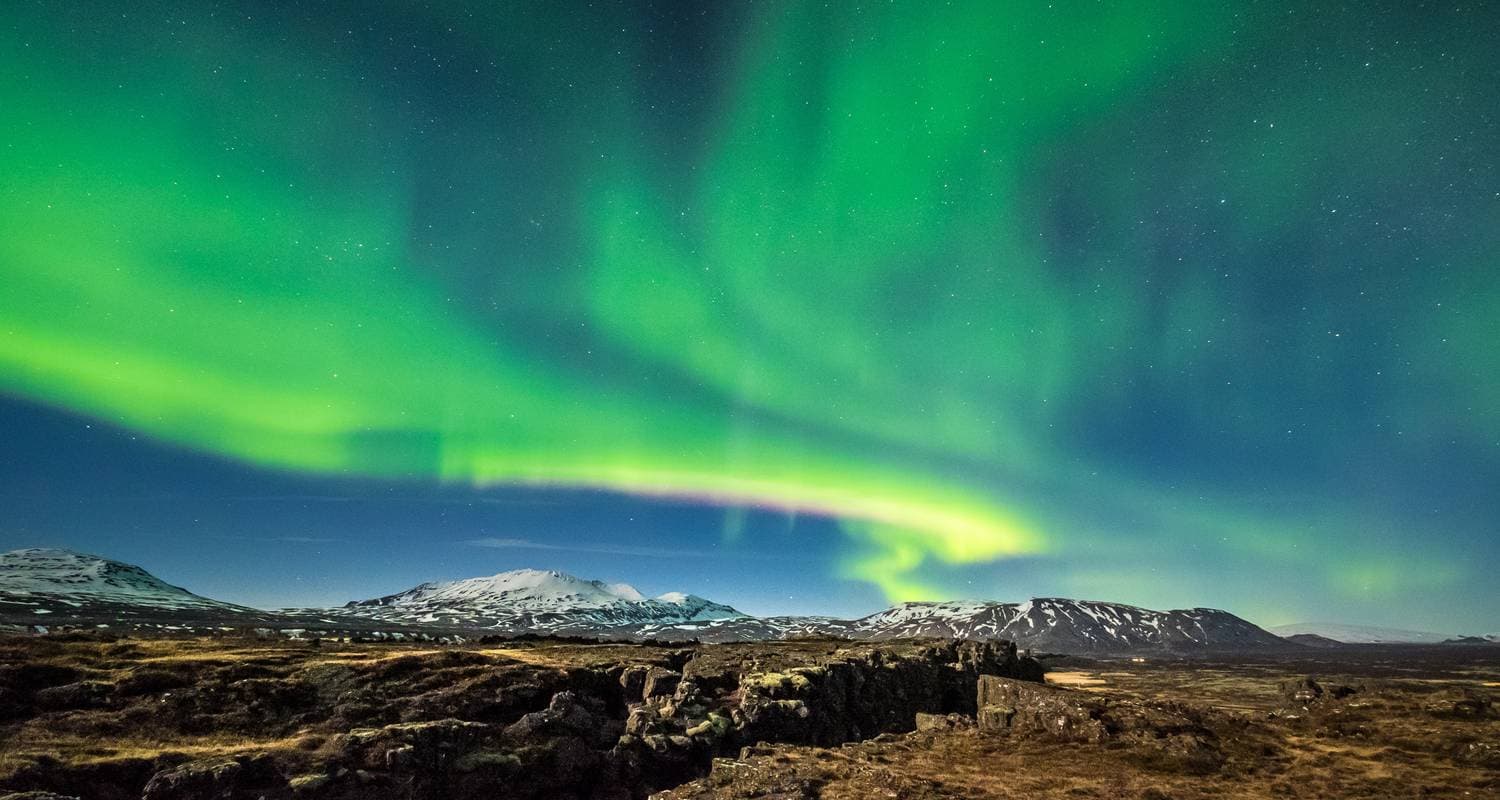
5 Days Land of Northern Lights
5 days · GJ Travel
4.5· 176 reviews✓ Instant confirmationtour from €1,213

3 Day - Golden Circle, South Coast, Jökulsárlón & Ice Cave
3 days · Arctic Adventures
4.4· 169 reviews✓ Instant confirmationtour from €771
5 Day - Snæfellsnes & South Coast
5 days · Arctic Adventures
4.5· 159 reviews✓ Instant confirmationtour from €1,259
Golden Circle vs Ring Road: what your Iceland tour covers
A 3-4 day Reykjavík short break covers the Golden Circle (Þingvellir, Geysir, Gullfoss), the South Coast (Seljalandsfoss, Skógafoss, the black sand at Reynisfjara) and usually a soak at the Blue Lagoon or Sky Lagoon. It runs €600-€950 before flights and makes a grand long weekend, though you only meet the southwest corner of the country.
The full Ring Road is the trip most people are really after. Seven to ten days circling Route 1 sweeps up the South Coast, the Vatnajökull glacier and the iceberg-strewn Jökulsárlón lagoon, the East Fjords, Lake Mývatn and Dettifoss up north, and the Snæfellsnes peninsula out west. Budget €1,400-€2,200 for eight days with a guide.
Self-drive Ring Road packages sit in the middle: the operator lines up your hotels, car and itinerary, then leaves the driving to you. Usually €900-€1,400 per person for seven nights. Cheaper than guided, but you miss the running commentary on the geology and the folklore — which, frankly, is half the magic of the place.
Northern Lights tours: when you actually see them
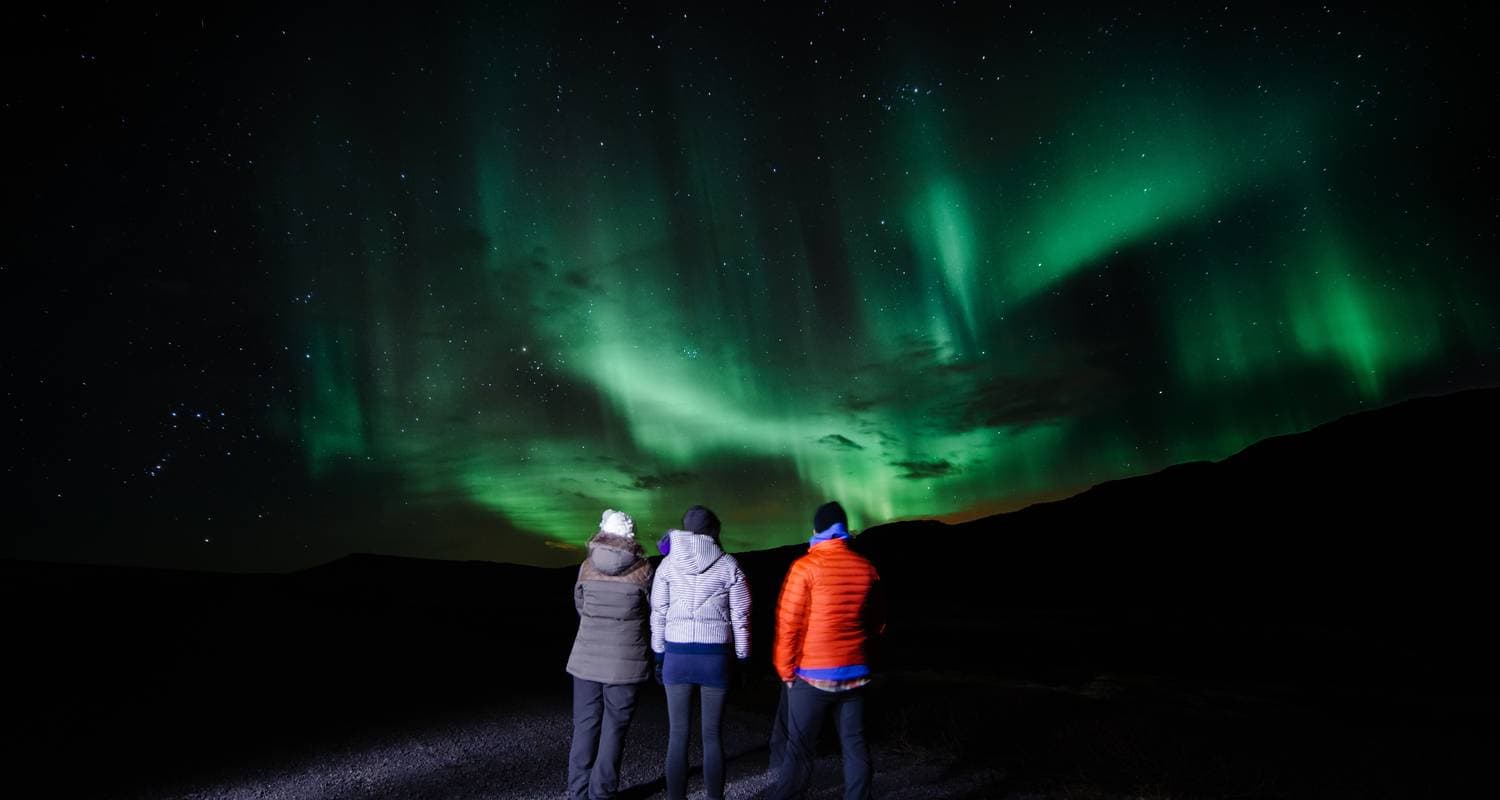
Aurora season runs mid-September to mid-April; outside those months it simply never gets dark enough. Even within the window, a realistic hit rate on a 7-night trip is 50-70% — you need clear skies, lively solar activity and the good fortune to be looking up at the right moment.
The honest steer: book Iceland for Iceland, and treat the lights as the bonus they are. Operators that 'guarantee' a sighting usually just rebook you onto another night if you miss, so read the small print.
The best aurora months that dodge the worst weather are late September, October, February and early March. December and January bring the longest nights but also the fiercest storms and a mean 4-5 hours of daylight, which eats into how much of the country you actually get to see.
Superjeep aurora hunts from Reykjavík cost €150-€220 per person for a four-hour evening. Most winter trips build in two attempts as standard, and a winter Ring Road tour stacks the odds in your favour far better than a single night in the capital ever could.
7, 10 and 14 day Iceland tour packages compared
A 7-day tour gives you the full Ring Road at a fair clip. It works, but you cover roughly 1,400 km, so expect several 4-5 hour driving days. A solid first-timer's choice if you want the headline sights and nothing left over. €1,400-€1,900 per person.
Ten days adds the Snæfellsnes peninsula — Iceland in miniature — and the Westfjords, or simply buys you proper time at the big stops: a whole day at Jökulsárlón, a glacier hike on Vatnajökull, a morning watching for whales at Húsavík. €1,800-€2,500, and the sweet spot if you can spare the days.
Fourteen days is for photographers, hikers, and anyone wanting to fold in the Highlands (open June-September, F-roads and a 4x4 only) or the Laugavegur trek. You get room for the off-piste stuff: Hornstrandir, the Westman Islands, a hot-pot chase up the Trollaskagi peninsula. €2,400-€3,500.
With fewer than seven days, stick to Reykjavík and a 2-3 day south coast loop, and come back another time for the rest. You'll want to.
Summer vs winter Iceland: which season suits which traveller
Iceland is firmly northern-hemisphere, so its calendar mirrors North America and Europe rather than reversing it: June to August is high summer, December to February the depth of winter. If you're coming from Australia or New Zealand, that's worth holding in mind — the Icelandic summer falls right in your own winter.
Summer (June to August) is the easy answer. Daylight stretches to 20-24 hours, temperatures sit at 10-15°C, and every road is open, Highlands F-roads included. You can hike, whale-watch, spot puffins at Látrabjarg and drive deep into the evening light. The trade-offs: peak prices 15-25% above shoulder season, busier sites, and no aurora.
Shoulder season (May, September, early October) is quietly the best deal. Prices ease, the Ring Road is still wide open, September brings autumn colour, and the aurora is back on the table from mid-September. Our pick for value.
Winter (November to March) is dramatic and demanding in equal measure. Aurora hunts, the blue ice caves beneath Vatnajökull (which only form November-March), snowmobiling across glaciers, black beaches piled with frozen surf. But daylight shrinks to 4-7 hours, the F-roads shut, and Ring Road tours lean on a guide and a 4x4 because roads can close with barely any warning. Self-driving is doable in winter, just not for nervous drivers.
Christmas and New Year are the priciest weeks of the Icelandic year — book six months out or steer around them.
What Iceland actually costs on the ground
Let's not pretend otherwise: Iceland is the priciest place we send travellers. A sit-down lunch runs €20-€30, a mid-range dinner €35-€55, a pint €10-€14. Plan on €80-€120 per person per day for food and drink beyond what the tour covers.
Most trips throw in breakfast daily and a few group dinners. Lunches are usually a DIY affair at the petrol-station grills (Olís, N1), which are far better than they have any right to be and cost €12-€18. The supermarkets (Bónus, Krónan) are the thrifty move — a lunch from Bónus runs €5-€8.
Extras worth penciling in: a glacier hike (€130-€180), an ice cave (€180-€250), whale watching (€90-€120), Blue Lagoon entry (€70-€120 by tier), a snowmobile run (€200-€280). Most travellers add two or three of these across a week, so set aside €400-€600.
Return flights on PLAY or Icelandair run €120-€220 from Northern Europe off-peak, €140-€280 from most EU capitals. Bundle here and the live fares from Kiwi stay put until you're ready to commit.
Small-group, self-drive, or private: picking your Iceland tour style
Small-group guided tours of 10-20 people are the obvious call for the winter Ring Road, when conditions turn over by the day and you'll be glad of someone who knows which passes have shut. Intrepid, Nordic Visitor's guided option, G Adventures and Contiki all run Iceland. €1,400-€2,200 for 7-8 days.
Self-drive packages suit confident drivers in summer. The local operators, Nordic Visitor and Iceland Travel, handle every hotel booking, hand you a printed itinerary and a rental car, then turn you loose. You keep the freedom, they soak up the admin. €900-€1,500 for seven nights in summer, €1,100-€1,800 in winter (a 4x4 is compulsory, often on studded tyres).
Private guided tours are the step up for families or two couples travelling together. A private guide-driver runs €400-€600 a day on top of your rooms — well worth it split four ways if you want stops tailored to you.
The photo and adventure specialists — ice caving, glacier trekking, ski touring — keep the groups small and the prices higher at €2,500-€4,000 a week, and they earn it if that's the very reason you came.
Getting to Iceland from the US, Australia, Canada and Europe
Iceland is one of the easiest long-haul trips going, because it sits halfway between two continents and the national carriers have built their whole model around that.
From the US, Iceland is a genuinely short hop and one of the country's biggest markets. Icelandair and PLAY fly direct to Keflavík from Boston, New York (JFK/EWR), Washington, Chicago, Seattle, Denver, Orlando and more, with the East Coast just 5-6 hours out — barely longer than a domestic transcontinental flight. Off-peak return fares land around US$450-$750, climbing to US$800-$1,100 over summer and the holidays. The famous free stopover is the trick worth knowing: Icelandair lets you break a US-to-Europe trip in Reykjavík for up to seven nights at no extra airfare, so plenty of Americans tack Iceland onto a wider Europe trip for the price of one ticket.
From Australia, there's no quick way — count on 22-26 hours via a Gulf hub (Doha, Dubai, Abu Dhabi on Qatar, Emirates or Etihad) or an Asian one, then a final leg into Keflavík through London, Copenhagen or another European gateway. Return fares run roughly A$2,200-$3,500 depending on season. It's a long road, so most Australians fold Iceland into a longer European summer rather than flying all that way for a single week.
From Canada, Icelandair flies direct from Toronto year-round and seasonally from Montreal and Vancouver; reckon on 5-6 hours from the east and C$600-$1,000 return off-peak, more in summer.
From the UK and Europe, Keflavík is about 3 hours from London, Dublin or Manchester and 3.5-4 from the central-European capitals, on Icelandair, PLAY, easyJet, Wizz Air and others. Off-peak returns sit at €120-€280, more over Christmas and high summer.
Whichever airport you start from, the live bundle on Multiday.tours prices the flight from your own home airport, in your own currency, right beside the tour, so the total you see is the total you'd actually pay.
Ready to price your trip?
Enter your origin airport and month — we'll search live flight and tour prices and give you one bundled total per person.
Find combosCommon questions
Are Iceland tours worth it or is self-drive cheaper?
In summer, self-drive saves €300-€600 a head over a week, and the Ring Road is an easy, low-stress drive June-August. In winter the sums flip: 4x4 rentals roughly double, roads shut with little warning, and a single storm-day off-plan can cost you more than a guide would have. Rule of thumb — self-drive May-September if you're confident on gravel F-roads, guided November-March, and either works in shoulder season depending on your appetite for risk and whether you fancy the geology commentary along the way.
Can I see the Northern Lights on a 7-day Iceland tour?
Go between mid-September and mid-April and a realistic hit rate over seven nights is 50-70%. You need dark skies, clear weather and solar activity to line up at once. A Ring Road tour spreads you across the country, so you get more clear-sky chances than you would camped out in Reykjavík alone. Treat the aurora as the bonus, not the reason — the landscapes stand on their own two feet. Most winter trips include two or three dedicated evening attempts at no extra cost.
How much does a week in Iceland cost with flights?
All-in for seven days, roughly €1,700-€2,400 per person from most European cities. That's a guided small-group tour at €1,400-€1,900 (accommodation, guide, transport and most breakfasts), return flights at €150-€280, plus €600-€800 for lunches, dinners, drinks and two or three paid activities like a glacier hike or Blue Lagoon entry. Self-drive packages can shave €300-€500 off the tour element, though some of that comes back at the fuel pump and the dinner table.
Do I need a 4x4 for Iceland in winter?
Yes if you're self-driving November through March, and for any Highland F-road at any time of year. Winter conditions on the Ring Road can swing from clear to whiteout inside an hour, especially along the East Fjords and the north coast. Most rental companies won't let a 2WD off the paved roads, and several ban 2WD on the Ring Road outright in deep winter. Guided tours run 4x4 mini-coaches or superjeeps, which is one honest reason winter trips cost more.
Is Iceland good for families with kids?
Yes, and especially in summer. The Ring Road is low-stress driving, most waterfalls and black beaches are a short stroll from the car park, and kids tend to be spellbound by the geology — geysers, puffins, whales off Húsavík. Skip the ice caves and glacier hikes for under-10s, as most operators set minimum ages of 8-10. Family specialists like Intrepid Family and Exodus Family run dedicated Iceland trips in July and August with the activity mix pitched right for younger travellers, usually €1,600-€2,200 per person.
What should I pack for an Iceland tour?
Waterproof hiking boots are non-negotiable, whatever the month. Think in layers: a base layer, a fleece or wool mid, and a properly waterproof shell jacket and trousers. Iceland rains sideways on half its days and the weather can turn over four times in an afternoon. Pack hats and gloves even in June, and a swimsuit and quick-dry towel for the hot pots and lagoons. In winter, add thermal base layers, a proper insulated jacket (down or synthetic) and traction cleats for icy paths (€10-€20 at the outdoor shops in Reykjavík). Sunglasses too, for the glare off glacier and snow.
Related destinations
- Morocco Multi-Day Tours with Flights from €700Nights in the Merzouga dunes, mornings lost in the Fes medin…
- Peru Multi-Day Tours with Flights from €1,900Machu Picchu at sunrise, the Sacred Valley, an Amazon lodge.…
- Egypt Multi-Day Tours with Flights from €1,300Sail the Nile, stand at the pyramids, sleep out under the Wh…
Related tour styles
Pick by trip length
Plan this trip from your city
- Multi-Day Tours from New York with Flights IncludedMulti-day tours from New York with flights included — one US…
- Multi-Day Tours from Los Angeles with Flights IncludedPackage tours from Los Angeles with flights included — one U…
- Multi-Day Tours from Sydney with Flights IncludedLeaving Australia means a long-haul flight whether you like …
- Multi-Day Tours from Toronto with Flights IncludedPearson is Canada's biggest long-haul hub, and with a weak l…
- Multi-Day Tours from London with Flights IncludedBuilt for London travellers: LHR for long-haul, LGW for Euro…
- Multi-Day Tours from Dublin with Flights IncludedPackage tours from Dublin with flights included — one total …
- Multi-Day Tours from Vienna with Flights IncludedVienna is a central-European hub on Austrian Airlines with d…
Deeper reading
- The Perfect 8-Day Iceland Itinerary (Route, Day by Day)Eight days is the Iceland sweet spot: one full loop of the R…
- How Much Does an Iceland Tour Cost? The Honest All-In NumberA week to ten days in Iceland runs roughly €1,700–€3,000 (≈$…
- The Best Time to Visit Iceland (Month-by-Month, 2026)It comes down to one trade: aurora and ice caves in the dark…