
Vietnam Multi-Day Tours with Flights from €650
Sail Halong Bay, drift through Hoi An by lantern-light, wake to a Mekong sunrise — all bundled into one price with your flight from Europe.
Edited by Multiday.tours editor
- ✓10-day Hanoi-to-Saigon tours from €600 land before flights
- ✓Return flights from Europe to Hanoi or Saigon €550-€900 in shoulder season
- ✓Best months: mid-February to early April (dry in all three regions)
- ✓Halong Bay overnight cruise included on almost every multi-day tour
- ✓Catalog operators: Realistic Asia, Legend Travel Group, Vietnam Tour Fun
- ✓14-day full-country trips from €900 land (Realistic Asia Best Of Vietnam)
For sheer reward against what you pay to get there, nothing long-haul beats Vietnam in 2026. A typical 10-day small-group tour with guide, domestic flights, an overnight Halong Bay cruise and most breakfasts lands from around €650-€1,100 per person on the land side. Add a return flight from Europe and you're at €1,400-€2,100 all-in for a proper journey down the length of the country. Local specialists like Realistic Asia, Legend Travel Group, Vietnam Tour Fun and Wonderscape Travel run daily departures out of Hanoi, while international names like G Adventures and Intrepid lay a more polished group experience over the same ground. Below you'll find honest price ranges, sample 10 and 14-day routes, how the monsoon shifts region by region, and which style of trip suits which traveller.
The tours doing the heavy lifting here
Prices are tour-only — add flights for the real total. You book the tour itself on TourRadar.

Vietnam Intro 12 Day
12 days · INTRO Travel
4.8· 1,863 reviews✓ Instant confirmationtour from €1,540
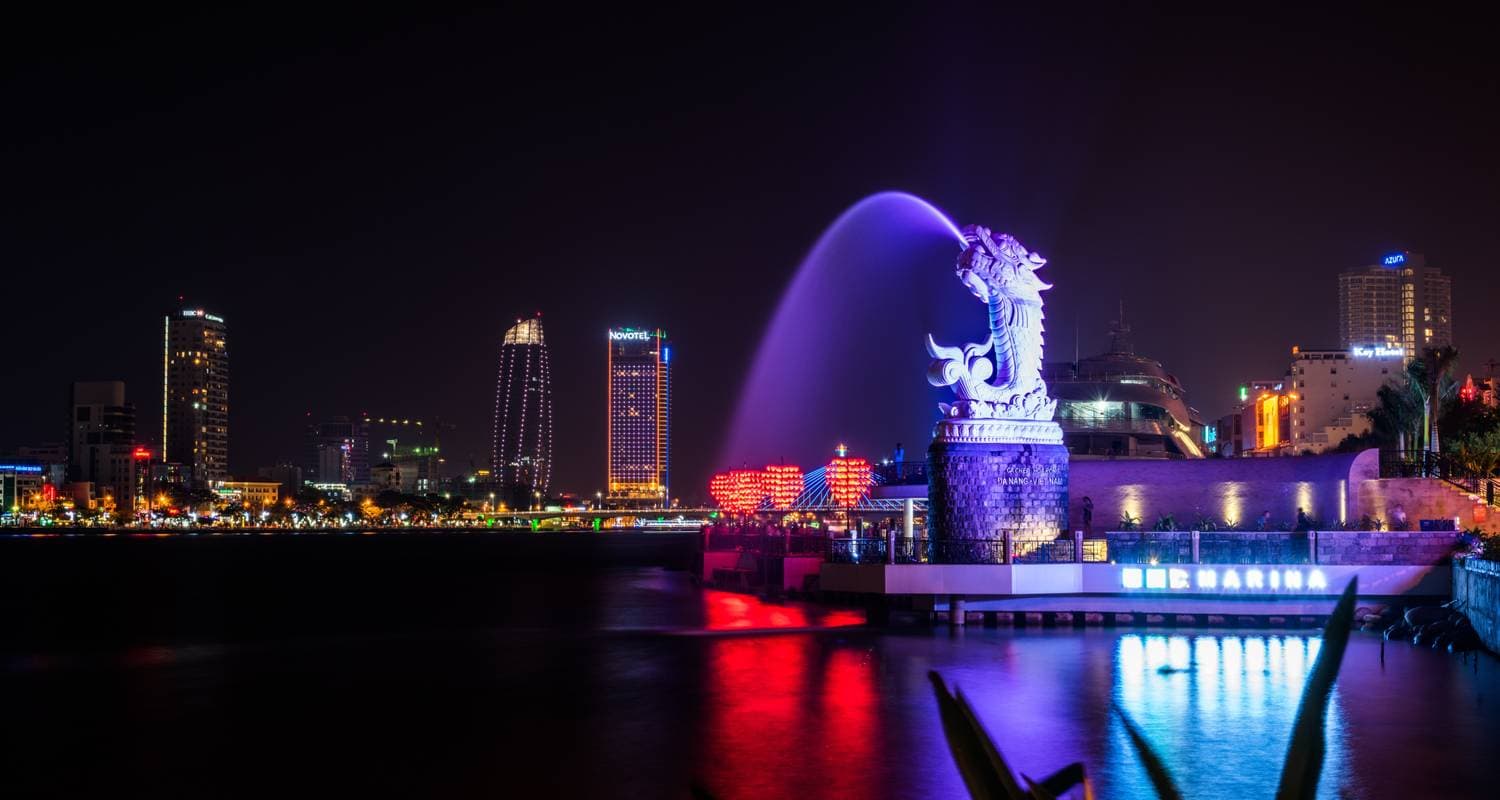
Essential Vietnam & Cambodia
17 days · G Adventures
4.9· 575 reviews✓ Instant confirmationtour from €2,345

Vietnam Intro 9 Day
9 days · INTRO Travel
4.8· 395 reviews✓ Instant confirmationtour from €1,154
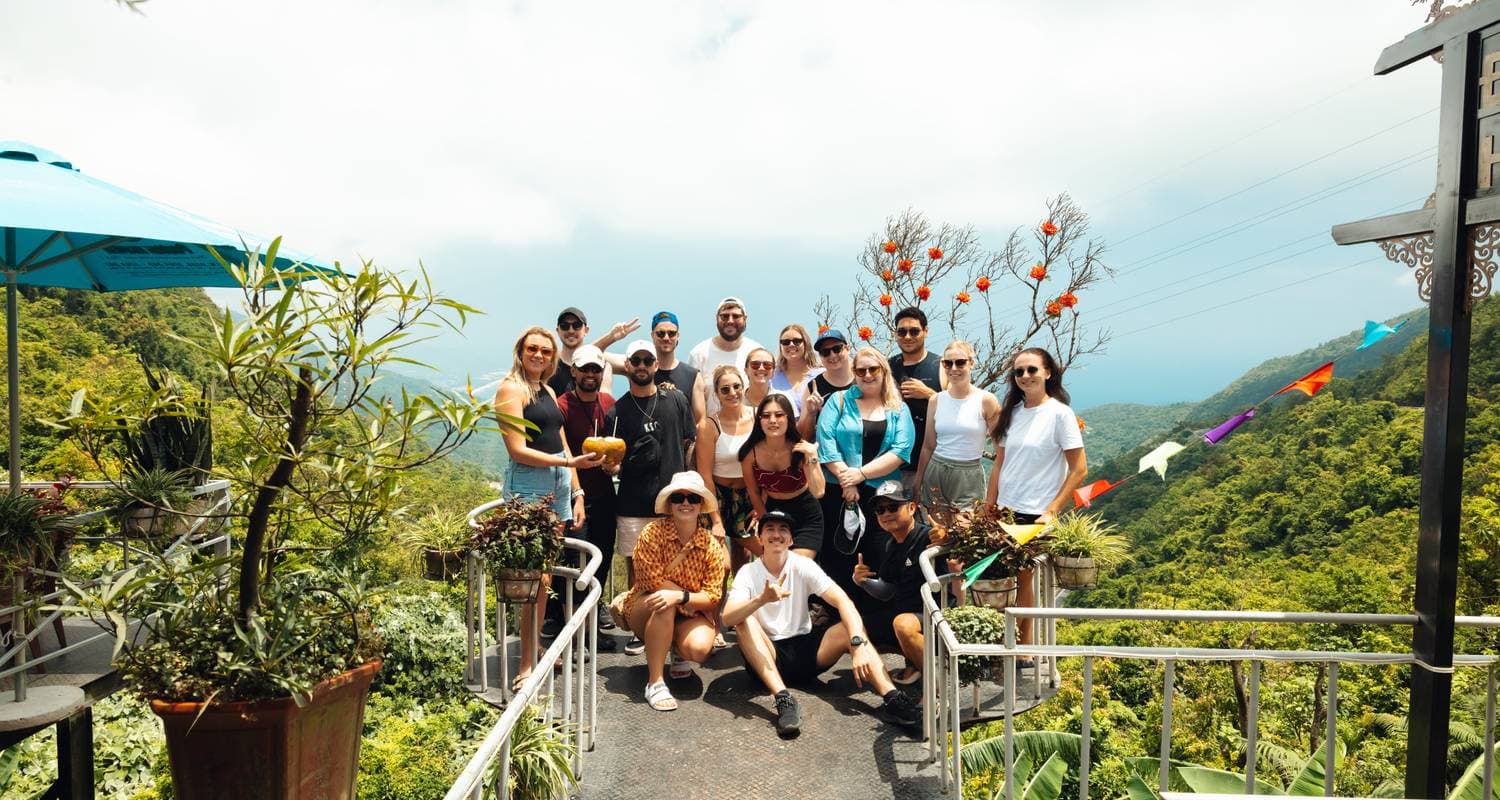
Vietnam Classic 12 Day - One Life Adventures
12 days · One Life Adventures
4.8· 360 reviews✓ Instant confirmationtour from €1,605
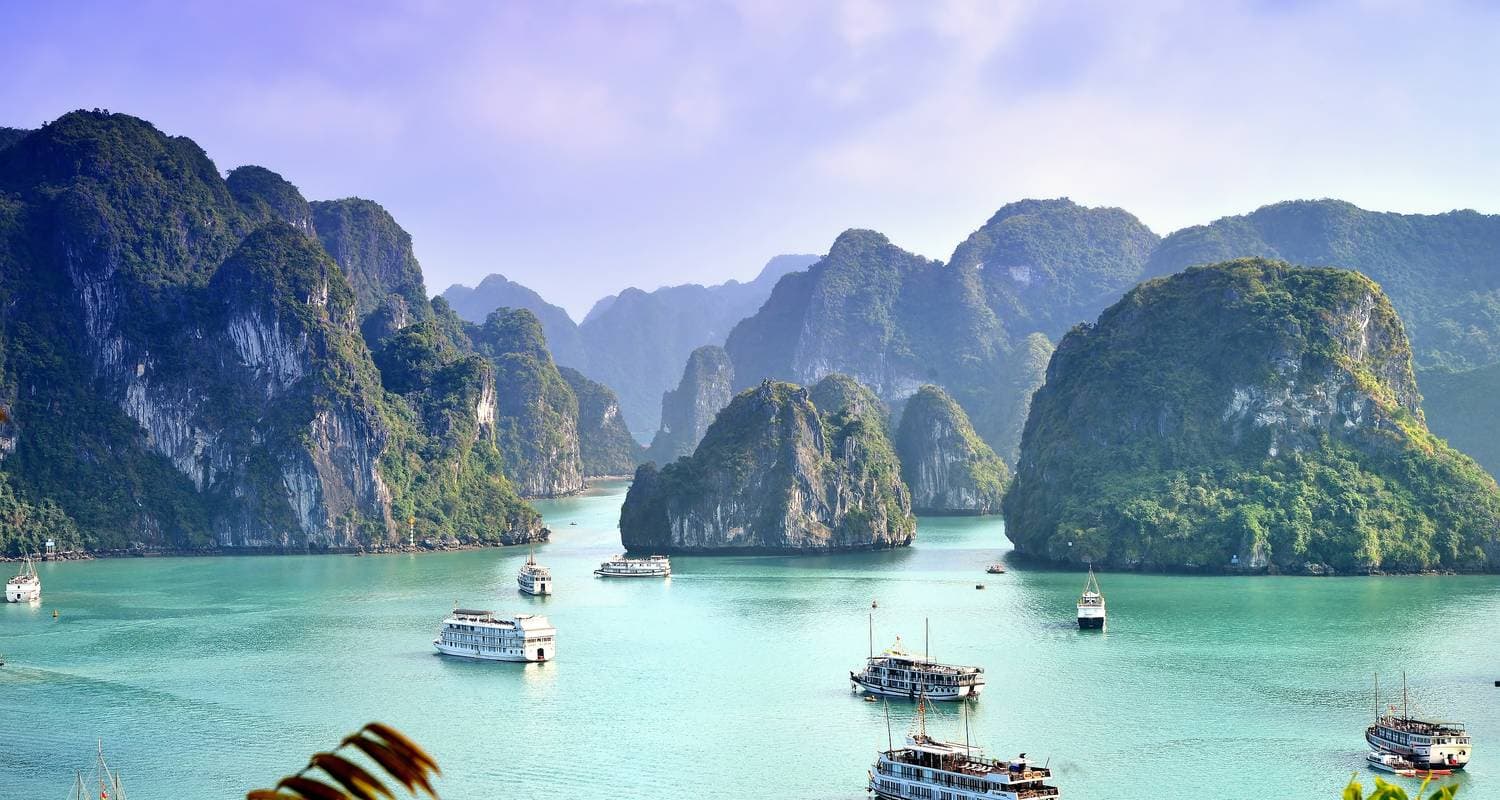
Vietnam Express Southbound
10 days · Intrepid Travel
4.8· 303 reviews✓ Instant confirmationtour from €1,371
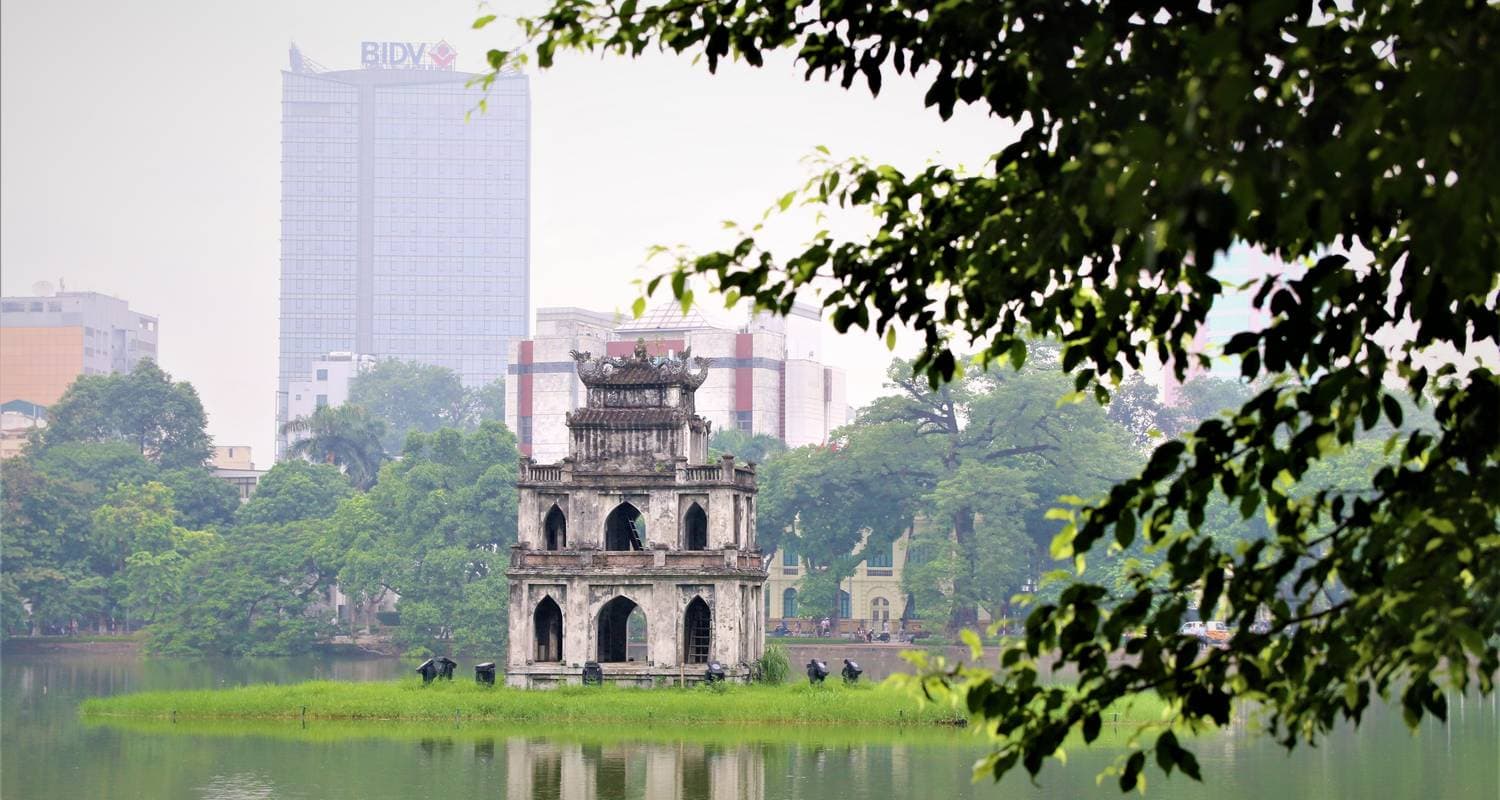
Classic Vietnam: Hanoi to Ho Chi Minh City
10 days · G Adventures
4.9· 228 reviews✓ Instant confirmationtour from €1,177
What a 10 to 12 day Vietnam tour actually covers
The classic trip runs the length of the country, top to bottom: two nights in Hanoi, an overnight Halong Bay cruise, an internal flight to Hue or Danang, two or three nights settled into Hoi An, then a flight to Saigon and a day out in the Mekong Delta. Most 10-day routes follow exactly this spine and cost €600-€1,200 on the land side before your flight from Europe.
A few trips consistently win travellers over: Vietnam Tour Fun's "Astonishing Vietnam in 11 Days" at around €640, Legend Travel Group's 10-day Hanoi-departure package at roughly €810, and Hoi An Express's 10-day South-to-North Cultural Odyssey at €1,100. All three include the domestic flights, which genuinely matters — booking Hanoi-Danang and Danang-Saigon yourself on VietJet or Vietnam Airlines adds €80-€150 per person.
You'll clock 6-10 km on a busy day weaving through the old quarters, take breakfast at the hotel and sort lunch and dinner yourself (€5-€15 at a good street-food spot). The overnight Halong junk is almost always thrown in with full board. Vietnam is wonderfully cheap on the ground: €30-€50 a day covers meals, drinks and the odd extra, so long as you're not chasing rooftop cocktails.
7 days vs 14 days vs north-only or south-only
Seven or eight days is tight. You can do Hanoi, Halong and Hoi An and skip Saigon, or Saigon, the Mekong and Hoi An and skip Hanoi — either makes a fine first taste. Land cost €450-€750. The catch is you only see half the country, and a good slice of the time goes on short internal flights.
Ten days is where most travellers land, and where the choice is widest. Realistic Asia's "Amazing Vietnam Super Save" at €655 and Wonderscape Travel's 10-day daily-departure package at €605 are the entry point; mid-market 10-day trips run €800-€1,200. The length lets you walk the full Hanoi-Halong-Hue-Hoi An-Saigon-Mekong arc without ever feeling hurried.
Fourteen days is the sweet spot if the budget stretches. Realistic Asia's "Best Of Vietnam In 14 Days" at around €900 land is the one to measure against. You add the rice terraces and a hill-tribe homestay around Sapa in the north, or beach time on Phu Quoc in the south, or the karst country of Ninh Binh on the way out of Hanoi. If this is your one shot at Southeast Asia, stretch to fourteen.
North-only (Hanoi, Halong, Sapa, Ninh Binh) suits travellers drawn to mountains and big landscapes, and works year-round if you pack layers. South-only (Saigon, Mekong, Dalat, Phu Quoc) is the one for beach and food, and runs brighter and hotter. Choose by the weather window rather than by gut feeling — see the seasons section below.
Group tour vs private vs motorbike or cycling trip
Small-group tours of 10-16 people are the default, and the best value. International operators like G Adventures and Intrepid run polished 10-15 day itineraries at €1,200-€2,000 land, with Western-style trip leaders and a step up in hotels. The local specialists cover the same ground for considerably less: Realistic Asia, Legend Travel Group, Vietnam Tour Fun, PrestiGo Asia and Indochina Today Travel all sit in the €600-€1,300 band for 10-14 days, using the very same guides, boats and restaurants — you simply get a less branded trip and a local rep in place of a Western tour leader.
Private tours are unusually good value here. Two people sharing a private guide and driver through Hoi An Express or PrestiGo Asia typically pay €1,200-€1,800 per person for ten days — not much over a group trip, and you set the pace, skip the 7am bus calls and can linger over lunch.
If you'd rather be active, SpiceRoads and Exodus run supported cycling trips along the Ho Chi Minh Highway and the coast road from Hue to Hoi An, usually €1,800-€2,800 for 8-12 days with bikes, support van and a mechanic. Motorbike tours over the Hai Van Pass and the northern loops out of Ha Giang run €900-€1,600 for 7-10 days with Easy Riders or Onyabike. Much Better Adventures runs shorter active trips pitched neatly at working professionals short on annual leave.
When to visit Vietnam and what the monsoon does to your trip
Vietnam runs 1,650 km top to tail, and the weather breaks into three zones that stubbornly refuse to line up. This is the single most important thing to get right when you plan.
The north (Hanoi, Halong, Sapa) has a proper winter. October to December is the sweet spot: dry, 20-25°C, clear skies over Halong Bay. January and February turn cold and misty — Halong loses its postcard sheen and Sapa can drop to 5°C. March to May is warm and easy. June to September is hot (35°C and up) and wet, with a real chance of typhoons shutting Halong Bay for two or three days at a stretch.
The centre (Hue, Hoi An, Danang) does the opposite. February to August is dry and hot; September to December is the wet season, and the flooding risk in Hoi An through October and November is no small thing — the old town has gone under more than once in recent years.
The south (Saigon, Mekong, Phu Quoc) splits into dry (November to April) and wet (May to October). Wet-season rain is usually a heavy late-afternoon burst rather than all-day grey, so it's far more livable than it sounds.
The one window that works just about everywhere is mid-February to early April: shoulder-season prices, broadly dry weather the length of the country, and Tet (Vietnamese New Year, 17 February in 2026) to either lean into or sidestep on purpose, since some businesses close for up to a week.
Flights to Vietnam: getting there from wherever you start
Vietnam has two international gateways — Hanoi (HAN) in the north and Ho Chi Minh City (SGN, still called Saigon) in the south — and your trip flows best north-to-south, so the smart move from anywhere is an open-jaw ticket: into HAN, out of SGN. It saves a whole day of doubling back and rarely costs more than a round-trip.
From Australia, this is your patch. Vietnam is close — closer than most Aussies realise — and that's the whole selling point. Vietnam Airlines, Jetstar and Vietjet fly Sydney and Melbourne direct to Saigon or Hanoi in about 9 hours, and Qantas has joined the direct game on some routes. One-stop options through Singapore (Scoot, Singapore Airlines), Bangkok or Kuala Lumpur are plentiful and often cheaper. Return economy fares from Sydney or Melbourne run roughly A$700-A$1,100 in the shoulder months, climbing to A$1,200-A$1,600 over the December-January summer holidays. For the price and the short hop, Vietnam is one of the best-value long-ish trips going from Australia.
From the US, the West Coast has a real edge. Los Angeles, San Francisco and Seattle reach Saigon or Hanoi in about 17-19 hours with one stop in East Asia (Korean Air via Seoul, EVA Air via Taipei, ANA or Japan Airlines via Tokyo, Cathay via Hong Kong), and crucially the fares are lower and the routing shorter than flying to most of Europe — Southeast Asia genuinely is the easier long-haul from California. Expect US$750-US$1,100 return from the West Coast in shoulder season, US$1,100-US$1,600 at peak. From the East Coast (New York, Washington, Boston) you're looking at 20-22 hours and US$900-US$1,400, routed either across the Pacific or via the Gulf (Qatar, Emirates).
From Canada, Vancouver mirrors the US West Coast — one stop in East Asia, around 17-19 hours, roughly C$1,000-C$1,500 return. Toronto and Montreal route via Asia or the Gulf at C$1,200-C$1,800.
From the UK and Europe, Vietnam Airlines flies direct from London, Paris and Frankfurt in 11-12 hours, while one-stop routings via the Gulf (Qatar, Emirates, Etihad) or East Asia (Singapore Airlines, Cathay, Korean Air) tend to price about the same in a nicer cabin. Shoulder-season returns run €550-€850, climbing to €900-€1,300 over Christmas and Tet.
Whatever your home airport, the bundle prices the flight live in your own currency the moment you search, so the total — open-jaw routing and all — shows right beside the tour price before you commit to either booking. Kiwi.com handles the routing behind the scenes.
Ready to price your trip?
Enter your origin airport and month — we'll search live flight and tour prices and give you one bundled total per person.
Find combosCommon questions
Is Vietnam safe for tourists in 2026?
Yes. Vietnam is one of the safer corners of Southeast Asia — violent crime against tourists is rare and the political picture is stable. The everyday annoyances are motorbike bag-snatches in Saigon's District 1 and taxi overcharging at the airports (use Grab rather than street cabs). The real hazard is the traffic: crossing the road in Hanoi or Saigon takes a steady nerve and a bit of faith. Foreign ministry advice for Ireland, the UK and most EU states is to exercise normal precautions. Solo women consistently tell us Vietnam feels comfortable and unhassled next to its neighbours.
How much does a 10-day Vietnam tour cost with flights?
Reckon on €1,400-€2,100 per person all-in from most European cities. That covers a small-group land tour at €650-€1,100 (guide, domestic flights, the Halong Bay overnight, hotels and breakfasts — Wonderscape Travel, Realistic Asia and Legend Travel Group all sit in this band), return flights from Europe at €550-€900, the e-visa at around €23, tips of €50-€80, and €250-€400 of spending money for lunches, dinners, drinks and a few extras. International brands like G Adventures and Intrepid run €500-€800 more for essentially the same ground.
Is an overnight Halong Bay cruise worth it?
Yes, and this is no place to cut corners. The day-trip out of Hanoi is rushed and crowded; an overnight junk of 10-20 cabins gives you kayaking in the late afternoon once the day boats have gone, a squid-fishing session after dinner and tai chi on deck as the sun comes up. Budget junks run €90-€130 per person with full board; mid-range boats like Paradise, Bhaya or Orchid go €180-€260; the luxury ones push past €350. Most trips fold an overnight cruise into the headline price. Given the choice, pay to upgrade to a smaller boat (16 cabins or fewer) and slip across from Halong proper to Lan Ha Bay, where the crowds thin out.
When is the cheapest time to visit Vietnam?
May, June and September. Tour prices fall 20-30% against the November-to-March peak, and flights from Europe drop under €600 return. The catch is the weather: heavy afternoon storms in the south, a real typhoon risk through the centre and north, and Halong Bay shutting now and then for a day or two. Late April and early October are the shoulder sweet spots, with near-peak conditions for 10-15% less. Tet (17 February 2026) is pricey and chaotic — book around it rather than straight through it.
Is Vietnam a good choice for solo travellers?
Very much so. Vietnam is one of the easiest Southeast Asian countries to travel solo, and small-group tours are full of people doing exactly that — expect 30-50% of any Intrepid or G Adventures departure to be travelling alone. Single supplements are modest (€150-€350 on a 10-day tour), and most operators will pair you with a same-sex roommate to waive it if you ask. Local specialists like Realistic Asia and Vietnam Tour Fun price single supplements lower again. Hanoi and Hoi An both have lively cafe and hostel scenes that make it easy to fall in with other travellers on your free days.
What should I pack for a Vietnam tour?
Lightweight, quick-drying clothes in neutral colours — you'll sweat clean through cotton. A light waterproof shell is non-negotiable in shoulder season, as the afternoon storms come on fast. Sandals or lightweight trainers for the cities, plus proper walking shoes if Sapa or Ninh Binh are on the cards. A warm layer for the Halong Bay mornings on deck, and for Sapa if you're heading north between December and February. Modest clothing covering shoulders and knees for temples and pagodas. Pack a refillable water bottle, mosquito repellent with DEET, basic stomach medication and about €100-€150 in small USD notes for the visa, tips and the occasional emergency taxi — ATMs are everywhere but now and then go offline.
Related destinations
- Thailand Multi-Day Tours with Flights from €1,050Bangkok temples, Chiang Mai elephants, Krabi limestone karst…
- Cambodia Multi-Day Tours with Flights from €730Sunrise over Angkor Wat, the weight of Phnom Penh's history …
- Sri Lanka Multi-Day Tours with Flights from €790Climb Sigiriya, ride the blue train through tea country to E…
Related tour styles
- Small Group Tours with Flights IncludedShared departures of 10-16 travellers. Expert guides, fixed …
- Adventure Tours with Flights IncludedTrek, cycle, paddle and climb on guided multi-day trips. Rea…
- Food and Wine Tours with Flights IncludedMulti-day culinary tours with small groups, winery visits an…
- Christmas & New Year Tours with Flights IncludedSkip the seasonal clamour at home. December departures to so…
Pick by trip length
Plan this trip from your city
- Multi-Day Tours from New York with Flights IncludedMulti-day tours from New York with flights included — one US…
- Multi-Day Tours from Los Angeles with Flights IncludedPackage tours from Los Angeles with flights included — one U…
- Multi-Day Tours from Sydney with Flights IncludedLeaving Australia means a long-haul flight whether you like …
- Multi-Day Tours from Toronto with Flights IncludedPearson is Canada's biggest long-haul hub, and with a weak l…
- Multi-Day Tours from London with Flights IncludedBuilt for London travellers: LHR for long-haul, LGW for Euro…
Deeper reading
- The Best Time to Visit Vietnam (Month-by-Month, 2026)Late October to April is the window, but the north/south mon…
- How to Choose a Guided Tour: A Practical Buyer's GuideWhat to ask before you book. Group size, pace, inclusions, o…
- The Perfect 10-Day Vietnam Itinerary (Hanoi to the Mekong)Ten days is enough to ride the whole length of Vietnam, top …
- How Much Does a Vietnam Tour Cost? (The Honest All-In Number)A 10-day Vietnam tour with flights runs around €1,400–€2,100…
- What a Vietnam Tour Costs from Los Angeles, Flights IncludedThirty-four Vietnam tours priced with a real LAX fare attach…
- What a Vietnam Tour Costs from San Francisco, Flights IncludedThirty-nine Vietnam tours priced with a real SFO fare attach…