
What a Japan Tour Costs from Chicago, Flights Included
Chicago is the most expensive American door to Japan — €572 (≈$622) above San Francisco. Here is the real total, and when flying west first is worth it.
By Adam, founding editor · Updated 1 September 2026
- ✓Cheapest complete Japan trip from O'Hare: €2,068 (≈$2,248) per person
- ✓Median complete trip: €3,479 (≈$3,782) — the highest of eight US gateways
- ✓€572 (≈$622) more than San Francisco for the identical holiday
- ✓On the cheapest combination the flight cost €1,452 (≈$1,578) against a €616 (≈$670) tour
There is no polite way to present this one. Of the eight American gateways we price, Chicago is the most expensive from which to reach Japan — last on the cheapest complete trip and last on the median. We priced 39 Japan tours against live O'Hare return fares in July 2026 for October departures. The cheapest complete trip came to €2,068 (≈$2,248) and the median to €3,479 (≈$3,782), against San Francisco's €1,496 (≈$1,626) and €3,124 (≈$3,396). That is a €572 (≈$622) penalty at the floor. On the cheapest combination the flight alone cost €1,452 (≈$1,578) — nearly two and a half times the €616 (≈$670) tour it was attached to. For Midwesterners this is the one route in our index where the departure airport genuinely deserves to be a decision rather than an assumption.
The Japan tours in these Chicago totals
Prices are tour-only — add flights for the real total. You book the tour itself on TourRadar.
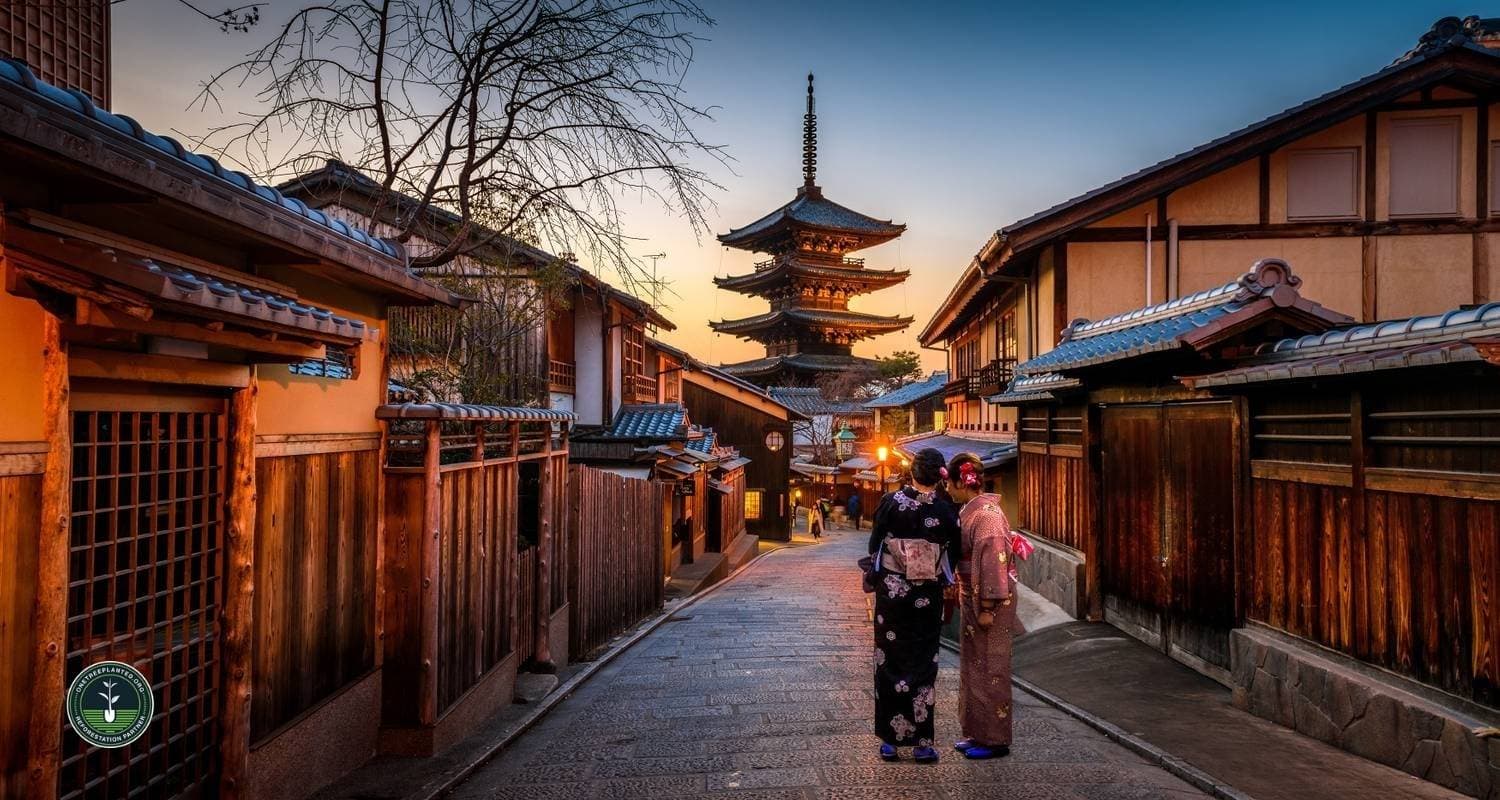
Japan Classic 10 Day - One Life Adventures
10 days · One Life Adventures
4.8· 2,287 reviews✓ Instant confirmationtour from €2,433

Japan Classic 14 Day - One Life Adventures
14 days · One Life Adventures
4.9· 970 reviews✓ Instant confirmationtour from €3,105
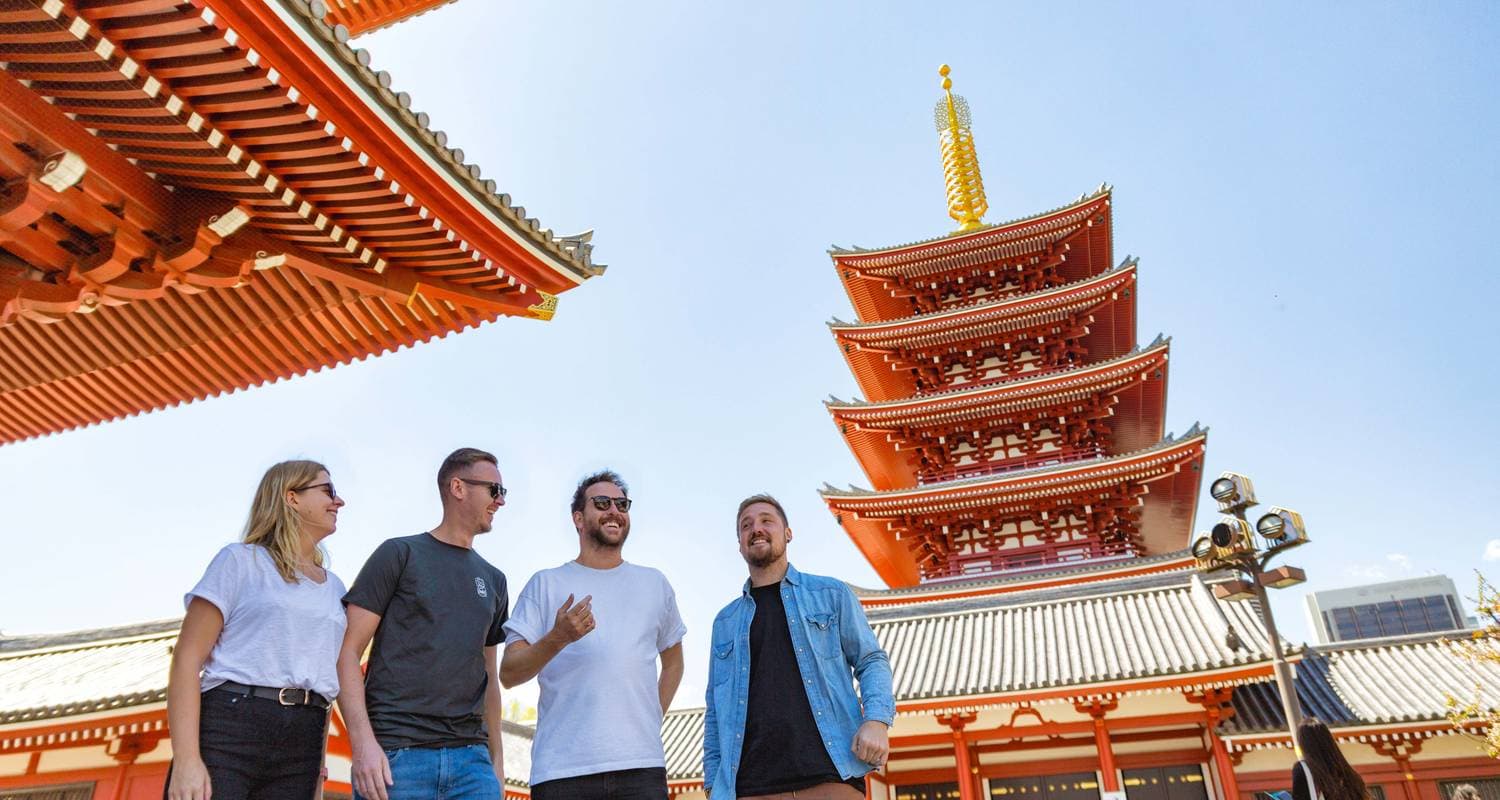
Japan Adventure 13 Day
13 days · INTRO Travel
4.9· 404 reviews✓ Instant confirmationtour from €2,851
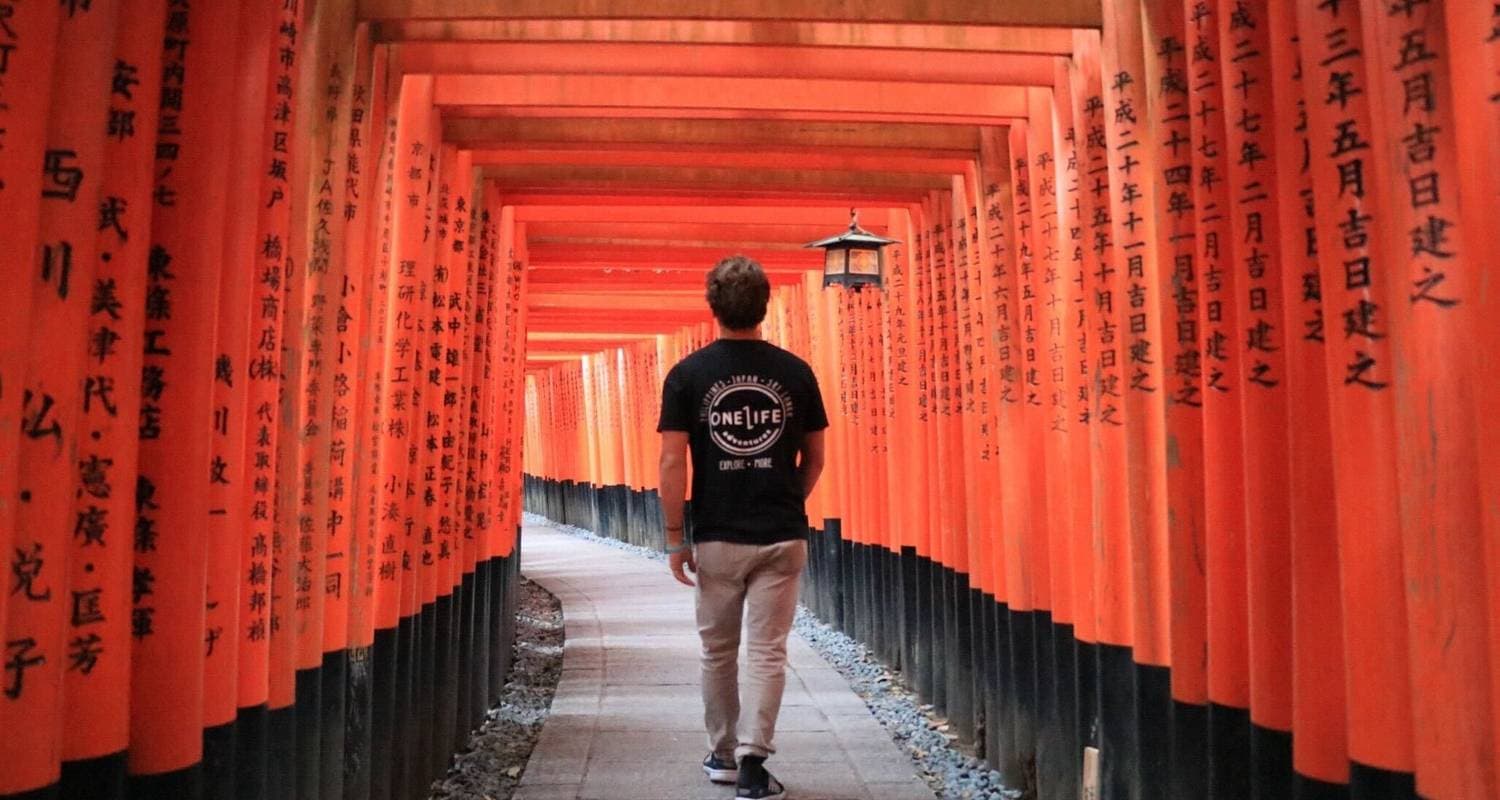
Japan Essentials 9 Day - One Life Adventures
9 days · One Life Adventures
4.8· 353 reviews✓ Instant confirmationtour from €1,697
9D Splendid Japan-Private 3 Star Hotels-Osaka to Tokyo
9 days · Stunning Tours
4.5· 343 reviews✓ Instant confirmationtour from €3,494
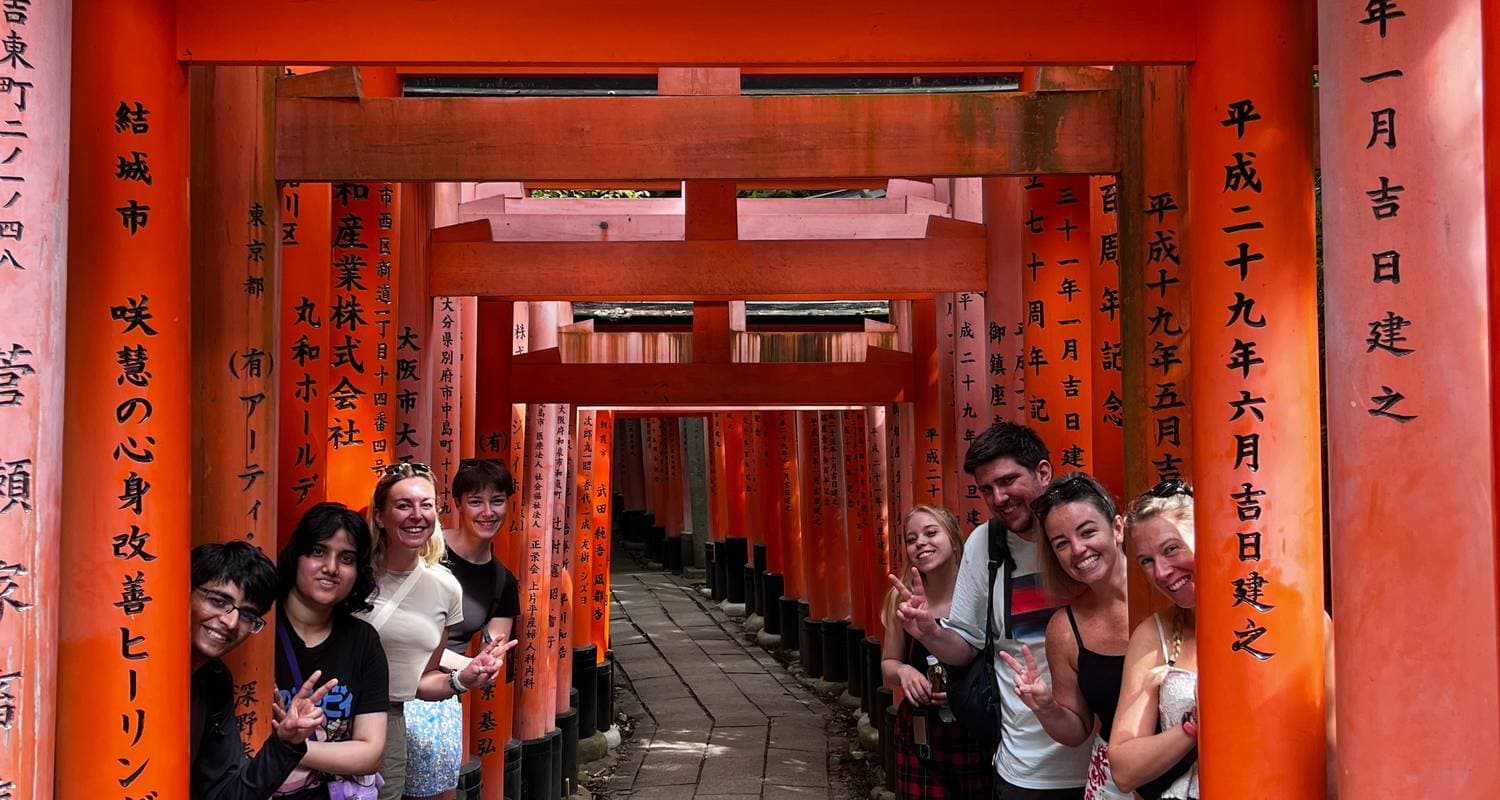
13-Day Japan Tour: Tokyo, Mount Fuji, Kyoto, Nara, Osaka & Beyond
13 days · The Dragon Trip
4.4· 166 reviews✓ Instant confirmationtour from €2,935
What Chicago actually pays, cheapest and typical
The lowest complete Japan trip we could build from O'Hare was €2,068 (≈$2,248): €616 (≈$670) for an eight-day Sado Island programme of conservation volunteering, cultural immersion and a temple stay, and €1,452 (≈$1,578) for the return flight. The ratio is the thing to notice. From San Francisco the same tour attaches to an €880 (≈$957) fare; from Chicago it attaches to €1,452 (≈$1,578). Identical holiday, €572 (≈$622) apart.
The median of all 39 combinations was €3,479 (≈$3,782), again the highest in our set. Chicago's median fare to Japan was €1,164 (≈$1,265), the worst of the eight airports and €333 (≈$362) above the west-coast pair.
Why? Chicago is a magnificent domestic hub and an ordinary transpacific one. O'Hare's Asia service is real but comparatively thin, it has no low-cost long-haul competitor on the route, and it sits over a thousand miles further from Tokyo than the west coast. Nothing about that is fixable by shopping harder within Chicago.
The honest framing is that this is a large penalty by the standards of our data. For Italy the entire American spread is €216 (≈$235), small enough to ignore. For Japan it is €572 (≈$622) — more than a quarter of the cheapest complete trip. That is why this page spends a section on positioning, which we would not normally recommend. The full table is in the Japan tour cost index from US airports.
When flying west first is genuinely worth it
Positioning — buying a domestic flight to a better gateway before the long-haul leg — is usually more trouble than it is worth. On Chicago to Japan, it is worth running the numbers, because the gap is unusually wide.
The arithmetic is straightforward. If a return to San Francisco or Los Angeles costs less than the €572 (≈$622) you save on the transpacific leg, you are ahead. Domestic returns from Chicago to the west coast frequently sit well below that, which means the play is often clearly profitable rather than marginally so.
Three conditions before you do it. Book it as a single ticket wherever possible, so the airline owns any misconnection — a self-transfer that goes wrong on a fourteen-hour international departure is an expensive lesson. Give yourself a long connection, or better, a night on the west coast in each direction. And apply it only to longer trips: on a Japan itinerary of ten days or more, losing part of a travel day is a rounding error, but on a short trip it is not.
The alternative worth pricing is a one-stop through a west-coast or Asian hub sold as a single through-fare. Connecting in San Francisco, Los Angeles, Seattle, Vancouver, Seoul or Taipei often undercuts O'Hare's nonstop substantially, and because it is one ticket you carry none of the self-transfer risk. This is the version most people should choose. It is slower than the nonstop, and on this route the saving is large enough to justify the hours in a way it rarely is transatlantic.
If you would rather simply fly nonstop and be done with it, that is a legitimate choice too — just make it knowingly, understanding that convenience is costing roughly €572 (≈$622).
What the tour half buys, and why length matters more here
Japanese land prices sort into three bands. Under €1,200 (≈$1,304) is the specialised tier: island programmes, temple stays on Koya-san, walking the Kumano Kodo, rural homestays in Tohoku. Rewarding, and not a standard first visit.
From €1,200 (≈$1,304) to €2,800 (≈$3,043) sits the classic circuit — Tokyo, Hakone or the Fuji lakes, Kyoto, Nara, often Hiroshima and Miyajima — over ten to fourteen days on the shinkansen. This is where the median lives. The variable that decides most comparisons in this band is whether rail is bundled: a fortnight of unlimited bullet-train travel is a large cost and operators are split on including it.
Above €2,800 (≈$3,043) you buy ryokan nights with kaiseki dinners, private guiding, craft and tea workshops, and smaller groups.
The Chicago-specific conclusion is about duration. When your fixed flight cost is €1,452 (≈$1,578), a short Japan trip is very poor value — you would be paying more to travel than to be there. The cost per day of holiday falls faster from Chicago than from anywhere else in our index as the trip lengthens, so if the calendar allows only a week, Japan from the Midwest is arguably the wrong choice this year. Two weeks changes the picture entirely.
Budget around €45 (≈$49) a day on top for meals outside the itinerary, local transport and entry fees. Eating in Japan is genuinely inexpensive, so tours including fewer meals are not the trap they would be in Europe, though rural areas still prefer cash. If you are taking the one-stop route, the choice of connecting hub is worth a moment. Connecting on the American west coast keeps you in one airline alliance and one baggage agreement, and immigration happens in Japan rather than twice. Connecting in Seoul, Taipei or Tokyo's other airport can be cheaper still, and the Asian carriers' service on the long leg is generally better than the American equivalents, but you should check that your bags are tagged through and give yourself more than the legal minimum connection. Vancouver is an option some Midwesterners overlook and it occasionally prices very well, though it adds a Canadian pre-clearance step.
Japan's seasons move both halves of the bill together, which matters more when your flight is already the expensive part. Cherry blossom from late March into mid-April is the annual peak on fares, land prices and availability at once. The autumn colour through November is nearly as beautiful and much cheaper, which is why our October sample looks as good as it does. Golden Week in early May and the New Year holidays are the periods to avoid outright — scarcity, not price, is the binding constraint then.
Before comparing two tours, settle the rail question. A nationwide two-week pass costs roughly €500 (≈$543) and a one-week pass about €320 (≈$348), so a €400 (≈$435) gap between two fourteen-day itineraries often disappears once the pass is added back to the cheaper one. On corridor-only trips, individual tickets can beat the pass, and an operator including named tickets may be giving you more rather than less.
One last practicality that makes a long trip from the Midwest easier: Japan's luggage-forwarding networks will move a suitcase between hotels overnight for around €15 (≈$16). On a multi-city itinerary with several shinkansen legs, sending the large bag ahead and travelling with an overnight bag turns the most tiring part of the trip into the easiest. Ask whether your operator arranges it; many do, and the ones that do not will still point you at the hotel desk that will.
The Japan tour cost guide covers the land component in more depth.
The full American ranking, and Chicago's better direction
By cheapest complete Japan trip: San Francisco €1,496 (≈$1,626), New York €1,543 (≈$1,677), Los Angeles €1,617 (≈$1,758), Dallas–Fort Worth €1,769 (≈$1,923), Miami €1,776 (≈$1,930), Boston €1,828 (≈$1,987), Seattle €2,030 (≈$2,207), Chicago €2,068 (≈$2,248).
By median: San Francisco €3,124 (≈$3,396), Los Angeles €3,139 (≈$3,412), Dallas–Fort Worth €3,178 (≈$3,454), Miami €3,246 (≈$3,528), Seattle €3,283 (≈$3,568), Boston €3,329 (≈$3,618), New York €3,393 (≈$3,688), Chicago €3,479 (≈$3,782). Last on both, which at least makes the advice unambiguous.
Seattle finishing seventh is the mild surprise, given it is the closest mainland American city to Tokyo. Proximity is not the driver; frequency and competition are, and Seattle's transpacific network is narrower than the California airports'. Chicago's position is less surprising but no less costly.
It is worth ending on the reassurance that this is destination-specific rather than a verdict on your airport. For Italy, Chicago finishes seventh of eight too — but the entire spread there is €216 (≈$235), so seventh place costs a Midwesterner under €200 (≈$217), which is genuinely not worth restructuring a trip over. Japan is the outlier where geography, competition and a missing low-cost carrier compound into a number large enough to act on.
If Europe is also on your list, what an Italy tour costs from Chicago sets out that side, where the nine-hour overnight nonstop is an asset and short trips make sense in a way they never will to Japan.
Bringing a Chicago to Japan total down
Price a one-stop through the west coast or an Asian hub as a single ticket. This is the main lever and it is worth more here than anywhere else in our index — often most of the €572 (≈$622) gap, with none of the self-transfer risk that a separately booked positioning flight carries.
Travel in the autumn shoulder. Late October and November give the maple colour without the cherry-blossom premium, when fares and land prices climb together. Golden Week is best avoided outright; the New Year period is a scarcity problem as much as a price one.
Go for a fortnight rather than a week. With €1,452 (≈$1,578) of fixed flying, the cost per day of holiday drops more steeply from Chicago than from any other American city as the trip lengthens. A ten-day minimum is a reasonable rule from the Midwest.
Settle the rail question before comparing tours. Two itineraries that look €400 (≈$435) apart are frequently identical once unlimited shinkansen travel is added back. It is the most common comparison error in Japan planning and it is easy to avoid.
Do not treat the €2,068 (≈$2,248) floor as a cheap version of the classic trip. It is an island volunteering and temple-stay programme, and it is a fine holiday for the right person — but it is not Tokyo and Kyoto, and choosing it on price alone is how people end up disappointed by a well-priced booking.
Then price the two halves against each other rather than in sequence. On a route where the flight can cost two and a half times the tour, comparing land prices in isolation is close to meaningless — search Japan tours and flights together and the real total is visible before you commit.
Ready to price your trip?
Enter your origin airport and month — we'll search live flight and tour prices and give you one bundled total per person.
Find combosFAQs
How much does a Japan tour cost from Chicago?
The cheapest complete trip we priced was €2,068 per person — €616 of tour plus a €1,452 return fare from O'Hare, for an eight-day Sado Island programme in October 2026. The median across all 39 combinations was €3,479. Both are the highest of the eight American gateways we price.
Why is Chicago so expensive for flights to Japan?
O'Hare is an excellent domestic hub and an ordinary transpacific one. Its Asia service is comparatively thin, there is no low-cost long-haul competitor on the route, and it sits over a thousand miles further from Tokyo than the west coast. Its median fare of €1,164 is the highest of the eight airports we sampled.
Is it worth flying to the west coast first to reach Japan?
On this route, often yes — the €572 gap is wide enough that a domestic return to San Francisco or Los Angeles can cost less than you save. Better still, book a one-stop through a west-coast or Asian hub as a single through-fare, which captures most of the saving without any self-transfer risk.
How much cheaper is Japan from San Francisco than from Chicago?
€572 on the cheapest complete trip — €1,496 against €2,068 — and €355 at the median. That is more than a quarter of the cheapest total, which is why the departure airport is worth treating as a decision here. For Italy the entire American spread is only €216, small enough to ignore.
Is a one-week Japan trip worth it from Chicago?
Rarely. With €1,452 of fixed flight cost, a short trip means paying more to travel than to be there, and the classic circuit is already compressed under ten days. Cost per day of holiday falls faster from Chicago than from anywhere else as the trip lengthens, so ten days is a sensible minimum and a fortnight is better.
Watching a trip?
Once a month: where all-in prices actually dropped, from your airport. No spam, unsubscribe anytime.
Related destinations
- Japan Multi-Day Tours with Flights from €1,900Kyoto temple mornings, Tokyo neon nights, shinkansen in betw…
- South Korea Multi-Day Tours with Flights from €1,881Seoul palaces and street food, the DMZ day trip to the North…
- Vietnam Multi-Day Tours with Flights from €650Sail Halong Bay, drift through Hoi An by lantern-light, wake…
- Thailand Multi-Day Tours with Flights from €1,050Bangkok temples, Chiang Mai elephants, Krabi limestone karst…
Related tour styles
Best for these travellers
- Tours for Couples with Flights IncludedGuided multi-day trips that work for two — small-group socia…
- Solo Travel Tours with Flights IncludedGuided multi-day tours built around solo travellers: small g…
- Tours for Seniors with Flights IncludedMulti-day guided tours for over-55 travellers: gentler pacin…
Pick by trip length
Plan this trip from your city
- Multi-Day Tours from New York with Flights IncludedMulti-day tours from New York with flights included — one US…
- Multi-Day Tours from Los Angeles with Flights IncludedPackage tours from Los Angeles with flights included — one U…
- Multi-Day Tours from Toronto with Flights IncludedPearson is Canada's biggest long-haul hub, and with a weak l…
- Multi-Day Tours from London with Flights IncludedBuilt for London travellers: LHR for long-haul, LGW for Euro…
Deeper reading
- What a Japan Tour Costs from New York, Flights IncludedJapan's tours are cheap and the flights are not. From JFK th…
- What a Japan Tour Costs from Los Angeles, Flights IncludedLos Angeles has the deepest transpacific network in America.…
- What a Japan Tour Costs from San Francisco, Flights IncludedNo American airport reaches Japan more cheaply. The cheapest…
- How Much Does a Japan Tour Actually Cost?Japan is the high-floor destination — even the lean trips st…
- The Perfect 14-Day Japan Itinerary (Day by Day)Two weeks down the golden route — Tokyo neon, Hakone hot spr…