
1 Week Tours with Flights Included
Seven-day guided tours sized for a week off work. Flights bundled, one price per person, and real itineraries rather than highlight reels.
Edited by Multiday.tours editor
- ✓7 days on the ground, 6 nights typical
- ✓Tour land price: 900-5,500 EUR depending on class
- ✓Economy flights: 80-1,100 EUR depending on origin and route
- ✓Best for single-country or single-region trips
- ✓Strong destinations: Morocco, Egypt, Iceland, Peru
- ✓Fly in the night before to preserve day one
A one-week tour is the sweet spot for most working travellers: long enough to reach somewhere substantial, short enough to fit around a week off with a weekend at each end. On Multiday.tours we list seven-day departures from Intrepid, G Adventures, Exodus, Explore and a handful of specialists, bundled with Kiwi.com flights from your home airport. Budget 900 to 2,500 EUR for the land price and 300 to 900 EUR for economy flights, depending on where you fly from. Seven days works best for a single country or region: Morocco, Egypt, Iceland, Jordan, Peru's Sacred Valley, Turkey's west coast, or a focused week in Italy. Below we set out what fits, what does not, and how to pace the flights.
The most-reviewed one-week tours
Prices are tour-only — add flights for the real total. You book the tour itself on TourRadar.

Wanderlands Bali - 8 Days
8 days · Wanderlands Travel
4.8· 2,360 reviews✓ Instant confirmationtour from €791

Thailand Experience
8 days · TruTravels
4.7· 1,566 reviews✓ Instant confirmationtour from €823

Pharaohs Nile Cruise Adventure - Grand GEM Visit – Return Flights Included
8 days · Beyond The Nile Tours
4.7· 1,530 reviews✓ Instant confirmationtour from €1,794

6 Day - Around Iceland Adventure
6 days · Arctic Adventures
4.6· 540 reviews✓ Instant confirmationtour from €1,926

Introduction to Ireland
7 days · Globus
5.0· 524 reviews✓ Instant confirmationtour from €2,538
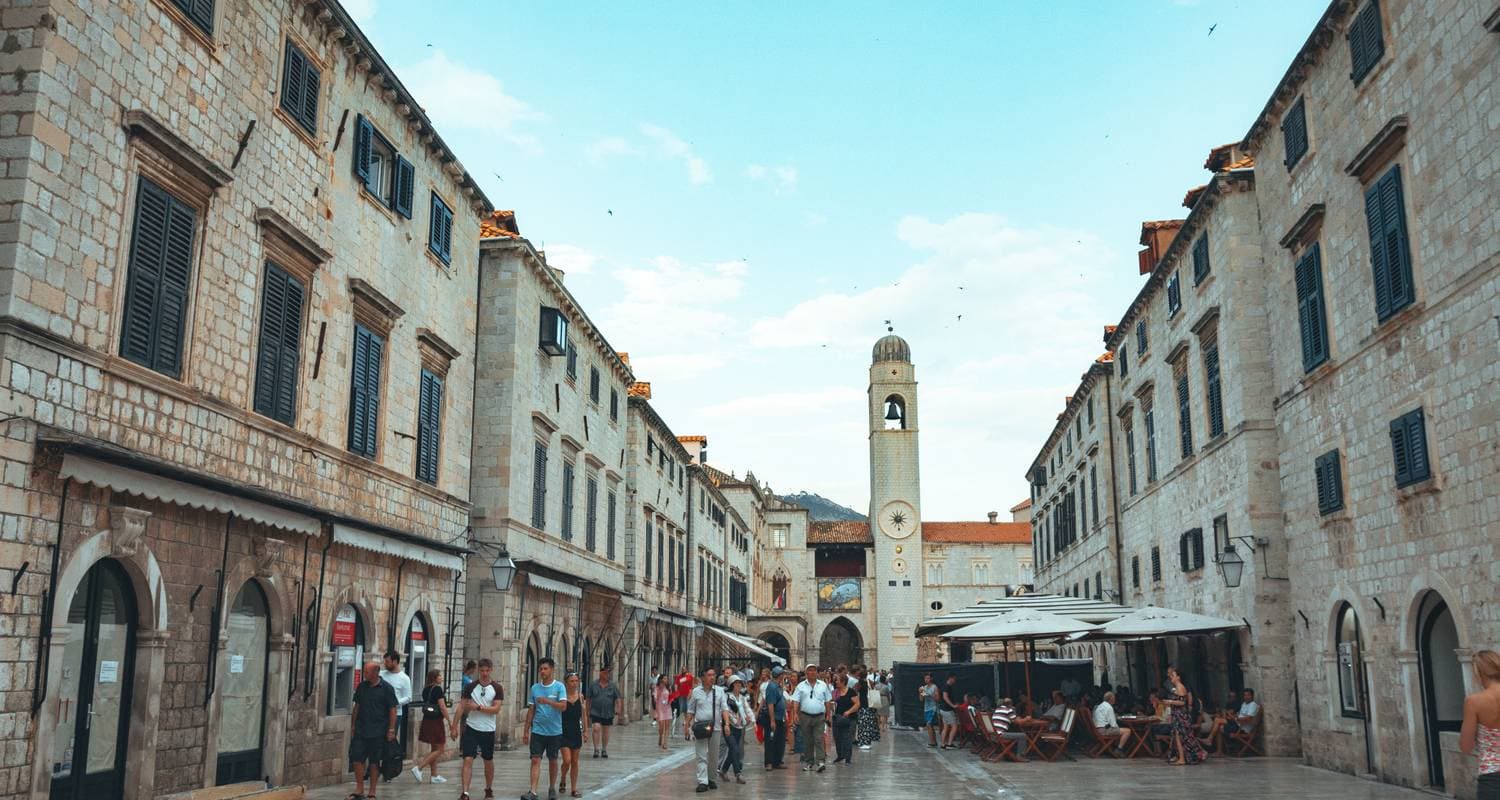
CROATIA SAIL - Split to Split (The Dalmatian Voyager)
8 days · Koda Sail
4.9· 511 reviewstour from €1,462
What a one week tour can actually cover
Seven days on the ground usually means six nights, flying in on day one and out on day seven. Take off two half-days for arrival and departure and you have five and a half active days. That is enough for one country, one theme, and three or four base locations.
What fits well: Morocco's imperial cities (Casablanca, Fes, Marrakech), an Egypt Nile cruise (Cairo, Aswan, Luxor), Iceland's Ring Road highlights, Jordan (Amman, Petra, Wadi Rum, the Dead Sea), Peru's Sacred Valley with Machu Picchu, Turkey's west coast (Istanbul, Cappadocia, Ephesus), or a single region of southern Italy or Tuscany.
What does not fit: two countries in a single week almost always feels rushed. A week that tries to fold in Egypt and Jordan, or Peru and Bolivia, is half a transfer and half a trip. Two-country combinations need ten days minimum. Long-haul trips that cross time zones lose a full day to jet lag at each end and really want nine or ten days too.
The honest rule: one anchor plus two satellites. Do not be talked into an itinerary that promises five cities in seven days.
Best destinations for 7 day tours
Europe and the near-abroad: Iceland is the single strongest seven-day destination if you can reach it without a long haul. The Ring Road loop strings together glaciers, geothermal fields, the south coast and Reykjavik with no backtracking. Italy works one region at a time, so Tuscany, the Amalfi coast or Sicily each fill a full week. Portugal (Lisbon, Porto, the Douro) fits nicely, and the Croatian coast (Split, Dubrovnik, Hvar) is a classic week.
North Africa and the Middle East: Morocco, Egypt and Jordan are made for seven days and come in well under 2,000 EUR with several operators. Egypt's Nile cruise format is especially efficient, because the boat sails overnight so you never lose a day to transfers.
Latin America: Peru's Sacred Valley plus Machu Picchu works as a tight week, usually out of Lima via Cusco. Costa Rica's Arenal-Monteverde-Manuel Antonio triangle covers rainforest, cloud forest and beach in seven days.
Asia tends to stretch beyond a week: Vietnam north to south is a two-week trip, not seven days, and Thailand's Bangkok-Chiang Mai-south-island loop wants nine or ten. For Asia in a week, pick just one region, such as northern Vietnam, Bangkok plus Angkor, or Kyoto plus Osaka.
The single biggest factor in what fits is how far you're starting from. A week that's an easy short-haul from one continent is a jet-lagged scramble from another, so weigh the destinations below against your own flight time, not a European one.
Typical prices for one week tours with flights
The land price for seven days runs 900 to 2,500 EUR in the mainstream range and 2,800 to 5,500 EUR at the premium end, with the region doing most of the work.
- 900-1,400 EUR land: Morocco, Turkey, Egypt and Jordan on the mainstream operators. Intrepid Original and G Adventures Classic live here.
- 1,400-2,200 EUR land: Peru's Sacred Valley, Iceland highlights, an Italian region, the Greek islands. Mid-range hotels with domestic transfers included.
- 2,200-3,500 EUR land: regional Japan, premium Egypt and Morocco, the French wine regions, the National Geographic Journeys tier.
- 3,500-5,500 EUR land: private guided, luxury hotels, five-star throughout.
Flight prices swing entirely on where you start. As a European-origin example, expect 80 to 280 EUR within Europe, 300 to 550 EUR to Morocco, Egypt, Jordan and Turkey, 450 to 900 EUR for Iceland and Peru, and 550 to 1,100 EUR for long-haul Asia. From North America, Australia or anywhere off the main long-haul hubs, the numbers shift and you may need a connecting leg or a separate positioning flight, so check your own airport.
Shoulder season is the value window. Late March to April and late September to October usually run 15 to 25 percent cheaper on both the tour and the flight than June to August. Christmas and New Year departures are the priciest of the year on most routes.
Pacing a one week trip without wasting days
Three rules for getting your money's worth out of seven days.
Fly in the day before the tour starts. Most seven-day tours open with a late-afternoon welcome meeting around 5 or 6pm. A flight landing at 2pm technically makes it but leaves no slack if anything goes wrong. Arrive the night before and you get a full morning to settle in, walk the start city and begin fresh. That extra hotel night at 80 to 130 EUR is worth far more than the same money shaved off an airfare.
Avoid long transfers on day one. Some itineraries open with a flight from your arrival city to the tour's real starting point, a Cairo-to-Aswan hop or a Lima-to-Cusco leg. These are fine when built into the tour but brutal stacked on top of an international flight the same day, so check the day-one schedule in the trip notes.
Give the return a buffer where you can. A trip that wraps at 6pm in Luxor and bundles you onto a dawn international the next morning rarely feels like seven good days. If the budget stretches, add a night in the finishing city before flying home, especially on long-haul where the time shift bites harder on the way back.
Jet lag and east-versus-west planning
Jet lag on a one-week trip is all about the time-zone gap between home and your destination — so measure it from wherever you live, not a fixed point on the map. A destination within a couple of hours of your home time zone needs no jet-lag planning at all. (From Europe, that band covers Morocco, Iceland, the Middle East and the rest of Europe; from the US East Coast it covers most of the Americas; the principle is the same wherever you start.)
Four to six hours of shift is manageable on a seven-day trip if you arrive the night before. It usually settles in two or three days, so the first half of the trip feels a touch sluggish.
Eight hours or more is borderline for a week. You spend days one to four adjusting and start feeling normal just as you head home. If you only have seven days, pick somewhere within four hours of your home time zone, and if you want a destination far around the clock — Asia from Europe, or Europe from the US West Coast, say — book ten days rather than seven.
One trick really works when you're flying eastbound into the time difference: take an overnight outbound flight that lands you mid-morning local time, then stay up until 9pm local and sleep through. You lose less of day one and adjust faster. Coming home in the other direction, the clock is on your side, so no planning needed.
Booking flights with a 7-day guided tour
Kiwi.com handles the flights on our bundles, multi-city routings included. For seven-day tours, three patterns work best.
A round trip to one airport, when the tour starts and ends in the same city. This is the cheapest option and covers Iceland Ring Road tours, Morocco imperial-cities tours out of Casablanca, and most Italian regional tours. Expect 80 to 550 EUR depending on the route.
Multi-city, or open-jaw, when the tour starts and ends in different cities. Peru Sacred Valley trips often start in Lima and end in Cusco on the Inca Trail version, though most group trips loop back to Lima for the flight home. Egypt Nile cruises sometimes start in Cairo and end in Luxor, while Jordan tours start and end in Amman. Multi-city tickets usually price within 10 to 15 percent of a round trip and save you a backtracking day.
Buffer days at each end, as above, are the single best thing you can spend on. If your employer gives you seven working days off, let two weekends carry the travel: fly Saturday, tour Sunday to Saturday, fly home Sunday. That is a genuine seven-day tour delivering seven full tour days plus two flight days, all inside a standard week of leave.
Ready to price your trip?
Enter your origin airport and month — we'll search live flight and tour prices and give you one bundled total per person.
Find combosFAQs
Is 7 days enough for a first trip to a new continent?
For North Africa, the Middle East or most of Europe, yes. For Asia or deep South America, it is tight. As a rule of thumb, every four hours of time difference is one extra day you will want. Japan at eight hours' difference really needs ten days minimum to justify the flight cost and ride out the jet lag. Peru at five hours works in seven days with careful pacing. Morocco at one hour is perfect for a week. If you can stretch to ten days for long-haul, do.
Should I fly in on day one or the night before?
Almost always the night before. A seven-day tour typically opens with a 5 or 6pm welcome meeting on day one. Arrive that same day and you have no slack if your flight slips, you sit through the meeting jet-lagged, and you miss the start city in daylight. An extra hotel night at 80 to 130 EUR buys a full morning to adjust, wander and eat a proper meal. Treat it as part of the tour cost, not a luxury.
What is the cheapest 7 day tour with flights?
Morocco tours from Intrepid and G Adventures run from around 750 to 900 EUR land in shoulder season. Add a short-haul flight — 80 to 250 EUR return from a European hub, more from further afield — and under 1,200 EUR per person all in is realistic if you're starting nearby. Turkey and Egypt in shoulder season also land under 1,500 EUR bundled on a short-haul flight. These are mainstream three-star itineraries with small groups, not budget backpacker trips; they are simply good value because the ground costs in North Africa are low. Your own total hinges on the flight, so check your home airport.
Can I do a multi-country tour in one week?
Rarely well. The exceptions are neighbours with a sensible airport strategy: Amsterdam-Brussels-Paris works, the Slovenia-Croatia coast works, Jordan-Israel day trips work. Most two-country combos in seven days feel like an airport week rather than a tour week. Egypt plus Jordan, Peru plus Bolivia and Thailand plus Cambodia all want ten days minimum. If a brochure promises four countries in seven days, read the daily schedule closely before you believe it.
Are 7 day tours suitable for solo travellers?
Yes, and a week is the most popular length for solo bookings. On the small-group operators, roughly half the people on a seven-day departure tend to have booked alone, so you are in good company, and most offer twin-share at no single supplement. The group bonds fast over a week: by day three it has its own rhythm and the dinner-table conversation flows. If your main worry about longer trips is social fatigue, a week is the ideal length to try this style of travel.
Is travel insurance needed for a 7 day tour?
Yes, always, and especially with prepaid non-refundable flights and tour deposits in the mix. Budget 20 to 50 EUR for a week of annual-multi-trip or single-trip cover from the likes of World Nomads, True Traveller or your bank's travel card. If the tour involves altitude above 3,000m (Cusco, in Peru), trekking, diving or skiing, you need a policy that names those activities, because standard policies leave them out. And do not buy insurance from the airline; it is usually the weakest cover at the highest price.
Related destinations
- Morocco Multi-Day Tours with Flights from €700Nights in the Merzouga dunes, mornings lost in the Fes medin…
- Egypt Multi-Day Tours with Flights from €1,300Sail the Nile, stand at the pyramids, sleep out under the Wh…
- Iceland Multi-Day Tours with Flights from €1,100Drive the Ring Road, walk on a glacier, chase the Northern L…
- Peru Multi-Day Tours with Flights from €1,900Machu Picchu at sunrise, the Sacred Valley, an Amazon lodge.…
Related tour styles
- Small Group Tours with Flights IncludedShared departures of 10-16 travellers. Expert guides, fixed …
- Adventure Tours with Flights IncludedTrek, cycle, paddle and climb on guided multi-day trips. Rea…
- Food and Wine Tours with Flights IncludedMulti-day culinary tours with small groups, winery visits an…
- Family Tours with Flights IncludedGuided multi-day family tours built for kids and parents. Fi…
- Christmas & New Year Tours with Flights IncludedSkip the seasonal clamour at home. December departures to so…