
2 Week Tours with Flights Included
Fourteen days on the ground: enough for two countries, a deep single-country route, or a real expedition. Flights bundled in.
Edited by Multiday.tours editor
- ✓14 days on the ground, 13 nights typical
- ✓Tour land price: 2,500-10,000 EUR depending on class
- ✓Economy flights: 500-1,300 EUR depending on origin
- ✓Best for deep single-country routes and two-country combos
- ✓Strong destinations: India, South Africa, Japan, Patagonia
- ✓Absorbs jet lag well — long-haul value sweet spot
A two-week tour is the length travellers graduate to after a shorter trip or two. Fourteen days on the ground opens up routes that simply do not work in a week or ten days: India's Golden Triangle plus Rajasthan, South Africa with Victoria Falls, a Vietnam-and-Cambodia traverse, the Patagonia circuits, the full Silk Road, or Japan with a proper regional loop. On Multiday.tours we list 14-day departures from Intrepid, G Adventures, Exodus, Explore and a few specialists, bundled with Kiwi.com flights from your home airport. Budget 2,500 to 5,500 EUR for the land price and 500 to 1,300 EUR for economy flights. Two weeks is where guided tours really earn their keep, because the logistics get involved enough that having someone else run them changes the whole trip.
The most-reviewed two-week tours
Prices are tour-only — add flights for the real total. You book the tour itself on TourRadar.
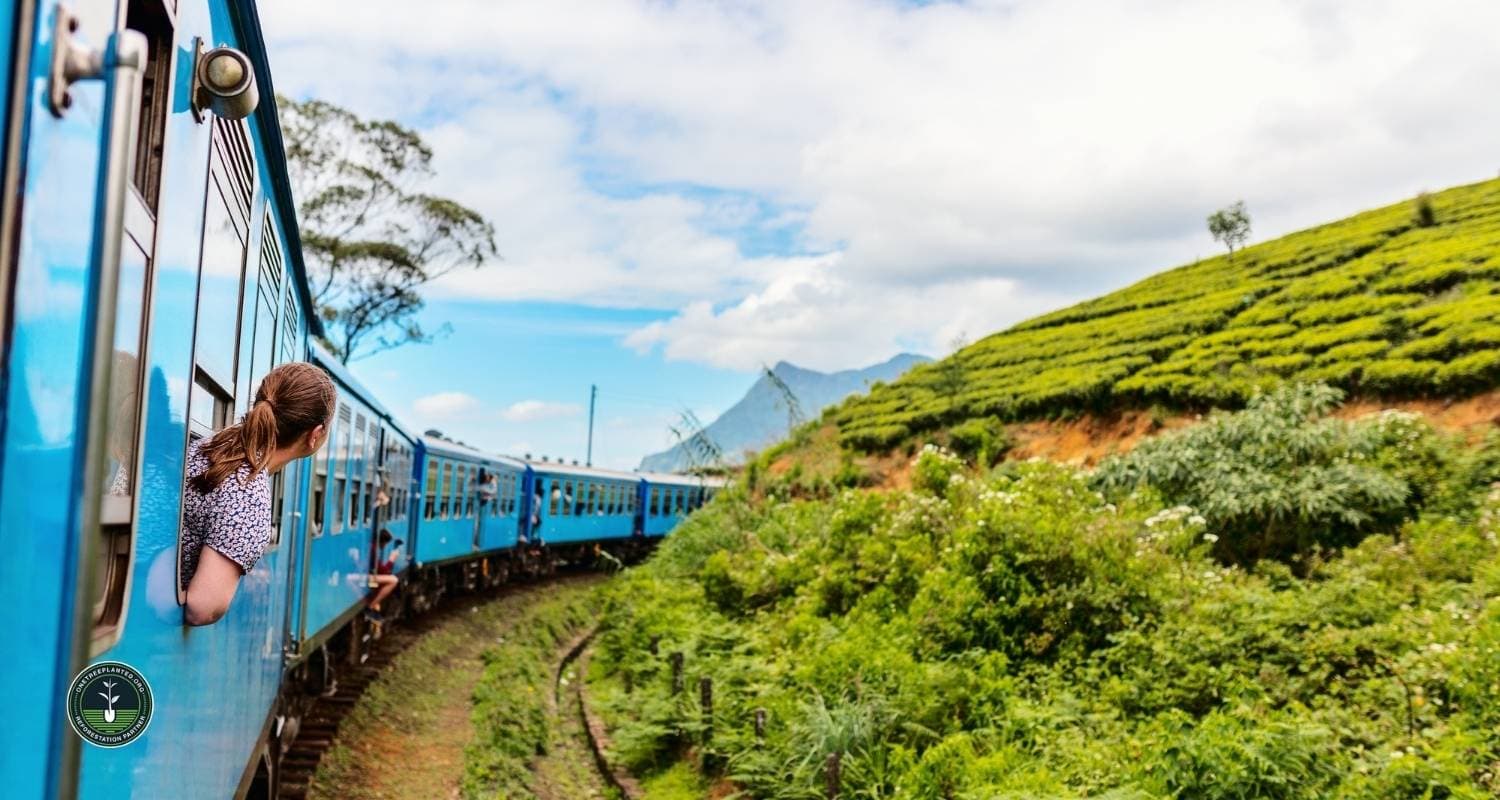
Sri Lanka Classic 12 Day - One Life Adventures
12 days · One Life Adventures
4.9· 2,194 reviews✓ Instant confirmationtour from €1,697

Vietnam Intro 12 Day
12 days · INTRO Travel
4.8· 1,863 reviews✓ Instant confirmationtour from €1,540

Thailand Island Hopper
14 days · TruTravels
4.7· 1,730 reviews✓ Instant confirmationtour from €1,311

Northern Thailand Adventure
14 days · TruTravels
4.8· 1,672 reviews✓ Instant confirmationtour from €1,311

Bali Intro 12 Day
12 days · INTRO Travel
4.8· 1,532 reviews✓ Instant confirmationtour from €1,241

Wanderlands Bali & Lombok - 13 Days
13 days · Wanderlands Travel
4.8· 1,149 reviews✓ Instant confirmationtour from €1,287
What fourteen days lets you do
The jump from ten days to fourteen is bigger than the four-day gap suggests. You get a proper second country without rushing, a deep single-country route with detours off the main line, or an expedition-grade trip that needs the full window for trekking, cycling or cruising rather than sightseeing alone.
Deep single-country routes: India's full Rajasthan loop (Delhi, Agra, Jaipur, Pushkar, Jodhpur, Udaipur, Mumbai) fits fourteen days, and nothing shorter does it justice. Japan with a northern or western extension to Kyushu, Hokkaido or the Japan Alps. South Africa with Kruger plus the Garden Route. Vietnam north to south at a civilised pace, with Sapa and the Mekong Delta.
Two-country combos: Egypt plus Jordan at proper depth, not the tight ten-day version. Kenya plus Tanzania for safari across the Maasai Mara and Serengeti. Thailand plus Laos with the slow boat down the Mekong. Peru plus Bolivia, taking in the Uyuni salt flats.
Expedition-grade trips: the Patagonia W Trek with Buenos Aires and El Chalten. Nepal's Annapurna Circuit or Everest Base Camp with Kathmandu at each end. The Silk Road across Uzbekistan or Kyrgyzstan. Antarctica expedition cruises, usually 10 to 13 days all in once you count the Buenos Aires buffer.
Fourteen days banishes the 'if only we had one more day' feeling that nags at shorter trips.
Best 2 week tour destinations
India is the single strongest 14-day destination. The Golden Triangle is only three or four days of content; add Rajasthan and you have a genuine two-week trip. Intrepid, G Adventures and Exodus all run it at 1,800 to 3,000 EUR land, with flights typically 550 to 900 EUR, so the bundled total lands around 2,500 to 3,800 EUR for most travellers.
South Africa plus Victoria Falls: fourteen days takes in Cape Town, the Garden Route, Kruger and Vic Falls, usually with a short hop into Zimbabwe or Zambia. 3,200 to 5,500 EUR land, 900 to 1,300 EUR flights, and at its best in the April-May and September-October shoulders.
Japan: fourteen days covers the classic route plus a regional extension to Kanazawa, Hokkaido or Kyushu. 5,000 to 8,000 EUR land, 700 to 1,100 EUR flights. Pricey but substantial.
Vietnam plus Cambodia: 1,800 to 3,200 EUR land, 600 to 900 EUR flights. A well-worn combo that most operators do well.
Peru plus Bolivia with the Uyuni salt flats: 2,400 to 4,000 EUR land, 700 to 1,000 EUR flights. The Uyuni side is genuinely out of the ordinary and worth the extra days.
Patagonia, Chile and Argentina: 3,500 to 6,500 EUR land, 900 to 1,300 EUR flights. The W Trek, Torres del Paine, Perito Moreno and the Fitz Roy area across two weeks.
Typical prices for 14 day tours with flights
The land price for fourteen days runs 2,500 to 5,500 EUR mainstream, 5,500 to 10,000 EUR premium, and 10,000 to 20,000 EUR at the private and luxury end.
- 2,500-3,800 EUR land: India Rajasthan, Vietnam plus Cambodia, Morocco plus Spain, Turkey plus Greece, mainstream Egypt plus Jordan, a Balkans loop.
- 3,800-5,500 EUR land: South Africa plus Vic Falls, Peru plus Bolivia with Uyuni, cross-country Indonesia, National Geographic Journeys in most regions.
- 5,500-8,000 EUR land: Japan with a regional extension, Patagonia, the Silk Road, a Kenya-Tanzania safari, Galapagos plus the Ecuador highlands.
- 8,000-15,000 EUR land: luxury small-group, private guided, Antarctica.
Economy flights: 500 to 1,300 EUR, depending on where you start. Multi-city itineraries are the norm at fourteen days, and they price close to the round-trip equivalent.
Shoulder season pays off especially well on a 14-day trip because the savings stack. A 15-to-25-percent cut on both the land price and the flights can take a 5,000 EUR bundled trip down to 4,000 EUR. For most destinations the shoulders are March-April and October to early November. Japan runs to its own calendar (dodge the cherry-blossom and autumn-colour peaks). Note that seasons flip across the equator: South Africa, East Africa and Patagonia sit in the southern hemisphere, so their peak summer falls around December to February and their best shoulders run opposite to anywhere up north.
Pacing two weeks without burning out
The trap on a 14-day trip is trying to fill every single day. Two weeks of 7am starts is not a holiday, it is an endurance event. The best itineraries build in two or three deliberate rest days and at least three half-free days across the two weeks.
Structure matters more at fourteen days than at any other length. The rhythm that works: days 1 to 2 arrival and gentle start, days 3 to 6 the first region in earnest, day 7 a rest or a slower travel day, days 8 to 11 the second region in earnest, day 12 a rest, days 13 to 14 winding down and heading home. Plot the intensity curve and if there are no troughs, it is a poorly designed trip whatever the brochure claims.
Laundry is a genuine consideration over fourteen days. Pack for seven and plan to wash once. Hotels in India, Southeast Asia and Latin America handle same-day laundry for 10 to 25 EUR. Hotels in Japan and Europe charge a premium, so use a coin laundry or a wash-and-fold service at 5 to 15 EUR instead.
Budget for one indulgence mid-trip: a smarter hotel for a couple of nights, a private day instead of a group one, a memorable meal. Fourteen days at the same level can blur together, and a single contrast point gives the trip shape in your memory. Most operators build this in with one premium hotel night somewhere in the middle.
Jet lag and rest on long-haul 14 day trips
Fourteen days is the first length where time zones more or less sort themselves out. By the time the jet lag clears around day three, you still have eleven days to enjoy feeling normal. For long-haul this is the real case for two weeks over ten days: you are not handing half the trip to adjustment.
The bigger the time-zone gap between home and your destination, the more this matters — and that gap depends entirely on where you set out from. As a rule, the first big trip across six or more hours of time difference costs you a day or two at the start, so keep days one and two low-key and expect day three to be your first properly energised one. The flight home is often the harder adjustment, so leave a day or two before you have to be back at work.
Where the shift is gentler, four to six hours, most people come round in two or three days and the first half of the trip just feels a touch sluggish.
For high-altitude trips (Peru, Bolivia, Nepal), build in two acclimatisation days, not one. At 3,400m in Cusco or 3,500m in Kathmandu, most people need 48 hours of easy activity before anything strenuous. Many 14-day Peru trips start with a night in Lima at sea level, which doubles as acclimatisation strategy by giving your body one easy day before Cusco.
The most common mistake on a 14-day trip is getting home with no buffer before work. Land back on a Saturday rather than the night before you're due in. That one extra day at home costs nothing and saves you the bleary re-entry disaster.
Booking flights and logistics for 14 day tours
Kiwi.com handles the flights on our bundles, and 14-day trips almost always gain from multi-city booking. Open-jaw tickets, flying into one city and out of another, are standard on long-haul two-week trips: into Cairo and home from Amman, into Delhi and home from Mumbai, into Hanoi and home from Saigon or Siem Reap, into Lima and home from La Paz.
Expect multi-city fares within 10 to 15 percent of the round-trip equivalent. The time and backtracking you save usually more than make up the difference. The Kiwi Guarantee covers the full itinerary, including connecting flights on separately-ticketed legs, which is well worth having on a trip with several transfers.
Travel insurance on a 14-day trip costs more than you might expect: 60 to 140 EUR for a single-trip policy on a 3,000 to 5,000 EUR bundled cost. Annual multi-trip policies at 100 to 200 EUR are far better value if you travel twice a year or more. Confirm cover for the specific activities on your itinerary, whether that is altitude, trekking, diving or any other adventure element.
Visas matter more at fourteen days because you are likelier to cross borders. India and Vietnam issue e-visas online in three to five days, while Egypt and Jordan issue them on arrival for many nationalities. Rules vary by the passport you hold, so check every country on the itinerary at the booking stage, not at the airport, and most operators include a visa-requirements document with your final booking pack.
Ready to price your trip?
Enter your origin airport and month — we'll search live flight and tour prices and give you one bundled total per person.
Find combosFAQs
Is two weeks long enough for India?
For Rajasthan plus the Golden Triangle, yes, and comfortably. To pair the north with South India or Kerala, no, because that wants three weeks minimum once you factor in the internal flights and distances. Fourteen days on a northern route covers Delhi, Agra, Jaipur, Pushkar, Jodhpur, Udaipur and Mumbai at a civilised pace, with two rest days built in. Try to fit in at least one overnight sleeper train, as the Delhi-Varanasi or Jodhpur-Jaisalmer runs are an experience in themselves.
Can I do two full countries in 14 days?
Yes, with careful pacing. The well-proven 14-day two-country combos are Egypt plus Jordan, Vietnam plus Cambodia, Peru plus Bolivia, Thailand plus Laos, and Kenya plus Tanzania. Each gives you roughly six or seven days per country, enough to take in the highlights without rushing. Badly matched pairs like Egypt plus Morocco or Thailand plus Japan do not work even at fourteen days, because the transfer swallows too much time. Check that the inter-country flights are in the tour price.
How fit do I need to be for a 14 day tour?
It depends entirely on the trip. A cultural 14-day tour of India or Egypt means moderate walking, 5 to 10km a day in bursts, with plenty of stairs at temples and ruins. A 14-day Patagonia trek means six to eight hours on your feet most days, with altitude and weather thrown in. Operators publish a physical rating on every trip, so assess yourself honestly, because fourteen days at a pace you cannot keep up is a miserable way to burn holiday and money. When in doubt, drop a rating.
Should I book a 14 day tour or two separate 7 day tours?
Usually one 14-day tour if you want depth, and two separate seven-day trips if you want variety. The single two-week trip is cheaper, with one flight, one insurance policy, one round of visa admin, and per-day pricing that tends to favour longer trips. Logistically, two seven-day trips in a year feel like two different holidays, while one 14-day trip feels like a single big adventure. Most travellers mix both patterns over a few years: one long immersive trip and two or three shorter ones.
What is the minimum age for 2 week tours?
On standard adult small-group tours, 18 is the usual minimum, with the odd 16 or 17 exception at the operator's discretion. On family 14-day tours, the minimum is five to eight depending on operator and activity level. Teens do well on Intrepid's 18-to-Thirtysomethings range and on standard adult tours from 16 up. Fourteen days is a lot for a child under ten however well the tour is designed; ten days is usually the better length for families with younger kids.
What do I do about work emails during a two-week trip?
Leave them. Honestly, fourteen days is short enough that most things can wait and long enough that you need to switch off to get value from the trip. Set an out-of-office that names a colleague for anything urgent. If you truly must check in, do it once mid-trip from a hotel for 30 minutes on a rest day, not daily from your phone. Wifi across Asia, Latin America and Africa is reliable these days. The people who come home from two weeks feeling properly rested are the ones who did not answer work email. The ones who did, did not.
Related destinations
- Egypt Multi-Day Tours with Flights from €1,300Sail the Nile, stand at the pyramids, sleep out under the Wh…
- Peru Multi-Day Tours with Flights from €1,900Machu Picchu at sunrise, the Sacred Valley, an Amazon lodge.…
- Morocco Multi-Day Tours with Flights from €700Nights in the Merzouga dunes, mornings lost in the Fes medin…
- Iceland Multi-Day Tours with Flights from €1,100Drive the Ring Road, walk on a glacier, chase the Northern L…
Related tour styles
- Small Group Tours with Flights IncludedShared departures of 10-16 travellers. Expert guides, fixed …
- Adventure Tours with Flights IncludedTrek, cycle, paddle and climb on guided multi-day trips. Rea…
- Food and Wine Tours with Flights IncludedMulti-day culinary tours with small groups, winery visits an…
- Family Tours with Flights IncludedGuided multi-day family tours built for kids and parents. Fi…
- Christmas & New Year Tours with Flights IncludedSkip the seasonal clamour at home. December departures to so…
Pick by trip length
Deeper reading
- How to Choose a Guided Tour: A Practical Buyer's GuideWhat to ask before you book. Group size, pace, inclusions, o…
- The Best Time to Visit Egypt (Month-by-Month, 2026)Month-by-month weather, tour prices and crowd levels for Cai…
- The Perfect 14-Day Japan Itinerary (Day by Day)Two weeks down the golden route — Tokyo neon, Hakone hot spr…