
What an Italy Tour Costs from San Francisco, Flights Included
San Francisco has the priciest median fare to Italy of any US gateway. The cheapest complete trip still lands at €1,603 (≈$1,742).
By Adam, founding editor · Updated 1 September 2026
- ✓Cheapest complete Italy trip from SFO: €1,603 (≈$1,742) per person
- ✓Median SFO fare to Italy: €739 (≈$803) — the highest of eight US gateways
- ✓But SFO is the cheapest US gateway to Japan, at €1,496 (≈$1,626)
- ✓Airport choice swings Italy totals €216 (≈$235); it swings Japan totals €572 (≈$622)
San Francisco is the most expensive American airport we price for flights to Italy. Its median return fare, €739 (≈$803), is the highest of the eight gateways in our index — above Los Angeles, above Seattle, above Dallas. And yet the cheapest complete Italy trip from SFO came to €1,603 (≈$1,742), which puts the Bay Area sixth rather than last, because the cheapest fares and the cheapest tours do not always fall on the same departures. We priced 37 Italy tours with live SFO fares attached in July 2026, for October travel. The median complete trip was €2,809 (≈$3,053). There is a striking counterpoint buried in the same dataset: the airport that is worst in America for Italy is the best in America for Japan.
The Italy tours in these San Francisco totals
Prices are tour-only — add flights for the real total. You book the tour itself on TourRadar.
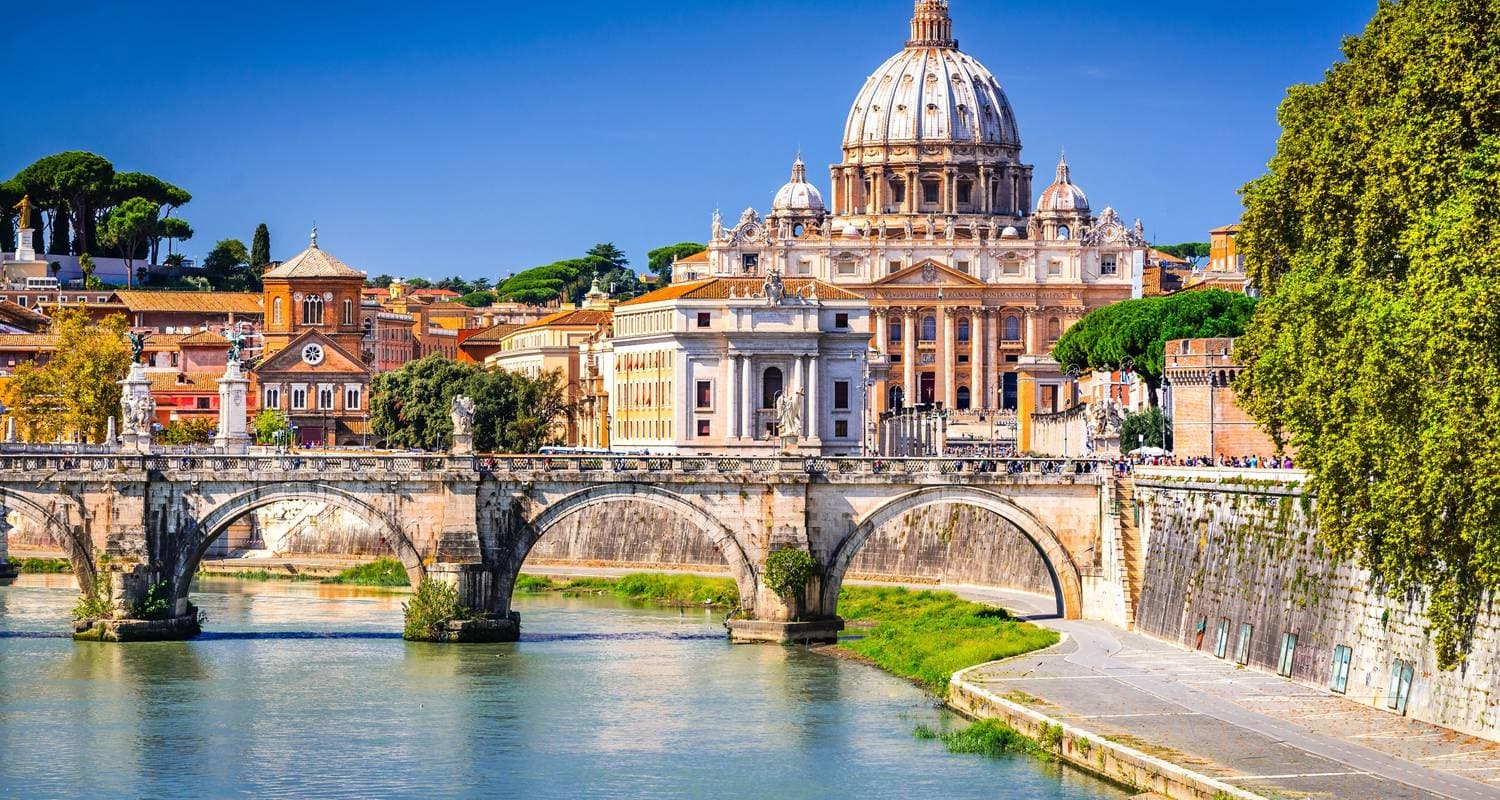
Europe Escape
12 days · Expat Explore Travel
4.5· 868 reviews✓ Instant confirmationtour from €3,284

Scenic Switzerland by Train
9 days · Cosmos
5.0· 452 reviews✓ Instant confirmationtour from €3,532

Europe Jewel
14 days · Expat Explore Travel
4.5· 388 reviews✓ Instant confirmationtour from €3,386
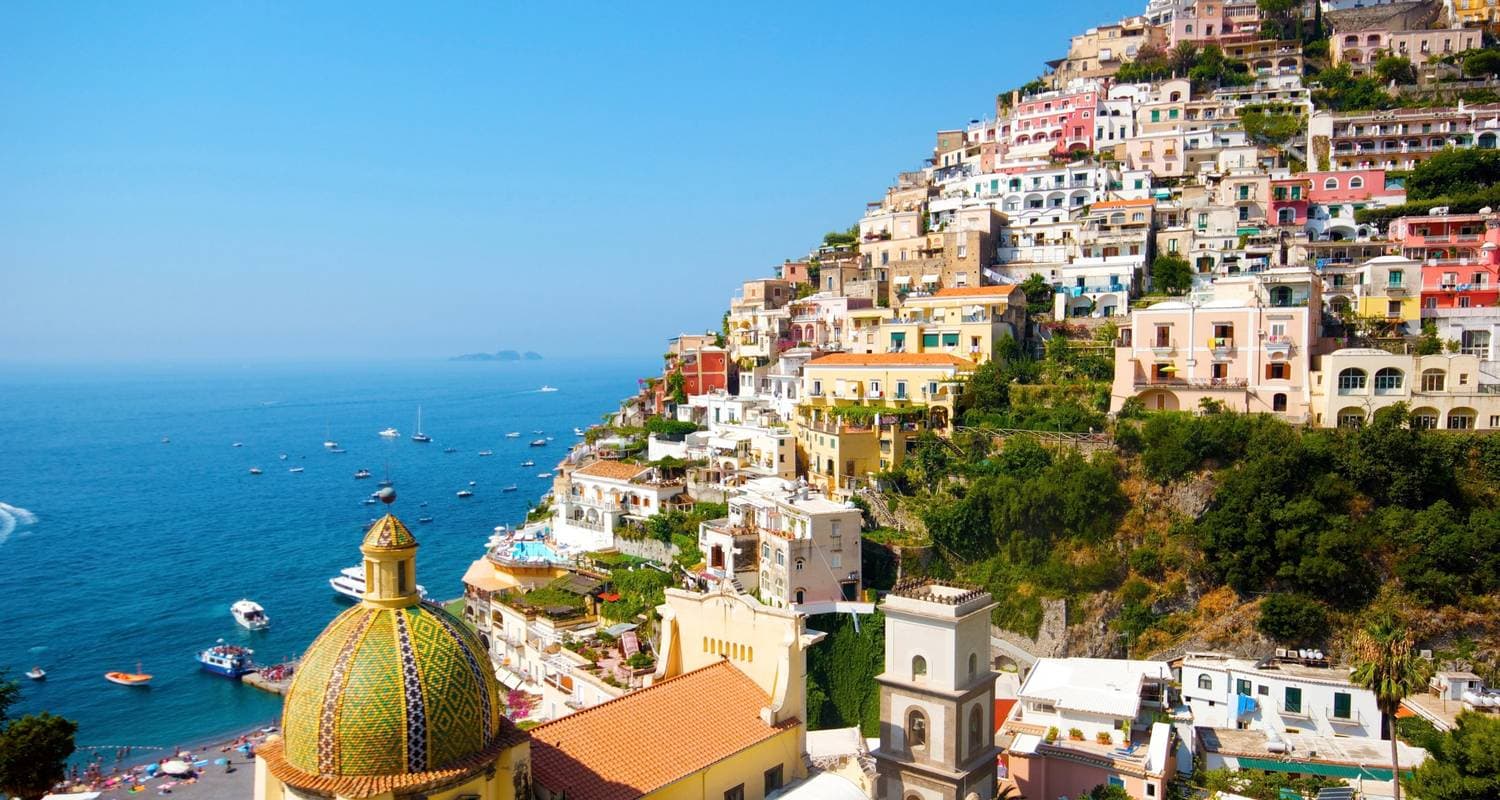
Walking the Amalfi Coast
8 days · Exodus Adventure Travels
4.4· 316 reviews✓ Instant confirmationtour from €2,029
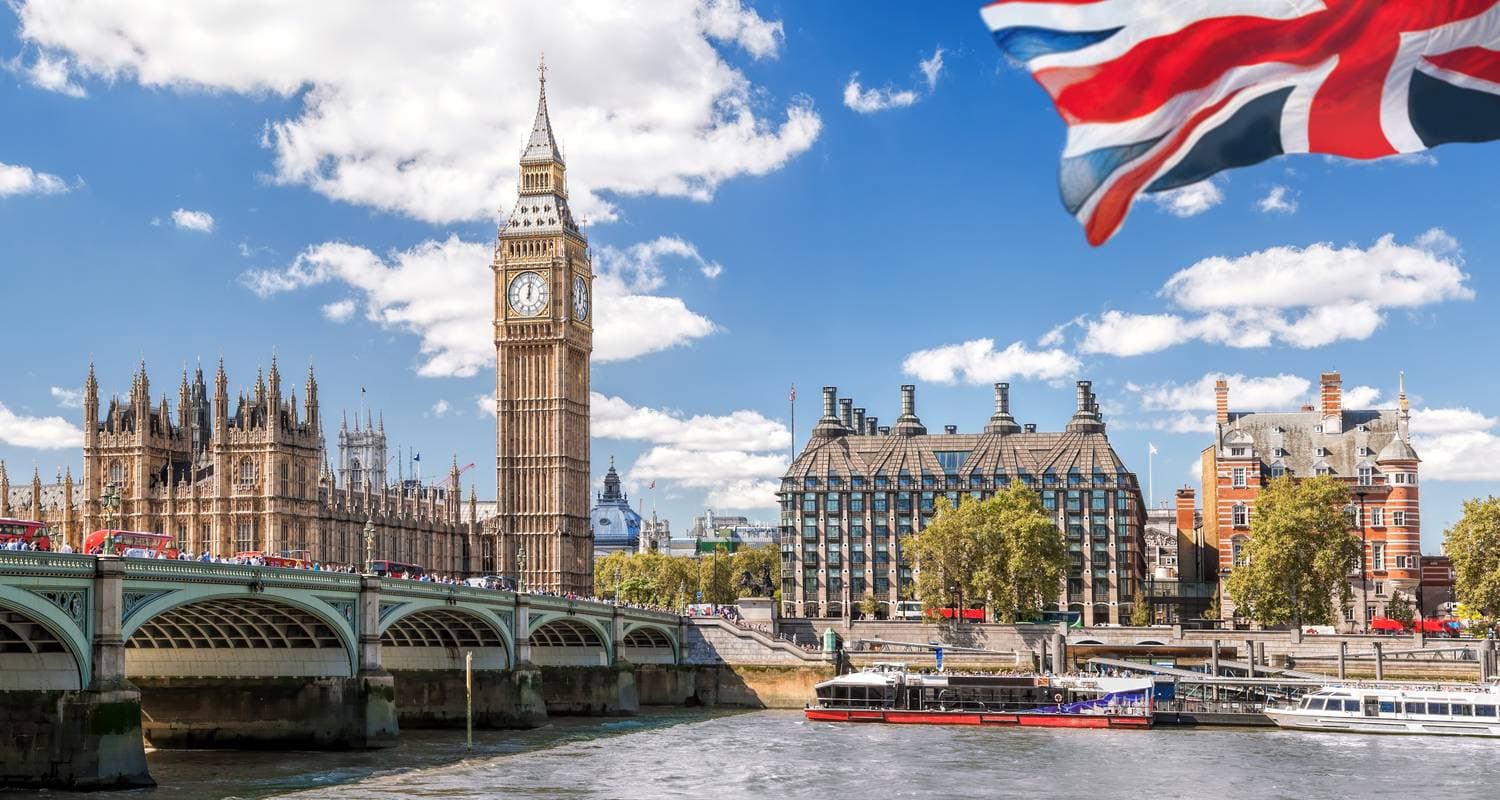
Classic Europe
14 days · Expat Explore Travel
4.6· 289 reviews✓ Instant confirmationtour from €3,358
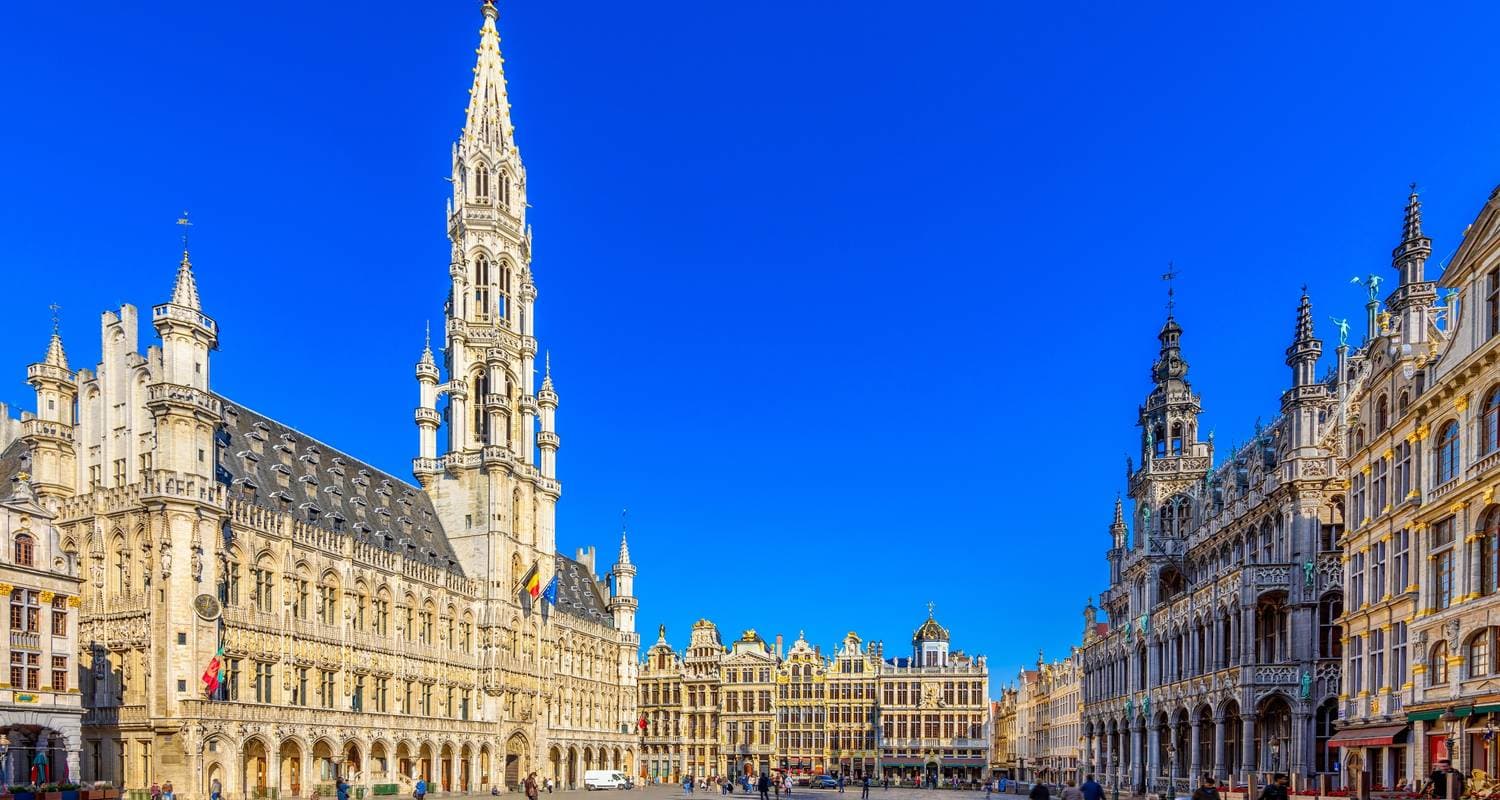
Seven Countries, Venice & Paris
10 days · Cosmos
4.9· 278 reviews✓ Instant confirmationtour from €2,235
The floor, the median, and the fare doing all the work
The cheapest full Italy trip from San Francisco came to €1,603 (≈$1,742) per person — €873 (≈$949) for a five-day southern Italy tour through Naples, Sorrento, the Amalfi coast, Capri, Pompeii and Vesuvius, and €730 (≈$793) for the return flight. The median of all 37 combinations was €2,809 (≈$3,053), and that is the sensible planning number.
The fare is doing almost all the work here. San Francisco's median Italy fare of €739 (≈$803) is €223 (≈$242) above New York's €516 (≈$561) — a forty-three per cent premium on the flight alone. Against Los Angeles, four hundred miles down the coast, SFO is €24 (≈$26) worse on the median and €54 (≈$59) worse on the cheapest complete trip.
That Bay Area premium has an unglamorous cause. San Francisco's long-haul network is weighted towards Asia, not Europe. Its transpacific capacity is exceptional; its transatlantic capacity is thinner than Los Angeles's and far thinner than New York's, and fewer competing carriers on a route means less discounting. You are not paying for distance — Los Angeles is further from Rome — you are paying for a shallower market.
The complete airport-by-airport table sits in the Italy tour cost index from US airports.
Getting from the Bay Area to Italy without overpaying
In October, San Francisco to Rome nonstop is generally available on United, with ITA Airways operating seasonally, and Milan served on a comparable pattern. Eastbound the nonstop runs about eleven and a half hours. The seasonal services taper through late autumn, so by November your realistic choices narrow considerably.
One-stop routings through Heathrow, Frankfurt, Amsterdam, Paris or Munich carry most of the discounting and add roughly four to six hours door-to-door. Given how high SFO's baseline fare sits, the saving from accepting a connection is usually worth more here than from almost any other American airport — commonly €150 (≈$163) to €250 (≈$272).
The positioning play deserves a fair hearing from the Bay Area, because the numbers are larger than elsewhere. A domestic leg to New York or Boston followed by a transatlantic departure from that market can beat a through-fare from SFO, and the gap to New York is €186 (≈$202) on the cheapest complete trip. Book it on one ticket. Count the elapsed time honestly. And do not do it on a short tour, where you will spend a meaningful fraction of the holiday in American airports to save the price of two dinners in Rome.
The more comfortable advice for most Bay Area travellers is simpler: check Oakland and San Jose as well as SFO, and check Los Angeles if you were already going to be down there. Otherwise, accept the connection, take the saving, and put it into a longer tour.
Given the fare, buy length rather than polish
Italy's land prices sort into the usual three bands. Below €1,000 (≈$1,087) buys a short single-region trip — the Amalfi and Naples loop, a Rome and Vatican package, a few days around Venice — generally three-star and generally staying outside the historic centre. Between €1,000 (≈$1,087) and €2,200 (≈$2,391) sits the classic eight- to twelve-day Rome, Florence and Venice run, which is where Italy delivers most reliably. Above €2,200 (≈$2,391) you are buying agriturismo nights, private guiding at the major sites, cooking days, and boats instead of ferries.
From San Francisco the planning logic is unusually clear-cut, because the fare is both high and fixed. Whatever you spend on flying, you spend it whether the tour is five days or fifteen. So the cost per day of holiday drops steeply as the trip lengthens, and a short Italian itinerary is close to indefensible from the Bay Area. If the calendar allows only a week, Italy is arguably the wrong destination from here — Mexico, Costa Rica or Peru give you far more holiday per dollar of airfare.
When you do go, the upgrade that repays best is group size rather than hotel grade. Italy's headline sites run timed entry with hard caps, so a group of fourteen and a group of forty have materially different days at the Vatican Museums, the Uffizi and Pompeii. Operators capping in the mid-teens sit roughly €200 (≈$217) to €400 (≈$435) above coach tiers — a small share of a trip that already carries a €730 (≈$793) fare.
Excluded from every tier: guide and driver tips, dinners beyond half-board, optional excursions, and the accommodation tax collected in cash at Italian hotels. About €35 (≈$38) a day. There is a stronger argument from San Francisco than from anywhere else for not treating Italy as a single-country trip. When the fare is €730 (≈$793) and the flight is eleven and a half hours before connections, the marginal cost of adding a second country to the itinerary is unusually low — you have already paid the expensive part. Rome pairs naturally with Athens or Malta, Milan with Switzerland or the French Riviera, and Venice with Slovenia and Croatia, all on short and cheap intra-European hops or trains.
Multi-country tours generally cost €80 (≈$87) to €150 (≈$163) a day rather than the €110 (≈$120) to €200 (≈$217) a day of a single-country Italian trip, because the operator is moving you through less expensive territory for part of the time. For a Bay Area traveller who is going to be on a plane for most of a day regardless, that is the clearest route to a better trip for the same money — and it is why the Balkans-and-Italy and Greece-and-Italy combinations sell disproportionately well to west-coast customers.
If you do stay in Italy alone, buy the internal transport quality rather than the hotel grade. Italy's high-speed rail is excellent and a tour that uses it instead of a coach between Rome, Florence and Venice will save you six or seven hours over a fortnight — real holiday time, recovered. Operators do not always make it obvious which they use; the itinerary wording is usually the tell, and it is worth asking directly before booking.
Finally, watch the October cut-off in the north. Lake and alpine itineraries start winding down from mid-month, with properties closing and boat timetables thinning, while the south stays warm into November. From an airport this expensive it is worth confirming that everything on the printed itinerary actually runs in your chosen week. Operators are generally honest about seasonal closures when asked directly, but they rarely volunteer them, and a lake cruise replaced by a coach transfer is the kind of substitution that only becomes visible on arrival.
The Italy tour cost guide covers the land side by region.
Worst for Italy, best for Japan — why the ranking flips
Ranked by cheapest complete Italy trip, our eight gateways came out: New York €1,417 (≈$1,540), Boston €1,443 (≈$1,568), Los Angeles €1,549 (≈$1,684), Miami €1,566 (≈$1,702), Dallas–Fort Worth €1,591 (≈$1,729), San Francisco €1,603 (≈$1,742), Chicago €1,613 (≈$1,753), Seattle €1,633 (≈$1,775). On median fare alone San Francisco is last of the eight.
Now run the same exercise for Japan and the table inverts. San Francisco comes *first*, at €1,496 (≈$1,626) for the cheapest complete trip — ahead of New York, ahead of Los Angeles, and €572 (≈$622) ahead of Chicago, which finishes last. The Bay Area's thin transatlantic network is the flip side of the deepest transpacific network in the United States.
This is the most useful thing in our whole dataset, and it is invisible if you only ever price one destination. Your home airport is not simply cheap or expensive; it is cheap or expensive *per direction*. San Franciscans should treat Europe as the trip where they shop hard, accept a connection and consider positioning east — and treat Asia as the trip where they are already sitting in the best market in the country and should just book.
It also means the Italy penalty is smaller than it feels in context. The Italy spread across America is €216 (≈$235), about thirteen per cent of the cheapest trip. The Japan spread is €572 (≈$622), well over a third. Airport choice is a minor factor on a European tour and a major one on an Asian tour. If Japan is on the list, what a Japan tour costs from San Francisco is the better read.
Cutting a San Francisco to Italy total
Take the connection. From most American airports this is optional advice; from San Francisco it is the main lever, worth €150 (≈$163) to €250 (≈$272) because the nonstop premium here sits on top of an already high base fare.
Travel late in the shoulder. Late October and early November price well below the start of October, and southern Italy holds its weather. Fares are far more seasonal than land prices, so the combined total falls faster than either half on its own.
Go long. This matters more from the Bay Area than anywhere else in our index, because the €730 (≈$793) fare is a fixed cost spread across however many days you buy. Ten to fourteen days is the range where an Italian trip from San Francisco starts to look like good value; five days does not.
Fly open-jaw. Into Milan and out of Rome, or the reverse, usually prices within €50 (≈$54) of a return, and Italian itineraries almost never finish where they start.
Price the positioning leg honestly if you are chasing the floor — one ticket, longer trips only, and count the lost day as a real cost rather than a rounding error.
And if you are travelling solo, settle the single supplement before anything else. Sole occupancy commonly adds €350 (≈$380) on a ten-day Italian tour, more than every other saving here combined. Shoulder waivers and share-matching exist but are never advertised. Then price the tour and the flight together, because the same itinerary three weeks apart can differ by €400 (≈$435) once an SFO fare is attached, and the cheaper departure is not predictably the earlier one.
Ready to price your trip?
Enter your origin airport and month — we'll search live flight and tour prices and give you one bundled total per person.
Find combosFAQs
How much does an Italy tour cost from San Francisco?
The cheapest complete trip we priced was €1,603 per person — €873 of tour plus a €730 return fare from SFO, for a five-day Naples and Amalfi itinerary in October 2026. The median across all 37 combinations was €2,809. Both figures include the return flight.
Why are flights from San Francisco to Italy so expensive?
Because the Bay Area's long-haul network points at Asia rather than Europe. SFO has exceptional transpacific capacity and comparatively thin transatlantic service, and fewer competing carriers means less discounting. Its median Italy fare of €739 is the highest of the eight US airports we price, despite Los Angeles being further from Rome.
Is San Francisco a bad airport for tours generally?
No — only for Europe. For Japan, San Francisco is the cheapest gateway in the United States at €1,496 for a complete trip, ahead of New York and €572 ahead of Chicago. Home airports are cheap or expensive by direction, not overall, which is why pricing a single destination gives a misleading picture.
Should I fly to New York first to reach Italy more cheaply?
The gap is €186 on the cheapest complete trip, so the arithmetic is worth running. Book it as one ticket so the airline owns any misconnection, and only consider it on a longer tour — on a short itinerary you spend a real fraction of the holiday in American airports to save modest money.
How long should an Italy trip from the Bay Area be?
Ten to fourteen days. The €730 fare is fixed whatever the tour length, so cost per day of holiday falls sharply as you extend. A five-day Italian trip is hard to justify from San Francisco; if you only have a week, a destination closer to the west coast will give you far more holiday per dollar of airfare.
Watching a trip?
Once a month: where all-in prices actually dropped, from your airport. No spam, unsubscribe anytime.
Related destinations
- Italy Multi-Day Tours with Flights from €1,750Rome, Florence and Venice in ten days, or a full Grand Tour …
- Greece Multi-Day Tours with Flights from €1,220Athens and the Acropolis, Meteora's monasteries, the Santori…
- Portugal Multi-Day Tours with Flights from €1,325Lisbon trams, Porto's Ribeira, terraced vineyards of the Dou…
- Spain Multi-Day Tours with Flights from €1,115Madrid, Seville, Granada and Barcelona on the AVE, stitched …
Related tour styles
Best for these travellers
- Tours for Couples with Flights IncludedGuided multi-day trips that work for two — small-group socia…
- Tours for Seniors with Flights IncludedMulti-day guided tours for over-55 travellers: gentler pacin…
- Solo Travel Tours with Flights IncludedGuided multi-day tours built around solo travellers: small g…
Pick by trip length
Plan this trip from your city
- Multi-Day Tours from Los Angeles with Flights IncludedPackage tours from Los Angeles with flights included — one U…
- Multi-Day Tours from New York with Flights IncludedMulti-day tours from New York with flights included — one US…
- Multi-Day Tours from Toronto with Flights IncludedPearson is Canada's biggest long-haul hub, and with a weak l…
- Multi-Day Tours from London with Flights IncludedBuilt for London travellers: LHR for long-haul, LGW for Euro…
Deeper reading
- What an Italy Tour Costs from New York, Flights IncludedThirty-seven Italy tours priced with a real JFK fare attache…
- What an Italy Tour Costs from Los Angeles, Flights IncludedThirty-seven Italy tours priced with a real LAX fare attache…
- What an Italy Tour Costs from Chicago, Flights IncludedO'Hare has the connections but not the bargains. The cheapes…
- How Much Does an Italy Tour Cost? The Honest All-In NumberSeven to ten days in Italy, flights folded in, comes to roug…
- The Perfect 10-Day Italy Itinerary (Route, Day by Day)Ten days is the Italy sweet spot: Rome, Florence and Venice …