
Italy Multi-Day Tours with Flights from €1,750
Rome, Florence and Venice in ten days, or a full Grand Tour that adds Amalfi, Cinque Terre and Sicily. Tour and flights priced together, in euros.
Edited by Multiday.tours editor
- ✓8-day small-group Italy tours from around €1,750 before flights
- ✓10-day Rome-Florence-Venice coach tours €2,300-€3,000 before flights
- ✓Return flights from EU capitals to FCO/MXP/VCE €40-€250 shoulder season
- ✓Best months: April, May, September and October
- ✓Sicily and Puglia add-ons 15-25% cheaper than Tuscany
- ✓Specialist operators: Expat Explore, Dimensione Sicilia, Soleto Travel, Sicily Activities, Click Tours
No country rewards a guided trip quite like Italy, and no country gives you more ways to take one. The choice is genuinely yours: dozens of operators, every conceivable style, and a price spread wide enough that almost any budget finds a home. A solid 8-day small-group tour starts from around €1,750 per person, with most travellers landing nearer €2,250, and the polished coach trips from Expat Explore Travel or Insight climbing past €3,000. Fold in a return flight from a European hub and a week to ten days comes in at roughly €1,900 to €3,400 all-in. What follows is the honest lay of the land: the classic Rome-Florence-Venice spine, how north, centre and south actually trade off, the difference between a 50-seat coach and a truffle hunt, the months worth booking, and what it costs to fly into FCO, MXP, VCE and NAP in 2026.
The tours doing the heavy lifting here
Prices are tour-only — add flights for the real total. You book the tour itself on TourRadar.
Europe Escape
12 days · Expat Explore Travel
4.5· 868 reviews✓ Instant confirmationtour from €3,284
Scenic Switzerland by Train
9 days · Cosmos
5.0· 452 reviews✓ Instant confirmationtour from €3,532
Europe Jewel
14 days · Expat Explore Travel
4.5· 388 reviews✓ Instant confirmationtour from €3,386
Walking the Amalfi Coast
8 days · Exodus Adventure Travels
4.4· 316 reviews✓ Instant confirmationtour from €2,029
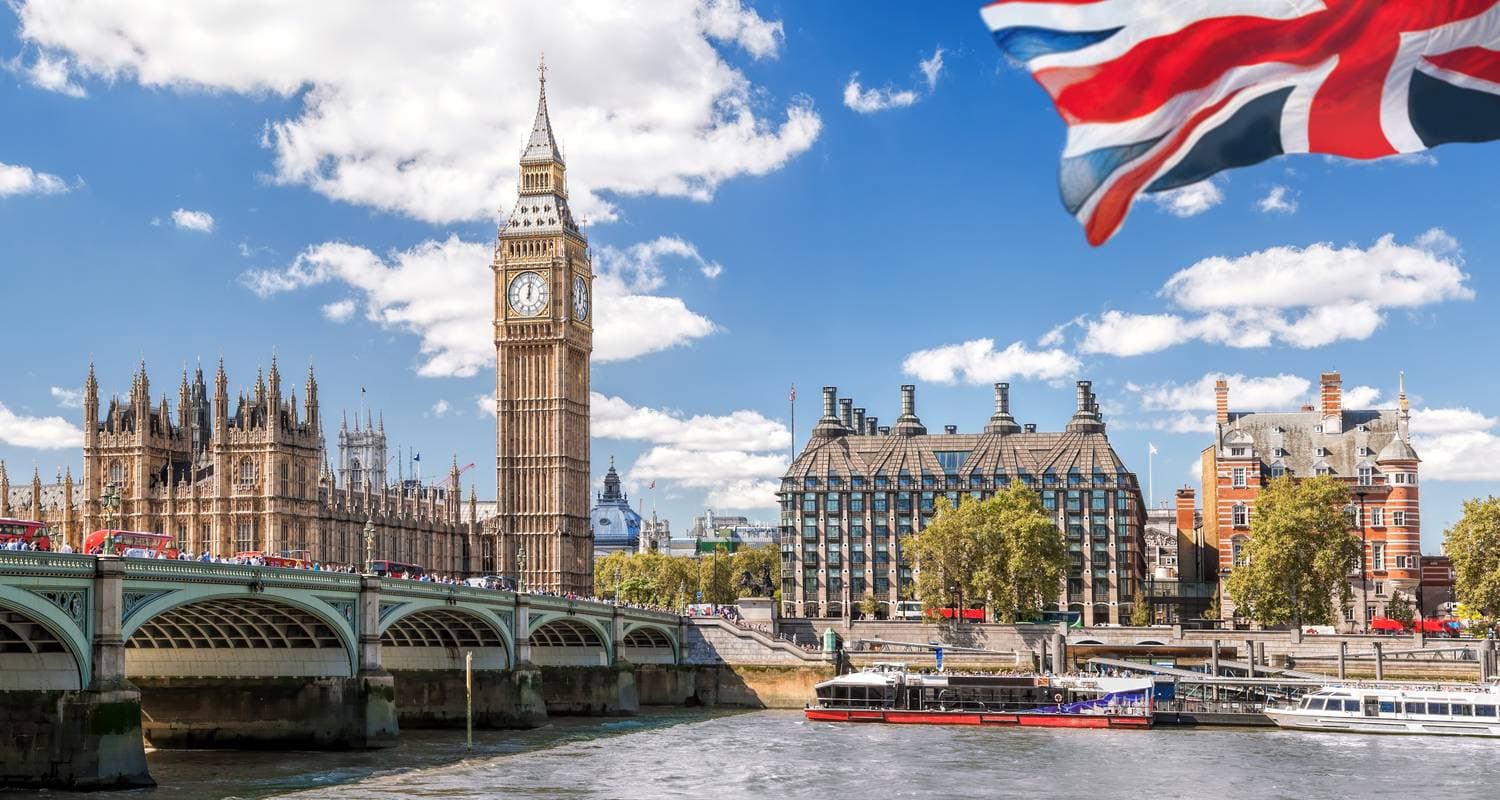
Classic Europe
14 days · Expat Explore Travel
4.6· 289 reviews✓ Instant confirmationtour from €3,358
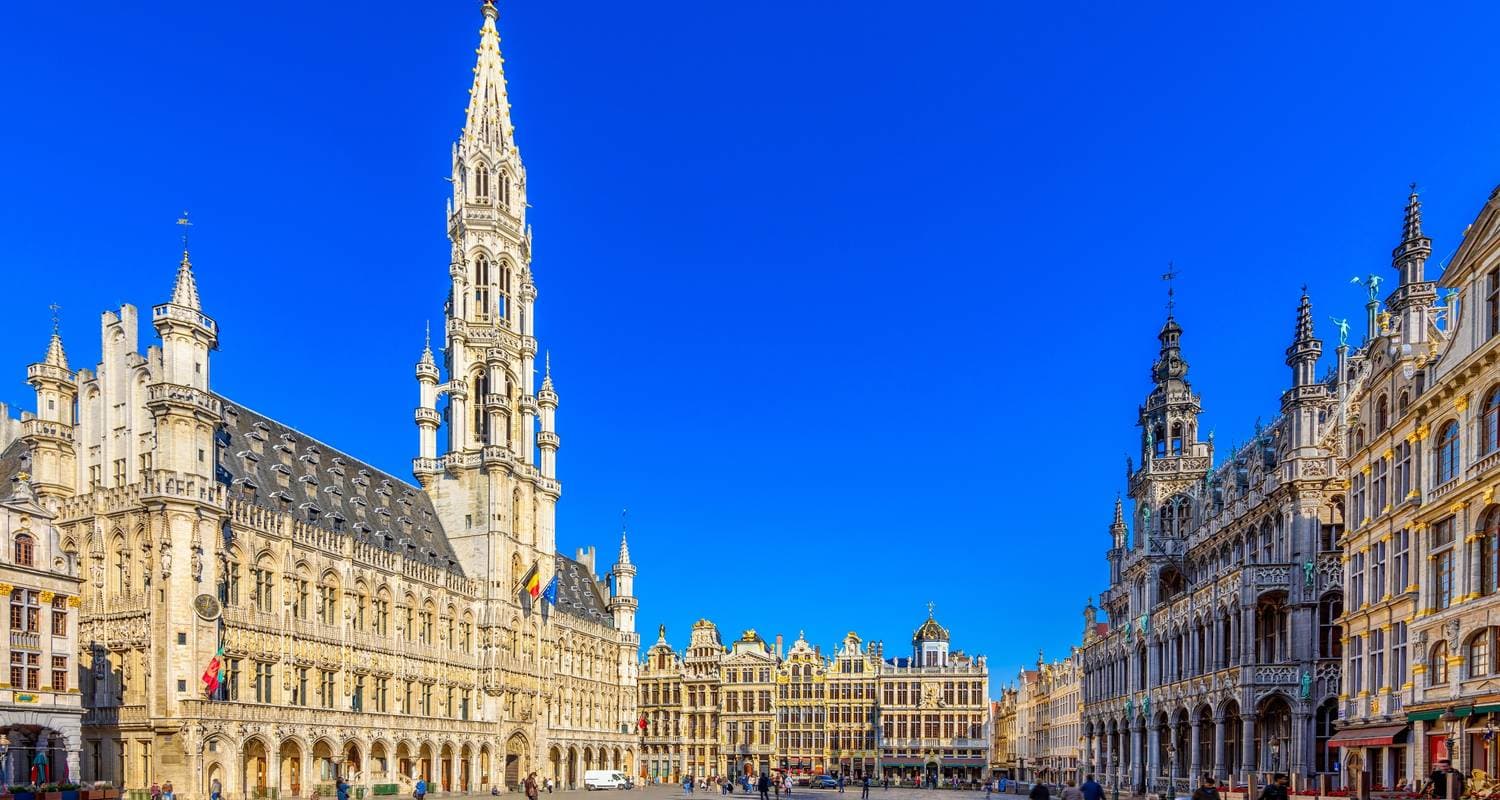
Seven Countries, Venice & Paris
10 days · Cosmos
4.9· 278 reviews✓ Instant confirmationtour from €2,235
What a classic Italy tour actually covers
Rome-Florence-Venice in 8 to 10 days is the trip first-timers default to, and every operator runs a version of it for one simple reason: it works. Rome gives you two full days, one for the Vatican and Sistine Chapel, one for the Colosseum, Forum and an evening loose in Trastevere. Florence gets a day and a half for the Uffizi, the Duomo climb, and a side trip out to Chianti or San Gimignano. Venice is another day and a half of San Marco, the Doge's Palace, and the real pleasure here: getting happily lost the moment you step off the main drag. Carrani Tours runs a compact 5-day version of exactly this from around €1,160 per person land-only, which works if time is tight, though you will feel Florence go by in a blur.
If you can stretch to 15 days or more, the Grand Tour is the one to chase. Add Amalfi for two or three nights of Positano, Ravello and a boat day to Capri; Cinque Terre for two nights walking the trail between the five villages; Puglia for the trulli of Alberobello and Baroque Lecce; or Sicily as a week-long coda through Palermo, Taormina and Agrigento. Dimensione Sicilia and Sicily Activities both run dedicated 8-day Sicily tours from around €1,525 up to €2,500 land-only, and they slot neatly onto the end of a mainland run.
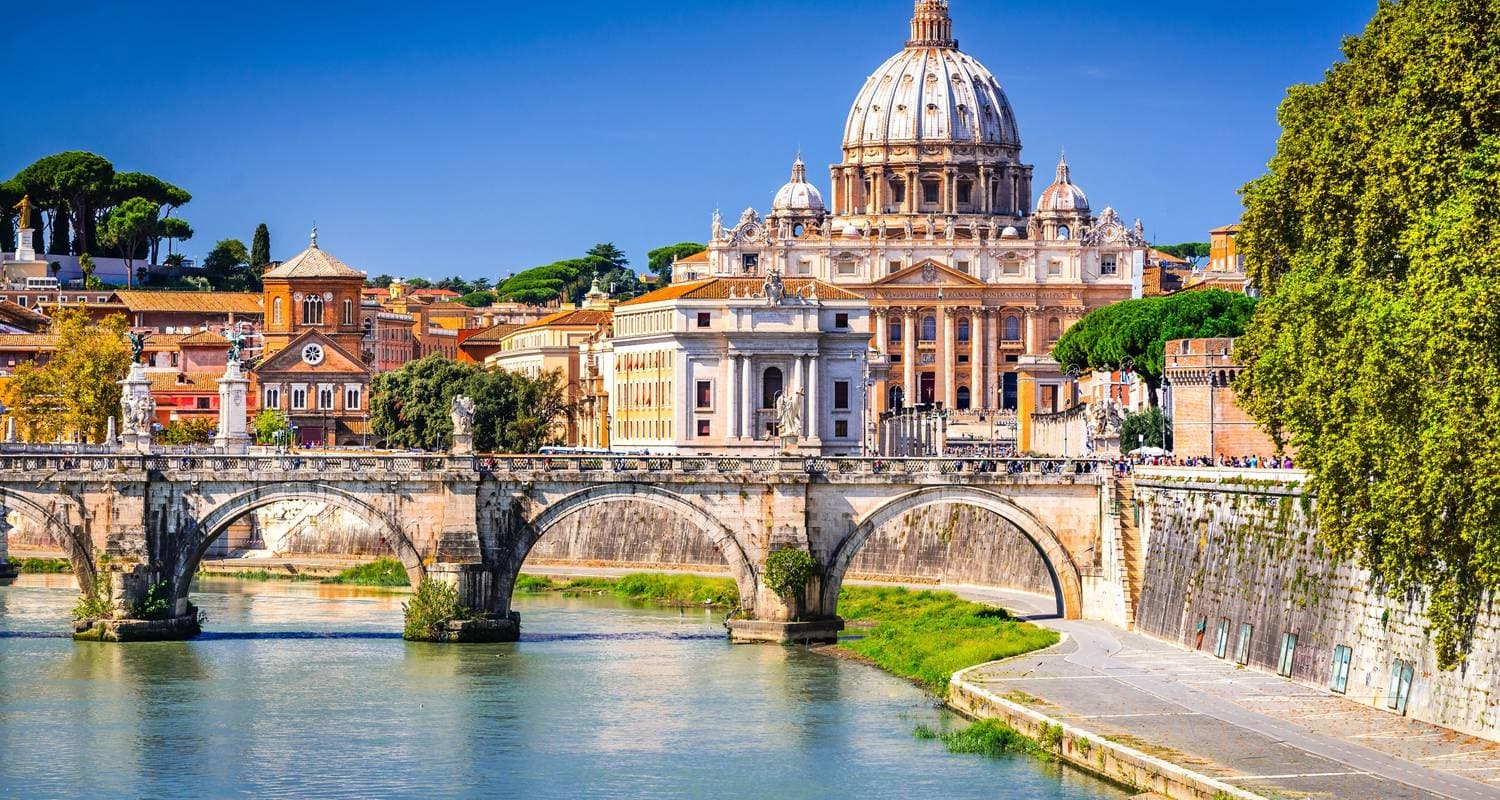
The Grand Tour also suits anyone treating Italy as the centrepiece of one big European trip. Expat Explore Travel's 12-day Europe Escape, from around €3,285, threads Italy into a wider loop through Switzerland, France and Spain. It is a different sort of trip, but worth knowing it exists.
North, centre or south: the regional trade-offs
Northern Italy is Alpine and lake country, and it is where the air gets crisp. The Dolomites serve up the finest summer hiking on the continent, the Alta Via 1 and the Tre Cime loop chief among them, with rifugio stays at €80-€120 per night half-board to break up the days. Lake Como, Garda and Maggiore move at a gentler pace, all ferry-hopping between towns like Bellagio and Varenna, while Milan and Verona anchor the cities. The catch is the bill: a week in the Dolomites or on the lakes runs 20-30% above a comparable week down south, and your flights tend to funnel through Milan MXP or Venice VCE.
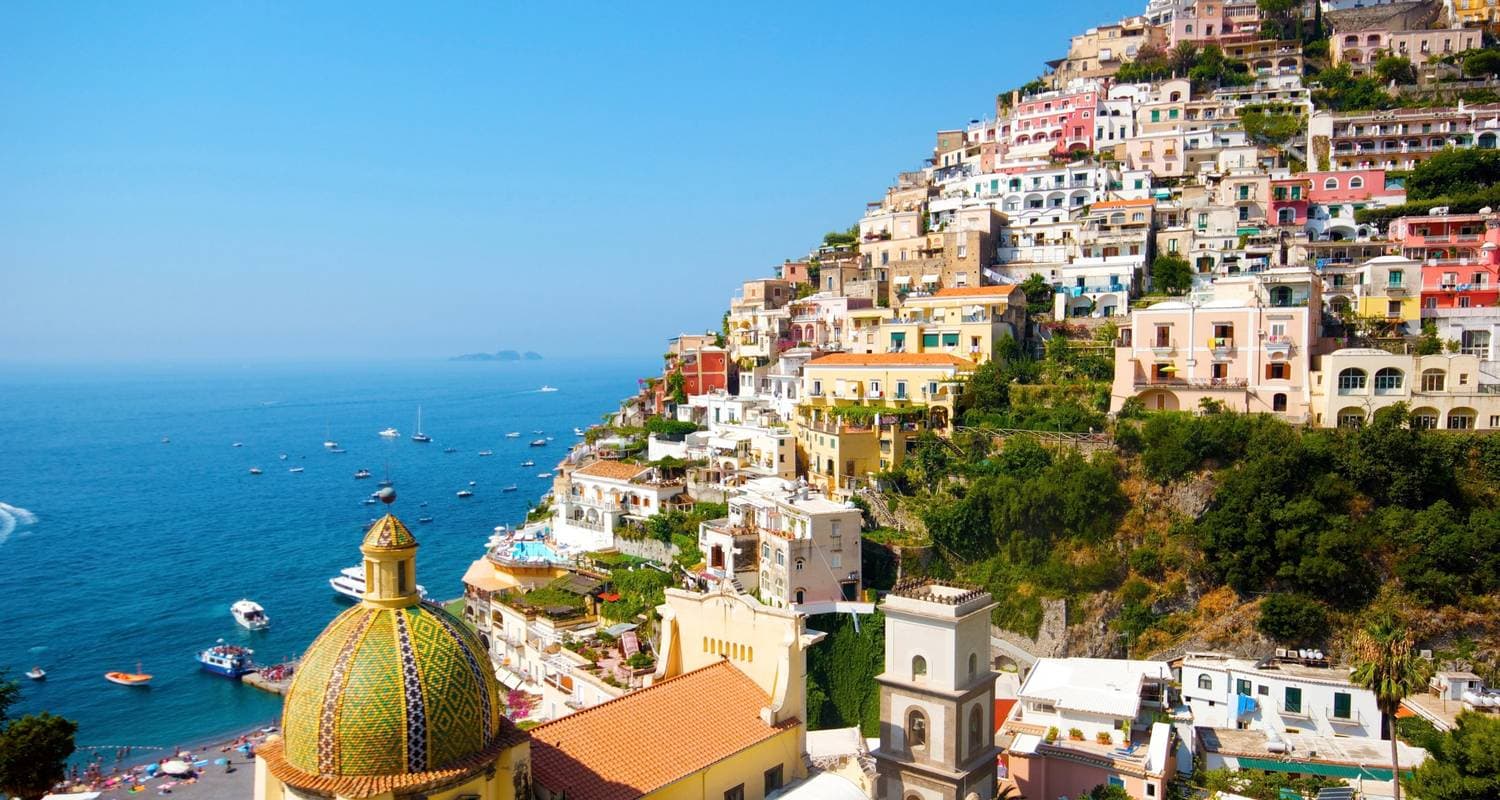
Central Italy is where the art and the Tuscan light live. Florence, Siena, Pisa, San Gimignano, Arezzo and Perugia all sit within 90 minutes of one another, which makes the region tailor-made for small-group tours that settle into an agriturismo for two or three nights. Explore!'s 8-day Amalfi Coast Walking, based out of a farm stay, runs around €1,905 and captures the whole appeal: a family-run kitchen, half your days spent on foot, and meals cooked from what is local. Reckon on €1,700-€2,400 land-only for a week here.
Southern Italy is where your wallet finally exhales. Naples, the Amalfi Coast, Puglia, Calabria and Sicily come in 15-25% cheaper than Tuscany for the same standard of hotel, and plenty of travellers will tell you the food beats anything further north. The trade-off is the heat: Palermo and Lecce regularly hit 36-38°C in July and August, and coach tours with long drive days turn punishing. For real on-the-ground depth in the south, look to Dimensione Sicilia, Soleto Travel (the Puglia specialist) and Sicily Activities.
Coach, small-group or food-focused: pick your style
Classic coach tours carry the most travellers through Italy, and for good reason. Expat Explore Travel, Trafalgar, Insight Vacations, Collette and Gate 1 Travel all run 50-seat itineraries covering Rome-Florence-Venice plus extensions, at €2,300-€3,500 for 10-12 days land-only. The appeal is that nothing is left to you: logistics handled, hotels booked, guided walks laid on, and a tour manager smoothing every wrinkle. Expat Explore's European Highlights, around €2,325 for 10 days, is the value pick; Insight and Trafalgar charge 20-30% more for smarter hotels and tighter groups of 25-35.
Small-group tours of 10-16 people are the home turf of Exodus, Intrepid, G Adventures and Explore!. G Adventures runs several 8-12 day Italy trips from around €1,800 up to €2,600, with better local restaurants and more room to breathe than the big coaches allow. Intrepid's Real Food Adventures and Exodus' walking trips lean into cooking classes, market mornings and unhurried days. If the thought of 50 people on one bus makes you wince, this is your lane.
Food-focused Italy is a world of its own. The country's specialists, Click Tours, Dimensione Sicilia, Soleto Travel and Sicily Activities among them, build trips around Barolo tastings, truffle hunts in Piedmont, pasta masterclasses in Bologna, or a full week eating your way across Sicily from Palermo to Syracuse. Expect 8-16 guests, €2,000-€3,000 land-only for the week, and a genuine feel for the region you are in. Click Tours' 5-day Italy City Break, around €2,005, is a shorter way in.
Best time to visit Italy and what it costs you
April, May, September and October are the shoulder months, and they are, without much argument, the finest time to tour Italy. Daytime highs of 18-25°C, queues at the Vatican and Uffizi that actually move, and tour prices running 10-20% below the June-August peak. October has a particular pull: it is vendemmia, the wine harvest, across Tuscany and Piedmont, so if a food tour is what you are after, this is the month to lock in.
July and August are hot and heaving. Rome and Florence hover at 32-36°C with sticky humidity, the south worse still. The locals decamp to the coast, and many family-run kitchens shut for two or three weeks around Ferragosto in mid-August. Prices climb 15-25%, Vatican queues stretch to three hours, and Venice is no fun at all. Go only if the school calendar leaves you no choice, and tilt your route north to the Dolomites and lakes, where the heat stays civil.
Winter, from late November through March and skirting Christmas, is the window few think to use. Rome holds at 8-14°C, fine for walking, the museums are half-empty, and tour prices fall 25-35%. Christmas and New Year are the exception and spike hard, so book those by September. From December the Dolomites flip to ski season, and Cortina d'Ampezzo and the Val Gardena valley both run well-priced week packages.
April and May bring spring flowers to Tuscany and weather warm enough for Amalfi, though rain is a gamble before mid-April. If you want one safe bet, aim for late September into mid-October.
Getting to Italy: flights from the US, Australia, Canada and Europe
Four airports matter for an Italy tour: Rome Fiumicino (FCO), Milan Malpensa (MXP), Venice Marco Polo (VCE) and Naples Capodichino (NAP). The right gateway depends on where your tour starts, and so does your routing from home.
From the US, Italy is one of the easiest long-haul trips going, and the volume of flights shows it. The East Coast flies direct: New York (JFK and EWR), Boston, Washington, Philadelphia, Atlanta, Miami and Chicago all run nonstop to Rome, and several to Milan, on Delta, United, American, ITA Airways and the partner European carriers, in around 8-9 hours. Reckon on US$650-$950 return in the April-May and September-October shoulder, climbing to US$1,100-$1,500 over the summer peak. From the West Coast (Los Angeles, San Francisco, Seattle) you will usually take one stop through a European hub or an East Coast gateway, 13-16 hours all in, at US$800-$1,300. Book three to five months out for the keenest fares, and longer for July and August.
From Australia it is a genuine long-haul, and worth being clear-eyed about: there is no nonstop, so you connect once through a Gulf hub (Emirates and Qatar via Dubai or Doha) or an Asian one (Singapore Airlines, Cathay), for roughly 22-24 hours door to door from Sydney, Melbourne or Brisbane. Return fares sit around A$1,800-$2,600 in the shoulder and A$2,600-$3,500 over the December-January and mid-year peaks. Italy pairs naturally with a stopover, so break the trip with two or three nights in Dubai, Doha or Singapore on the way through.
From Canada, Air Canada flies direct to Rome from Toronto and Montreal in summer (about 8-9 hours), with one-stop routings the rest of the year and from Vancouver; budget roughly C$900-$1,500 return depending on season.
From the UK and the rest of Europe, the budget carriers make Italy cheap. Bergamo (BGY) and Rome Ciampino (CIA) are the Ryanair back doors. From Dublin, London, Paris, Amsterdam, Frankfurt, Madrid or Barcelona, Ryanair, easyJet, Wizz and Vueling usually run €40-€120 return in shoulder season and €150-€250 at the summer peak; the full-service lines (Aer Lingus, British Airways, Air France, Lufthansa, ITA Airways) sit at €150-€280 in shoulder and €300-€450 in peak, with a checked bag and seat selection included.
Open-jaw routing is where the real savings hide whatever your origin. The classic Rome-Florence-Venice run finishes in Venice, so flying into Rome and home out of Venice, rather than doubling back, saves you a day and usually lands within a whisker of the round-trip fare. Sicily tours generally start and end at Catania (CTA) or Palermo (PMO), so fly into one and out of the other if your route crosses the island.
Bundle on Multiday.tours and you see the live Kiwi flight price from your own airport sitting right beside the tour, in your currency, so you can weigh the true cost of the whole trip before you commit to either booking.
Flying from the States? We've already done the sums once: the same October trip priced from eight US airports, coast to coast — Italy tour costs from eight US airports, priced.
Ready to price your trip?
Enter your origin airport and month — we'll search live flight and tour prices and give you one bundled total per person.
Find combosCommon questions
How much does a 10-day Italy tour cost with flights?
Budget €2,400-€3,400 per person all-in from most European cities. That stretches to a small-group or mid-range coach tour (€2,000-€2,800 land-only with guide, hotels, most breakfasts and some dinners from the likes of Expat Explore, G Adventures or Click Tours), return flights from an EU hub to Rome or Venice (€100-€280), tips (€50-€80), your own lunches and the occasional independent dinner (€250-€400), and a little headroom for museums and trains (€80-€150). Step up to a premium coach tour from Insight Vacations or Trafalgar and the total climbs to €3,800-€4,800.
Is Italy safe for tourists in 2026?
Yes. Italy is rated exercise-normal-precautions by Irish, UK and most EU foreign ministries, and violent crime against tourists is rare. The genuine risks are smaller and easily dodged: pickpockets on Rome's public transport (Termini station, the number 64 bus to the Vatican), around the Trevi Fountain and on the Venice vaporetti, plus the odd taxi trying it on from Rome Fiumicino if you skip the flat-rate €50 city fare. Keep your phone in a front pocket, use the official taxi queue, and you will be fine. Travelling on a tour here is about as low-stress as Europe gets.
Big coach tour or small-group — which is better for Italy?
Coach tours (Expat Explore, Trafalgar, Insight, Collette, Gate 1) are efficient and cheap by the day, but you share a 40-50 seat bus and you keep moving. Small-group trips (G Adventures, Intrepid, Exodus, Explore! with 10-16 guests) cost 20-40% more, take their time, favour smaller hotels and local kitchens, and leave you longer on the ground at each stop. For a first trip to Italy on a tight clock, the big coach earns its keep. If you have done Europe before, or you came for the food, go small-group.
When is the cheapest time to visit Italy?
Late November through mid-March, leaving aside the Christmas and New Year window. Tour prices fall 25-35% off the summer peak, flights from an EU hub drop to €40-€120 return, and Rome and Florence are a pleasure to walk at 8-14°C. The trade-offs are shorter days and a handful of rural agriturismos that shut from November to March. For the best balance of price and weather, aim for late September or the first half of October: 15-20% cheaper than July and August, and in far kinder conditions.
Tuscany, Amalfi or Sicily — which should I pick for a week?
Tuscany if art, wine and rolling hills are what you are after; base yourself in Florence or an agriturismo near Siena and day-trip out to San Gimignano, Pisa and Chianti. Amalfi if you want a romantic coastal week with boat days to Capri and Positano, though be warned it heaves June to August and the coastal road crawls. Sicily if you want the most food for your euro in Italy, ancient Greek ruins at Agrigento and Taormina, and noticeably fewer fellow travellers. Sicily Activities and Dimensione Sicilia both run solid 8-day island tours.
What should I pack for an Italy tour?
Proper walking shoes with real soles. Rome, Florence and Venice mean 10-15 km a day on cobbles, and sandals will have wrecked your feet by day three. Pack modest layers for the churches, since the Vatican, the Duomo and St Mark's all want shoulders and knees covered and will turn you away otherwise. A light rain shell for April-May and October-November. A refillable water bottle, because Italian tap water is excellent and the public fountains are everywhere and free. A power adapter for Type F/L plugs. And around €200-€300 in cash for tips, small cafes and markets; cards handle the rest.
Related destinations
- Greece Multi-Day Tours with Flights from €1,220Athens and the Acropolis, Meteora's monasteries, the Santori…
- Portugal Multi-Day Tours with Flights from €1,325Lisbon trams, Porto's Ribeira, terraced vineyards of the Dou…
- Spain Multi-Day Tours with Flights from €1,115Madrid, Seville, Granada and Barcelona on the AVE, stitched …
- France Multi-Day Tours with Flights from €1,696Paris and the Loire châteaux, then south through Provence la…
- Switzerland Multi-Day Tours with Flights from €1,998The Glacier Express, the Matterhorn and the Jungfrau in ten …
Related tour styles
Pick by trip length
Plan this trip from your city
- Multi-Day Tours from New York with Flights IncludedMulti-day tours from New York with flights included — one US…
- Multi-Day Tours from Los Angeles with Flights IncludedPackage tours from Los Angeles with flights included — one U…
- Multi-Day Tours from Sydney with Flights IncludedLeaving Australia means a long-haul flight whether you like …
- Multi-Day Tours from Toronto with Flights IncludedPearson is Canada's biggest long-haul hub, and with a weak l…
- Multi-Day Tours from London with Flights IncludedBuilt for London travellers: LHR for long-haul, LGW for Euro…
- Multi-Day Tours from Dublin with Flights IncludedPackage tours from Dublin with flights included — one total …
- Multi-Day Tours from Vienna with Flights IncludedVienna is a central-European hub on Austrian Airlines with d…
Deeper reading
- The Best Time to Visit Italy (Month-by-Month, 2026)May and September are the sweet spots. July-August is peak t…
- How to Choose a Guided Tour: A Practical Buyer's GuideWhat to ask before you book. Group size, pace, inclusions, o…
- The Perfect 10-Day Italy Itinerary (Route, Day by Day)Ten days is the Italy sweet spot: Rome, Florence and Venice …
- How Much Does an Italy Tour Cost? The Honest All-In NumberSeven to ten days in Italy, flights folded in, comes to roug…
- What an Italy Tour Costs from New York, Flights IncludedThirty-seven Italy tours priced with a real JFK fare attache…
- What an Italy Tour Costs from Los Angeles, Flights IncludedThirty-seven Italy tours priced with a real LAX fare attache…
- What an Italy Tour Costs from Chicago, Flights IncludedO'Hare has the connections but not the bargains. The cheapes…
- What an Italy Tour Costs from San Francisco, Flights IncludedSan Francisco has the priciest median fare to Italy of any U…