
The Best Time to Visit Thailand (Month-by-Month, 2026)
November-February is peak. The Gulf-vs-Andaman monsoon flip lets you travel profitably year-round.
By Adam, founding editor · Updated 18 June 2026
- ✓Best months overall: mid-January to mid-February
- ✓Avoid Chiang Mai March-April (burning season, AQI 200-400)
- ✓Andaman (Phuket/Krabi) dry: November-April
- ✓Gulf (Samui/Phangan/Tao) dry: January-September
- ✓Cheapest month: September (flights 30-40% off)
- ✓Christmas/New Year: 30-50% premium, book 5-6 months ahead
The best time to visit Thailand is November through February: dry weather nationwide, Bangkok highs around 31°C, cool mornings in Chiang Mai, and Andaman seas flat enough for island hopping. That window is also the priciest and busiest. Here is Thailand's quiet trick, though: the Gulf coast (Koh Samui, Koh Phangan, Koh Tao) and the Andaman coast (Phuket, Krabi, Phi Phi) run opposite monsoon calendars, so somewhere on the country's coastline is dry in every single month of the year. Below, we go month by month and region by region, flag the one window worth sidestepping (the late-February to April burning season up north), and point you to the months where flight and tour prices slide 25-40% without spoiling a thing.
The Thailand tours worth timing right
Prices are tour-only — add flights for the real total. You book the tour itself on TourRadar.

Thai Intro 9 Day
9 days · INTRO Travel
4.8· 4,561 reviews✓ Instant confirmationtour from €1,103

Thailand Island Hopper
14 days · TruTravels
4.7· 1,730 reviews✓ Instant confirmationtour from €1,311

Northern Thailand Adventure
14 days · TruTravels
4.8· 1,672 reviews✓ Instant confirmationtour from €1,311

Thailand Experience
8 days · TruTravels
4.7· 1,566 reviews✓ Instant confirmationtour from €823

Thai Intro 12 Day
12 days · INTRO Travel
4.8· 909 reviews✓ Instant confirmationtour from €1,425
Thai Experience
13 days · INTRO Travel
4.8· 597 reviews✓ Instant confirmationtour from €1,770
The monsoon flip: Andaman vs Gulf coasts run opposite calendars
Thailand has two coastlines on different monsoon cycles, and understanding the flip is the single most useful planning insight for any trip that includes beach time.
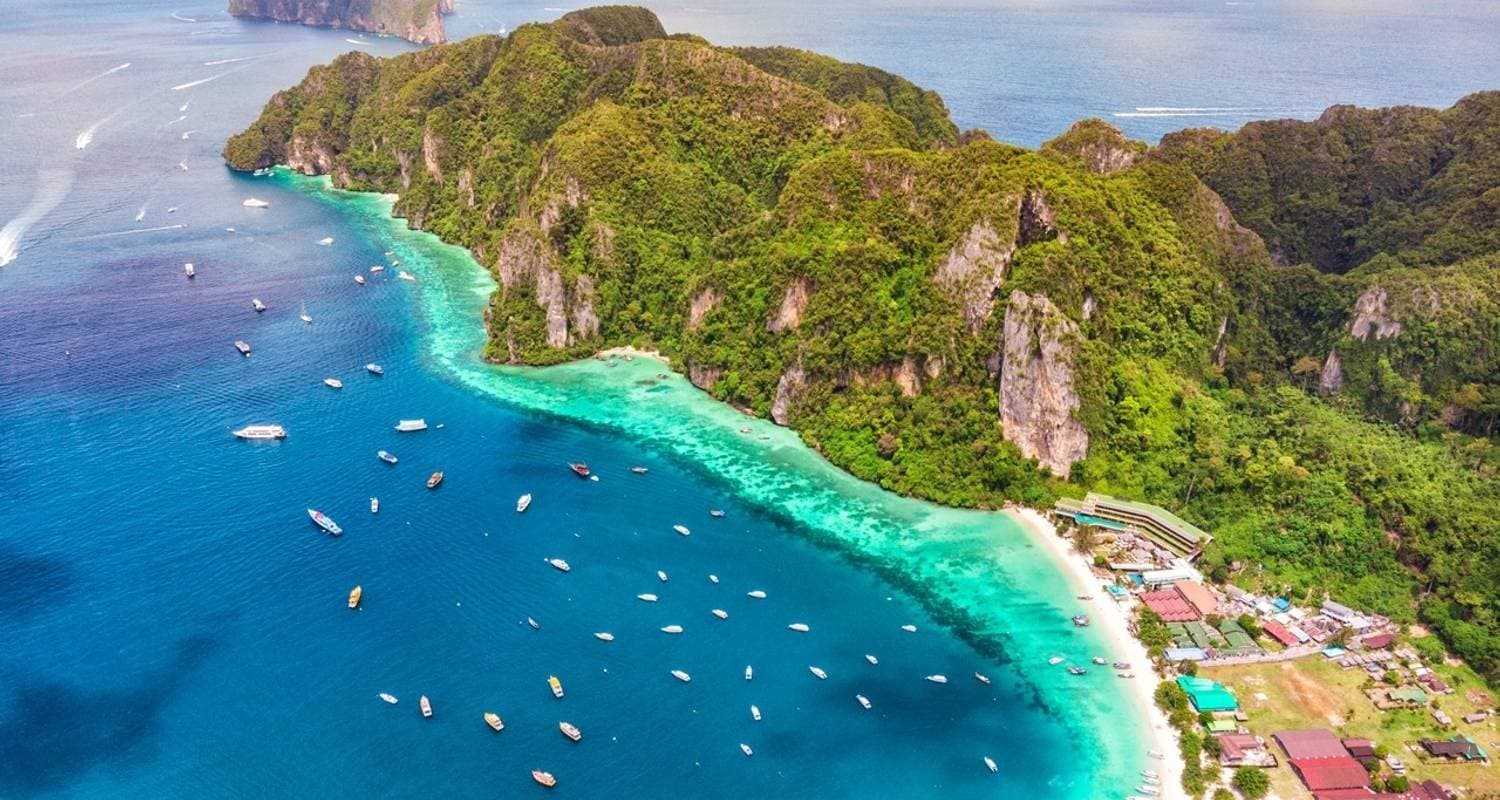
The Andaman coast — Phuket, Krabi, Railay, Koh Phi Phi, Koh Lanta, the Similans — is wet from roughly mid-May through October. The southwest monsoon brings daily rain, choppy seas, reduced ferry service and some resort closures on smaller islands. November to April is the dry Andaman season, with January-March the peak for visibility on dive sites and calm crossings.
The Gulf of Thailand coast — Koh Samui, Koh Phangan, Koh Tao — runs the opposite cycle. Its wet season is roughly October to December, with November the single rainiest month. That is exactly when Phuket is at its driest. The Gulf islands then stay dry and pleasant from January right through September.
The practical upshot: if your travel dates fall in May-October and you want good beach weather, go to Samui or Phangan, not Phuket. If you are travelling in November or December and want reliable sun, go to Phuket or Krabi, not Samui. Only a narrow band — roughly mid-January to mid-April — is genuinely dry on both coasts simultaneously.
Bangkok and the interior follow the southwest monsoon pattern (wet May-October) but rain is usually short afternoon bursts rather than all-day systems, so city sightseeing remains workable year-round.
Month by month: what Thailand actually looks like
January: Bangkok 31°C, Chiang Mai 28°C with 14°C mornings, Phuket 31°C dry, Samui 29°C dry. Peak season in full swing. Tour prices 20-35% above shoulder. Book 3-4 months ahead.
February: Very similar to January, slightly warmer. Chinese New Year spike around Feb 17. Best all-round month for the classic north-south circuit. Normal peak pricing.
March: Bangkok 33°C, Chiang Mai 34°C with worsening haze. Andaman still dry and excellent. Burning season begins in the north — avoid Chiang Mai.
April: Songkran (Apr 13-15) is the national water-fight new year. Bangkok 35°C, hottest month. Chiang Mai haze peaks early April then clears. Andaman seas warming, still dry.
May: Transition month. Andaman monsoon begins mid-month. Gulf islands still dry and cheaper than peak. Tour prices drop 20-30%.
June-July: Wet Andaman, dry Gulf. Good time for Samui and Phangan. Bangkok sightseeing fine between showers. Prices 25-40% below peak.
August: Similar to July, slightly wetter. Chiang Mai lush and green, cool evenings.
September: Wettest month overall. Andaman at its worst, some island resorts closed. Cheapest month for flights and tours.
October: Transition. Andaman starts drying late month. Gulf monsoon beginning. Awkward for beaches but great for Bangkok and Chiang Mai.
November: Andaman dry and perfect. Gulf rainy (peak Koh Samui rain mid-month). Loy Krathong lantern festival around Nov 24.
December: Dry nationwide from mid-month. Christmas/New Year premium 30-50%. Book 5-6 months ahead or shift to early December.
Best time for the classic Bangkok + Chiang Mai + south circuit
The standard two-week Thailand itinerary — 3 nights Bangkok, 3-4 nights Chiang Mai, then 5-7 nights on an island or two — works best from mid-November to mid-February. Everything is dry, temples are comfortable to walk, Chiang Mai mornings are genuinely cool (14-18°C), and both coastlines are workable.
Inside that window, the single cleanest pick is mid-January to mid-February. Christmas and New Year premiums have dropped, Chinese New Year has not yet hit, northern haze is still weeks away, and Andaman visibility is at its annual peak for divers.
If your dates force you outside the peak window, use the monsoon flip to choose your beach. Travelling May to October? Skip Phuket and route Bangkok-Chiang Mai-Samui instead. Samui, Phangan and Tao are dry and sunny right through the May-October northern-hemisphere summer, and flights and resorts there are 20-30% cheaper than their Phuket equivalents would be in peak.
Travelling October to December? Skip Samui and route Bangkok-Chiang Mai-Phuket or Krabi. Andaman dries out from late October and is fully reliable by mid-November while Samui is still under rain.
Travelling in March or April? Cut Chiang Mai from the itinerary entirely because of burning-season air pollution, and extend the beach portion. Bangkok-Ayutthaya-Phuket or Bangkok-Kanchanaburi-Krabi both make strong 10-14 day trips with no northern leg.
Burning season in the north: the one window to actively avoid
From late February through April, farmers in northern Thailand, Laos and Myanmar burn crop residue and forest undergrowth. The smoke settles into the Chiang Mai valley and does not leave until the first pre-monsoon rains arrive in late April or early May. This is the one period of the Thai year with a genuine 'avoid' recommendation attached.
The air quality index in Chiang Mai routinely hits 200-400 AQI during March — categories labelled 'unhealthy' to 'hazardous'. Mountain views disappear, outdoor activity becomes unpleasant and anyone with asthma or respiratory sensitivity will struggle. Trekking, cycling, elephant sanctuary visits and Doi Suthep viewpoints all suffer. N95 masks become standard kit for local residents.
Bangkok and the coasts are unaffected. The burning is a northern-interior problem centred on Chiang Mai, Chiang Rai, Pai and Mae Hong Son. Phuket, Krabi, Samui, Phangan and Bangkok all stay at normal AQI levels.
If your dates fall in March or April, the honest recommendation is to drop the northern portion of your trip entirely rather than 'try to make it work'. Replace those 3-4 nights with extra time in Bangkok, add Kanchanaburi or Ayutthaya, or extend the beach segment. Some travellers shift to Luang Prabang in Laos expecting cleaner air — it has the same problem.
The burning season typically ends within a week of the first serious rain, which is usually mid-to-late April but can slip into May. From mid-May onwards, northern air is clear again.
Flight timing: monsoon months are 25-40% cheaper
Emirates (via Dubai), Qatar Airways (via Doha), Etihad (via Abu Dhabi), Singapore Airlines (via Singapore) and Thai Airways dominate the long-haul routes into Bangkok. From Europe you are almost always routing through a Gulf or Southeast Asian hub. Bangkok is far cheaper and closer from Australia and the Gulf than from Europe or North America — Australians get frequent direct and one-stop services on Thai, Qantas, Jetstar and the Gulf carriers, and North Americans usually connect through a Gulf or Asian hub.
Peak pricing runs mid-December through mid-January (Christmas/New Year) and again around Chinese New Year in late January or mid-February. In those weeks expect roughly €900-€1,200 return from Europe, A$1,300-1,800 from Australia, and US$1,300-1,800 from North America. Book 4-5 months ahead for the best peak fares.
Shoulder pricing — October, November, early December, late February, March — runs around €650-€850 from Europe, with proportionate dips from Australia (A$900-1,300) and North America. This is the sweet spot for value-conscious travellers who still want mostly-dry weather.
Low season — May through September — drops fares to roughly €500-€700 from Europe and A$700-1,100 from Australia. September specifically is often the cheapest month of the year because it combines monsoon with the post-summer demand collapse across the northern hemisphere. If you are going for Samui or Phangan and can handle Bangkok's wet afternoons, September saves 30-40% on flights alone. Multiday.tours prices the flight live from your own airport in your own currency.
Domestic Thailand flights (Bangkok-Chiang Mai, Bangkok-Phuket, Bangkok-Samui) are inexpensive on Thai AirAsia, Nok Air, Thai Vietjet and Bangkok Airways. Book domestic legs 4-6 weeks ahead. Samui specifically is pricier because only Bangkok Airways flies there; the ferry-plus-flight-via-Surat-Thani alternative saves 40-60%.
Ready to price your trip?
Enter your origin airport and month — we'll search live flight and tour prices and give you one bundled total per person.
Find combosFAQs
What is the best month to visit Thailand?
February is the single best month for most travellers. Bangkok sits at a comfortable 31°C, Chiang Mai mornings are cool and still clear of burning-season haze, both the Andaman and Gulf coasts are dry, and Christmas/New Year premiums have dropped off. Late January is nearly as good. If you want the classic Bangkok-Chiang Mai-island circuit and your dates are flexible, book for the mid-January to mid-February window and you will get the strongest overall version of the country.
Can I visit Thailand during monsoon season?
Yes, with one key adjustment: pick your coast by the calendar. From May to October the Andaman side (Phuket, Krabi, Phi Phi) is wet and often rough, but the Gulf islands (Koh Samui, Koh Phangan, Koh Tao) are dry and sunny. Route your trip Bangkok-Chiang Mai-Samui rather than Bangkok-Chiang Mai-Phuket and you will have excellent beach weather. Tour prices drop 25-40% and flights 30%+ during these months, so it is often the best value window of the year.
When is Chiang Mai burning season and does it matter?
Burning season runs from late February through mid-April, peaking in March. Farmers across northern Thailand, Laos and Myanmar burn crop residue, and smoke settles into the Chiang Mai valley for weeks. Air quality hits 200-400 AQI ('unhealthy' to 'hazardous'), mountain views vanish and outdoor activity becomes unpleasant. Anyone with asthma should avoid the north entirely in March. The honest recommendation is to drop Chiang Mai from March-April itineraries and extend Bangkok or beach time instead.
What is Songkran and should I plan around it?
Songkran is the Thai new year, falling on 13-15 April in 2026. It is celebrated as a nationwide water fight — locals and visitors throw water from buckets, hoses and pistols for three days. Bangkok's Khao San Road, Chiang Mai's old city moat and Phuket's Patong become full-scale street festivals. It is genuinely fun but disruptive if you are trying to sightsee: temples stay open but expect to be soaked between them. Either lean into it or book April 16-20 to arrive just after.
When is the cheapest time to visit Thailand?
September. It is the wettest month on both the Andaman and Gulf coasts, northern-hemisphere summer holidays are over, and long-haul flight demand collapses. Return fares drop to roughly €500-€700 from Europe and A$700-1,100 from Australia on Qatar, Emirates, Etihad, Thai or Qantas. Tour prices fall 30-40% below peak. The trade-off is daily rain on either coast, though usually in afternoon bursts rather than all-day systems. If budget is the main driver and you are flexible on itinerary, September delivers the biggest discounts of the year.
How far ahead should I book a Thailand tour?
For Christmas and New Year (mid-December to early January), book 5-6 months ahead — both tours and the specific resorts fill early and prices climb. For the broader peak of mid-November through mid-February, 3-4 months ahead is sensible. Shoulder months (May, early November, late February) can usually be booked 6-8 weeks ahead without issue. Low season (June-September) often has availability 2-3 weeks out. Songkran dates (13-15 April) should be booked 3-4 months ahead if you want a specific location.
Watching a trip?
Once a month: where all-in prices actually dropped, from your airport. No spam, unsubscribe anytime.
Related destinations
- Thailand Multi-Day Tours with Flights from €1,050Bangkok temples, Chiang Mai elephants, Krabi limestone karst…
- Vietnam Multi-Day Tours with Flights from €650Sail Halong Bay, drift through Hoi An by lantern-light, wake…
- Cambodia Multi-Day Tours with Flights from €730Sunrise over Angkor Wat, the weight of Phnom Penh's history …
Related tour styles
- Small Group Tours with Flights IncludedShared departures of 10-16 travellers. Expert guides, fixed …
- Adventure Tours with Flights IncludedTrek, cycle, paddle and climb on guided multi-day trips. Rea…
- Food and Wine Tours with Flights IncludedMulti-day culinary tours with small groups, winery visits an…
Pick by trip length
Plan this trip from your city
- Multi-Day Tours from London with Flights IncludedBuilt for London travellers: LHR for long-haul, LGW for Euro…
- Multi-Day Tours from New York with Flights IncludedMulti-day tours from New York with flights included — one US…
- Multi-Day Tours from Los Angeles with Flights IncludedPackage tours from Los Angeles with flights included — one U…
- Multi-Day Tours from Sydney with Flights IncludedLeaving Australia means a long-haul flight whether you like …
- Multi-Day Tours from Toronto with Flights IncludedPearson is Canada's biggest long-haul hub, and with a weak l…
Deeper reading
- The Perfect 10-Day Thailand ItineraryBangkok to the north to the southern islands in ten days, da…
- How Much Does a Thailand Tour Cost? The Honest All-In NumberTen to fourteen days in Thailand runs roughly €1,650–€2,700 …
- How to Choose a Guided Tour: A Practical Buyer's GuideWhat to ask before you book. Group size, pace, inclusions, o…