
Cambodia Multi-Day Tours with Flights from €730
Sunrise over Angkor Wat, the weight of Phnom Penh's history and the classic Indochina circuit. One bundled price, two quick bookings.
Edited by Multiday.tours editor
- ✓8-day Siem Reap + Phnom Penh tours from €730 before flights
- ✓Return flights from Europe to Phnom Penh or Siem Reap €450-€800
- ✓Best months: November to February (dry and cool)
- ✓Get the 3-day Angkor pass, not the 1-day — no exceptions
- ✓Cambodia + Vietnam 12-day combos from €990 with local operators
- ✓Local specialists (About Cambodia, Legend Travel) beat big brands on price
Cambodia tours punch well above their price tag. A typical 8-day small-group tour with guide, the full 3-day Angkor pass and most meals starts from around €730 per person. Add return flights from Europe via Bangkok or Doha and you're looking at roughly €1,350 to €1,800 all in for a proper week, or €2,000 to €2,800 if you fold in Vietnam and Laos. Below you'll find honest price ranges from operators like G Adventures, Intrepid and the Cambodia specialists, sample 7 to 15-day itineraries, the dry-season window that matters most, and which tour style suits which sort of traveller. The aim is simple: to get you onto the right Cambodia tour and the right flights without juggling ten browser tabs.
The tours doing the heavy lifting here
Prices are tour-only — add flights for the real total. You book the tour itself on TourRadar.
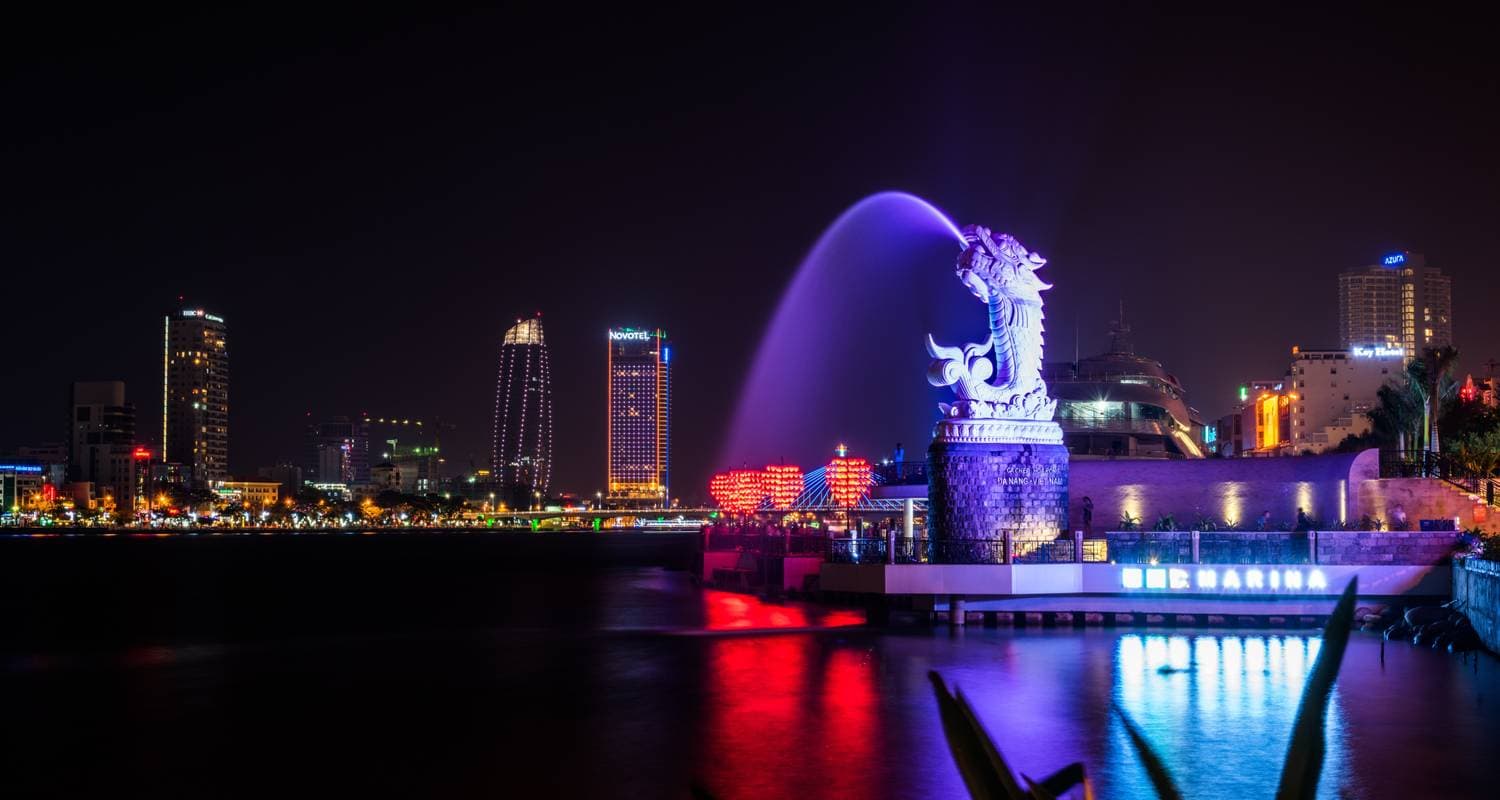
Essential Vietnam & Cambodia
17 days · G Adventures
4.9· 575 reviews✓ Instant confirmationtour from €2,345
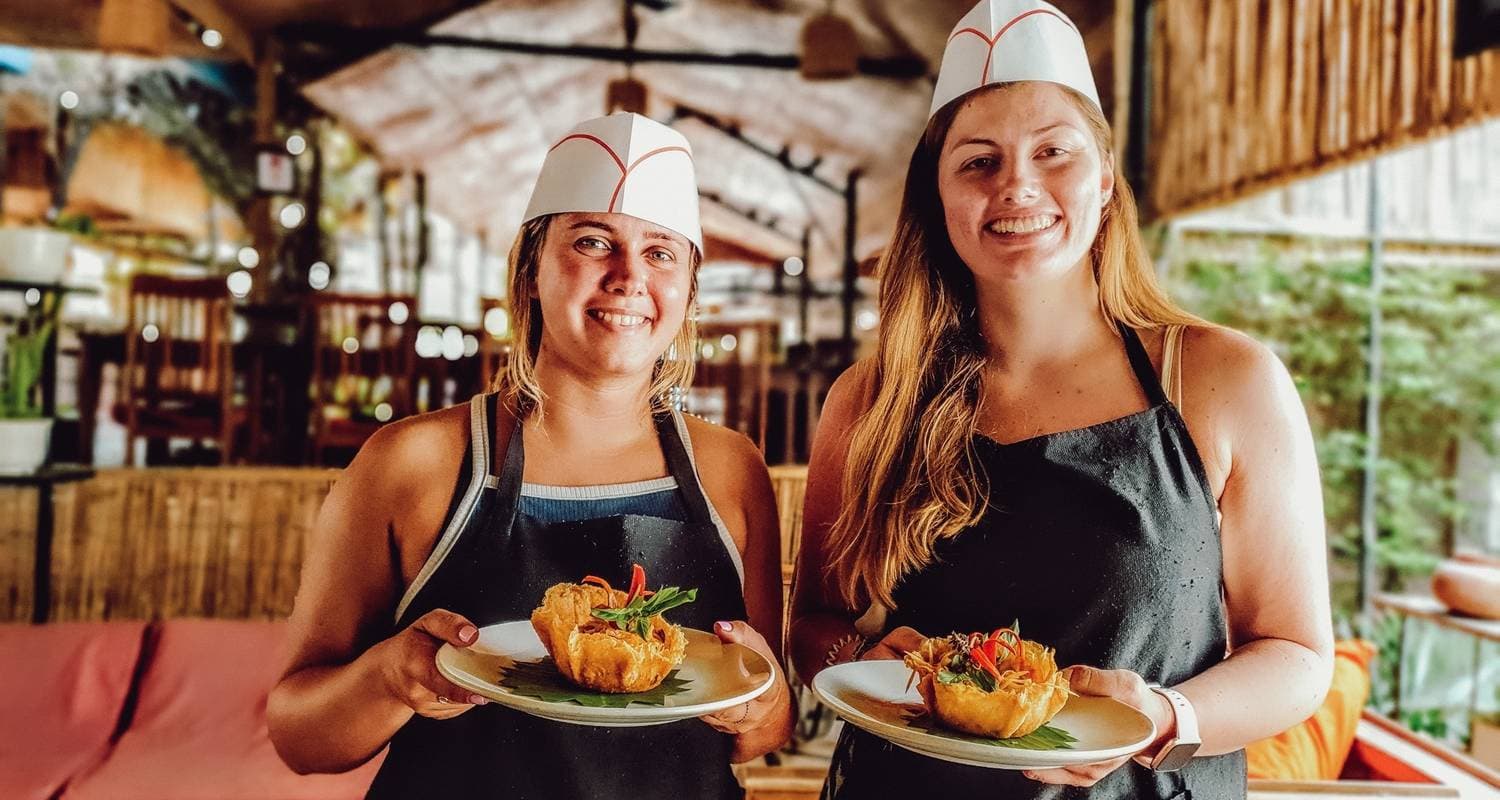
Cambodia Explorer
11 days · TruTravels
4.7· 383 reviews✓ Instant confirmationtour from €1,058
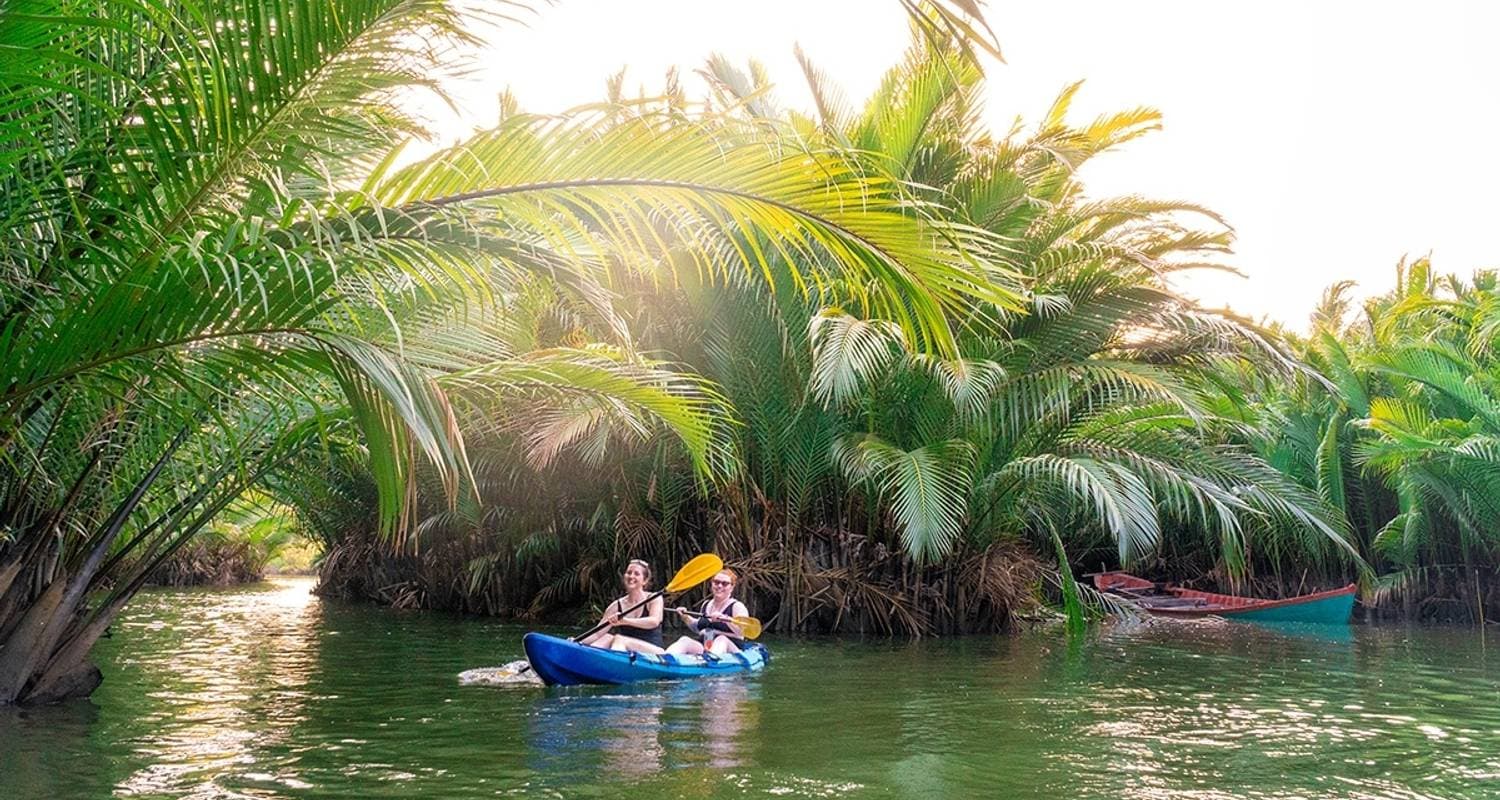
Cambodia Intro
10 days · INTRO Travel
4.8· 199 reviews✓ Instant confirmationtour from €1,034
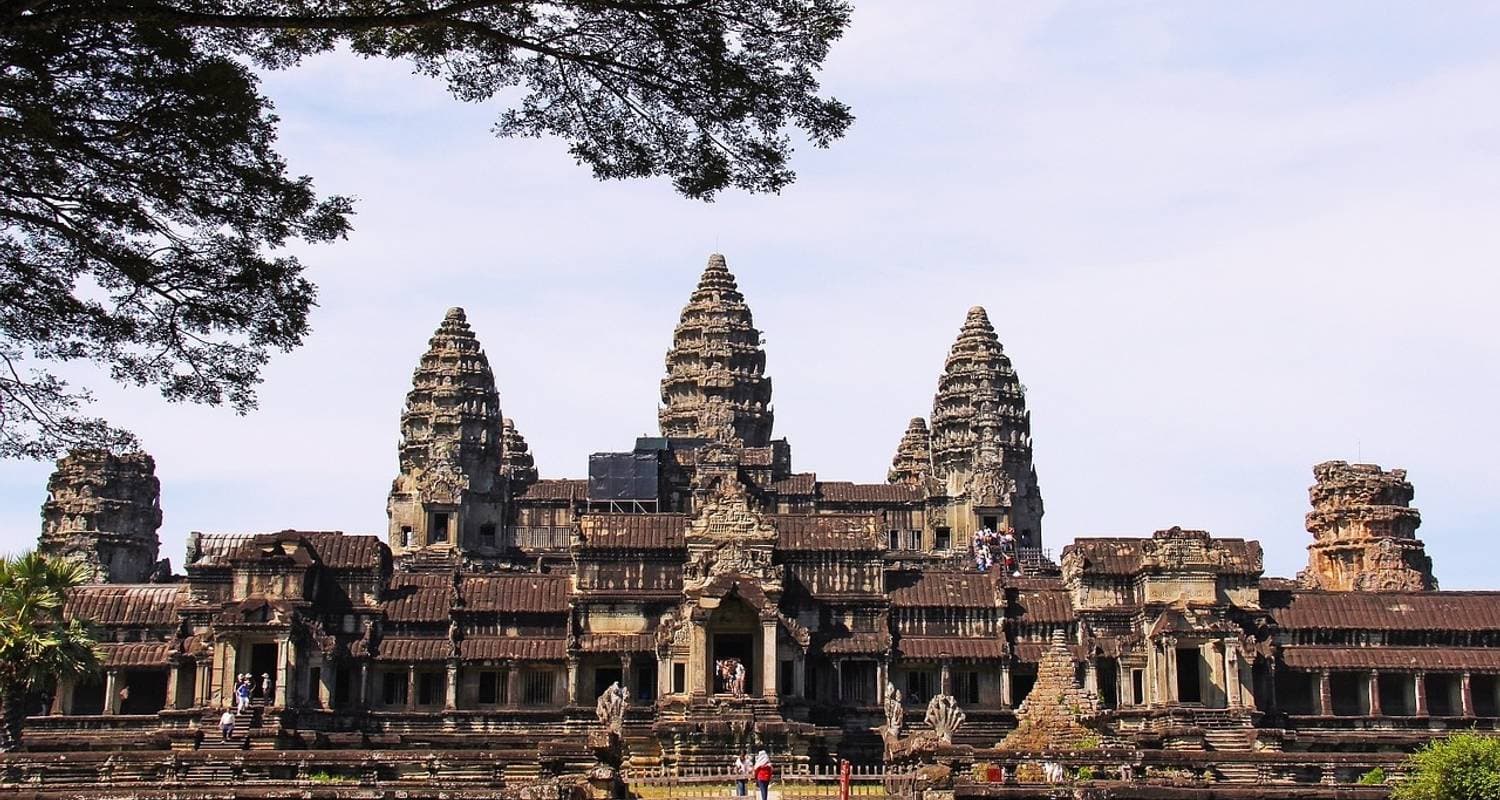
Cambodia to Vietnam: Night Markets & Noodle-Making
20 days · G Adventures
4.7· 173 reviews✓ Instant confirmationtour from €1,793
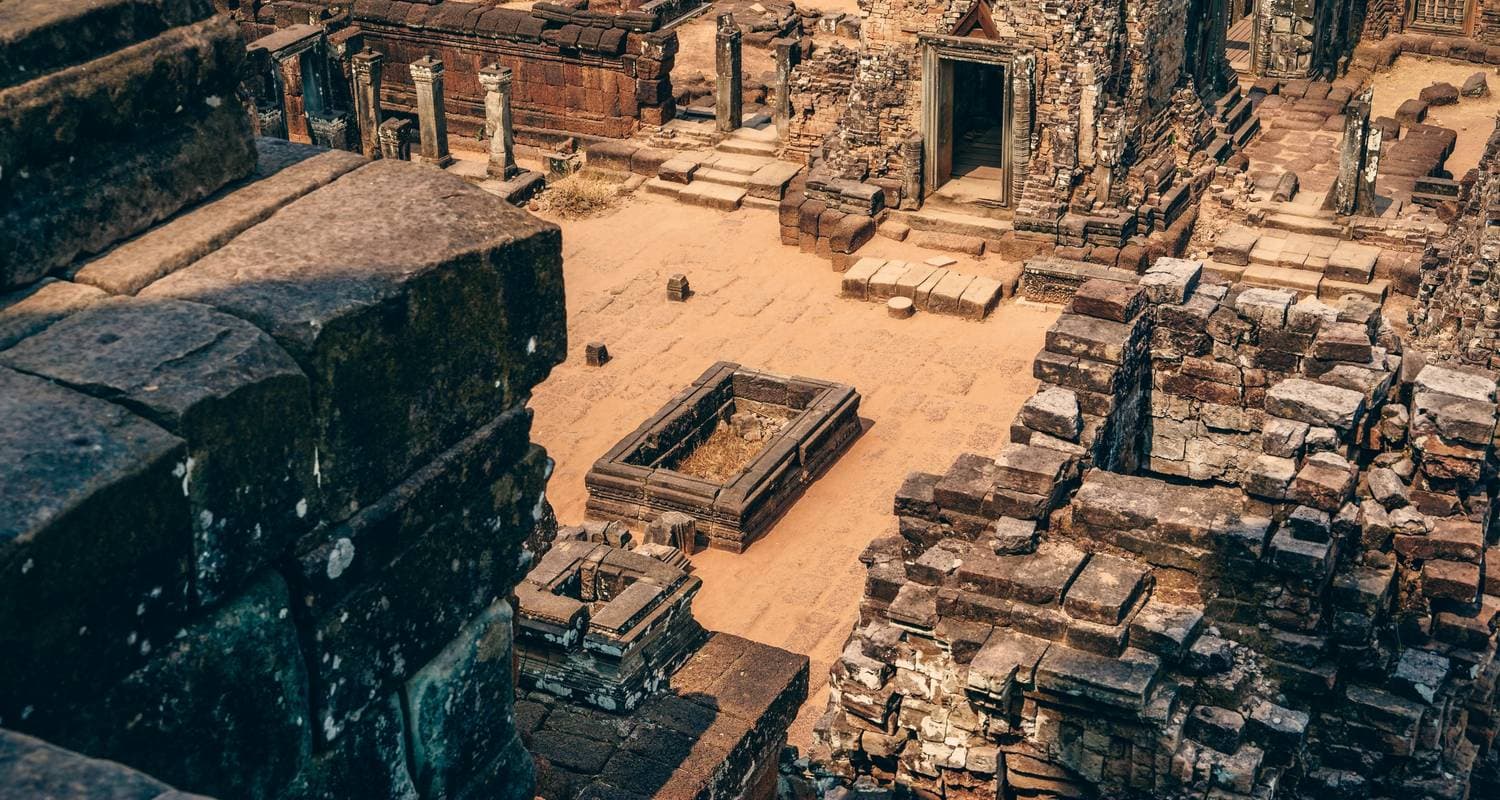
Cambodia: Ancient Ruins & Boat Rides
10 days · G Adventures
4.7· 170 reviews✓ Instant confirmationtour from €1,011
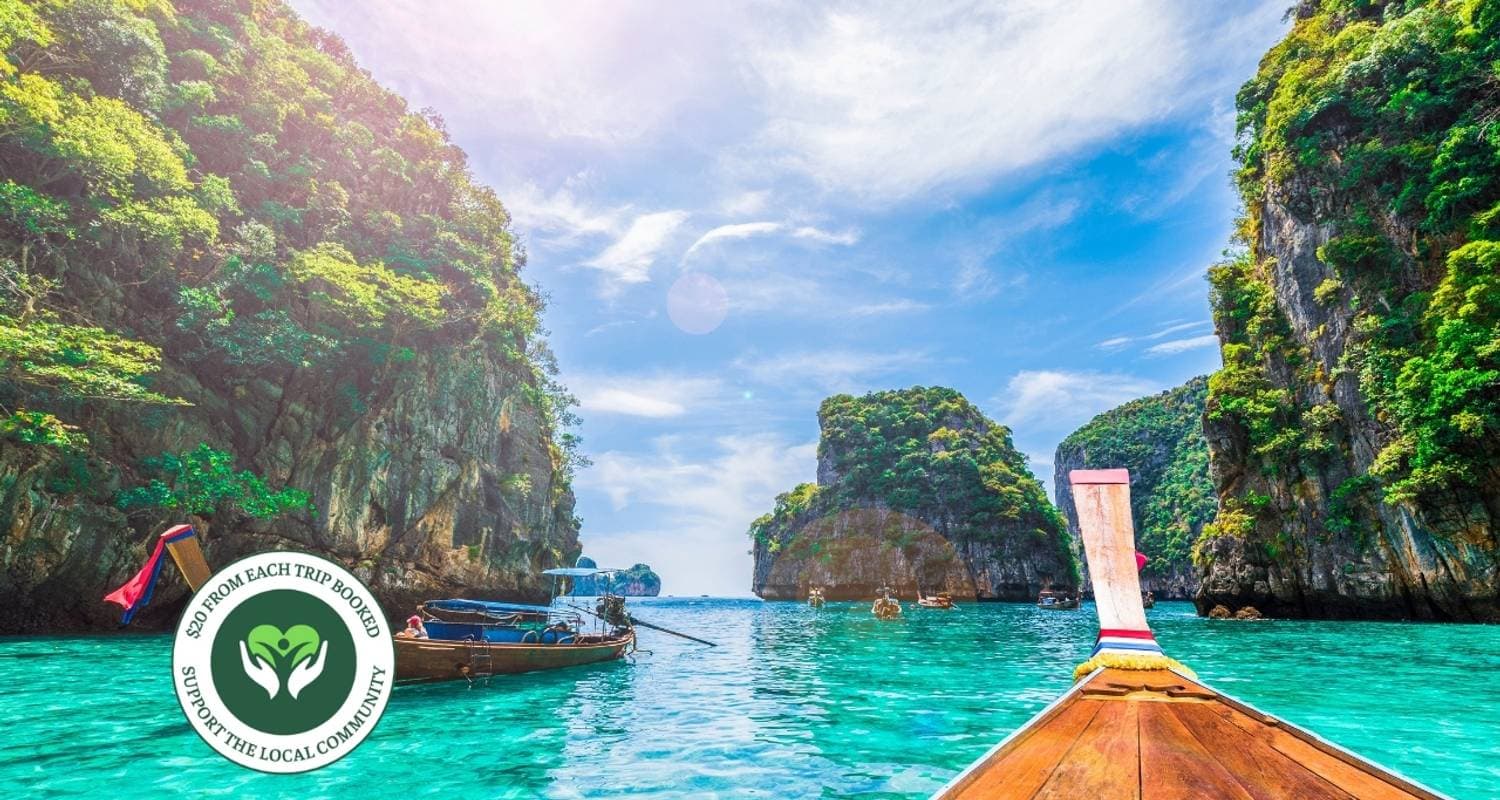
Spirits Of Vietnam, Cambodia & Thailand In 16 Days
16 days · Realistic Asia
4.9· 167 reviews✓ Instant confirmationtour from €1,498
What a week of Cambodia tours actually covers
Every Cambodia tour worth booking hangs off two anchors: Siem Reap and Phnom Penh. In Siem Reap you want the 3-day Angkor pass, never the 1-day. The gap is about €40, and it's the single best decision you'll make on the whole trip. Day one: sunrise at Angkor Wat, then Bayon and the Terrace of the Elephants inside Angkor Thom. Day two: Ta Prohm with its tree roots, Preah Khan and Banteay Kdei, all at a gentler pace. Day three: a 90-minute drive out to Banteay Srei for the pink-sandstone carvings most 1-day visitors never see, plus the jungle temple of Beng Mealea.
Phnom Penh wants two nights and a careful touch. Tuol Sleng (S-21) and the Choeung Ek Killing Fields document the Khmer Rouge genocide. Go early in the day, take the audio guide, and leave yourself some quiet time afterwards. Most tours pair this with the Royal Palace and the Silver Pagoda on a lighter afternoon.
With extra days to spare, the southern coast gives you Kep for crab and calm, or Sihanoukville for beach time, though most guides now nudge travellers towards Koh Rong instead. Plan on €730 to €1,300 for a full week with guide, entries and internal transfers on the G Adventures or INTRO Travel style of tour.
Cambodia plus Vietnam or full Indochina: the circuit reality
Most travellers who fly all the way to Cambodia end up stitching in another country or two. The two combinations that genuinely work:
Cambodia plus Vietnam (10 to 14 days). The standard run is Siem Reap for 3 nights, Phnom Penh for 2, then a flight or the slow Mekong boat to Ho Chi Minh City, up through Hoi An for 3 nights and finishing in Hanoi with a Ha Long Bay overnight. Bravo Indochina Tours sells this as a 12-day Essential Cambodia and Vietnam trip from around €990. Plan on €1,800 to €2,400 all in with flights.
Cambodia plus Vietnam plus Laos (14 to 21 days). The full Indochina Golden Triangle. Realistic Asia offers a 10-day version from roughly €1,350 and a 15-day grand tour around €2,320. You add Luang Prabang, with its French-colonial old town, the Kuang Si waterfall and the dawn alms-giving, and usually Vientiane as a transit stop. The 21-day pace lets you breathe; the 14-day version is a sprint.
As a rough split, you'll spend about a third of your days in Cambodia, around half in Vietnam, and the rest in Laos. With only two weeks, drop Laos and do Cambodia and Vietnam properly rather than spreading yourself thin across all three.
Small-group, local specialist or private: picking your style
Small-group tours (8-16 people) are the default and the best value for first-timers. Intrepid and G Adventures both run strong Cambodia itineraries; G Adventures' 14-day Ultimate Cambodian Adventure sits around €1,655. TruTravel and INTRO Travel aim at the under-35 crowd with a more social feel and hostels or 3-star hotels, typically €900 to €1,300 for 10 days before flights.
The local specialists are Cambodia's quiet strength. About Cambodia Travel and Tours, Legend Travel Group and Realistic Asia are all Cambodia-based, use their own guides, and often come in 15-25% under the big international brands for comparable quality. About Cambodia's 5-day private Angkor Wat tour starts around €530 per person, a price no Western-branded tour can touch, while Legend Travel's 8-day Cambodia Express runs around €770.
Private tours with a guide and driver are worth the upgrade if there are two or more of you and you want to set your own pace. Budget €1,500 to €2,300 per person for 10 days with a private guide, an air-conditioned car and mid-range hotels. You skip the 6am group breakfasts and get to linger at Bayon without the crowds. Luxury operators like Abercrombie and Kent push past €4,000 for the same length, with boutique lodges and your own Angkor scholar in tow.
Best time to visit Cambodia and what it costs
Cambodia has three seasons, and every one of them matters for tours.
November to February is dry and cool, relatively speaking. Daytime highs in Siem Reap sit at 28-32°C, the humidity eases off, and sunrise at Angkor Wat is genuinely comfortable rather than a sweat-soaked endurance test. This is peak season. Tour prices run 20-30% above the annual average, flights from Europe to Bangkok or Singapore go €550 to €800 return, and you'll need your Angkor sunrise slots and the better hotels booked 3-4 months out. Christmas and Chinese New Year are the toughest weeks of all.
March to May is hot and dusty. Temperatures climb to 35-38°C, with Phnom Penh tipping 40°C in April. Temple visits shift to dawn and late afternoon, and midday becomes a pool-and-air-con affair. The payoff: tour prices drop 15-20% and the crowds thin out at the big sites.
June to October is the wet green season. It rains most afternoons for an hour or two, then clears. The jungle around the temples turns lush, the Tonle Sap lake swells, and the photography is honestly better than in the dry months. Tour prices fall 25-35%, flights drop to €450 to €650 return, and you can book most things last minute. The catch: some rural roads flood, and the Mekong slow boats to Laos turn unreliable.
Go November to early February for comfort, late September to early October for value and green temples.
Getting to Cambodia: airports and routes from wherever you start
Two airports matter here. Phnom Penh (PNH) is the capital hub and handles the widest spread of connections. Siem Reap moved to the brand-new Siem Reap-Angkor International Airport (SAI, also listed as KZD) in late 2023, and the old REP airport closed. SAI sits 40km from town, further out than the old one, so build in a 50-60 minute transfer (most tours cover it). No flight runs nonstop to Cambodia from any of the long-haul markets, so you'll always connect — usually through a Southeast Asian hub. And if your tour starts in Siem Reap and ends in Phnom Penh (or the reverse), book an open-jaw ticket: it usually costs the same as a return and spares you a backtrack.
From Australia, Cambodia is close and easy — that's the appeal. Sydney and Melbourne connect through Singapore (Scoot, Singapore Airlines), Bangkok (Thai, AirAsia) or Kuala Lumpur in about 10-12 hours all in, and the fares are some of the gentlest long-ish hops you'll find. Return economy runs roughly A$800-A$1,200 in the shoulder months, A$1,300-A$1,800 over the December-January summer break. Many Aussies fold Cambodia into a wider Southeast Asia run, since the regional hops are cheap.
From the US, the West Coast wins on time and money. Los Angeles, San Francisco and Seattle reach Phnom Penh or Siem Reap in about 18-21 hours with one Asian stop (Singapore Airlines via Singapore, EVA via Taipei, Korean via Seoul, Cathay via Hong Kong) — shorter and cheaper than routing to most of Europe, so Southeast Asia is the easier long-haul from California. Expect US$900-US$1,300 return from the West Coast in shoulder season, US$1,300-US$1,800 at peak. From the East Coast (New York, Washington, Boston) it's 20-23 hours and US$1,000-US$1,500 via the Gulf (Qatar to Phnom Penh) or across the Pacific.
From Canada, Vancouver mirrors the US West Coast at around C$1,200-C$1,700 return via an Asian hub; Toronto and Montreal route via Asia or the Gulf at C$1,400-C$2,000.
From the UK and Europe, the reliable routes are Qatar via Doha (often the smoothest, around 15-16 hours total, €600-€850), Singapore Airlines or Scoot via Changi (€600-€900, the region's best layover airport if you've 4 hours to fill), and Thai, Bangkok Airways or EVA via Bangkok (14-17 hours, €450-€800 depending on season).
Whatever your home airport, the bundle prices the flight live in your own currency the moment you search, so the full trip cost — open-jaw routing and all — shows beside the tour before you commit to either booking. Kiwi.com handles the routing behind the scenes.
Ready to price your trip?
Enter your origin airport and month — we'll search live flight and tour prices and give you one bundled total per person.
Find combosCommon questions
Is the 3-day Angkor pass really worth it over the 1-day?
Yes, no question. The 1-day pass costs US$37 and the 3-day US$62, a €23 gap. One day at Angkor means sprinting through Angkor Wat, Bayon and Ta Prohm in the heat alongside a thousand other rushed visitors. Three days buys you sunrise at Angkor Wat, a full slow day inside Angkor Thom, and a separate run out to Banteay Srei and Beng Mealea 40km away. Almost every serious tour includes the 3-day pass; if yours doesn't, upgrade it yourself.
How much does a 10-day Cambodia tour cost with flights?
Reckon on €1,500 to €2,000 per person all in from most European cities for a standalone Cambodia trip. That covers a small-group or local-specialist tour (€900 to €1,300 with guide, Angkor pass, internal transfers, hotels and most breakfasts), return flights via Bangkok, Singapore or Doha (€450 to €800), tips (€50 to €80), the visa (€28) and spending money for lunches, dinners and souvenirs (€200 to €350). Add €400 to €800 if you carry on into Vietnam.
How should I handle Tuol Sleng and the Killing Fields?
With care. Tuol Sleng (S-21) is a former school used as a torture prison during the Khmer Rouge years; Choeung Ek, 15km outside Phnom Penh, is the main killing-fields memorial. Both are essential to making sense of Cambodia, but they sit heavy. Go in the morning while you've got the energy, take the audio guide (genuinely excellent), and leave quiet time in your afternoon afterwards. Photography is allowed, but be respectful with it. Children under 12 are probably better off skipping Tuol Sleng.
Should I combine Cambodia with Vietnam or just do Cambodia?
It comes down to how much time you have. With 7-10 days, do Cambodia properly: Siem Reap, Phnom Penh and maybe Kep or Koh Rong. With 12-14 days, Cambodia plus Vietnam is the classic, and it works. The common pattern is Siem Reap, Phnom Penh, a flight to Ho Chi Minh City, then Hoi An and Hanoi with Ha Long Bay. Only add Laos if you've got 18 days or more; below that the trip dissolves into a blur of airports.
When is the cheapest time to visit Cambodia?
June to September. Tour prices drop 25-35% against the November-February peak, and flights from Europe can fall to €450-€550 return. The trade-off is rain, but it tends to arrive for an hour or two in the afternoon rather than settling in all day. The jungle around the temples is at its greenest and the Tonle Sap lake is full. Late September and early October are the sweet spot: still cheap, the rains easing, the temples at their most photogenic. Steer clear of mid-December through mid-January unless you've booked 4 months ahead or more.
What currency do I actually use in Cambodia?
US dollars, in practice. Cambodia officially runs on the riel (around 4,100 to US$1), but dollars are taken everywhere: hotels, restaurants, taxis, temple entries, even market stalls. You get your change in a mix of dollars and riel for anything under US$1. Bring clean, unmarked USD notes in small denominations, mostly $1, $5, $10 and $20, as big notes are sometimes waved away. ATMs dispense both currencies. Cards work in the mid-range hotels and tourist restaurants, but cash still rules for tips, tuk-tuks and the smaller spots.
Related destinations
- Vietnam Multi-Day Tours with Flights from €650Sail Halong Bay, drift through Hoi An by lantern-light, wake…
- Thailand Multi-Day Tours with Flights from €1,050Bangkok temples, Chiang Mai elephants, Krabi limestone karst…
- Sri Lanka Multi-Day Tours with Flights from €790Climb Sigiriya, ride the blue train through tea country to E…
Related tour styles
Pick by trip length
Plan this trip from your city
- Multi-Day Tours from New York with Flights IncludedMulti-day tours from New York with flights included — one US…
- Multi-Day Tours from Los Angeles with Flights IncludedPackage tours from Los Angeles with flights included — one U…
- Multi-Day Tours from Sydney with Flights IncludedLeaving Australia means a long-haul flight whether you like …
- Multi-Day Tours from Toronto with Flights IncludedPearson is Canada's biggest long-haul hub, and with a weak l…
- Multi-Day Tours from London with Flights IncludedBuilt for London travellers: LHR for long-haul, LGW for Euro…