
Sri Lanka Multi-Day Tours with Flights from €790
Climb Sigiriya, ride the blue train through tea country to Ella, and end on the southern beaches. Private driver or small group, one bundled price.
Edited by Multiday.tours editor
- ✓10-day private-driver tours from €790 before flights, typical €1,220
- ✓Qatar and Emirates via Doha/Dubai to Colombo: €500-€900 return from Europe
- ✓Best months for south coast: December to March
- ✓Best months for east coast and Arugam Bay surf: June to August
- ✓12-day itineraries cover Sigiriya, Kandy, Ella train, Yala and Galle
- ✓Operators: BH Lanka Tours, Beauty Lanka Travels, Mango Vacations, Intrepid, G Adventures
Sri Lanka is one of the best-value long-haul trips going right now. A typical 10 days with a private driver, mid-range hotels, most breakfasts and every entry fee covered comes in around €1,220 a head land-only; budget group trips with the likes of Beauty Lanka Travels and Mango Vacations start from around €790, while smarter itineraries from BH Lanka Tours and One Life Adventures climb to €1,660 and beyond. The classic route stitches together what feel like three different countries: the Cultural Triangle around Sigiriya and Kandy, the tea country and its famous Ella train line, and the palm-heavy beaches of the south. Add Gulf-carrier flights to Colombo at €500-€900 and you have a full two weeks away for under €2,000 all-in.
The tours doing the heavy lifting here
Prices are tour-only — add flights for the real total. You book the tour itself on TourRadar.
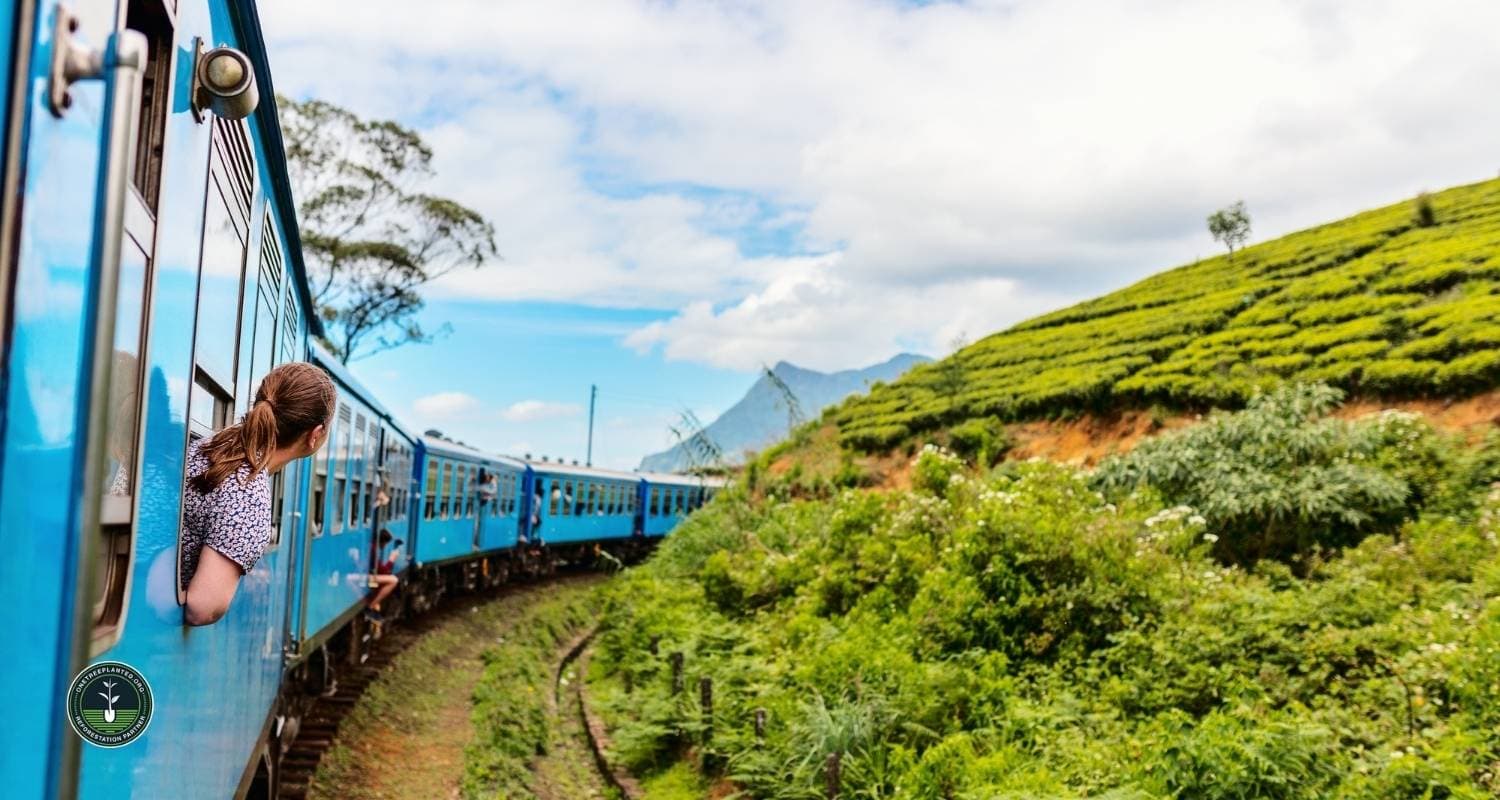
Sri Lanka Classic 12 Day - One Life Adventures
12 days · One Life Adventures
4.9· 2,194 reviews✓ Instant confirmationtour from €1,697
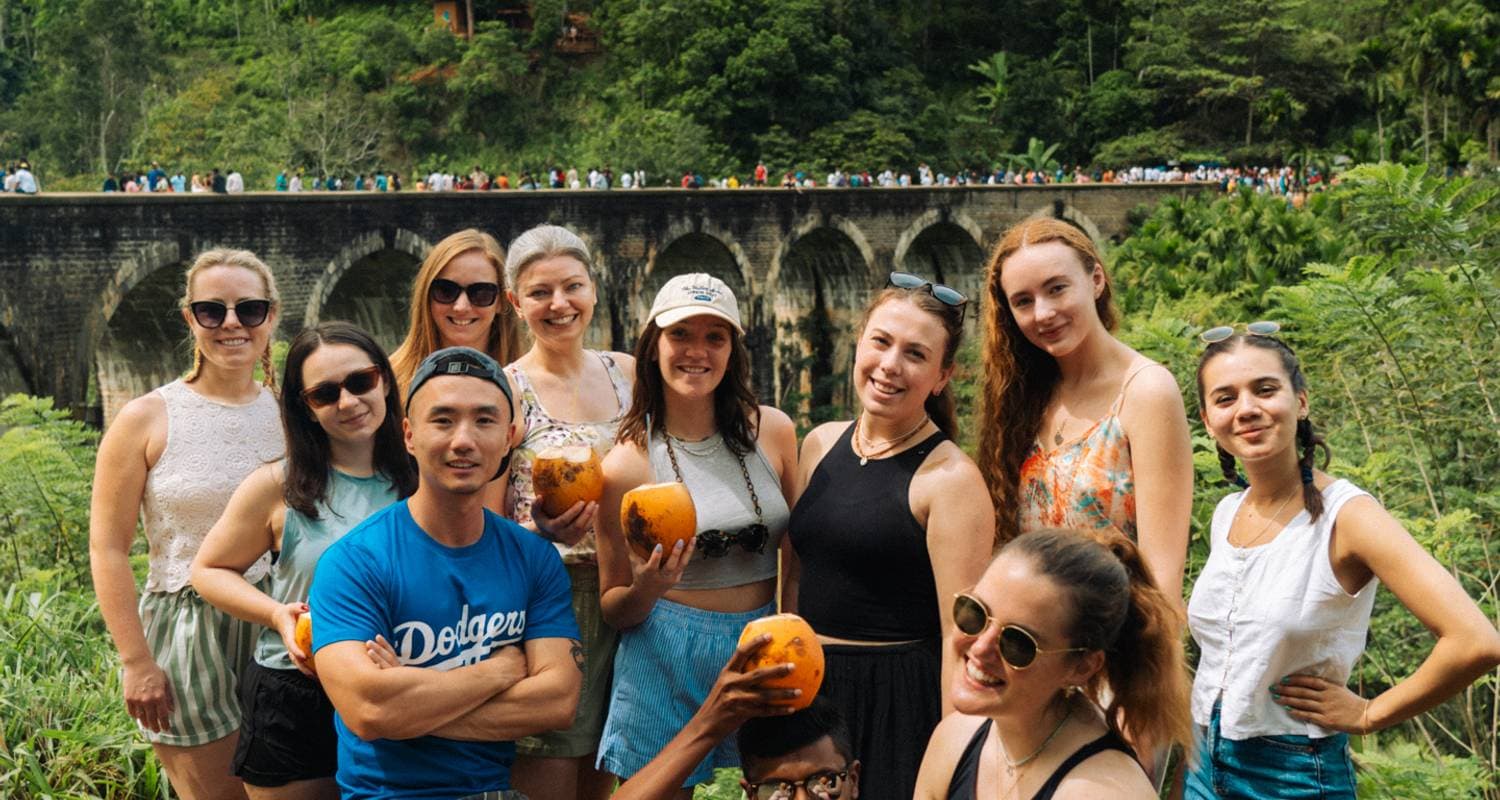
Sri Lanka Uncovered
10 days · TruTravels
4.8· 392 reviews✓ Instant confirmationtour from €1,150
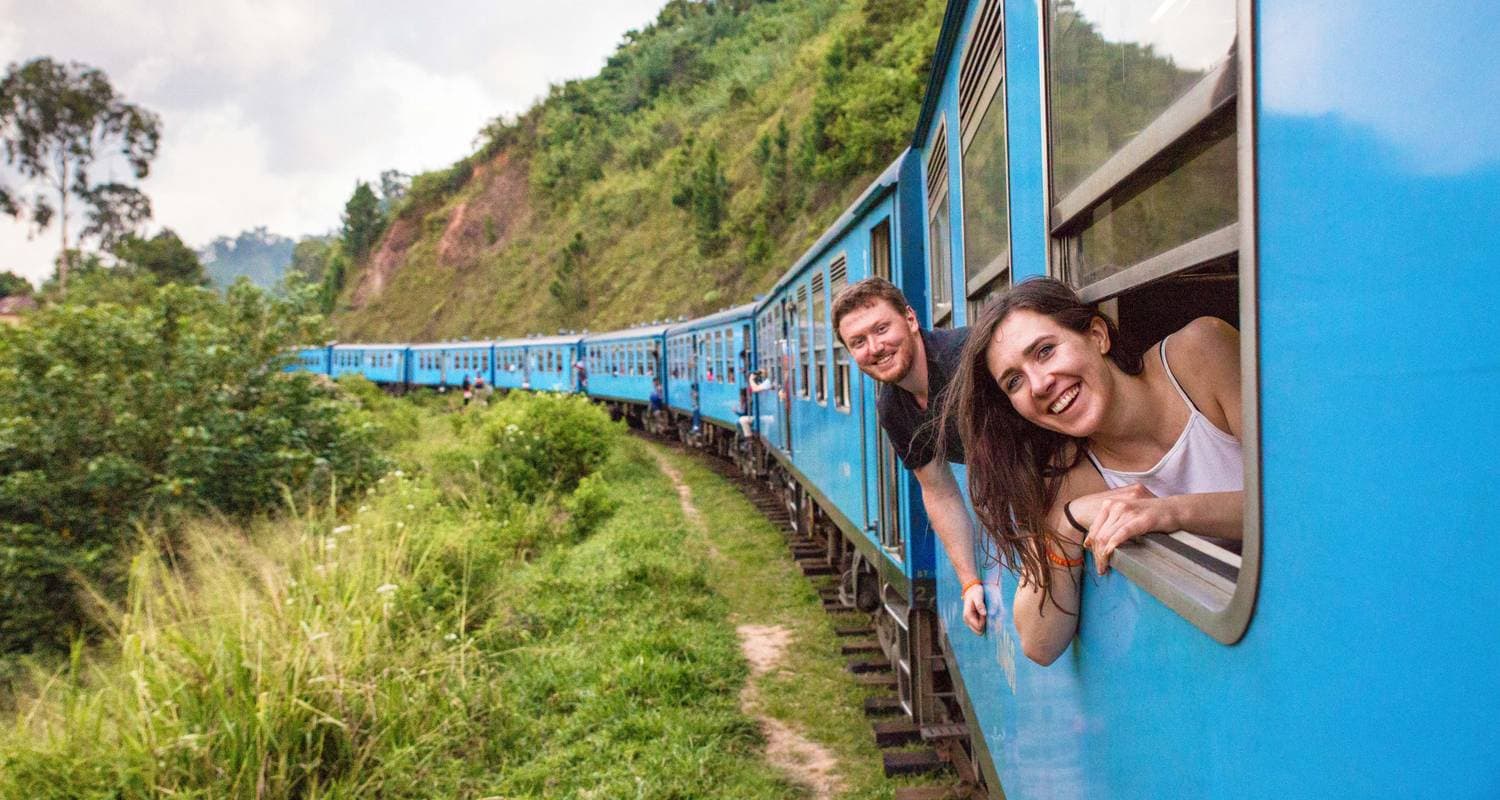
Sri Lanka Experience
12 days · INTRO Travel
4.9· 331 reviews✓ Instant confirmationtour from €1,724
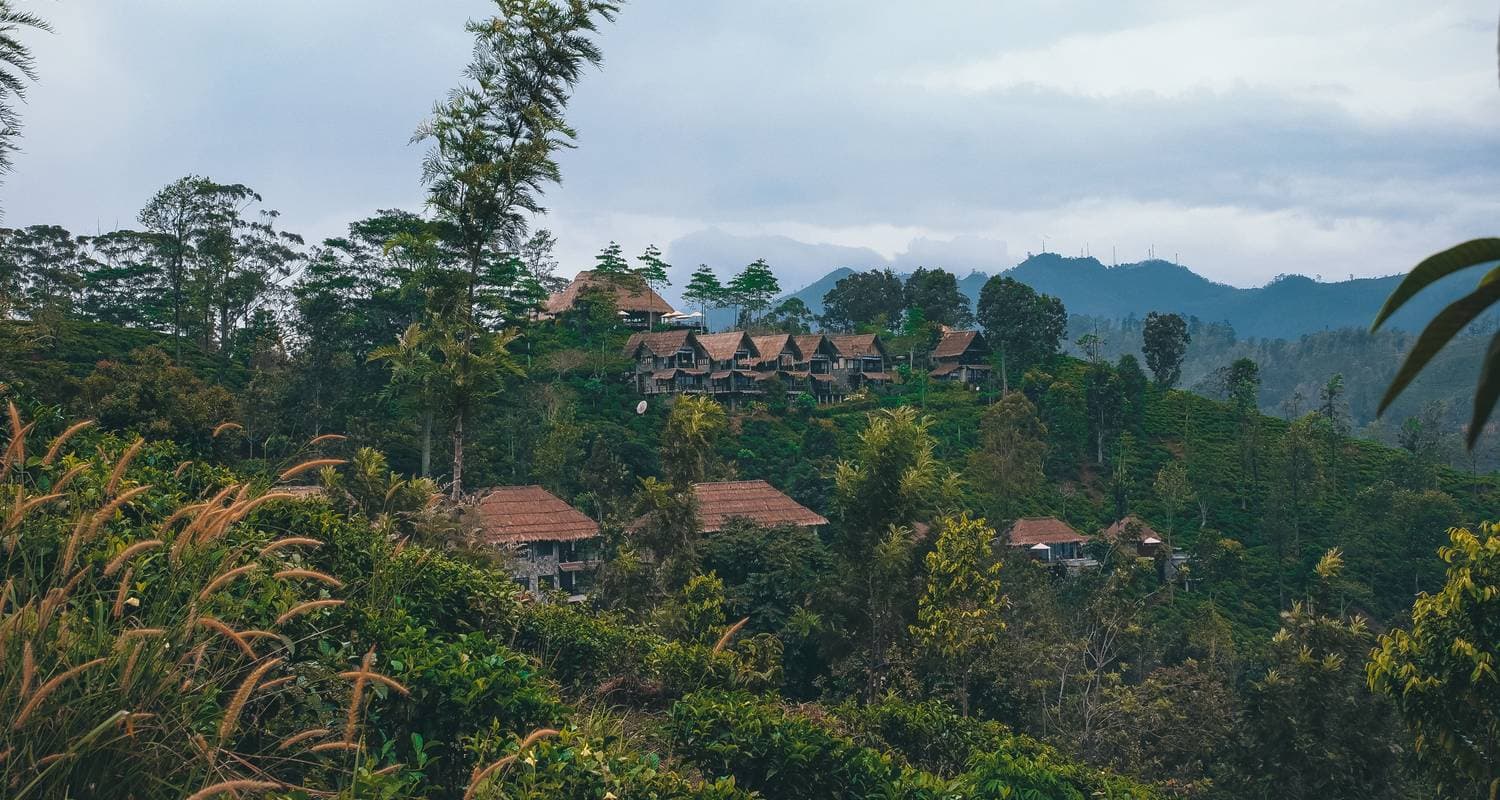
Splendour of Sri Lanka - (8 Days and 7 Nights tour in Sri Lanka)
8 days · Beauty Lanka Travels
4.8· 315 reviews✓ Instant confirmationtour from €513
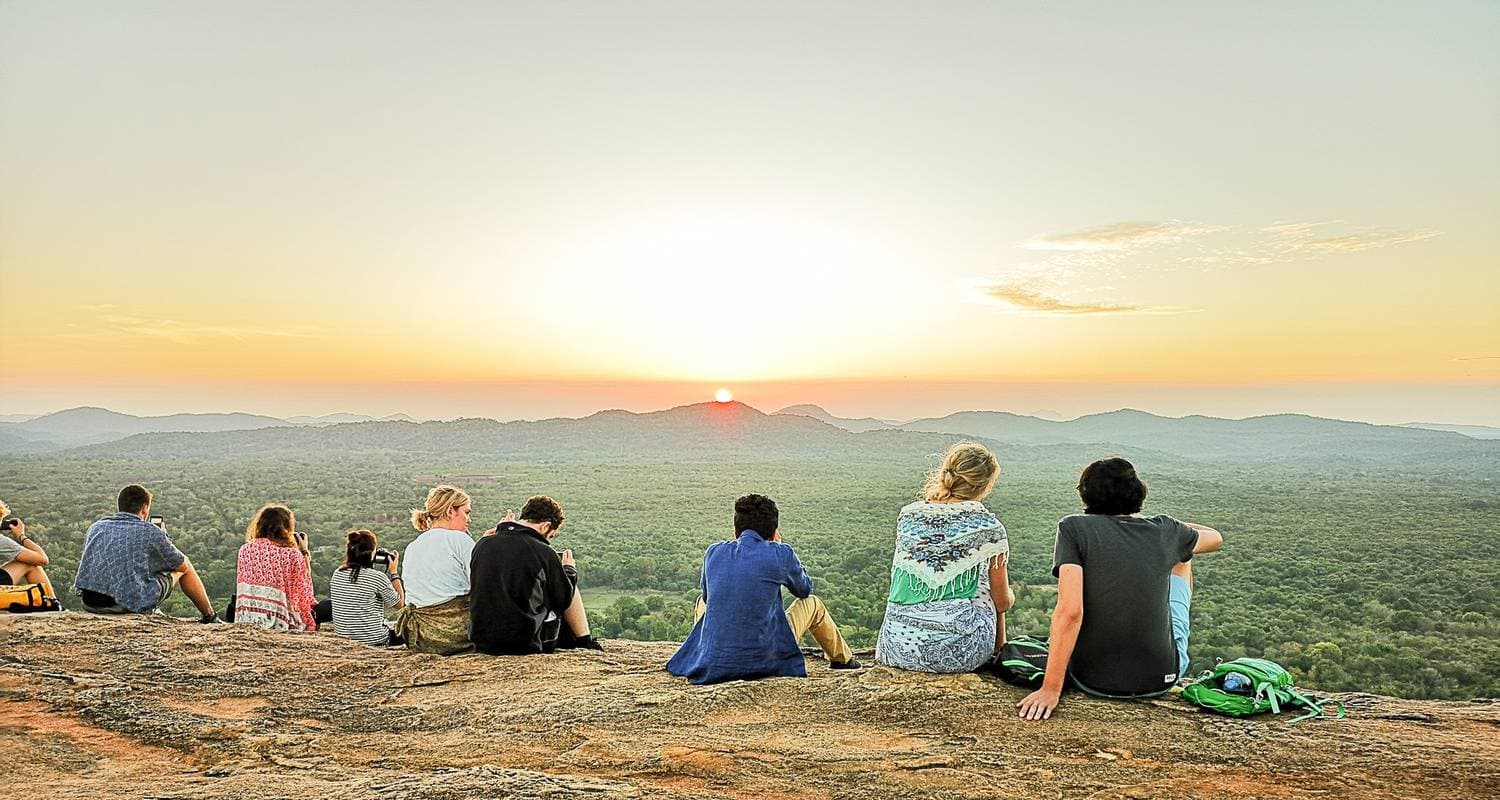
Exclusive Grand Tour Of Sri Lanka
12 days · BH Lanka Tours
4.7· 286 reviews✓ Instant confirmationtour from €1,684
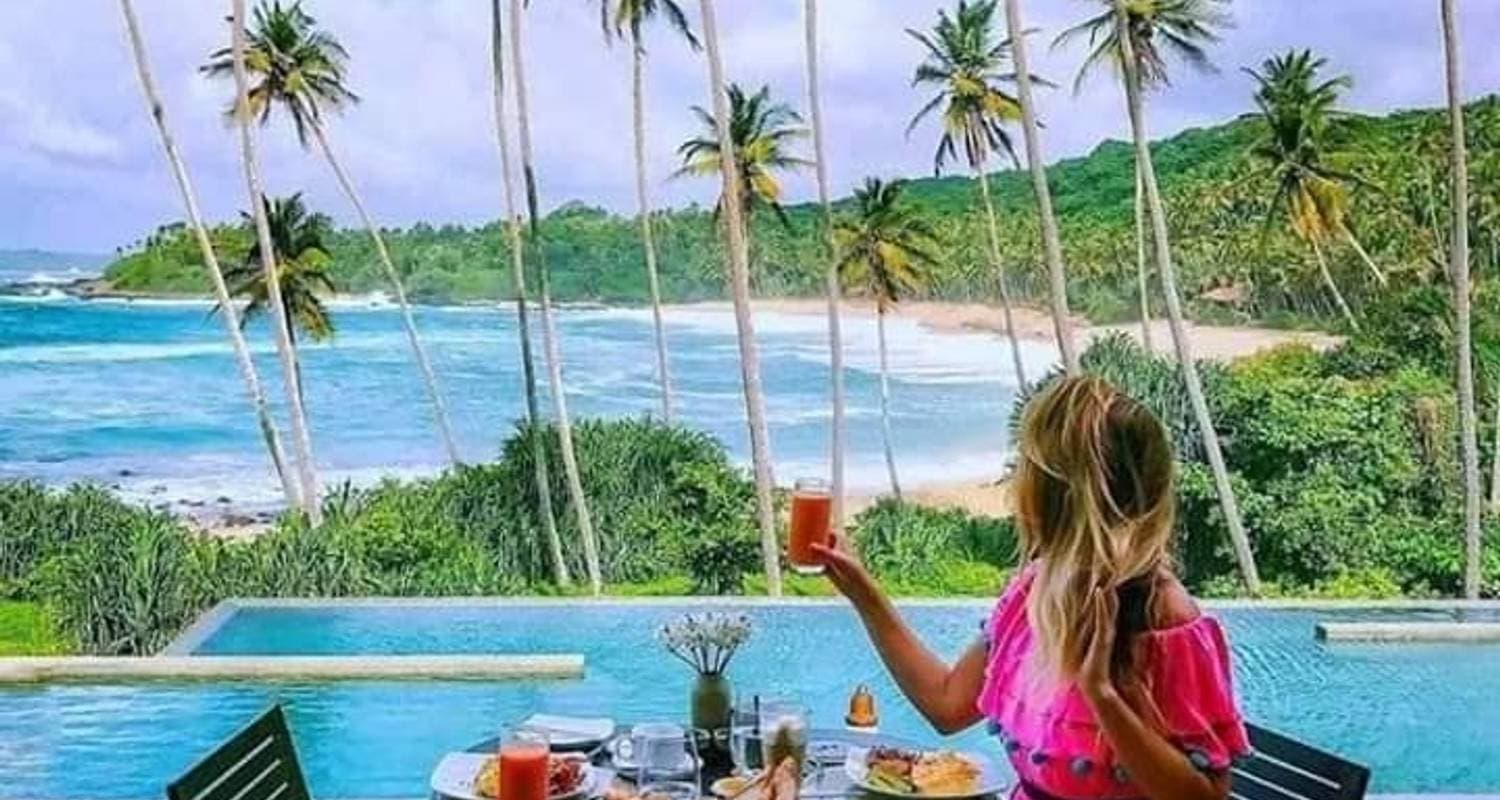
Lifetime Experience In Sri Lanka
8 days · BH Lanka Tours
4.8· 224 reviews✓ Instant confirmationtour from €1,283
What a classic 10-12 day Sri Lanka tour covers
The standard itinerary is a loop, not a line. You land at Colombo (CMB) and, as most guides will quietly admit is the right call, head straight inland without bothering to overnight in the capital. Day one is simply the transfer up to Dambulla or Sigiriya in the Cultural Triangle.
Days two and three are the headline sights: the Sigiriya rock fortress at dawn (climb before 8am or live to regret it), the Dambulla cave temples, and usually Polonnaruwa or Anuradhapura for the ancient-capital ruins. Day four slips south to Kandy for the Temple of the Tooth and a cultural dance show. Day five is the celebrated Kandy to Ella train, seven hours through tea plantations and, for very good reason, the most photographed rail journey in Asia. Book second-class reserved rather than first, and grab a seat on the right.
Days six to eight are Hill Country: the Nuwara Eliya tea estates (Pedro, Mackwoods, Heritance), Ella with Little Adam's Peak and the Nine Arch Bridge, and a Horton Plains sunrise hike out to World's End if the knees are willing. Days nine to eleven drop to the south coast for a Yala safari, Galle Fort and beach time at Mirissa or Unawatuna, before day twelve is the road back to Colombo airport. A 14-day version adds Trincomalee on the east coast or a Jaffna peninsula extension; trim to seven days and you skip the south and stay inland.
The two monsoons and why timing is not simple
Sri Lanka runs two monsoons that strike opposite coasts at opposite times of year, and it trips up plenty of first-timers, because a quick glance at the average rainfall for "Sri Lanka" tells you nothing useful at all.
The southwest monsoon, Yala, runs roughly May to September and soaks the south and west coasts, leaving Galle, Mirissa, Unawatuna and Bentota wet, grey and rough for swimming. Those very same months are the dry season on the east coast, where Trincomalee, Nilaveli, Pasikuda and Arugam Bay turn sunny and the sea goes glassy; Arugam Bay hits its peak surf window from June to August.
The northeast monsoon, Maha, runs roughly October to January and flips the whole picture: the east coast becomes a write-off while the south and west dry out. December to March is the high season on the classic south-coast route, which is exactly why prices climb 20-30% and Mirissa fills up.
The Cultural Triangle and Hill Country sit between the two and are far more forgiving. Sigiriya, Kandy and Ella are reliable year-round, though the hills turn chilly and misty December to February, so do genuinely pack a fleece for Nuwara Eliya. April and September are the "inter-monsoon" shoulder months, with short afternoon thunderstorms but mostly sunny mornings and the lowest prices of the year. So: for south-coast beaches aim December to March, for east-coast beaches or surf aim June to August, and to taste both in one trip you really only have April or September.
Private driver vs small-group vs backpacker — the honest version
In Sri Lanka the private driver is not a luxury, it is the default. Labour and fuel are cheap and the whole tourist industry is built around it, so a private car with an English-speaking driver-guide for 10 days costs roughly €450-€700 on top of your hotels, often working out cheaper per head than a small-group seat once you weigh the flexibility. Two travellers sharing the car come in at €1,100-€1,500 each for a full 10-day private tour with mid-range hotels, meals and every entry fee. BH Lanka Tours, Beauty Lanka Travels, ASY Tours Sri Lanka, Mango Vacations and Apple Vacations all run this model to much the same standard; the price really comes down to hotel tier and how new the vehicle is.
Small-group tours of 10 to 16 people from Intrepid, G Adventures, Exodus and One Life Adventures run €1,200-€2,200 for 10 to 14 days before flights. You get a full-time tour leader plus local guides, which earns its keep at the big cultural sites, and built-in company if you are travelling solo. Intrepid's Classic Sri Lanka and G Adventures' Best of Sri Lanka are the most-booked itineraries here, while Exodus leans a little older and more active, with hiking days written in.
Backpacker and youth trips (One Life Adventures, some TruTravel) run €700-€1,100 for 10 to 12 days of hostels and guesthouses, pitched at the 18-35 crowd. At the top end, Audley Travel and Red Dot Tours build bespoke private trips at €2,500-€4,500 a head with boutique boltholes like Cape Weligama or Ceylon Tea Trails. Unless you are specifically after the group social side, the private driver is the honest best-value pick here.
Beaches, safari and how the mix actually works
Most 10 to 12 day itineraries bolt three to five nights of beach onto the end, which is usually plenty. The south coast is lovely, but it is, in the end, just beach, and the country's real strengths are its culture, tea country and safari. If sand is your main reason for going, you would be happier in Thailand or the Maldives.
For safari, three parks matter: Yala, Udawalawe and Wilpattu. Yala is the famous one, with the highest leopard density on earth, but it is also the busiest, and peak-season jeep queues at the gate can leave 30 vehicles crowding a single sighting. Yala block one shuts each September-October for the dry season. Udawalawe is smaller and quieter, the dependable choice for elephants, with more than a hundred wild residents that often gather in big herds at the reservoir. Wilpattu, off in the northwest, is wilder and far less visited, your best shot at leopards without the scrum, and well worth the detour if you want a proper safari. A half-day jeep safari runs €35-€60 a head, a full day with a camp lunch €70-€120.
For surf, Arugam Bay on the east coast (the June-August window) is the genuine surf town, with reef breaks for intermediates and up. Weligama and Hiriketiya on the south coast are the beginner scene, with surf schools right on the sand and a point break at Weligama gentle enough for first-timers from December to March. Mirissa is the livelier, party-leaning beach with whale-watching tours from November to April, when blue and sperm whales pass 20km offshore. Unawatuna and Bentota are quieter and family-friendly. Galle Fort is not a beach at all, but a night or two inside the old Dutch walls is non-negotiable.
Flights to Colombo from wherever you start
Colombo's Bandaranaike International (CMB) is the only airport that matters for a standard tour. There is a second at Mattala in the south, but almost nothing flies there. No matter where you set off, you'll route through a Gulf or Asian hub, and the Gulf carriers in particular own this route and rank among the world's best airlines.
From the UK and Europe, SriLankan Airlines runs a direct from London Heathrow in about 11 hours, though the schedule is thin and the fares mid-range. The Gulf carriers are nearly always cheaper: Qatar via Doha and Emirates via Dubai fly frequently from most European hubs (Dublin, London, Paris, Frankfurt, Amsterdam, Madrid, Milan, Rome) and connect cleanly into Colombo on a 2-4 hour layover, with Etihad via Abu Dhabi a solid third and Turkish via Istanbul usually the cheapest. Returns run €500-€900 in shoulder season (April-May, September-October), €700-€1,200 in the December-February peak; door to door is 12-16 hours.
From the US, Sri Lanka is a real haul. From the West Coast (Los Angeles, San Francisco, Seattle) reckon on 21-23 hours via a Gulf hub or Singapore, US$1,000-US$1,500 return in shoulder season. From the East Coast (New York, Washington, Boston) it's a touch shorter at 18-20 hours via Doha, Dubai or Abu Dhabi, US$900-US$1,400 — so unlike Southeast Asia, Sri Lanka is the easier reach from the East Coast, not the West.
From Australia, the Asian and Gulf hubs do the work. Sydney and Melbourne reach Colombo in about 13-15 hours with one stop in Singapore, Kuala Lumpur or a Gulf hub; SriLankan also runs seasonal Melbourne services. Return economy runs roughly A$1,000-A$1,500 in the shoulder months and A$1,500-A$2,100 over the December-January summer break.
From Canada, Vancouver and Toronto both connect via a Gulf hub or Singapore in around 19-22 hours, C$1,200-C$1,800 return depending on season.
If your tour ends near Galle in the south you can still fly home from Colombo without fuss — the transfer is only 3-4 hours. Book three to four months ahead for the best fares. The bundle prices the flight live in your own currency the moment you search and shows it beside the tour, so you can size up the whole trip before committing to either booking. Kiwi.com searches the Gulf carriers and the direct together behind the scenes.
Ready to price your trip?
Enter your origin airport and month — we'll search live flight and tour prices and give you one bundled total per person.
Find combosCommon questions
Is Sri Lanka safe for tourists in 2026?
Yes. The 2022 economic crisis, the fuel queues, the protests and the presidential resignation, is genuinely behind the country now. Tourism has been back at full capacity since 2023, fuel and food supply are stable, and there has been no repeat of the 2019 Easter attacks. Both the UK FCDO and the Irish Department of Foreign Affairs have Sri Lanka at "exercise normal precautions" for 2026. Petty theft at busy sites and the odd tuk-tuk overcharge are the usual tourist niggles. Solo women should stick to the standard circuit, where the infrastructure is well worn and reassuring.
How much does a 10-day Sri Lanka tour cost with flights?
Reckon on €1,500-€2,100 a head all-in from most European cities for a mid-range trip. That covers a 10-day private-driver tour with mid-range hotels, daily breakfast and entry fees (€1,000-€1,400), return flights via Qatar, Emirates or Etihad (€500-€900), the ETA visa (around €45), a tip for the driver-guide at the end (€80-€120), and spending money for lunches, dinners and safari (€250-€400). Budget group trips can drag the total down to €1,300, while bespoke private trips with Audley or Red Dot Tours run €3,500-€5,500.
Is the private driver option really worth it over a group tour?
For two travellers, almost always yes. A private car with an English-speaking driver-guide for 10 days costs around €450-€700 split between you, which rarely lands dearer per head than a small-group seat once you weigh the freedom it buys. You set your own pace, skip the 7am bus calls, linger as long as you like at the tea factories or Sigiriya, and pull over at roadside fruit stalls on a whim. For solo travellers the sums shift: a group tour at €1,400 often beats a solo private driver at €1,800, and throws in company besides. Couples and small family groups should nearly always go private.
When is the cheapest time to visit Sri Lanka?
April-May and September-October are the inter-monsoon shoulder months and the cheapest overall, with tours 20-30% below the December-January peak and flights from Europe occasionally dipping under €500 return. The catch is changeable weather: short afternoon thunderstorms anywhere, and the odd wash-out day. If you want dry south-coast beaches without the premium, early December and late March are the sweet spots right at the edges of peak. For the east coast, June is the value month, just before the July-August surf rush at Arugam Bay.
Which safari park should I pick — Yala, Udawalawe or Wilpattu?
It depends what you most want to see. Yala has the world's highest leopard density but is also the most crowded, with peak-season jeep traffic of 20-30 vehicles at a single sighting that breaks the spell for a lot of people. Udawalawe is smaller and quieter, the most dependable park for wild elephants, often gathered in big herds at the reservoir. Wilpattu, off in the northwest, is wilder and less visited, with a real shot at leopards minus the crowds. If this is your only safari of the trip, Wilpattu delivers the best of it; Udawalawe is the easy call if you are short on time and want elephants all but guaranteed.
What should I pack for a Sri Lanka tour?
Light cotton or linen for the lowlands, where the humidity is relentless, plus one fleece or light jacket for Nuwara Eliya and Horton Plains, which drop to 8-10°C at dawn. Proper trainers for Sigiriya's 1,200 uneven steps and any Hill Country walking; sandals simply will not do. Modest clothing for the temples, with shoulders and knees covered and shoes off at the entrance (a light sarong folds flat and covers both). Pack high-SPF sunscreen, insect repellent with DEET and a refillable water bottle. Sockets are type D and G, so bring a universal adapter, and carry €100-€150 in small bills for tips, tuk-tuks and safari park fees.
Related destinations
- India Multi-Day Tours with Flights from €640Golden Triangle, Rajasthan forts, Kerala backwaters and Vara…
- Thailand Multi-Day Tours with Flights from €1,050Bangkok temples, Chiang Mai elephants, Krabi limestone karst…
- Vietnam Multi-Day Tours with Flights from €650Sail Halong Bay, drift through Hoi An by lantern-light, wake…
Related tour styles
Pick by trip length
Plan this trip from your city
- Multi-Day Tours from New York with Flights IncludedMulti-day tours from New York with flights included — one US…
- Multi-Day Tours from Los Angeles with Flights IncludedPackage tours from Los Angeles with flights included — one U…
- Multi-Day Tours from Sydney with Flights IncludedLeaving Australia means a long-haul flight whether you like …
- Multi-Day Tours from Toronto with Flights IncludedPearson is Canada's biggest long-haul hub, and with a weak l…
- Multi-Day Tours from London with Flights IncludedBuilt for London travellers: LHR for long-haul, LGW for Euro…
Deeper reading
- The Perfect 12-Day Sri Lanka Itinerary (Route, Day by Day)Twelve days is the Sri Lanka sweet spot: Sigiriya, the Kandy…
- How Much Does a Sri Lanka Tour Cost? The Honest All-In NumberTen days to two weeks in Sri Lanka runs roughly €1,300–€2,40…
- The Best Time to Visit Sri Lanka (Month-by-Month, 2026)Two monsoons hit opposite coasts at opposite times, so there…