
India Multi-Day Tours with Flights from €640
Golden Triangle, Rajasthan forts, Kerala backwaters and Varanasi ghats. Real operators, one bundled price, two quick bookings.
Edited by Multiday.tours editor
- ✓5-day Golden Triangle from €380 land, 7-day from €850 before flights
- ✓11-day Taj plus wildlife with Swastik India Journeys around €1,300 land
- ✓14-day Rajasthan with royal castle stays around €1,360 land price
- ✓Return flights Europe to Delhi €450-€750 shoulder season
- ✓Best months: October, November, February, March (North); Dec-Feb (Kerala)
- ✓Operators on the page include Swastik India Journeys, G Adventures, World Travel Experiences
Nowhere in Asia hands you as much variety as India, and few places stretch a day's budget so far once you are on the ground. A 5-day Golden Triangle tour with Swastik India Journeys starts from around €380 land price. A 7-day Delhi-Agra-Jaipur loop with Golden Triangle India Tours comes in around €850. Stretch to 11 days across Rajasthan with a dose of wildlife and you are near €1,300, while a full 14-day Taj Mahal and Rajasthan run with castle stays from Swastik sits around €1,360. Fold in a return flight from Europe at €450-€750 and a 10-day trip lands at €1,500-€2,100 all-in. What follows is the honest version: real prices, named operators, how the North and South pull apart, and a straight answer on whether India is too much for a first trip to Asia.
The tours doing the heavy lifting here
Prices are tour-only — add flights for the real total. You book the tour itself on TourRadar.
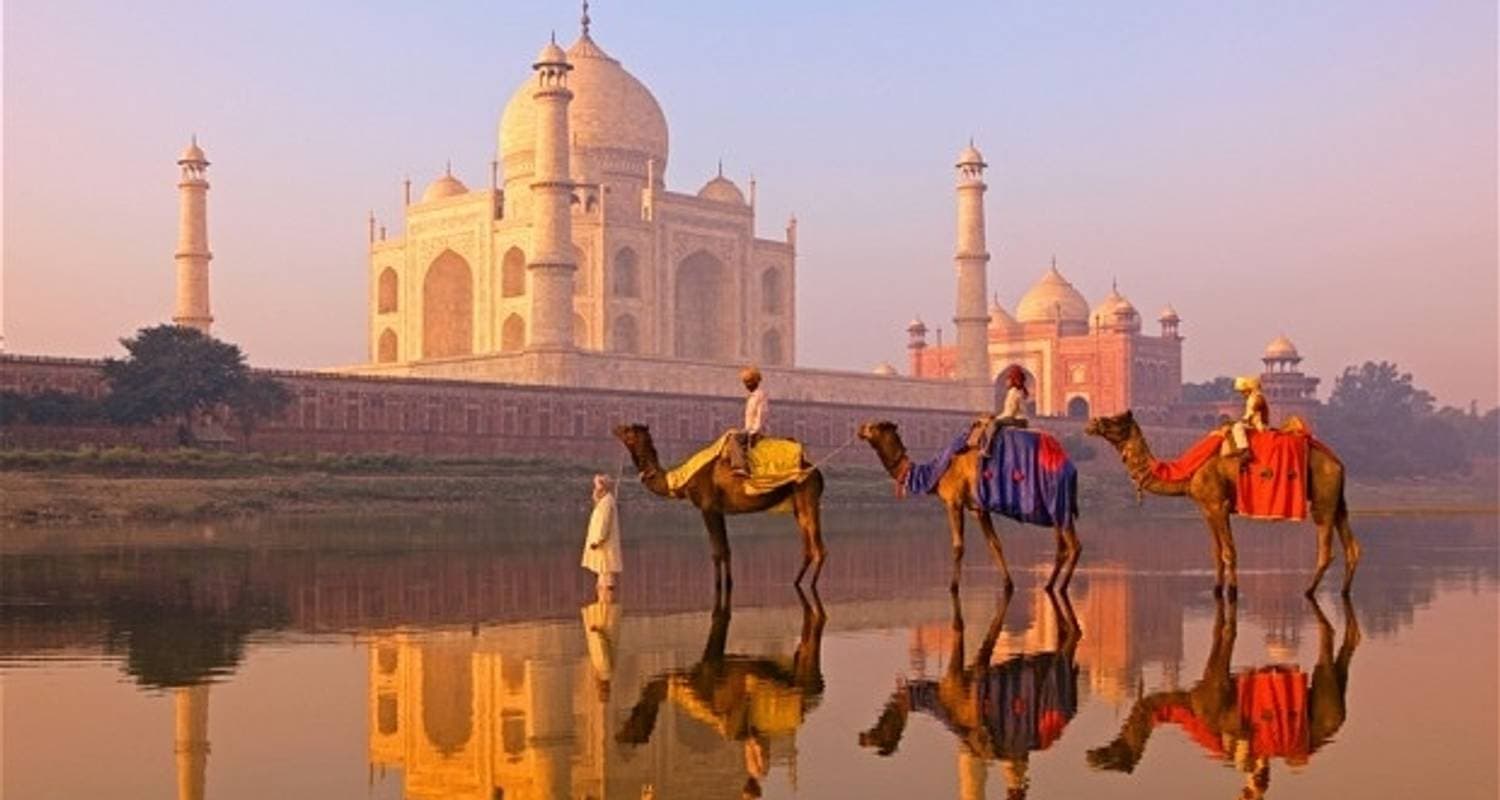
Taj Mahal and Wildlife with Royal Stay at Castles
11 days · Swastik India Journeys
4.8· 585 reviews✓ Instant confirmationtour from €1,306
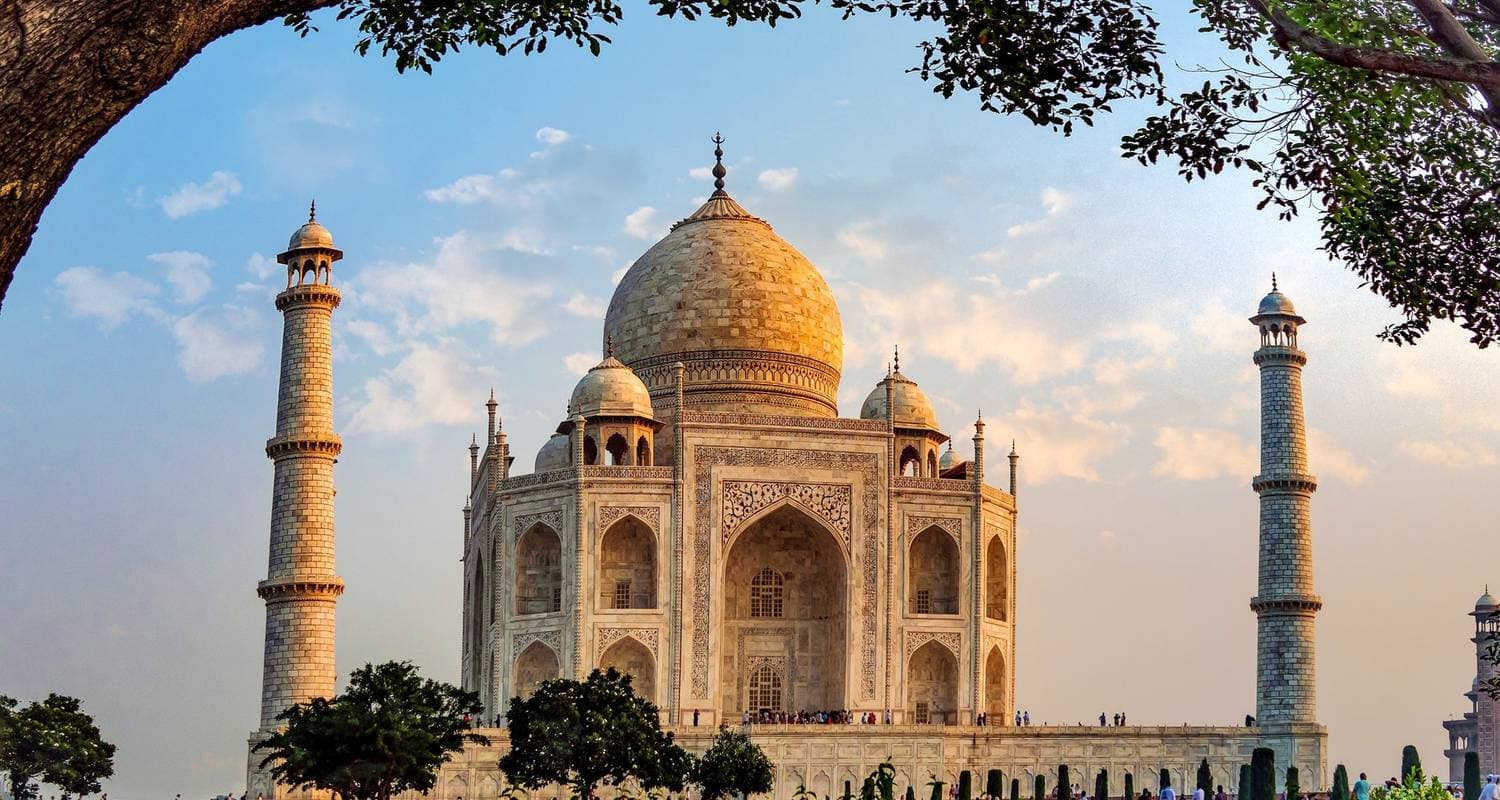
India's Top Selling Golden Triangle India Tour w/ Meals and Sunrise Taj Mahal
5 days · Swastik India Journeys
4.7· 421 reviews✓ Instant confirmationtour from €377
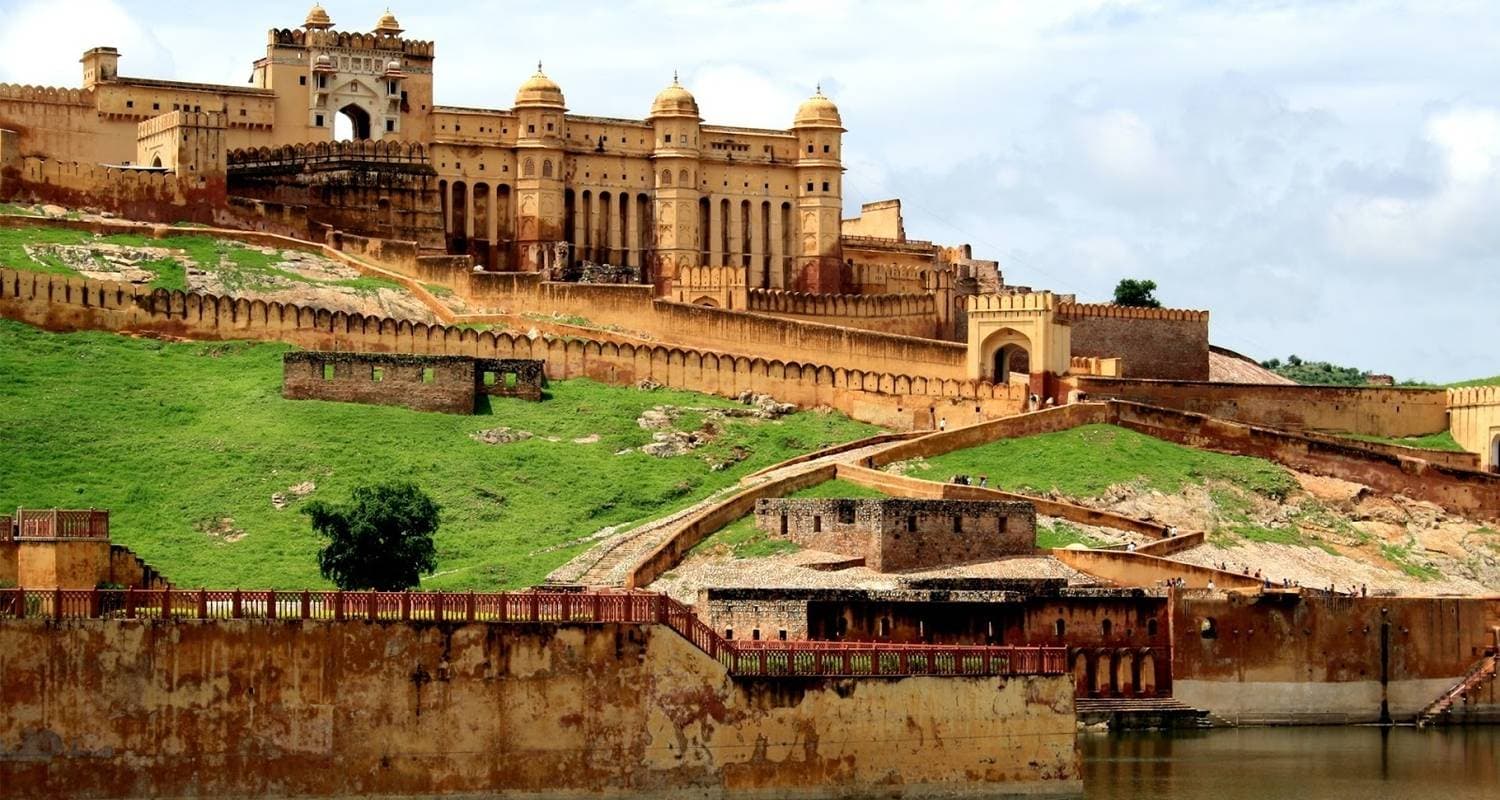
India's Bestseller - 5 Day Golden Triangle - Delhi, Agra & Jaipur (Guaranteed Departure)
5 days · K K Holidays N Vacations
4.8· 362 reviews✓ Instant confirmationtour from €828
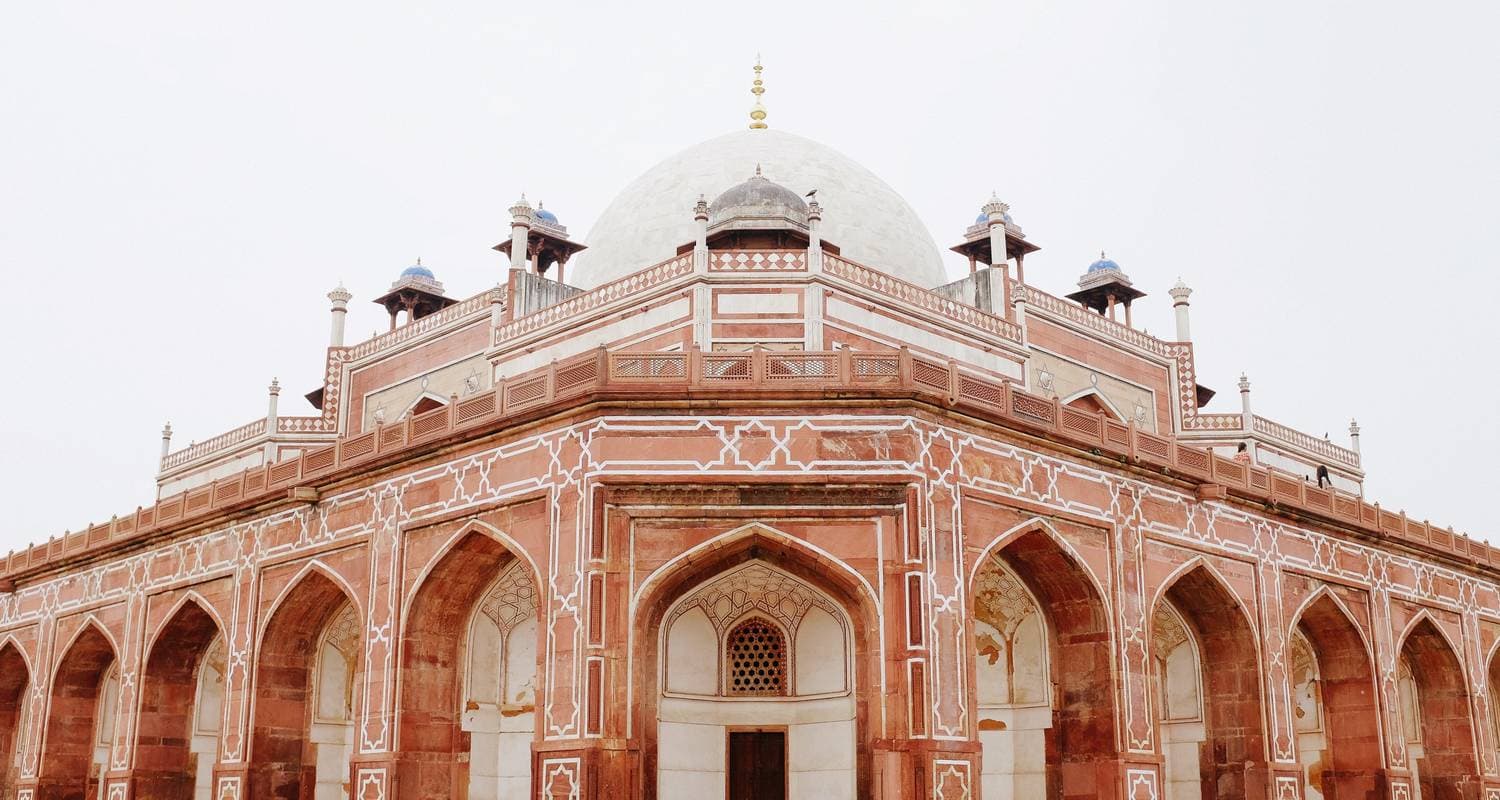
Golden Triangle Tour - 3 Days
3 days · Taj Destination Tours
4.8· 318 reviews✓ Instant confirmationtour from €202
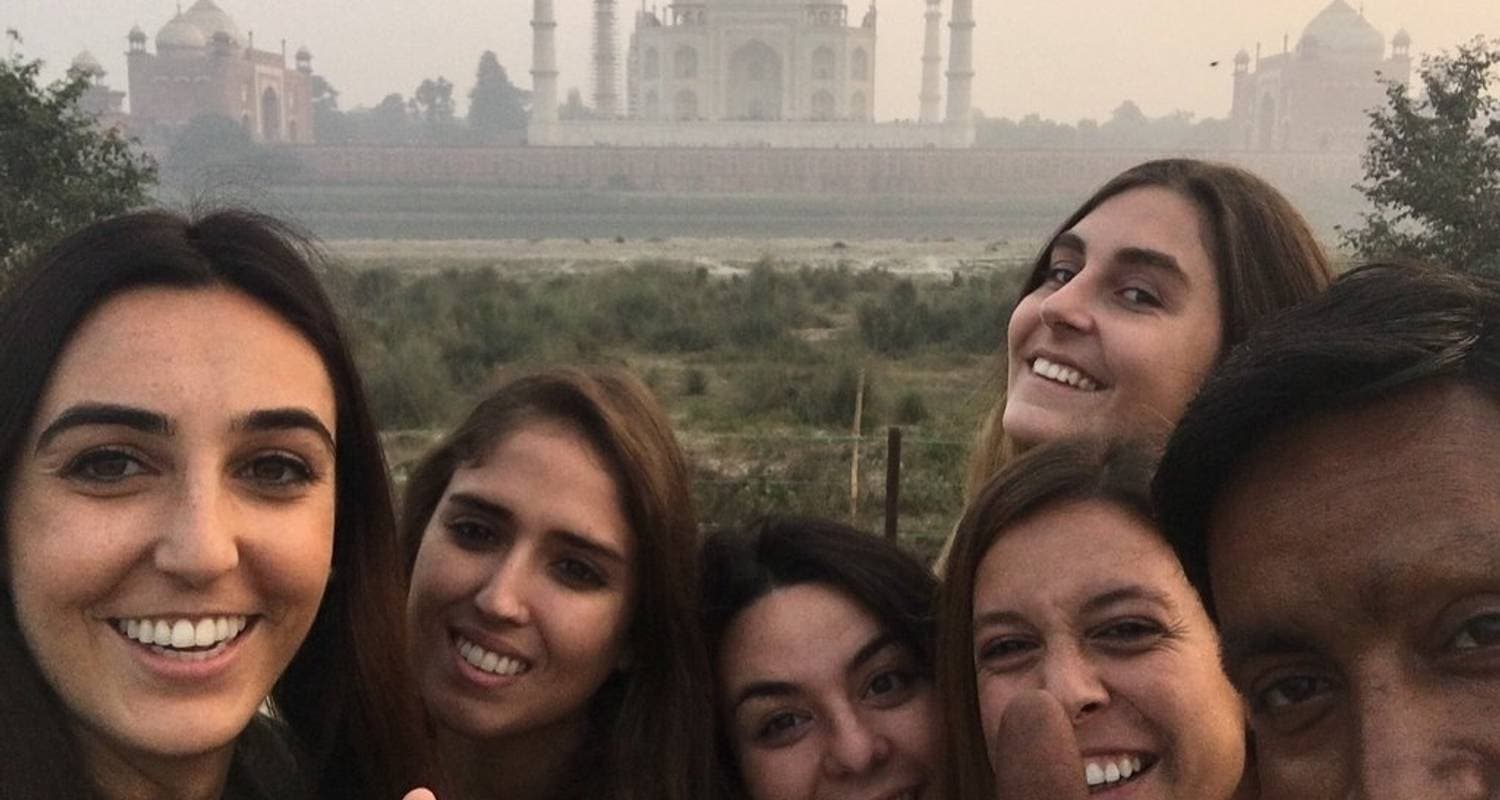
Luxury 3 Day Golden Triangle With 5 star Hotel
3 days · Taj Destination Tours
4.8· 318 reviews✓ Instant confirmationtour from €322
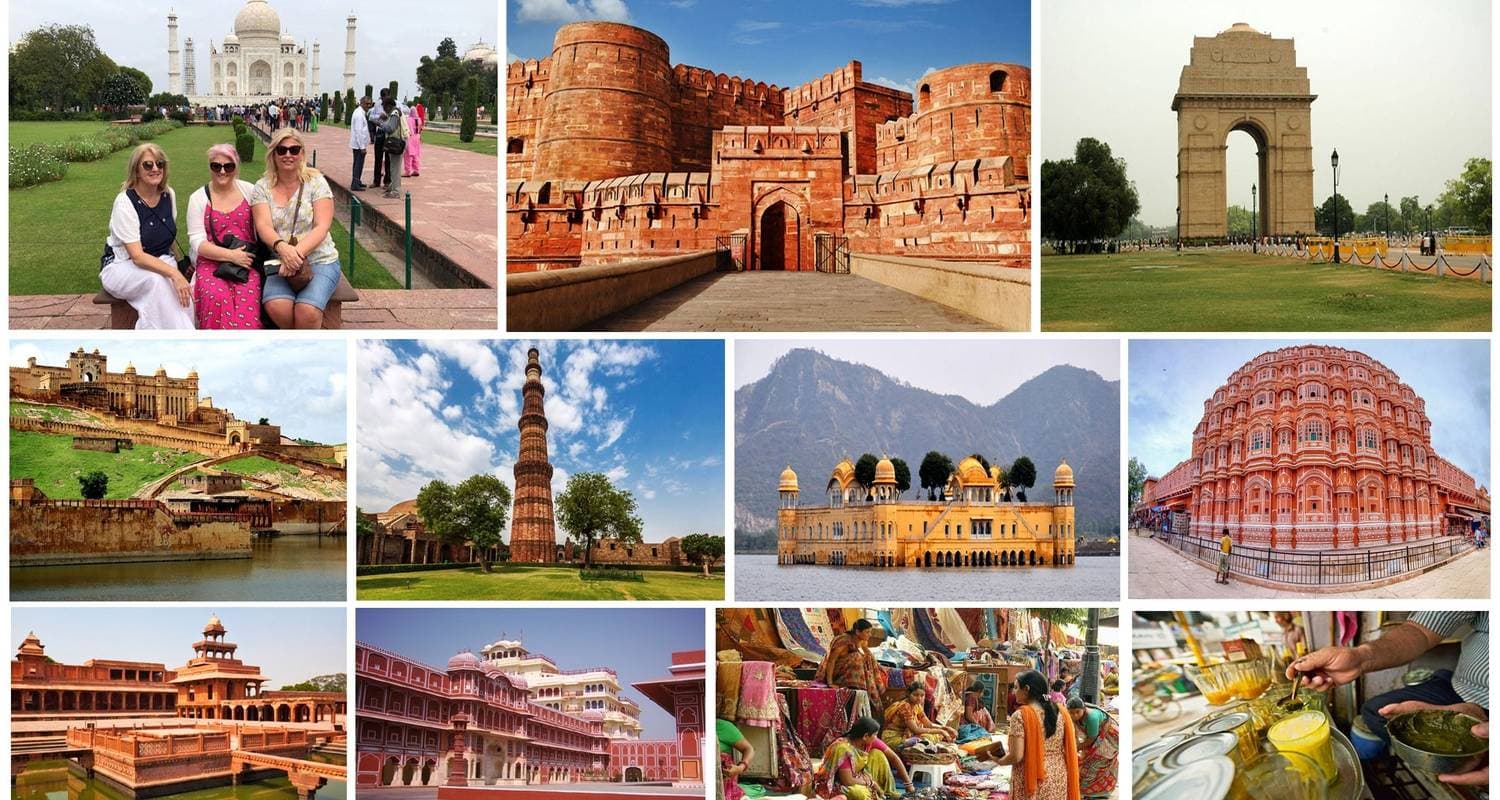
Golden Triangle Tour 3 Days & 2 Nights
3 days · ITS holidays
5.0· 246 reviews✓ Instant confirmationtour from €184
What the Golden Triangle (Delhi-Agra-Jaipur) actually covers
The Golden Triangle is the trip most people take first, and it earns the place. You fly into Delhi, drive 3-4 hours to Agra for the Taj Mahal and Agra Fort, then 4-5 hours on to Jaipur for Amber Fort, the City Palace and the Hawa Mahal, before looping back to Delhi. The route draws a neat triangle, the drives stay manageable, and you tick off three of India's most recognisable sights inside a week.
The 5-day version is the way in. Swastik India Journeys runs a top-selling 5-day Golden Triangle with meals and a sunrise Taj visit from around €380 land price. Taj Tour Trips offers a 5-day private version out of Delhi for around €550. Those are land-only; add flights from Europe and you are at €800-€1,100 all told.
The 7-day version is where the trip finally has room to breathe. Golden Triangle India Tours runs a 7-day Delhi-Agra-Jaipur at around €850 that folds in a half-day at Fatehpur Sikri and a second day in Jaipur. The 8-day upgrade with a Ranthambore tiger safari from World Travel Experiences sits around €1,430 with 4-star hotels. And if you want the Taj at sunrise (you do, the light is the whole point), make sure your itinerary builds in two Agra nights rather than a day trip.
Reckon on 8-12 km of walking on the big sight days, temperatures of 25-32°C from October to March, and traffic dense enough to add an hour to every drive.
Beyond the Golden Triangle: where to go on a longer India trip
Once you have 10-14 days, three regions slot neatly onto the Golden Triangle. Rajasthan brings Udaipur and its lake palaces, Jodhpur with the blue city and Mehrangarh Fort, and Jaisalmer for the desert fort and Thar camel camps. Swastik's 14-day Taj Mahal and Rajasthan run with royal castle stays comes in around €1,360 land and is the best value going on the longer itineraries.
Varanasi is the spiritual one. Two nights on the Ganges ghats at sunrise and sunset, a dawn boat ride past the burning ghats, and one evening aarti ceremony. World Travel Experiences runs an 8-day Golden Triangle with Varanasi at around €1,600. It is intense, and it may be the most wholly Indian experience on any tour you could pick.
Kerala is the South, and the polar opposite in tempo. A night or two on a houseboat in the Alleppey backwaters, the Munnar tea plantations, and the colonial quarter of Fort Kochi. Most travellers fly Delhi to Kochi rather than drive, since the distances are simply too big. Kerala adds €400-€700 to a North India tour and flips the whole mood from dust and forts to water and green.
For the Himalayan add-ons, take your pick of Rishikesh (yoga, Ganges rafting, a 5-6 hour drive from Delhi) or Ladakh (altitude, monasteries, open May to September only). Mumbai with Goa is the third route, better suited to repeat visitors: Mumbai's colonial facades and street food, then 3-4 beach nights up in North Goa.
Small-group vs private driver vs budget backpacker
India runs to three tour styles that feel like three different holidays, and choosing the wrong one is the regret travellers voice most often.
Small-group tours with Intrepid, G Adventures or Exodus sit in the €900-€1,800 land-price range for 8-12 days. Groups are 10-16, hotels mid-range 3-4 star, transport a private AC bus or train. You travel with one leader the whole way plus local guides in each city. This is the easiest call for solo travellers, nervous first-timers, or anyone who wants the company.
A private driver with a local operator is common in India and cheaper than most people expect. Swastik India Journeys, Taj Tour Trips, Golden Triangle India Tours, Crystal India Holidays and Joyful Holidays all run private Golden Triangle and Rajasthan trips with a dedicated car, driver and English-speaking guide in each city. Reckon on €300-€700 per day for two sharing a room, hotels 3-4 star. You set the alarm, skip whatever you fancy, and pull over at the roadside dhaba whenever the chai calls. For couples and families, this is the sweet spot.
Budget backpacker style with TruTravel, G Adventures 18-to-Thirtysomethings or small local outfits trades the star ratings for guesthouses and sleeper trains. Eight days from €500-€700 land price. The honest take: it sings if you are under 35 and there for the social energy, and it falls flat if what you crave is a quiet evening and a clean shower after a long day. Greaves India and Trafalgar's India range hold the premium end, €3,500 and up for 12-14 days of heritage hotels and boutique camps.
Best time to visit India and what it costs you
Three seasons shape an India tour, and they pull sharply in different directions between North and South.
October to March is the main window for the North. Delhi, Agra, Jaipur and Rajasthan sit at 20-28°C by day, cool at night, low humidity, not a drop of rain. November to February is the peak: Christmas and New Year fill the Udaipur and Jaipur heritage hotels and operator prices lift 20-30%. October and March are the canny months, near-peak weather without the crowds.
April and May bring serious heat. Delhi and Agra clear 40°C by mid-April and push 45°C in May. Temple and fort visits become a 6am affair, and most travellers simply will not enjoy it. There is a reason tour prices drop 25-35%.
June to September is monsoon across most of India. Rajasthan gets short, heavy bursts and the hills stay lush, but the North turns humid and sticky. It is not peak season, though mid-September is a quiet shoulder with good prices if you can shrug off the odd wet day.
Kerala keeps its own calendar. The monsoon rolls in early June and lingers into September, so the South peaks October to March, with December to February the pick of it. Kerala in monsoon is far from miserable if you are there for an Ayurveda retreat, but the houseboats run less reliably.
For Ladakh, the road and flight window is May to September, full stop. Outside it the roads close and the flights bend to the weather.
Flights to India: gateways and routes from wherever you start
Delhi (DEL) is the main gateway for the Golden Triangle, Rajasthan and the Himalayas. Mumbai (BOM) makes more sense if you are heading straight for Kerala, Goa or West India. Direct flights into Kochi (COK) for Kerala are thin from most markets, so plan to route via Delhi or Mumbai. Whatever your start point, a multi-city ticket (Delhi in, Mumbai out, say) usually costs the same as a round-trip and saves you a long internal leg.
From the UK and Europe, India is an easy long-haul. Air India flies Delhi nonstop from London, Paris, Frankfurt, Milan, Copenhagen and others in 8-9 hours. The Gulf carriers — Emirates via Dubai, Etihad via Abu Dhabi, Qatar via Doha — usually undercut the direct fares by €100-€250 at 11-14 hours total, and Turkish via Istanbul is often the cheapest of the lot. Shoulder-season returns run €500-€750, climbing to €700-€1,000 at the December-January peak.
From the US, India is a genuine haul from either coast, and the Gulf carriers are your friend. From the West Coast (Los Angeles, San Francisco, Seattle) it's about 19-21 hours via Dubai, Doha or Abu Dhabi, US$900-US$1,400 return in shoulder season. From the East Coast it's shorter — Air India flies New York, Newark, Washington and Chicago nonstop to Delhi in around 14-15 hours, with the Gulf one-stops competing on price; expect US$800-US$1,300 return. Worth knowing: unlike Southeast Asia, India is no closer from California, so East Coast flyers actually have the easier trip here.
From Australia, the Gulf and Asian hubs carry the load. Sydney and Melbourne reach Delhi or Mumbai in about 14-16 hours with one stop in Singapore, Bangkok, Kuala Lumpur or a Gulf hub; Air India also runs some direct Sydney-Delhi services. Return economy runs roughly A$1,100-A$1,600 in the shoulder months and A$1,600-A$2,200 over the December-January summer break.
From Canada, Air Canada flies Vancouver and Toronto nonstop to Delhi (Vancouver around 15 hours, Toronto around 14), with the Gulf carriers one-stop alternatives; reckon on C$1,200-C$1,800 return depending on season and city.
Book 3-4 months out for the best fares from anywhere. The bundle prices the flight live in your own currency the moment you search, so the full trip cost shows right beside the tour before you commit to either booking. Kiwi.com handles the multi-city routing behind the scenes.
Ready to price your trip?
Enter your origin airport and month — we'll search live flight and tour prices and give you one bundled total per person.
Find combosCommon questions
Is India safe for tourists in 2026, including for women?
For the routes most tours actually cover, the Golden Triangle, Rajasthan, Kerala and Varanasi, India is safe when you travel on an organised tour or with a private driver. Violent crime against tourists is rare. The real annoyances are petty scams, pushy touts around the big sites, and the odd bout of stomach trouble. Women travellers report more unwanted attention and staring than in most places, and a small-group tour or private driver strips almost all of that away. Dress modestly at religious sites and beyond the tourist bubbles, give the unmarked taxis a miss, and you will be fine.
How much does a 10-day India tour cost with flights?
Budget €1,500-€2,100 per person all-in from most European cities. That stretches to a small-group or private-driver tour (€900-€1,400 land with guide, hotels, transport and most breakfasts), return flights from Europe to Delhi or Mumbai (€500-€750), the e-visa (€30), tips (€50-€80), and spending money for lunches, dinners and the inevitable shopping (€250-€400). Luxury operators like Greaves India and Trafalgar push the total to €3,500-€5,000, while budget backpacker trips with TruTravel come in around €1,200 all-in.
Golden Triangle vs Kerala vs Rajasthan — which should I pick first?
Golden Triangle for a first India trip under 7 days: you get the headline sights, the drives stay manageable, and the logistics look after themselves. Rajasthan if you have 10-14 days and you came for forts, palaces and desert; it is the richest region to look at and the heritage hotels are something else. Kerala if you want India at half-speed, all backwaters, beaches, tea hills and Ayurveda. Kerala also suits anyone wary of the full intensity of the North.
Should I avoid India during monsoon (June to September)?
Not entirely. Rajasthan and the North get short, heavy bursts rather than constant rain, and tour prices fall 25-35%. The Kerala monsoon (June to August) is wetter and the houseboats run less reliably, but the Ayurveda retreats actively court those months. The hills, Himachal Pradesh, Darjeeling and the Western Ghats, stay cool and green throughout. Steer clear if you have your heart set on outdoor sightseeing every day or photography at the Taj. Lean in if you want lower prices, thinner crowds, and you do not mind reshaping the odd plan around a wet afternoon.
Is India good for a female solo traveller?
Yes, with the right setup. A small-group tour with Intrepid, G Adventures or Exodus is the easiest route: company built in, a female tour leader more often than not, and none of the solo-in-public visibility that draws unwanted attention. Private-driver tours through Swastik India Journeys, Taj Tour Trips or Crystal India Holidays work just as well for couples or solo women who want more say over the day. Fully independent solo travel is doable, but it is harder graft than almost anywhere else in Asia. Dress modestly, book your beds ahead, and try not to land in a new city after dark.
What should I pack for an India tour, including religious sites?
Lightweight long trousers and long-sleeve cotton shirts for the temples and mosques, where shoulders and knees covered is the standard. A scarf for women to cover the hair at Sikh gurdwaras and some Hindu temples. Slip-on shoes, because you will be taking them off constantly at religious sites. Real walking shoes for the forts, since Amber, Mehrangarh and Jaisalmer each mean 2-3 km of stone stairs. High-SPF sunscreen, a wide-brim hat, a refillable water bottle. Imodium and rehydration sachets, no question. And around €150-€200 in small euro or USD notes, with cards as backup.
Related destinations
- Nepal Multi-Day Tours with Flights from €790Everest Base Camp, the Annapurna Circuit, Kathmandu temples …
- Sri Lanka Multi-Day Tours with Flights from €790Climb Sigiriya, ride the blue train through tea country to E…
- Thailand Multi-Day Tours with Flights from €1,050Bangkok temples, Chiang Mai elephants, Krabi limestone karst…
Related tour styles
- Small Group Tours with Flights IncludedShared departures of 10-16 travellers. Expert guides, fixed …
- Culture Tours with Flights IncludedGuided culture tours built around UNESCO sites, ancient civi…
- Adventure Tours with Flights IncludedTrek, cycle, paddle and climb on guided multi-day trips. Rea…
- Christmas & New Year Tours with Flights IncludedSkip the seasonal clamour at home. December departures to so…
Pick by trip length
Plan this trip from your city
- Multi-Day Tours from New York with Flights IncludedMulti-day tours from New York with flights included — one US…
- Multi-Day Tours from Los Angeles with Flights IncludedPackage tours from Los Angeles with flights included — one U…
- Multi-Day Tours from Sydney with Flights IncludedLeaving Australia means a long-haul flight whether you like …
- Multi-Day Tours from Toronto with Flights IncludedPearson is Canada's biggest long-haul hub, and with a weak l…
- Multi-Day Tours from London with Flights IncludedBuilt for London travellers: LHR for long-haul, LGW for Euro…
Deeper reading
- The Perfect 12-Day India Itinerary (Route, Day by Day)Twelve days is the India sweet spot: the Golden Triangle plu…
- How Much Does an India Tour Cost? The Honest All-In NumberTen days in India runs roughly €1,300–€2,300 (≈$1,413–$2,500…
- The Best Time to Visit India (Month-by-Month, 2026)Most of India is October-March. Kerala breaks the rule. Hima…
- What an India Tour Costs from New York, Flights IncludedThirty-five India tours priced with a real JFK fare attached…
- What an India Tour Costs from Chicago, Flights IncludedThirty-five India tours priced with a real O'Hare fare attac…
- What an India Tour Costs from San Francisco, Flights IncludedThirty-five India tours priced with a real SFO fare attached…