
Nepal Multi-Day Tours with Flights from €790
Everest Base Camp, the Annapurna Circuit, Kathmandu temples and Pokhara lakes. One bundled price, two quick bookings.
Edited by Multiday.tours editor
- ✓Everest Base Camp trek (12-15 days) from €1,240 before flights; max altitude 5,545 m at Kala Patthar
- ✓Annapurna Base Camp (7-10 days) is the smart shorter option; max 4,130 m, far lower AMS risk
- ✓8-day Kathmandu + Chitwan + Pokhara cultural loop from €640 for non-trekkers
- ✓Return flights Europe-Kathmandu €550-€1,100 via Gulf carriers; add €180-€220 for Lukla
- ✓Peak trekking: October-November; second window March-April for rhododendrons
- ✓Local operators (Nepal Social Treks, Sherpa Expedition Teams) run the same trails for a third of Western prices
Nepal is the best-value trekking country on the planet right now. A typical 11 to 15 day guided trek with porter, guide, teahouse lodging and most meals starts from around €790 a head on the ground; most travellers land nearer €1,150, and a decent Everest Base Camp package tops out around €1,380 before flights. Add a return from Europe to Kathmandu and you are looking at roughly €1,400 to €2,100 all-in for a proper Himalayan trip. What follows is the honest version: real price ranges from the operators running these routes, the three great treks with straight talk on altitude and fitness, a plan for travellers who have no intention of walking eight hours a day, and a flight section that confronts the very real Lukla delay problem head on.
The tours doing the heavy lifting here
Prices are tour-only — add flights for the real total. You book the tour itself on TourRadar.
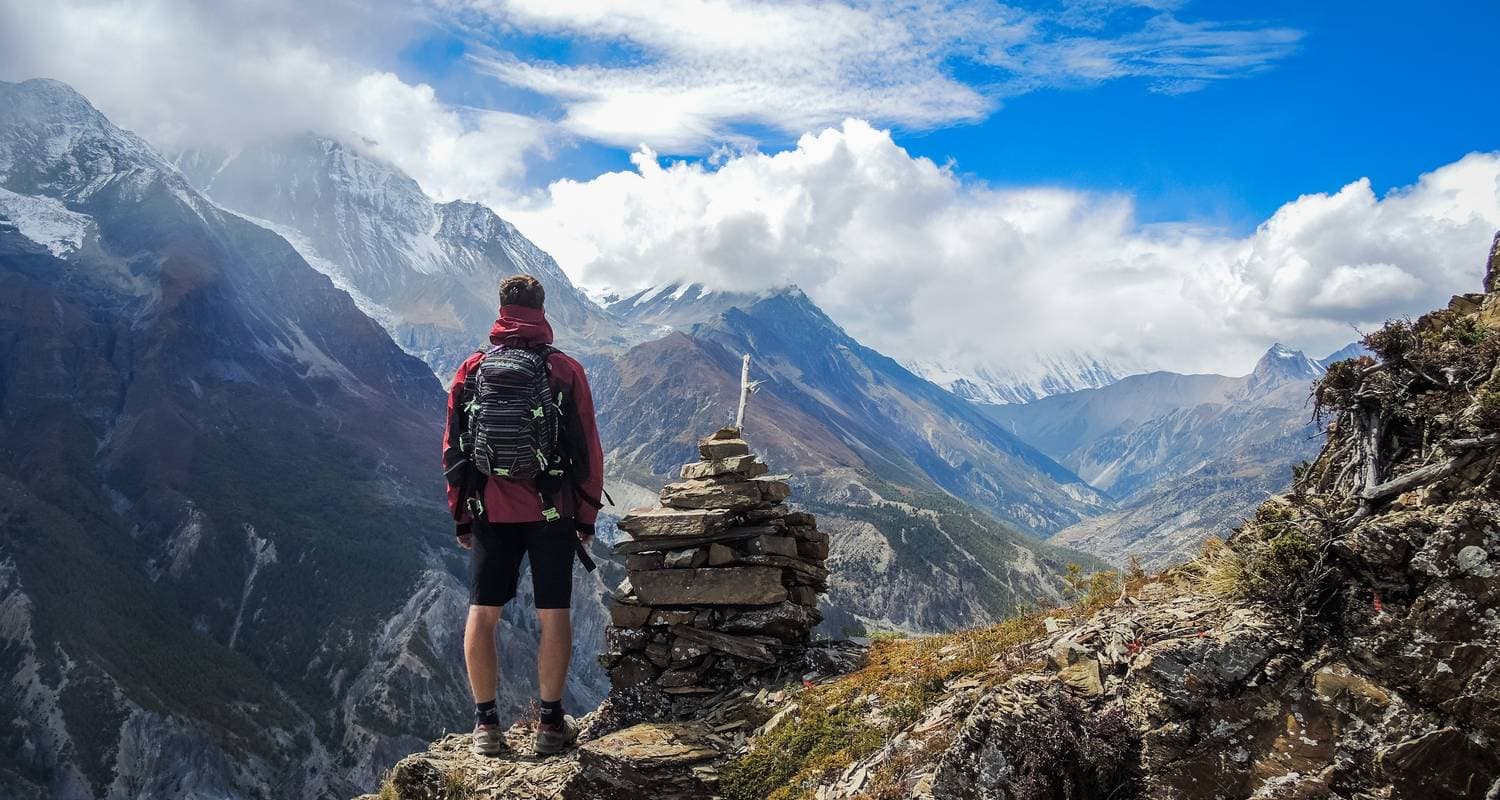
Bestseller Tour India with Nepal, flight included
15 days · Payless tours india
4.8· 136 reviews✓ Instant confirmationtour from €1,540
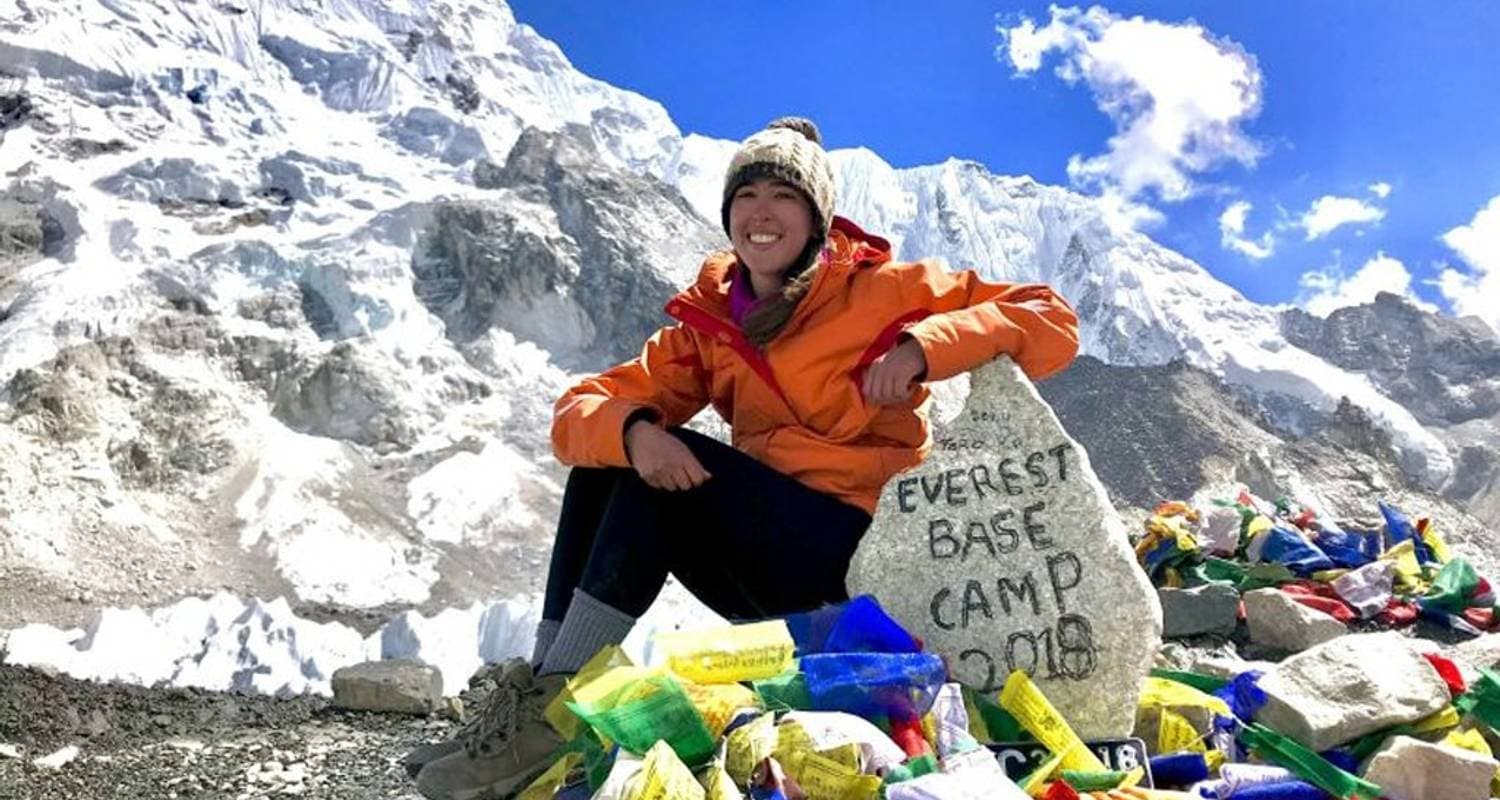
Everest Base Camp Trek
11 days · Alpine Ramble Treks
5.0· 90 reviews✓ Instant confirmationtour from €1,140
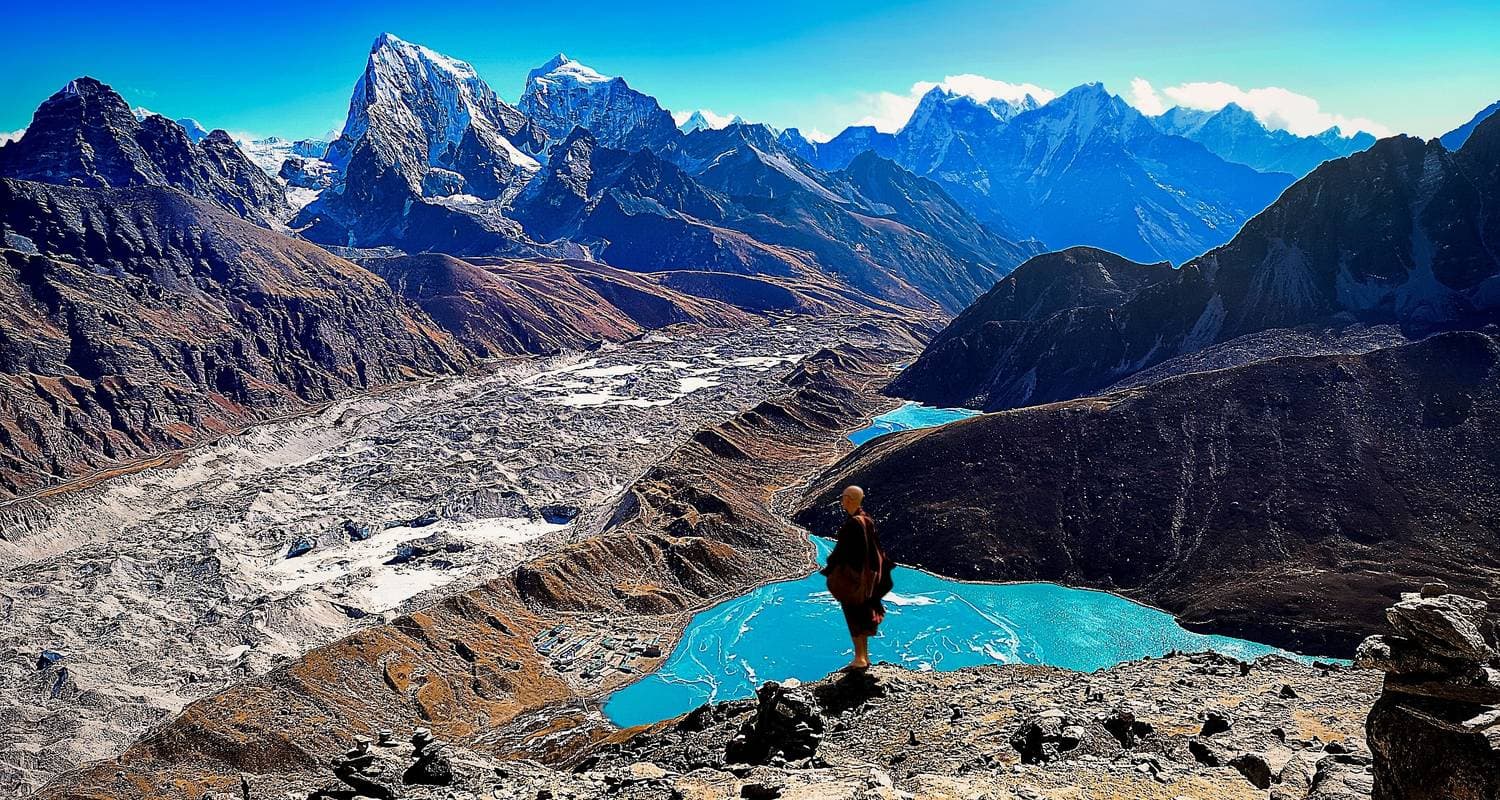
Everest Base Camp Trek
15 days · G Adventures
4.8· 78 reviews✓ Instant confirmationtour from €1,545
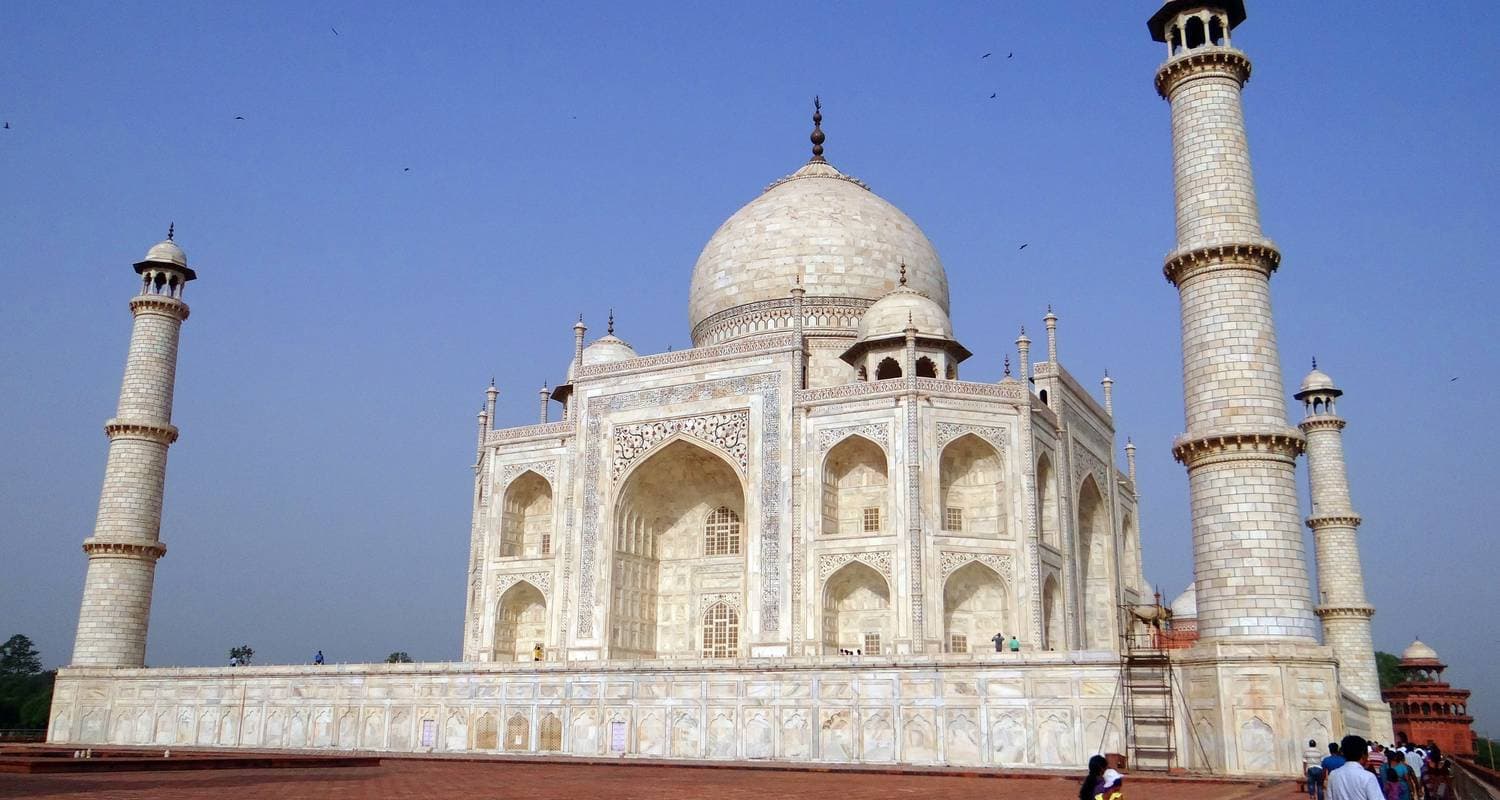
Delhi to Kathmandu Adventure
15 days · G Adventures
4.5· 78 reviews✓ Instant confirmationtour from €1,563
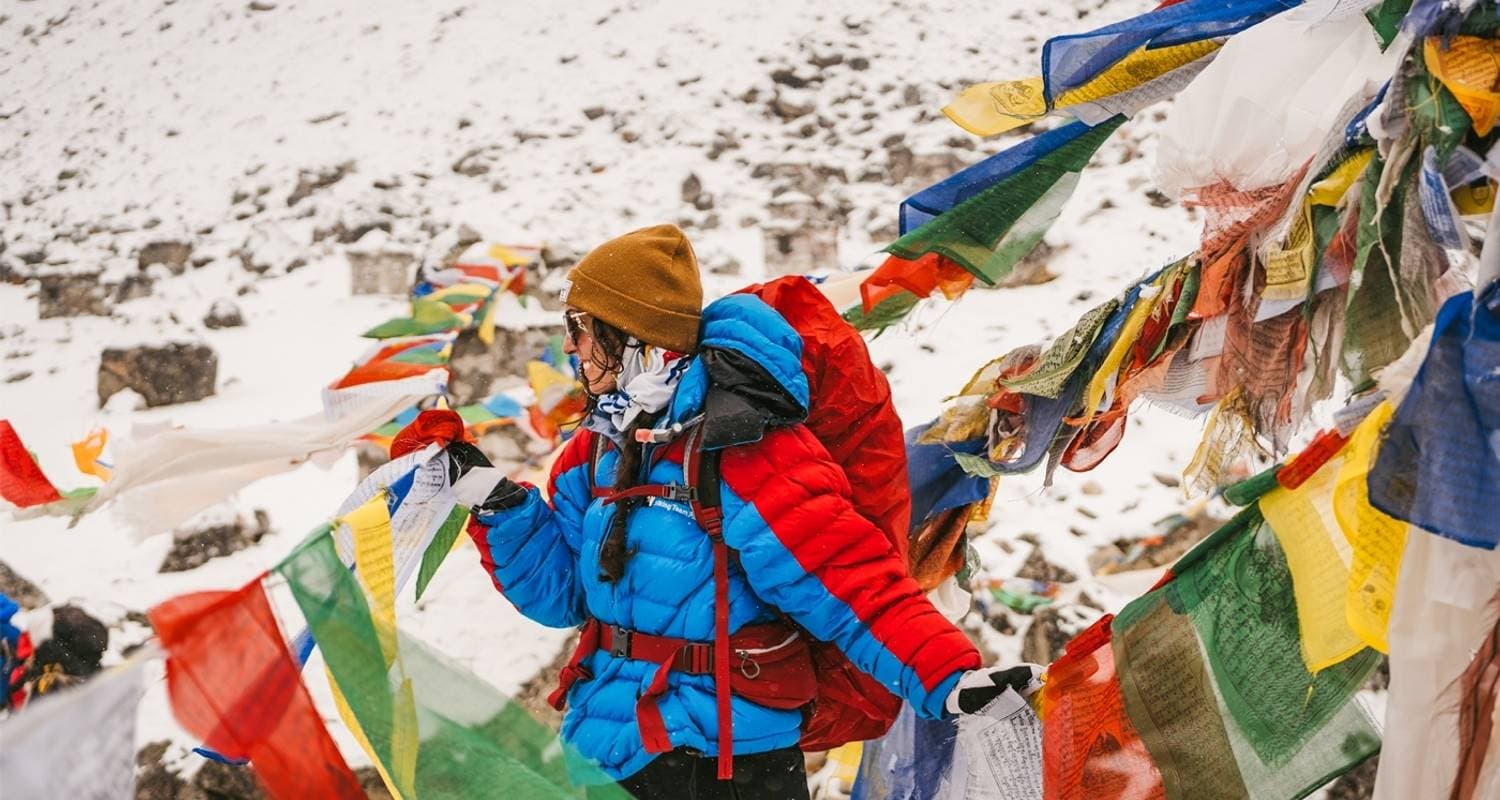
Everest Base Camp Trek 14-days trip
14 days · Nepal Hiking Team
4.9· 69 reviews✓ Instant confirmationtour from €1,357
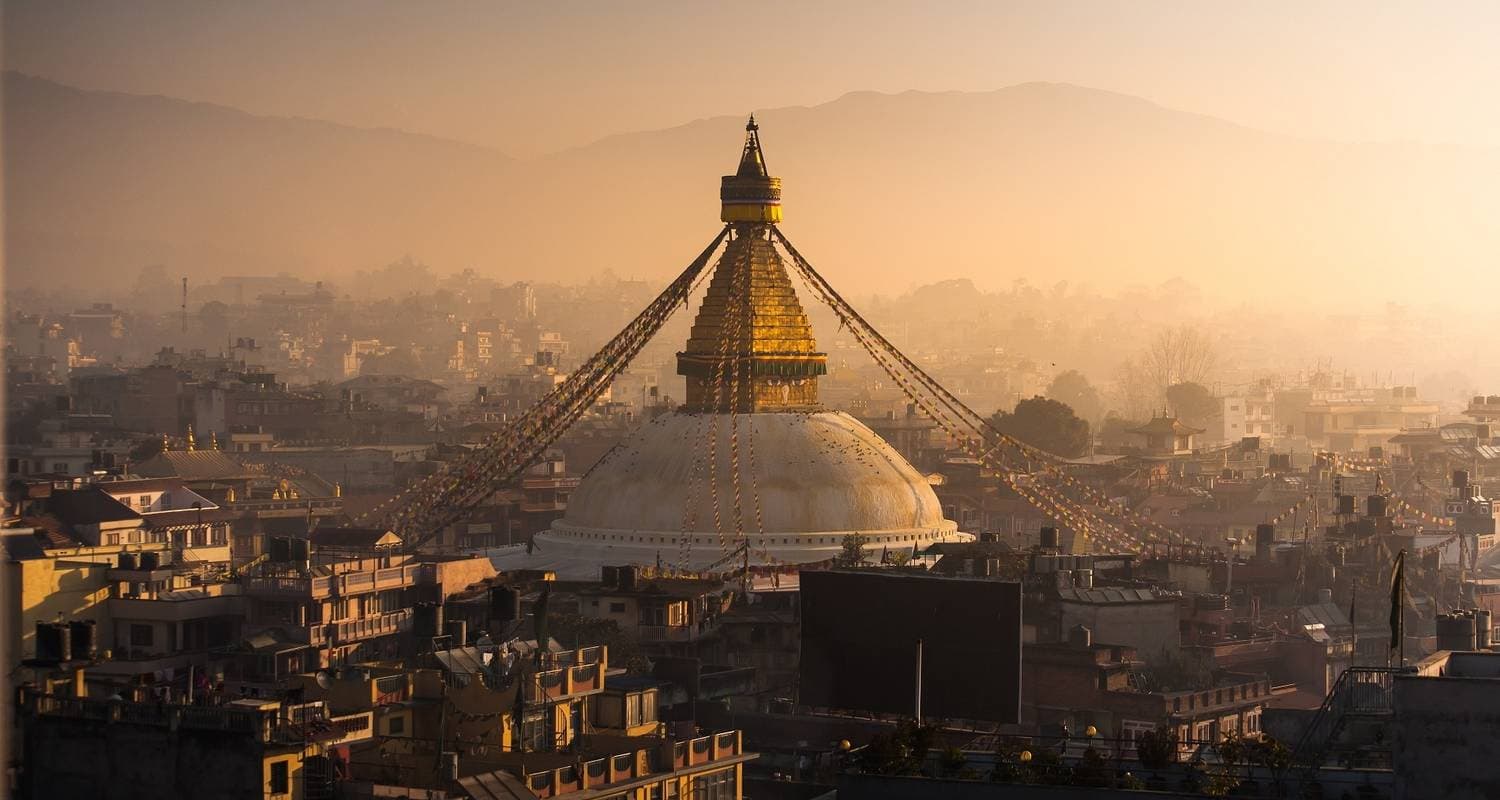
Nepal Highlights Tour
11 days · Asian Heritage Treks & Expeditions
4.9· 69 reviews✓ Instant confirmationtour from €1,679
The three big treks: EBC, Annapurna Circuit, Annapurna Base Camp
Everest Base Camp is the headline trek. Allow 12 to 14 days on the mountain plus a travel day each side. You fly from Kathmandu to Lukla (2,860 m), walk 5 to 8 hours a day on rocky, stepped trails, sleep in teahouses, and top out at Kala Patthar (5,545 m) for the postcard view of Everest. The real challenge here is altitude, not fitness. The acclimatisation days at Namche and Dingboche are non-negotiable, and even so roughly one trekker in five picks up some form of AMS. Sherpa Expedition Teams run 12-day versions from around €1,290, and G Adventures a 15-day from around €1,545.
The Annapurna Circuit is the classic 13 to 17 day loop, climbing from paddy fields to high desert, over the Thorong La pass at 5,416 m, then down into the Kali Gandaki gorge. More varied than EBC, more cultural too, and with no white-knuckle flight; it sits in much the same price bracket.
Annapurna Base Camp is the smart 7 to 10 day choice. The top altitude is 4,130 m, far safer, you get a proper glacier amphitheatre at the end, and there is no Lukla to gamble on. If you have one shot and two weeks, do ABC over EBC.
Non-trekking Nepal: Kathmandu, Chitwan, Pokhara, Lumbini
Not everyone fancies eight hours of walking a day for two weeks straight, and Nepal rewards the non-trekker more handsomely than most people expect. The standard 8-day cultural loop pairs the Kathmandu Valley with Chitwan and Pokhara, and runs from around €640 with Relax Getaways up to around €870 for World Travel Experiences' Classic Nepal Tour.
The Kathmandu Valley deserves three full days: Durbar Square, the Boudhanath stupa circuit at dusk, Swayambhunath at dawn, and the medieval warren of Bhaktapur, which came through the 2015 earthquake better than most assume. Add Patan on the third day if the temples haven't worn you out.
Chitwan National Park is a 5-hour drive south into the lowland Terai. Spend two nights, take a jeep safari for one-horned rhinos and sloth bears, and choose one of the elephant-free experiences (the ethical operators have all dropped the rides). In the dry season, roughly two in five travellers spot a Bengal tiger.
Pokhara is where you draw breath. There is Phewa Lake, paragliding off Sarangkot with Annapurna South filling the sky, and the Peace Pagoda. Lumbini, birthplace of the Buddha, is a 6-hour bus south and usually an overnight add-on for those with the time to spare.
Which operator, and what 'support' actually means
Nepal runs on two tiers. Western-branded operators like Intrepid, G Adventures, Exodus, World Expeditions, KE Adventure and Mountain Kingdoms wrap their trips around local ground crews and charge €1,500 to €3,000 for a trek that costs a third of that locally. What you are paying for is English-speaking trip leaders, Western insurance, evacuation cover and a refund policy that will actually pick up the phone.
The local operators (Nepal Social Treks, Sherpa Expedition Teams, Nepal Hiking Team, Alpine Ramble, Peregrine Treks) run the very same routes for €790 to €1,480. Same trails, same teahouses, often the same guides, since G Adventures subcontracts to them anyway. You save real money and trade away a layer of service.
Here is what that support actually buys you: one licensed guide per 4 to 6 trekkers, plus a porter for every two trekkers carrying up to 20 kg of your gear, leaving you to walk with just a daypack of water, layers and a camera. Teahouse treks (all of EBC, most of Annapurna) mean private rooms, shared squat toilets and a dining hall warmed by a yak-dung stove. Fully supported camping treks (Manaslu Circuit, Upper Mustang) cost 30-50% more and come with a cook, a kitchen crew and tents. For a first Nepal trek, teahouse is the way to go.
Best time to go: October peak, March-April second window
October and November are the peak trekking months, and they earn it. Skies clear once the monsoon has scrubbed out the haze, the lower elevations sit at a pleasant 15-20°C while EBC altitude drops to -5 to -10°C, and the Annapurna and Everest ranges look exactly as you have always imagined them. Book 4 to 6 months ahead for this window, because Lukla flights and the EBC teahouses fill fast.
March and April are the second window, and arguably the lovelier. The mountain views go a touch hazy, but the rhododendron forests on the Annapurna and Langtang routes blaze red and pink from 2,500 to 3,500 m, and the teahouse nights are warmer. Prices come down roughly 10-15% on the autumn peak.
June through early September is monsoon. The trails turn to mud, the leeches come out, and the views vanish behind cloud for days at a stretch. Manaslu and Upper Mustang sit in the rain shadow and stay trekkable, but EBC and Annapurna are not sensible bets, and operators drop prices 30-40% for good reason.
December through February is trekkable but cold. EBC plunges to -20°C at night and the teahouses above Dingboche close for the winter. It is fine for lower-altitude cultural trips and for ABC to 4,130 m, provided you are properly geared up.
Flights to Kathmandu from wherever you start, plus the Lukla reality check
Kathmandu (KTM) is the single international gateway, and no carrier flies nonstop from any of the long-haul markets in 2026 — everyone connects, almost always through a Gulf or Asian hub.
From the UK and Europe, the standard routing is via a Gulf hub: Qatar through Doha, Etihad through Abu Dhabi, Emirates through Dubai, or Turkish through Istanbul. Turkish and Qatar are usually the cheapest, and Dublin, Paris, Frankfurt and London all connect well. Door to door is 13-17 hours; returns run €550-€750 in shoulder season (late February, early May, late September) and €700-€1,100 in the October-November peak.
From the US, Nepal is a long way from either coast. From the West Coast (Los Angeles, San Francisco, Seattle) reckon on 21-24 hours via a Gulf hub or via Asia (Cathay through Hong Kong, Singapore Airlines through Singapore), US$1,100-US$1,600 return in shoulder season. From the East Coast (New York, Washington, Boston) it's a touch shorter at 19-22 hours via Doha, Dubai or Abu Dhabi, US$1,000-US$1,500.
From Australia, Sydney and Melbourne reach Kathmandu in about 15-18 hours via Singapore, Kuala Lumpur, Bangkok or a Gulf hub. Return economy runs roughly A$1,200-A$1,700 in the shoulder months, A$1,700-A$2,300 over the October-November trekking peak, which collides with neither summer nor winter holidays in Australia, so book early.
From Canada, Vancouver and Toronto both connect via a Gulf or Asian hub in around 20-23 hours, C$1,300-C$1,900 return depending on season.
For Everest Base Camp, it is the second flight that matters: Kathmandu to Lukla (LUA) on Tara Air or Summit Air, 25 to 30 minutes, roughly €180-€220 (US$200-US$240) return. Tenzing-Hillary airport is a 527-metre sloped runway carved into the side of a mountain at 2,860 m. The flight is genuinely fine in clear weather and genuinely cancelled in anything less, so build two buffer days into each end of an EBC trip. In peak season, 10-20% of Lukla flights are scrubbed on the day. A helicopter out of a stuck airport runs US$500-US$600 a seat and is a running joke among Nepal trekkers. The good operators bake buffer days into the itinerary, which is precisely why the 15-day EBC packages are 15 days long.
Book 3-4 months out for the best fares from anywhere. The bundle prices the international flight live in your own currency the moment you search, so the full trip cost shows beside the tour before you commit to either booking. Kiwi.com handles the routing behind the scenes.
Ready to price your trip?
Enter your origin airport and month — we'll search live flight and tour prices and give you one bundled total per person.
Find combosCommon questions
How much does a 14-day Nepal tour cost with flights?
Reckon on €1,400-€2,100 a head all-in from most European cities. That covers a trekking package (€1,150-€1,480 with guide, porter, teahouses, permits and most meals), return flights Europe to Kathmandu (€550-€850 outside the October-November peak), the Lukla flight if you are doing EBC (€180-€220 return), the visa (€28), trekking insurance with helicopter evacuation (€80-€120), tips for guide and porter (€100-€150), and personal spending on drinks, snacks and WiFi on the trail (€100-€150). Step up to a Western-branded operator like G Adventures or Exodus and add €400-€800.
Am I fit enough for Everest Base Camp or the Annapurna Circuit?
Fitness counts for less than people think; altitude counts for more. If you can comfortably walk 6 to 8 hours a day with a daypack on consecutive days, you have the fitness. Three months of hill walks and stairs beforehand is plenty. The real filter is altitude tolerance, which you cannot predict or train for, and roughly one in five EBC trekkers gets meaningful AMS symptoms even with proper acclimatisation. If you are under 35 and in reasonable shape, EBC is doable. If you are over 55 or carrying heart or lung issues, do ABC at 4,130 m instead; it is the better trek anyway.
Does my travel insurance cover trekking to 6,000 metres?
Standard travel insurance usually caps out at 2,500-3,000 m, which leaves EBC (5,545 m) and the Annapurna Circuit's Thorong La pass (5,416 m) uncovered. You need a dedicated high-altitude trekking policy that covers helicopter evacuation up to at least 6,000 m. World Nomads, True Traveller and Global Rescue are the usual picks; reckon on €80-€150 for two weeks. Check the wording names both helicopter evacuation and high-altitude trekking in plain terms, because plenty of policies quietly exclude one or the other. Your operator will want to see the certificate before you set off.
How often are Lukla flights actually cancelled?
In the October-November peak, roughly 10-20% of Lukla flights are cancelled or delayed each day, thanks to cloud or wind on one side of the route. Morning flights have the best odds; afternoons are usually grounded. In the monsoon months, cancellations can top 50%. Build in at least one buffer day at each end of an EBC trip, and ideally two. The fix when you are stuck is a shared helicopter from Lukla to Kathmandu at US$500-$600 a seat, which most trekkers end up taking at some point. The good operators write buffer days into their itineraries, which is the whole reason 15-day EBC packages exist.
Is Nepal safe for solo female trekkers?
Nepal is one of the safer trekking destinations on earth for solo women, with the important caveat that you should trek with a licensed guide rather than entirely on your own. Since 2023 Nepal has made guides mandatory in the national parks for foreign trekkers anyway, partly in response to a handful of serious incidents on solo trails. On a guided trek with a reputable operator you will share teahouses with other trekkers every night, walk with your guide and porter by day, and be genuinely looked after. Kathmandu and Pokhara are straightforward too, with the usual city common sense.
What do I actually need to pack for an EBC or Annapurna trek?
Proper trekking boots, broken in rather than box-fresh, a 30-litre daypack, and a 4-season sleeping bag rated to -15°C (rent one in Kathmandu for €2-€3 a day rather than buying). Then a down jacket, two or three merino base layers, a waterproof shell, a fleece mid-layer, trekking trousers, a hat, gloves, and UV400 sunglasses, because snow blindness is a real risk at altitude. Pack SPF50 sunscreen, blister plasters, diamox for AMS prevention (it is prescription-only, so bring it from home), a 2-litre water bladder with purification tablets, and trekking poles your knees will thank you for on the descents. Finally, carry roughly €200-€300 in cash for tips, drinks, charging and WiFi up on the mountain, where card payment simply does not exist.
Related destinations
- India Multi-Day Tours with Flights from €640Golden Triangle, Rajasthan forts, Kerala backwaters and Vara…
- Vietnam Multi-Day Tours with Flights from €650Sail Halong Bay, drift through Hoi An by lantern-light, wake…
- Thailand Multi-Day Tours with Flights from €1,050Bangkok temples, Chiang Mai elephants, Krabi limestone karst…
Related tour styles
Pick by trip length
Plan this trip from your city
- Multi-Day Tours from New York with Flights IncludedMulti-day tours from New York with flights included — one US…
- Multi-Day Tours from Los Angeles with Flights IncludedPackage tours from Los Angeles with flights included — one U…
- Multi-Day Tours from Sydney with Flights IncludedLeaving Australia means a long-haul flight whether you like …
- Multi-Day Tours from Toronto with Flights IncludedPearson is Canada's biggest long-haul hub, and with a weak l…
- Multi-Day Tours from London with Flights IncludedBuilt for London travellers: LHR for long-haul, LGW for Euro…