
The Best Time to Visit Portugal (Month-by-Month, 2026)
April-June and Sep-Oct are the sweet spots. July-August cooks the Algarve. Douro harvest September is a calendar-pinner.
By Adam, founding editor · Updated 18 June 2026
- ✓Best months: May, June, September, October
- ✓Avoid Algarve: July and August (crowded, expensive, 32-36°C)
- ✓Douro harvest 2026: approximately 15 Sep - 8 Oct
- ✓Cheapest month: January (20-30% below normal)
- ✓Lisbon works every month of the year
- ✓Porto: wetter than people expect November-March
The best time to visit Portugal is late April to mid-June, then again from September to late October. That's when you get 22-28°C days across Lisbon, Porto and the Algarve, crowds you can live with, and tour prices sitting 15-25% under the July-August peak. High summer is a tighter squeeze than people expect: the Algarve coast hits 32-36°C and fills up with British, German and Irish package holidaymakers, while Lisbon's hills in 35°C heat will test your calves and your patience. What follows is the country split into its three weather zones, a month-by-month walk through real Lisbon, Porto and Faro numbers, the Douro harvest window (far and away the most calendar-sensitive reason to come), and how TAP Portugal and the budget airlines price flights into LIS, OPO and FAO across the year.
The Portugal tours worth timing right
Prices are tour-only — add flights for the real total. You book the tour itself on TourRadar.
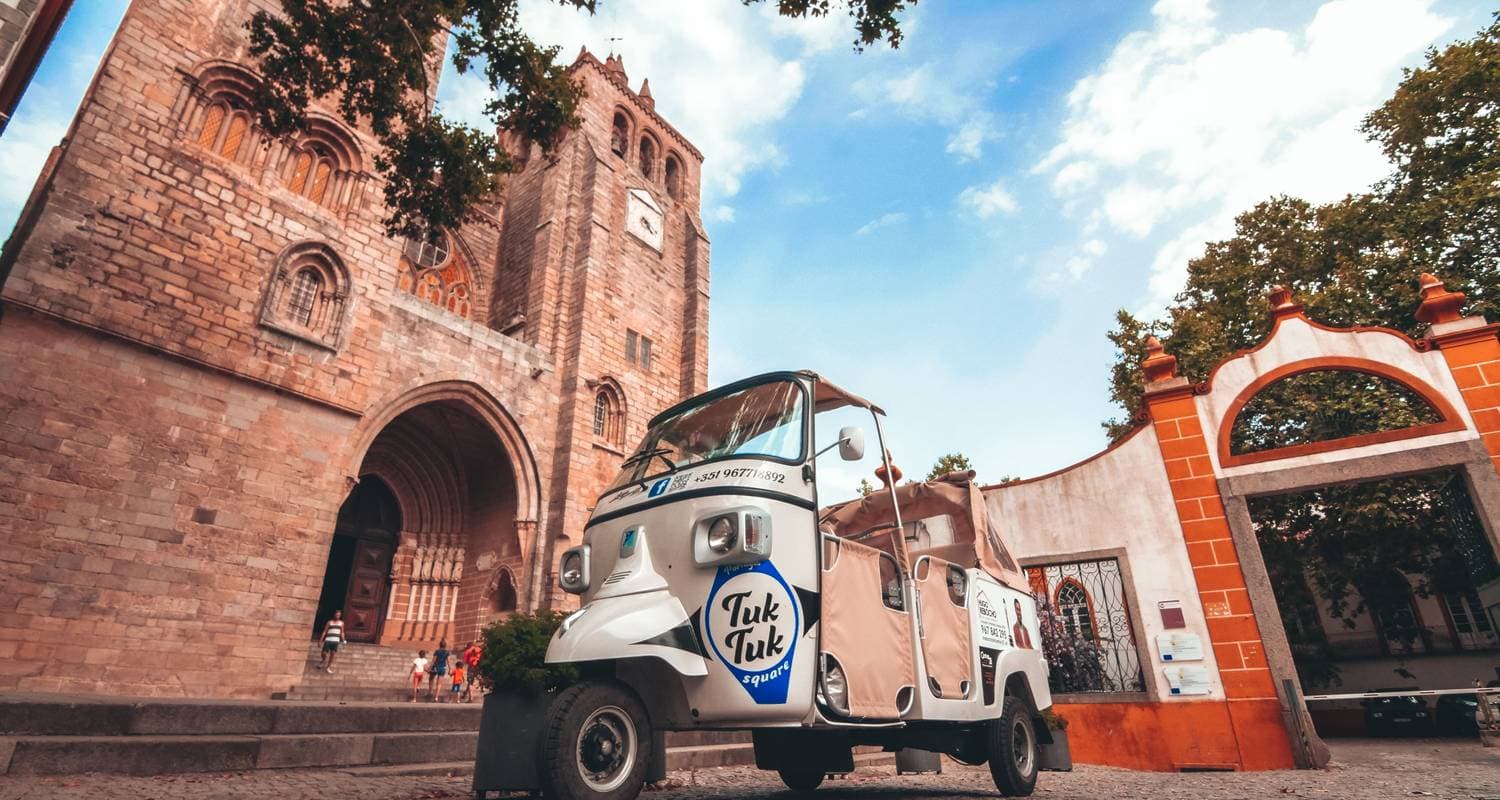
Portugal in Depth
11 days · Globus
5.0· 1,222 reviews✓ Instant confirmationtour from €2,529
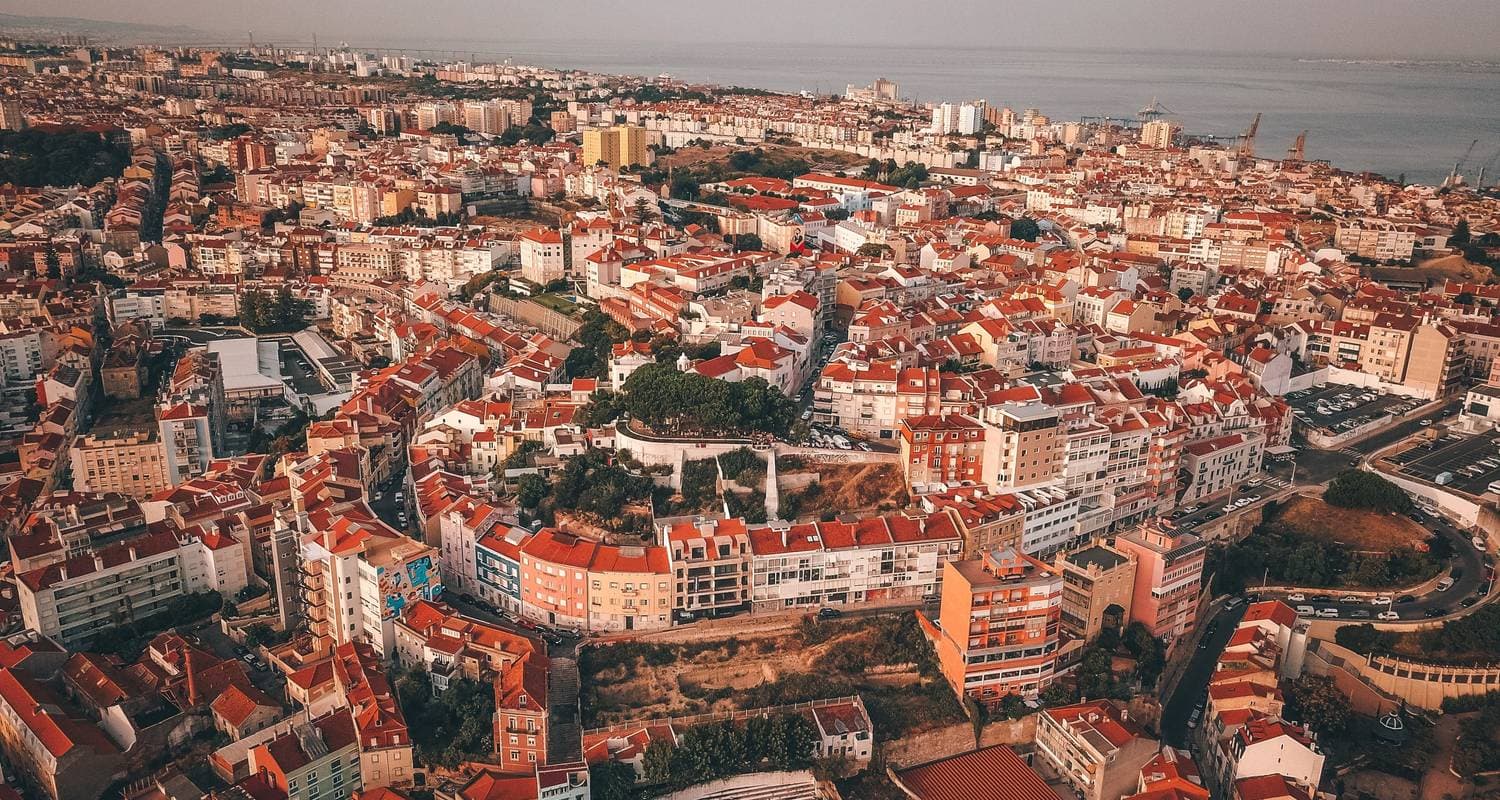
Fátima, Lourdes & Shrines of Spain - Faith-Based Travel
12 days · Cosmos
5.0· 443 reviews✓ Instant confirmationtour from €2,695
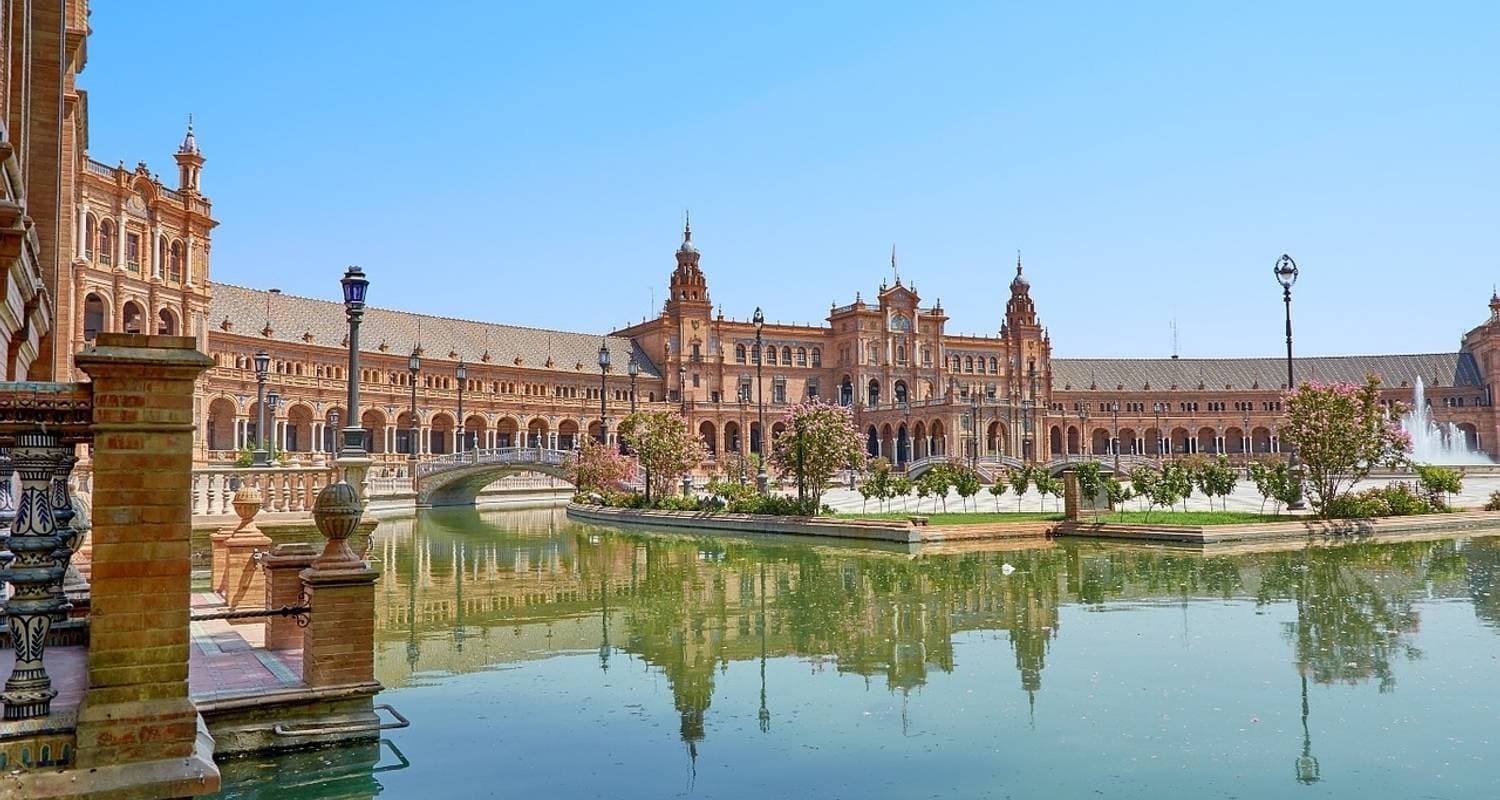
Spain, Portugal & Morocco
16 days · Cosmos
4.8· 194 reviews✓ Instant confirmationtour from €3,017

Walking in Madeira
8 days · Explore!
4.6· 159 reviews✓ Instant confirmationtour from €1,812
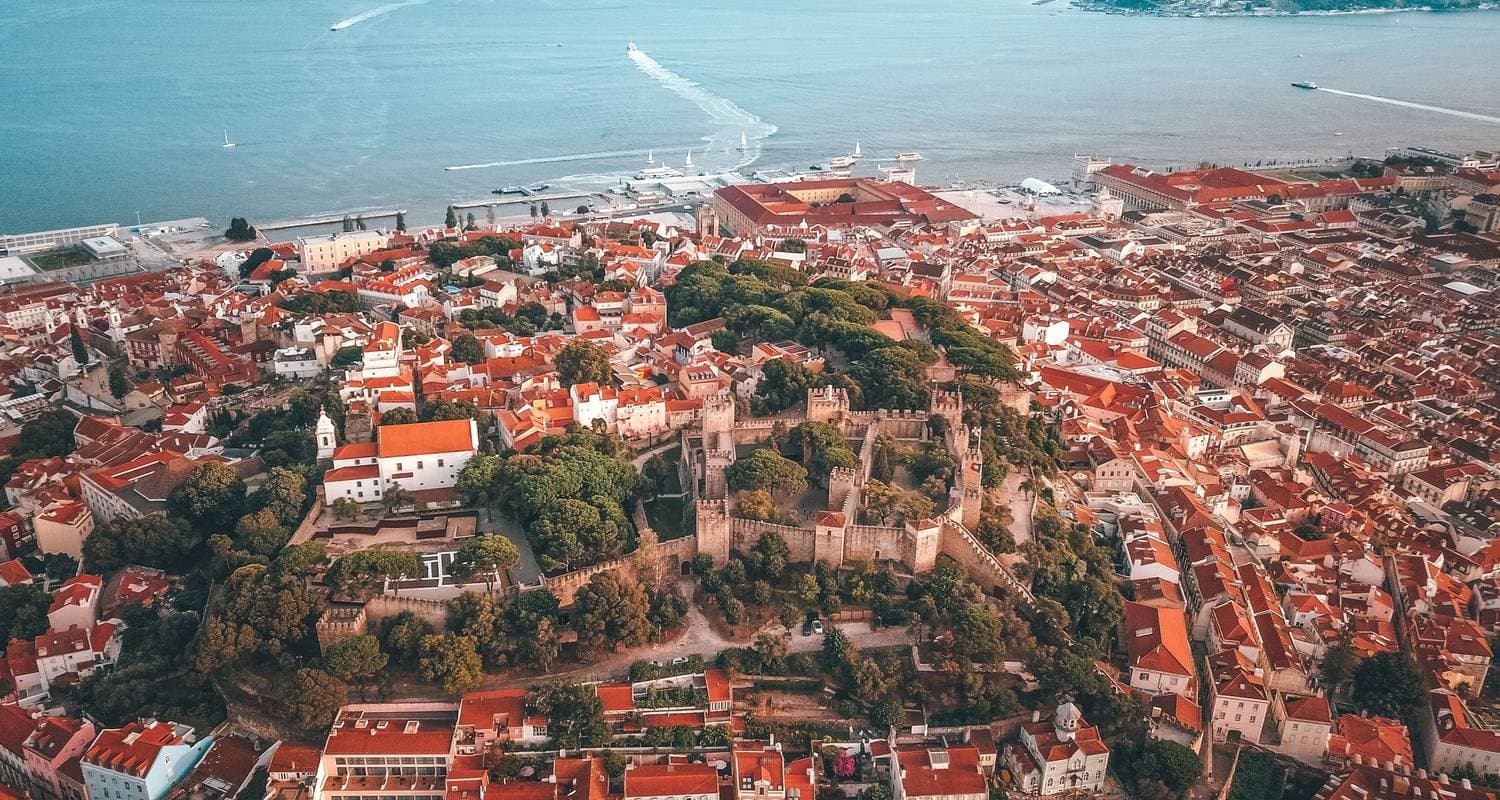
Highlights of Portugal
7 days · G Adventures
4.6· 77 reviews✓ Instant confirmationtour from €1,655

Best of Spain and Portugal (Small Group Tour)
11 days · Eskapas
4.8· 73 reviews✓ Instant confirmationtour from €4,370
Portugal has three weather zones, not one
Most Portugal trips come unstuck because people treat the country as one climate. It isn't. There are three distinct zones, and they peak in different months.
North (Porto, the Douro Valley, the Minho): wetter, cooler, and genuinely four-seasoned. Porto sits right on the Atlantic and catches whatever weather rolls off the ocean. Winters are damp, with persistent rain from November to March, and summers are warm without ever being brutal — Porto highs of 25-28°C in July and August, a notch cooler than Lisbon. The Douro Valley, 100km inland, runs hotter and drier than the city. This is the one corner of the country where autumn actually feels like autumn: vineyard colour, crisp mornings, long golden sunsets.
Central (Lisbon, Sintra, the Alentejo coast, Evora): a mild Mediterranean rhythm. Lisbon banks 220-plus days of sun a year, with mild wet winters (12-16°C highs in January) and warm-to-hot summers (27-32°C in July and August). Sintra runs slightly cooler and mistier on its own little microclimate, while the Alentejo interior is hotter and drier than Lisbon, where 35-40°C is ordinary in July.
South (the Algarve, Faro, Lagos, Tavira): hot dry summers, mild winters, and the most sunshine hours anywhere in Europe, around 3,000 a year. Faro highs hold at 29-32°C from June through September, with the sea a swimmable 20-23°C from May to October. Winter is mild (16-18°C highs in January) with the odd Atlantic storm but plenty of bright days, and the rain bunches sharply into November-February. Three zones, then, which is why 'the best time for Portugal' really depends on which Portugal you're going to.
Month by month: Lisbon, Porto, Faro
January: Lisbon 15°C, Porto 13°C (wet), Faro 16°C. Low season pricing, 20-30% off. Quiet cities, mild sun days in the Algarve.
February: Lisbon 16°C, Porto 14°C, Faro 17°C. Almond blossom in the Algarve. Carnival late Feb. Prices still low.
March: Lisbon 18°C, Porto 16°C, Faro 19°C. Rain eases. Good shoulder value. Lisbon Half Marathon mid-month.
April: Lisbon 20°C, Porto 18°C, Faro 21°C. Sweet spot begins. Wildflowers, Easter busy (book ahead). Prices normal.
May: Lisbon 23°C, Porto 20°C, Faro 24°C. Peak-quality weather at shoulder pricing. Our top pick alongside September.
June: Lisbon 27°C, Porto 23°C, Faro 27°C. Santos Populares festivals in Lisbon (12-13 June) and Porto (Sao Joao, 23-24 June) — book 2-3 months ahead.
July: Lisbon 30°C, Porto 25°C, Faro 30°C. Peak season starts. Algarve rammed. Prices up 20-30%.
August: Lisbon 30°C, Porto 26°C, Faro 31°C. Most expensive month. Algarve towns at capacity. Portuguese families on holiday domestically.
September: Lisbon 27°C, Porto 23°C, Faro 28°C. Second sweet spot. Douro harvest begins. Prices ease after first week.
October: Lisbon 22°C, Porto 19°C, Faro 24°C. Strong value month. Harvest wraps early month. Warm sea still works in Algarve.
November: Lisbon 17°C, Porto 15°C (wet), Faro 20°C. Rain returns north. Prices drop sharply.
December: Lisbon 15°C, Porto 13°C, Faro 17°C. Christmas-New Year premium in Lisbon and Madeira only. Otherwise quiet.
Douro Valley harvest: the one calendar-sensitive reason to go
The Douro Valley harvest, the vindima, runs roughly mid-September to early October, with the exact dates drifting year to year on how hot the summer ran. For 2026, expect a 15 September to 8 October window, the peak two weeks falling around 20 September to 4 October.
This is the most time-pinned decision in all of Portugal travel. The terraced hillsides turn gold and red, the quintas throw open their cellars for tours and tastings, and a handful of operators run harvest tours where you actually pick grapes and tread them barefoot in the old stone lagares. None of that exists outside these four weeks.
It costs more, naturally — harvest tours run 20-40% above a May or June Douro trip. A 4-day harvest package lands around 900-1,400 EUR per person at the mid-range, and 2,000-3,500 EUR per person at the premium quintas like Quinta do Crasto, Quinta do Noval and Quinta da Roeda. The Douro river cruises (Viking, Uniworld, AmaWaterways) crest at the same moment and sell out 9-12 months ahead.
Lead time is everything. Book by January or February 2026 for that year's harvest, because by April and May the best quintas and the river-cruise cabins are gone. Turning up in September only really works for a day trip out of Porto, not for staying in the valley.
Outside harvest, the Douro is still lovely — May for green terraces and wildflowers, late October for autumn colour without the premium. But if you actually want to see and join the harvest, the window simply does not bend.
Algarve realities and why Lisbon works year-round
The Algarve leads a double life. In July and August it's swamped with British, German and Irish package tourism, and resort towns like Albufeira, Praia da Rocha and parts of Lagos turn into full-throttle European summer-holiday zones: pub strips, beaches packed shoulder to shoulder, restaurant queues, and traffic snarling up the EN125. Independent travellers and small-group operators give these months a wide berth on purpose.
May, September and October are the Algarve at its honest best. The water is warm (21-23°C in September), the beaches are walkable, the cliff trails around Lagos and Sagres go genuinely quiet, and restaurants aren't under siege. Prices sit 25-40% below August. This is when the thoughtful Algarve trips actually run — coastal hiking, fishing-village stays, the pousada circuits.
Winter on the Algarve is quietly brilliant and badly underrated. November to February brings 16-18°C highs, rain that comes in bursts rather than all-day grey, and a world-class surf season at Sagres, Arrifana and the west coast. Surfers have this calendar memorised. Sun-and-sand tourists won't love it — the sea is a cold 16-18°C and some restaurants close for the season.
Lisbon, meanwhile, is the city that works any month of the year. January and February there are mild, sunny and cheap. Spring is a joy. Summer is hot but the coastal breezes help, and Cascais or Sintra are an easy escape. Autumn is superb. Anchor a Portugal trip in Lisbon and you've got a weather safety net that an Algarve-only trip simply doesn't give you. With flexible dates, Lisbon-plus-Douro (April-June, September-October) beats Lisbon-plus-Algarve on almost everything except guaranteed high-summer beach weather.
Flight timing: LIS, OPO, FAO
Portugal has three real international airports, and they don't price alike.
Lisbon (LIS) is the main hub. TAP Portugal flies direct from most European capitals, plus the US East Coast (JFK, EWR, BOS, MIA, IAD) and a growing list of Brazil routes, while Ryanair, easyJet, Vueling and Wizz pile in from across Europe. From London, Dublin, Paris or Amsterdam, expect round-trips around 80-140 EUR in the shoulder season, 180-280 EUR in July and August, and 60-100 EUR from November to February. US East Coast returns on TAP run 450-650 USD in the shoulder, 750-1,100 USD at the summer peak. Australian travellers connect via a Gulf or European hub (roughly A$1,900-2,800 in shoulder season). Multiday.tours prices the flight live from your own airport in your own currency, so the combined figure you see is always in your own money.
Porto (OPO) is growing fast, with TAP, Ryanair and easyJet in charge. Fares shadow Lisbon's, often 10-20 EUR cheaper on intra-European routes because the hub is less in demand. Direct US links are thinner — TAP runs Newark and the odd other route. Make Porto your arrival for anything Douro-focused, and you skip the three-hour train down from Lisbon.
Faro (FAO) is the Algarve's airport and the most seasonal of the three by a mile. Ryanair, easyJet, TUI, Jet2 and Eurowings flood it from May to October, then from November to March most of those routes thin to one to three flights a week or vanish altogether. Summer fares from the UK, Ireland and Germany are cheap (60-120 EUR round-trip) on sheer volume of competition, but the seats go early. Winter Faro is harder work — plenty of travellers fly into Lisbon and drive or train down instead.
When to book: 8-12 weeks ahead for the shoulder season, and 4-6 months for July and August and for harvest-season Porto arrivals.
Ready to price your trip?
Enter your origin airport and month — we'll search live flight and tour prices and give you one bundled total per person.
Find combosFAQs
What is the best month to visit Portugal?
May and September are the two strongest months overall. You get 23-28°C days across Lisbon, Porto and the Algarve, sea warm enough to swim, shoulder-season prices 15-25% below July-August, and crowds you can live with. June is close behind but climbing in price. October is an excellent, cheaper alternative, especially for the Douro Valley where the harvest wraps up in the first week. Skip July and August unless you specifically want the peak-summer Algarve beach scene and can stomach the crowds and roughly 30% higher prices.
When is the Douro Valley harvest in 2026?
Roughly 15 September to 8 October 2026, with the peak around 20 September to 4 October. The exact dates ride on the summer heat and shift year to year. This is the only window where you can join the grape-picking and traditional barefoot treading at working quintas. Book by January or February 2026 for the best quinta stays and any Douro river cruise, because by April the premium properties (Quinta do Crasto, Quinta do Noval, Quinta da Roeda) and most cruise cabins are sold out. September outside the harvest window still gives you gorgeous vineyards, just without the working harvest itself.
Is July or August too hot for Portugal?
For the Algarve it's the peak crowd and price window more than a heat problem — 30-34°C is hot, but the sea breezes take the edge off. The real issue is sheer volume: resort towns fill with British, German and Irish package tourism, and independent travel gets harder. Lisbon hits 30-32°C and those famous hills turn genuinely punishing at midday, while the Alentejo interior runs 35-40°C and is no fun for walking tours. Porto and the Douro fare better at 25-28°C, so if August is your only window, tilt the trip north to Porto, the Douro and the Minho.
When is the cheapest time to visit Portugal?
January and February. Tour prices run 20-30% below peak, European flights drop to 60-100 EUR round-trip (long-haul travellers from North America and Australia connect via a hub and pay more, but winter is still their cheapest window), and Lisbon and Porto hotels go for half their August rates. The Algarve is mild (16-18°C, plenty of sun) but cool for beach days. Lisbon is genuinely lovely this time of year — mild, sunny most days, and quiet at the big sights. The trade-offs are rain in Porto and the Douro, shorter daylight, and some Algarve resorts ticking over at reduced capacity. For value-hunters happy to swap beach for city and countryside, this is the cheapest Portugal you'll ever see.
Does it really rain that much in Porto?
Yes, more than most visitors bargain for. Porto averages around 1,200mm of rain a year, packed into November through March, with December and January each seeing 10-14 wet days. That's noticeably more than Lisbon (700mm) and almost double Faro (500mm). It isn't a constant drizzle — the Atlantic delivers it in bursts between clear spells — but pack a proper waterproof for any winter Porto trip. Summer Porto, June to September, is genuinely dry and warm. If grey damp weather gets you down, give Porto a miss from November to February and lean on Lisbon or the Algarve instead.
Should I fly into Lisbon or Porto?
It depends on where your trip really happens. Fly into Lisbon (LIS) for Lisbon-anchored trips, Sintra, the Alentejo, or anything heading south to the Algarve. Fly into Porto (OPO) for the Douro Valley, the Minho or Porto itself, and you save the three-hour train down from Lisbon. For two-week trips covering both, think open-jaw: into Porto, train down, out of Lisbon. TAP Portugal, Ryanair, easyJet and Vueling all price that sensibly. Faro (FAO) is only worth a direct flight if you're heading straight to the Algarve and not bothering with the rest of the country.
Watching a trip?
Once a month: where all-in prices actually dropped, from your airport. No spam, unsubscribe anytime.
Related destinations
- Portugal Multi-Day Tours with Flights from €1,325Lisbon trams, Porto's Ribeira, terraced vineyards of the Dou…
- Spain Multi-Day Tours with Flights from €1,115Madrid, Seville, Granada and Barcelona on the AVE, stitched …
- Italy Multi-Day Tours with Flights from €1,750Rome, Florence and Venice in ten days, or a full Grand Tour …
Related tour styles
Pick by trip length
Plan this trip from your city
- Multi-Day Tours from London with Flights IncludedBuilt for London travellers: LHR for long-haul, LGW for Euro…
- Multi-Day Tours from Dublin with Flights IncludedPackage tours from Dublin with flights included — one total …
- Multi-Day Tours from New York with Flights IncludedMulti-day tours from New York with flights included — one US…
- Multi-Day Tours from Toronto with Flights IncludedPearson is Canada's biggest long-haul hub, and with a weak l…
- Multi-Day Tours from Vienna with Flights IncludedVienna is a central-European hub on Austrian Airlines with d…
Deeper reading
- The Perfect 10-Day Portugal Itinerary (Route, Day by Day)Ten days is the Portugal sweet spot: Lisbon and Sintra, the …
- How Much Does a Portugal Tour Cost? The Honest All-In NumberA week to ten days of Lisbon, Sintra, Porto and the Douro co…
- How to Choose a Guided Tour: A Practical Buyer's GuideWhat to ask before you book. Group size, pace, inclusions, o…