
South Africa Multi-Day Tours with Flights from €1,100
Kruger and the Big Five, Cape Town under Table Mountain, the Garden Route coast and the Stellenbosch winelands. One country, two completely different holidays.
Edited by Multiday.tours editor
- ✓Entry-level 5-7 day Garden Route and Kruger tours from €720-€1,100
- ✓Median 9-day tour lands around €1,850 per person before flights
- ✓Direct flights from most European capitals to JNB and CPT, €550-€850 shoulder
- ✓Best safari window: May-October (dry, cold mornings, strong game viewing)
- ✓Best Cape Town window: November-March (dry summer, wine harvest Feb-Mar)
- ✓Weak rand in 2026 makes mid-range game lodges the best value in Africa
South Africa might be the best long-haul bargain going right now, and the reason is gloriously dull: the rand is weak against the euro. So a country that always felt mid-priced has quietly become the cheapest place on earth to wake up in a proper safari lodge or sit down to dinner at a world-class winery. Entry-level small-group trips start from around €1,100 per person, while a comfortable 9-day trip sits closer to €1,850 and mid-range lodges with the Garden Route folded in land around €3,100. Bolt on a direct flight from Europe and a full two weeks taking in Kruger, Cape Town and the coast still comes in under €3,500 all in. Below: honest price ranges by tour style, what each lodge tier actually buys you, when to go, and how to settle the JNB versus CPT question.
The tours doing the heavy lifting here
Prices are tour-only — add flights for the real total. You book the tour itself on TourRadar.
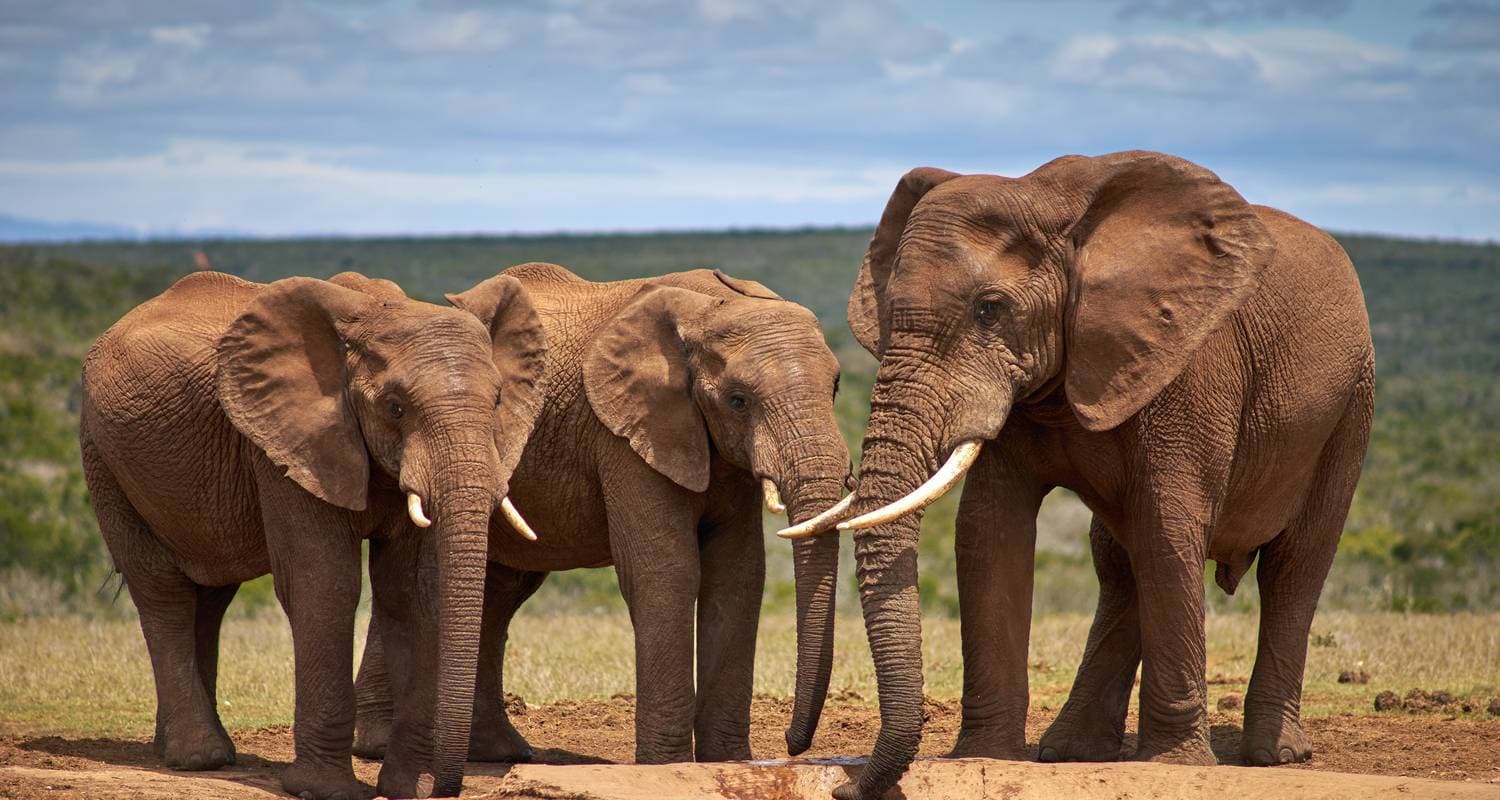
5 day Best of South Africa Highlights: Garden Route with Addo National Park
5 days · Hotspots2c
4.7· 181 reviews✓ Instant confirmationtour from €714
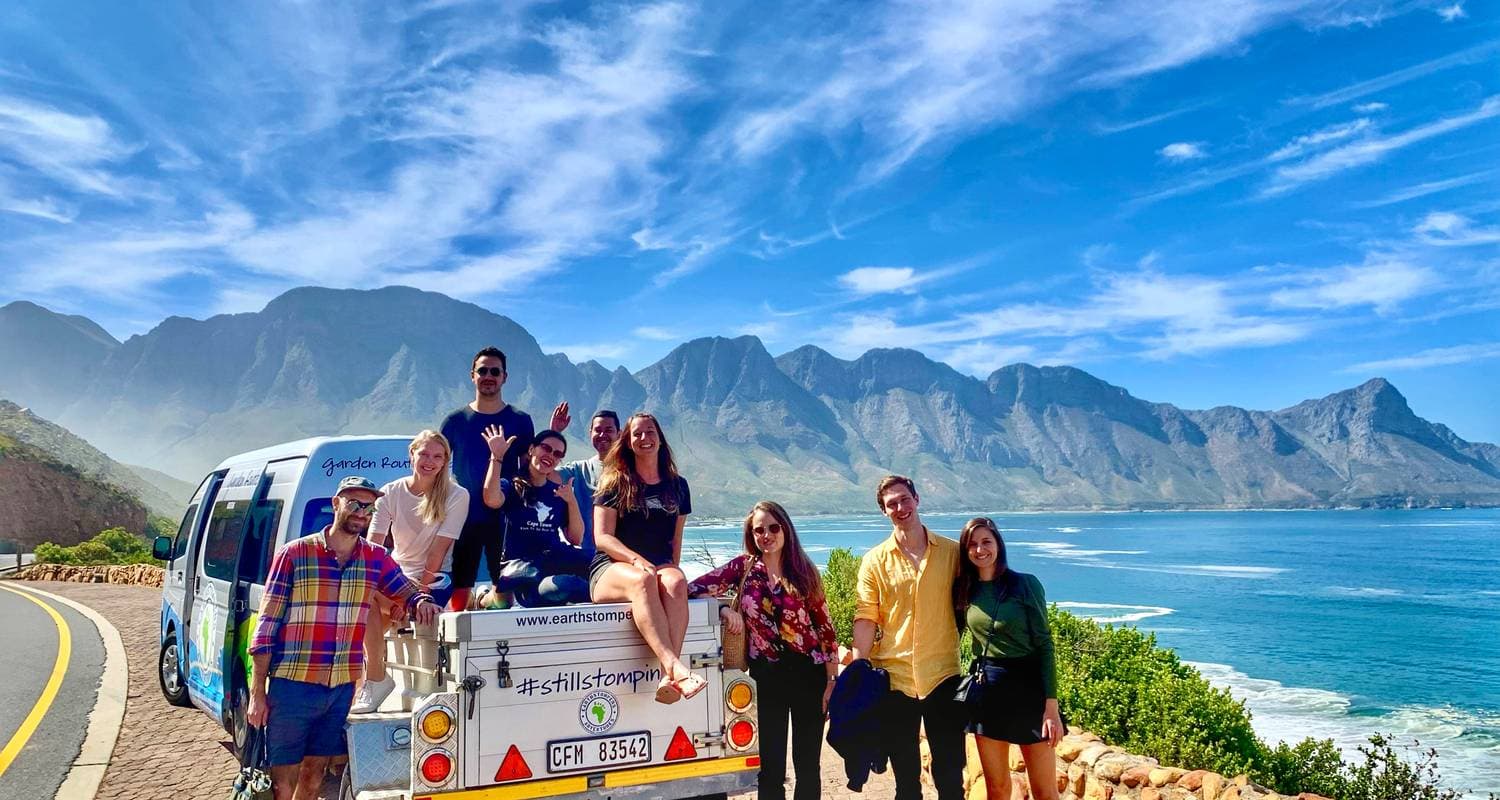
Garden Route & Addo Group Adventure - 6 Days
6 days · Earthstompers Adventures
4.8· 129 reviews✓ Instant confirmationtour from €741
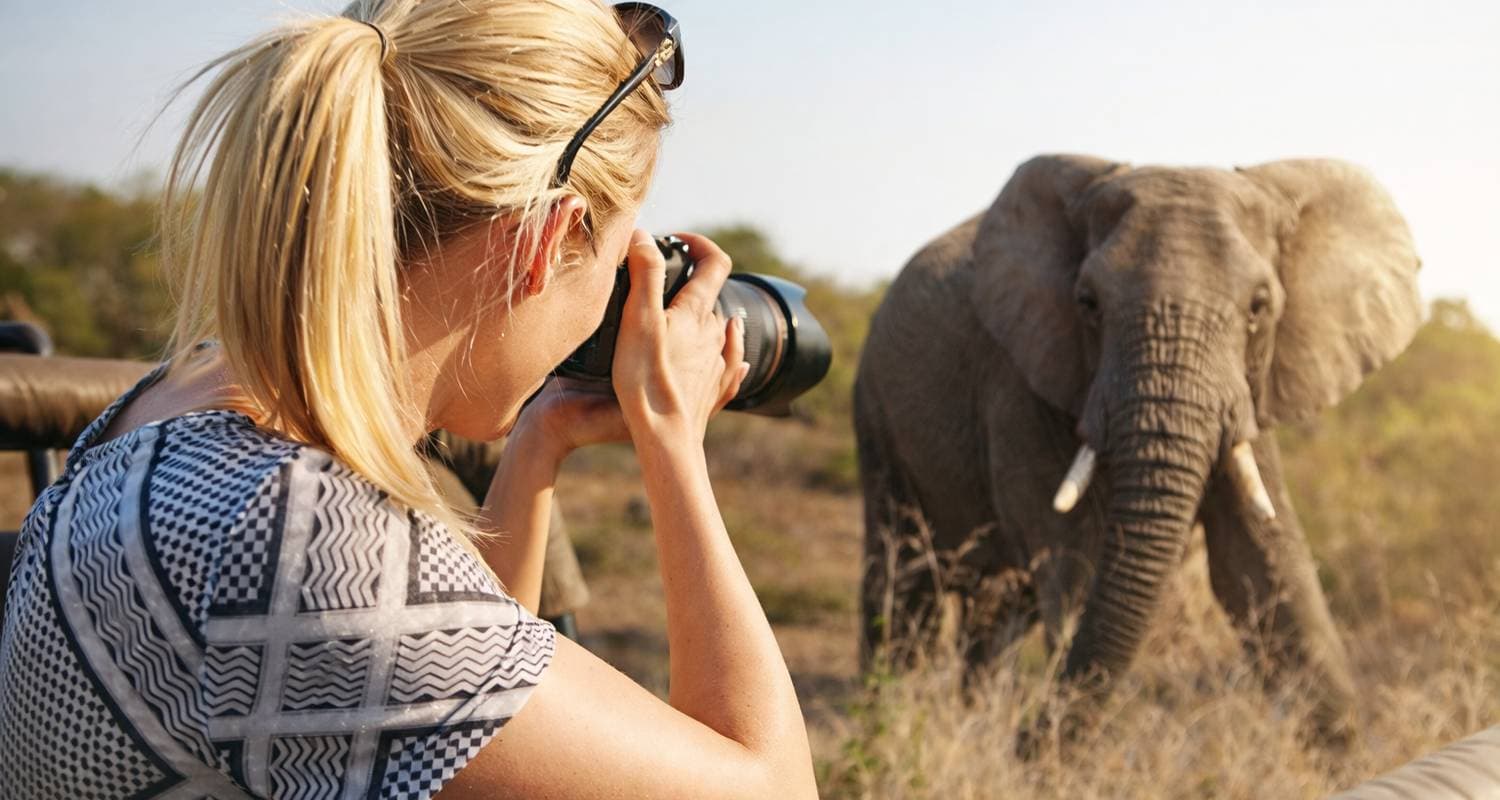
2 day South African Wildlife Safari Highlights Tour from Cape Town
2 days · Hotspots2c
4.7· 83 reviews✓ Instant confirmationtour from €285
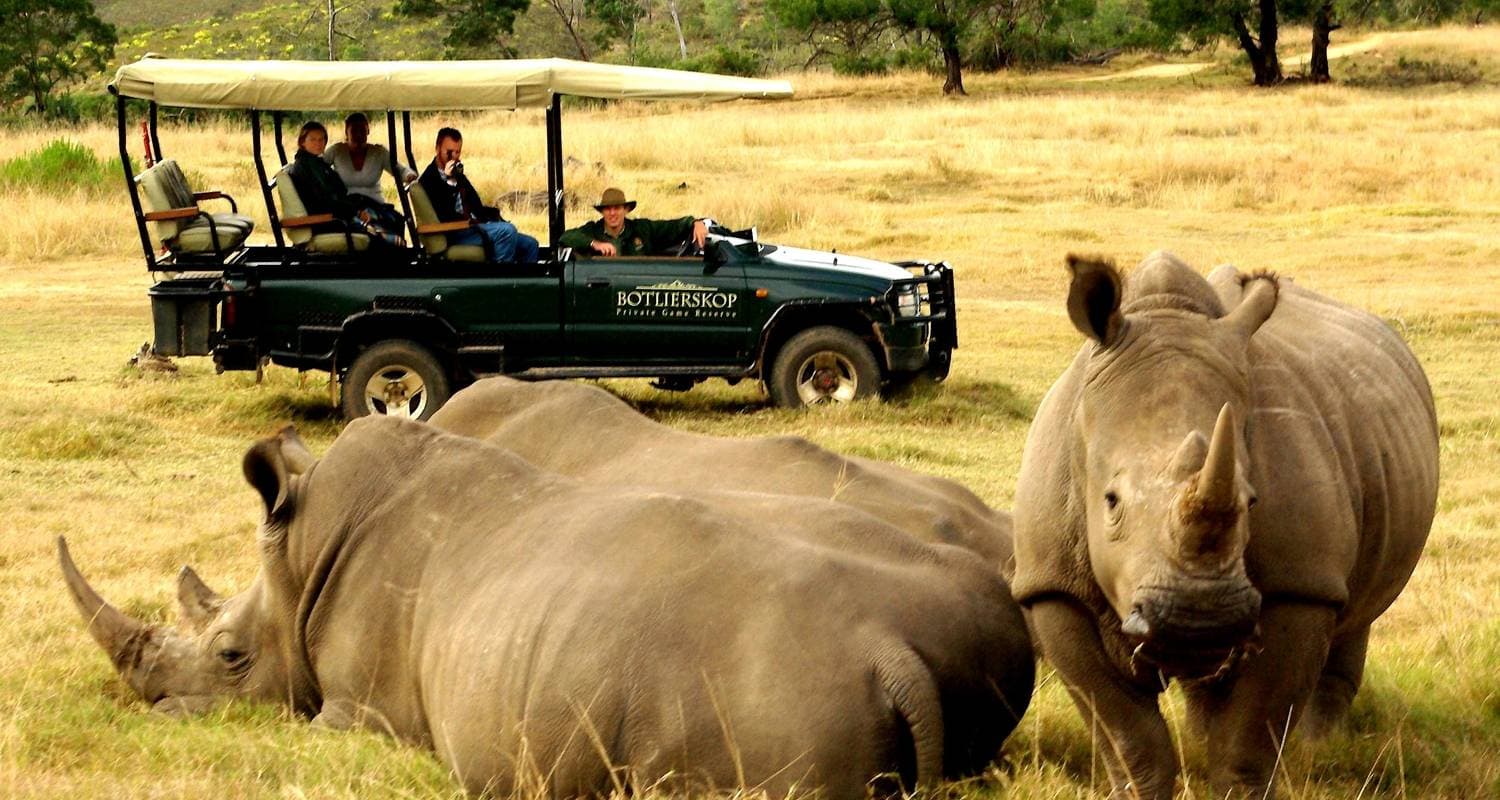
3 day Garden Route + Safari Highlights Tour from Cape Town
3 days · Hotspots2c
4.6· 83 reviews✓ Instant confirmationtour from €371
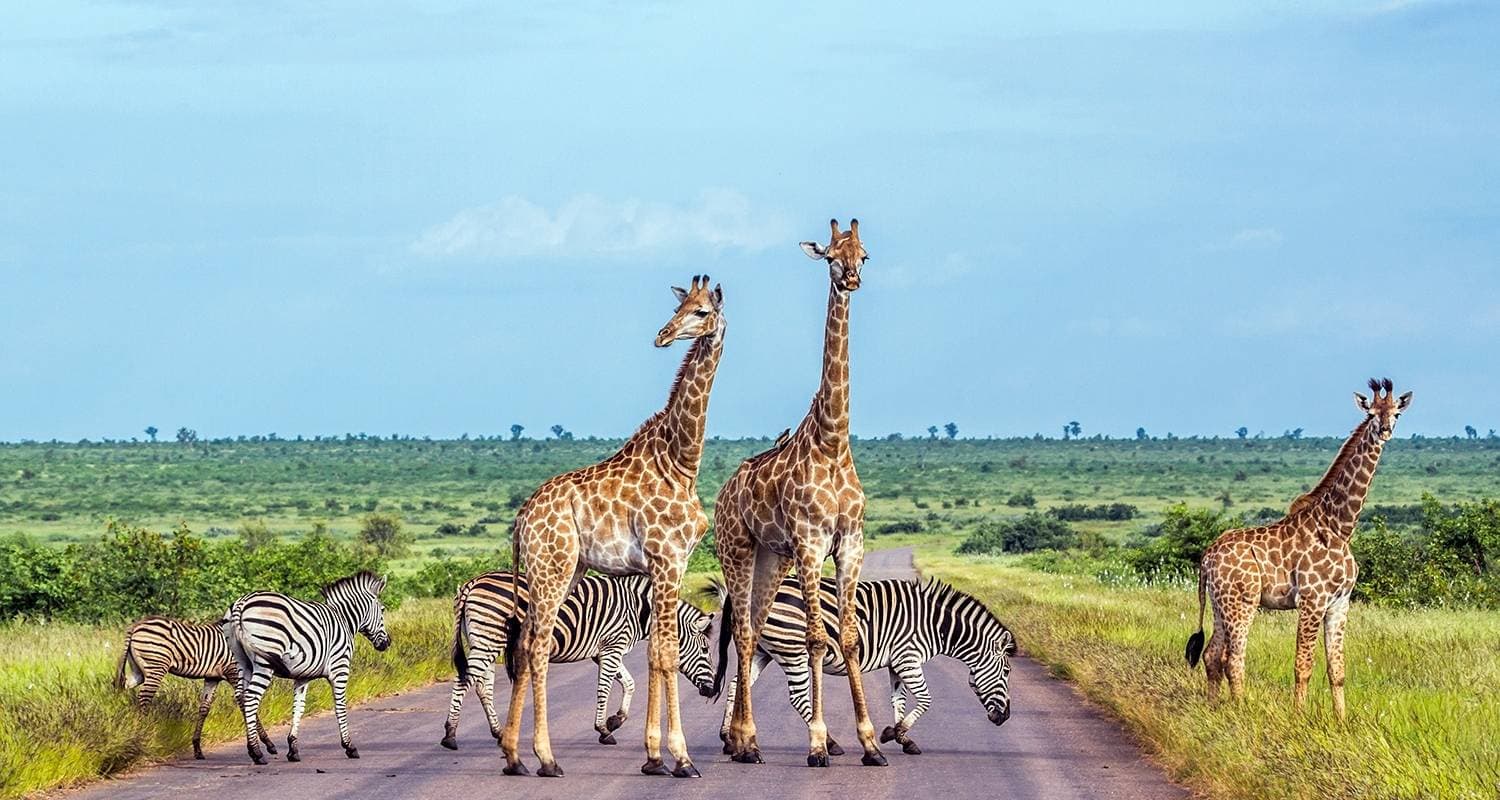
South Africa Adventure
12 days · INTRO Travel
4.9· 68 reviews✓ Instant confirmationtour from €2,322
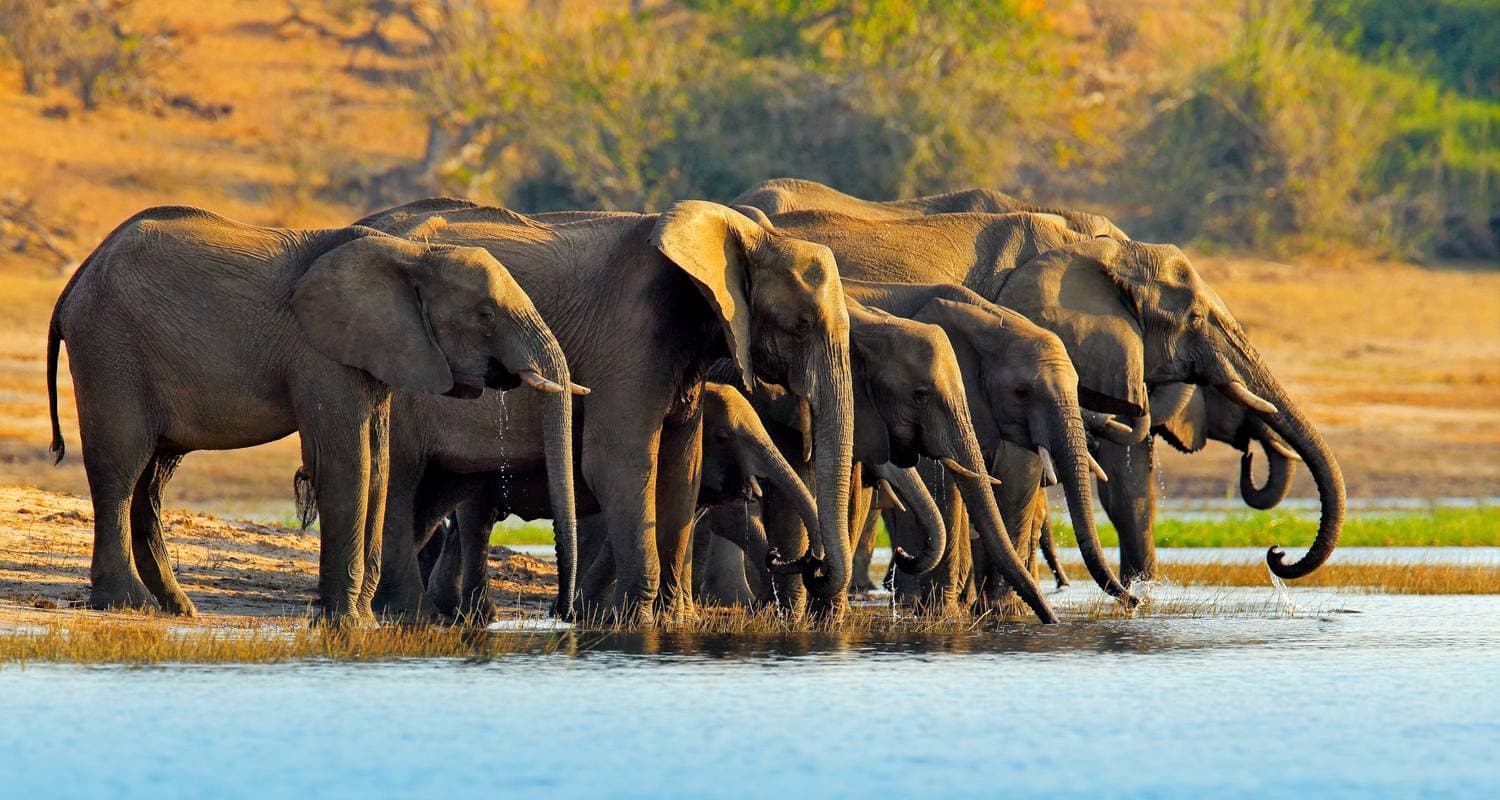
Okavango Experience
10 days · Intrepid Travel
4.6· 62 reviews✓ Instant confirmationtour from €1,601
The classic 10-14 day South Africa tour: what it actually covers
Most first-timers split South Africa neatly in two. One half is the Cape: three or four nights in Cape Town for Table Mountain, Cape Point, Robben Island and the painted lanes of Bo-Kaap, then a hire car or small-group bus down the Garden Route through Hermanus, Knysna and Tsitsikamma, winding up at Addo Elephant Park near Port Elizabeth. The other half is the safari, whether that's a fly-in to Kruger or a road trip up through the Panorama Route.
Ten days is the honest minimum to do both. Give it fourteen and you can finally breathe: three nights in Cape Town, five days on the Garden Route, three on safari and a couple of travel days without sprinting. Plan on €2,200-€3,500 per person for two weeks with flights, mid-range lodges and a hire car.
Self-drive or group is the first decision you'll make. The roads here are excellent and signed in English, so driving yourself shaves off roughly a quarter to a third of the cost and hands you the winelands and coast on your own clock. Group tours from the likes of Intrepid, G Adventures and Expat Explore are the smarter call for Kruger or whenever you want zero logistics, riding in a minibus with a guide and waving goodbye to the insurance headache. Hotspots2c and Earthstompers run cracking-value 5-7 day Garden Route add-ons from around €720-€1,120 that slot neatly onto the end of a do-it-yourself Cape Town stay.
Safari lodge tiers: what €150 vs €1,500 per night actually buys
Nowhere stretches the gap between the cheapest and the dearest safari quite like South Africa, and the middle is where most travellers should plant themselves.
Budget mobile camps and overland tours (G Adventures' Kruger in Depth at around €1,930, Intrepid's Okavango Experience at €1,600) put you in walk-in tented camps inside or on the edge of the park, sharing group meals and rolling out in an open vehicle with eight to twelve others. You see exactly the same animals as the luxury crowd. All that separates you from them is the bed and the bar.
Mid-range game lodges (€200-€450 per person per night, full board) — Shishangeni, Rhino Post or Lion Sands River Lodge — hand you a private plunge pool, two game drives a day in a vehicle of six, and a breakfast laid out in the bush. This is the sweet spot, and where the weak rand really earns its keep: you're paying Greek-island prices for a private reserve.
Luxury lodges (€800-€1,800 per person per night) — Singita, &Beyond Phinda, Royal Malewane, Londolozi — are another animal entirely. Private decks, round-the-clock butler service, a tracker as well as a ranger on every vehicle, kitchens run by chefs who've cooked in Michelin rooms. Two nights here bolted onto a cheaper base is the upgrade plenty of people quietly make.
Small-group, overland, self-drive or fly-in: picking your style
Small-group tours are the default, and South Africa runs more of them than anywhere else on the continent. G Adventures alone fields a vast programme, from 5-day Cape-and-wine jaunts up to 21-day full-country loops, with Intrepid and Exodus the other two names you'll keep meeting. Groups usually run twelve to sixteen, the guides are South African, and the land price for 7-10 days sits in the €1,100-€2,100 band.
Overlanding (Acacia Africa, Dragoman, Absolute Africa) is a wholly different beast: big converted trucks, eighteen to twenty-four passengers, camping or cheap lodges, three to six weeks grinding from Cape Town up to Victoria Falls or Nairobi. Brilliant if you're under 35 and there for the social side at €60-€90 a day. Less so if you want a proper bed every night.
Self-drive with private guides booked day by day is the premium do-it-yourself route. Hire a car in Cape Town (€25-€45 a day), drive the Garden Route at your own pace, then fly up to Kruger and hand the reins to a private lodge guide for three nights. It's the most flexible option going, and usually 15-25% cheaper than the fully guided equivalent.
Fly-in safari packages skip the long drive altogether: a direct light-aircraft hop from Johannesburg or Cape Town straight onto a private concession airstrip, three nights at the lodge, then out again. Pricey but utterly frictionless. Budget €2,500-€4,500 per person for three nights plus flights.
Best time to visit South Africa and what it costs you
South Africa hands you two useful seasons for touring, and they pull in opposite directions.
May to October is the dry winter and prime safari time. The bush thins out, the waterholes draw the animals in, and Kruger game viewing is reliably excellent. Dawn starts are properly cold at 5-10°C in an open vehicle, but the days turn bright at 20-25°C and the rain stays away. This is peak pricing: June to September lodge rates run 20-40% above green-season ones, and the good lodges fill up six to nine months out.
November to April is the green season. The bush thickens, so the animals are harder to spot, but the birding turns spectacular as the migrants pour in and there are newborns everywhere you look. The pattern is an afternoon thunderstorm: short, dramatic, usually done by sunset. Rates drop 25-40% and rooms open up. The trade-off is genuine, mind. Some days you'll simply sit out a washout.
On the Cape side it all flips. November to March is Cape Town's summer: 25-30°C, dry, with long light evenings and beaches that finally deliver. Wine harvest in Stellenbosch and Franschhoek runs February into March and is the moment for the winelands. June to August in Cape Town turns wet, cold and windy, so give it a miss unless the safari is what's pulling you.
For a combined trip the sweet spot is late April into early May, or mid-September through October: passable weather in both regions and shoulder-season prices.
Getting to South Africa from wherever you start
Two airports matter. Johannesburg (JNB, OR Tambo) is the safari gateway and the main hub; Cape Town (CPT) is the Cape gateway. Both take direct flights from across the world.
From the US, there are real nonstops: United flies Newark to both Johannesburg and Cape Town, and Delta runs Atlanta-Johannesburg, all of them long (around 15-16 hours). From the West Coast or the middle of the country you connect once, usually through Newark, Atlanta or a European or Gulf hub, for 20-24 hours door to door. Expect roughly US$900-$1,500 return from the East Coast, US$1,100-$1,800 from the West.
From Australia, this is one of the shorter long-hauls for a change: Qantas flies Sydney-Johannesburg nonstop in around 14 hours, and the Gulf carriers (Qatar, Emirates) connect from Melbourne and Perth. Reckon on roughly A$1,500-$2,500 return — South Africa sits in a friendly time zone for Australians, just one hour behind the east coast.
From Canada, Toronto and Montreal connect through a European or US hub (Air Canada codeshares, or a European carrier); budget roughly C$1,300-$2,100 return and 19-23 hours via the stop.
From the UK and Europe, you've the widest spread of nonstops: BA from London, Lufthansa from Frankfurt and Munich, KLM from Amsterdam, Air France from Paris into JNB, with BA, KLM, Lufthansa, Virgin and Emirates also serving CPT. From London it's 11-12 hours nonstop, 13-15 with one stop from elsewhere. Return fares run €550-€850 in the shoulder months (April-May, September-October), climbing to €900-€1,300 over Christmas, Easter and the July-August stretch; CPT sits roughly €50-€150 above JNB on the same dates.
The classic move, whatever your origin, is the open-jaw: into JNB, home from CPT (or the reverse) so you never double back. Most carriers price an open-jaw like a return. If your tour pins you to one city, the domestic JNB-CPT hop takes two hours at €60-€120 one way on FlySafair or Airlink. On Multiday.tours the live Kiwi flight price sits right beside each tour, from your own home airport in your own currency, so you can weigh up the all-in cost before you commit to either side.
Ready to price your trip?
Enter your origin airport and month — we'll search live flight and tour prices and give you one bundled total per person.
Find combosCommon questions
Is South Africa safe for tourists in 2026?
The honest read: South Africa does carry one of the highest violent-crime rates in the world, but that figure is driven by specific townships and neighbourhoods no tour goes anywhere near. The places you'll actually visit, Kruger and the private reserves, the Cape Town waterfront and city bowl, the Garden Route, Stellenbosch and Franschhoek, are generally safe with the usual common sense. Most foreign ministries advise increased caution. Don't wander central Johannesburg after dark, take an Uber rather than a street taxi, keep phones and jewellery out of sight, and park in guarded lots. A guided tour strips out almost all the risk anyway.
How much does a 10-day South Africa tour cost with flights?
Reckon on €2,200-€3,200 per person all in from most European capitals for a mid-range 10-day trip. That covers a small-group tour or self-drive package with mid-range lodges (€1,500-€2,200), return flights to JNB or CPT (€600-€850 in the shoulder months), the domestic JNB-CPT hop if you need it (€80-€120), tips (€100-€150) and a bit of spending money for meals and wine tastings (€200-€400). Splash out on luxury lodges and the total can sail past €6,000; lean into the budget overland options and it drops to €1,800-€2,200.
Safari or Cape Town: which should I prioritise if I only have a week?
If it's your first trip to Africa, put the safari first. Three or four nights in Kruger or Sabi Sands gives you the animals, the landscape and the story you came for, and you can tack two nights in Cape Town onto either end. If you've already done safari in East Africa, flip it: spend five nights in and around Cape Town for Table Mountain, the peninsula, the winelands and a day at Boulders Beach, then add a short two-night fly-in safari. Seven days is tight for both. Ten is the real minimum.
When is the cheapest time to visit South Africa?
November into early December, and mid-January through March, are the cheapest stretches, sitting outside the Christmas peak and the local school holidays. Green-season lodge rates run 25-40% below the June-September safari peak, and flights from Europe can dip to €500-€650 return. The catch on safari is thicker bush and afternoon storms; the reward on the Cape side is full summer weather and the wine harvest. Late April into May is the quiet shoulder where you'll find genuinely good prices in both regions at once.
Is there malaria in Kruger and do I need anti-malarials?
Kruger is a low-to-moderate malaria area, and the risk shifts with the season. October to May, the wet, warm months, carries meaningful risk, and most doctors will steer you towards anti-malarials (Malarone is the usual choice). June to September is low risk, and plenty of travellers skip the prophylaxis on shorter stays, though it's still worth keeping the bites at bay. The private reserves next to Kruger (Sabi Sands, Timbavati) share the same risk profile. Cape Town, the Garden Route, Addo and the winelands are malaria-free all year. Have a word with a travel clinic four to six weeks before you fly.
What should I pack for a South Africa tour?
Neutral layers for safari: beige, olive or khaki trousers and shirts, a warm fleece and a windproof jacket for those cold morning game drives (dawn can drop to 5°C in winter), and closed shoes. Leave the bright white, black and camouflage at home. For the Cape side, pack your usual holiday clothes plus a windproof layer, because Cape Town does love a gust. Add a hat, high-SPF sunscreen, sunglasses, insect repellent with DEET, binoculars (genuinely essential on safari), a headtorch and a universal adapter with the Type M three-pin. Laundry is cheap and quick at most lodges.
Related destinations
- Egypt Multi-Day Tours with Flights from €1,300Sail the Nile, stand at the pyramids, sleep out under the Wh…
- Morocco Multi-Day Tours with Flights from €700Nights in the Merzouga dunes, mornings lost in the Fes medin…
- Peru Multi-Day Tours with Flights from €1,900Machu Picchu at sunrise, the Sacred Valley, an Amazon lodge.…
Related tour styles
Pick by trip length
Plan this trip from your city
- Multi-Day Tours from New York with Flights IncludedMulti-day tours from New York with flights included — one US…
- Multi-Day Tours from Los Angeles with Flights IncludedPackage tours from Los Angeles with flights included — one U…
- Multi-Day Tours from Sydney with Flights IncludedLeaving Australia means a long-haul flight whether you like …
- Multi-Day Tours from Toronto with Flights IncludedPearson is Canada's biggest long-haul hub, and with a weak l…
- Multi-Day Tours from London with Flights IncludedBuilt for London travellers: LHR for long-haul, LGW for Euro…
Deeper reading
- The Perfect 12-Day South Africa Itinerary (Route, Day by Day)Twelve days is the South Africa sweet spot: Cape Town and th…
- How Much Does a South Africa Tour Cost? The Honest All-In NumberA week to two weeks in South Africa runs roughly €1,800–€3,5…
- The Best Time to Visit South Africa (Month-by-Month, 2026)Two opposite windows. May to September for the safari, Novem…
- What a South Africa Tour Costs from New York, Flights IncludedThirty-seven South Africa tours priced with a real JFK fare …
- What a South Africa Tour Costs from Los Angeles, Flights IncludedThirty-seven South Africa tours priced with a real LAX fare …
- What a South Africa Tour Costs from Chicago, Flights IncludedThirty-seven South Africa tours priced with a real O'Hare fa…