
Costa Rica Multi-Day Tours with Flights from €1,600
Arenal, Monteverde, Manuel Antonio and the Guanacaste beaches. Wildlife round every corner, easy on families, and made for travellers who like to keep moving.
Edited by Multiday.tours editor
- ✓9-day Costa Rica tours from €1,200 before flights
- ✓10-day Arenal-Monteverde-Manuel Antonio classic at €1,600-€2,100
- ✓Direct flights US East Coast to SJO; Madrid-SJO via Iberia from Europe
- ✓Dry season Dec-Apr runs 20-30% more than May-Nov green season
- ✓Turtle-nesting Tortuguero July-October, Pacuare rafting year-round
- ✓Self-drive or fully guided both work; skip Caribbean-style all-inclusives if you want the real country
Costa Rica lands in a happy middle ground: enough adventure to keep teenagers and parents equally pleased, flights short enough from North America that jet lag barely registers, and a country compact enough to fold volcanoes, cloud forest, wildlife and two coastlines into ten days. A nine-day small-group tour runs around €1,200-€1,800 per person. Add flights from Europe via Miami or Madrid and the full package comes to €2,000-€2,700 all-in; from the US East Coast it's cheaper and quicker. Below we walk through the standard ten-day loop, what self-drive, guided and all-inclusive each actually feel like on the ground, which activities are genuine adventure and which are scenic family fun, how the dry season nudges prices, and whether to fly into San José or Liberia.
The tours doing the heavy lifting here
Prices are tour-only — add flights for the real total. You book the tour itself on TourRadar.
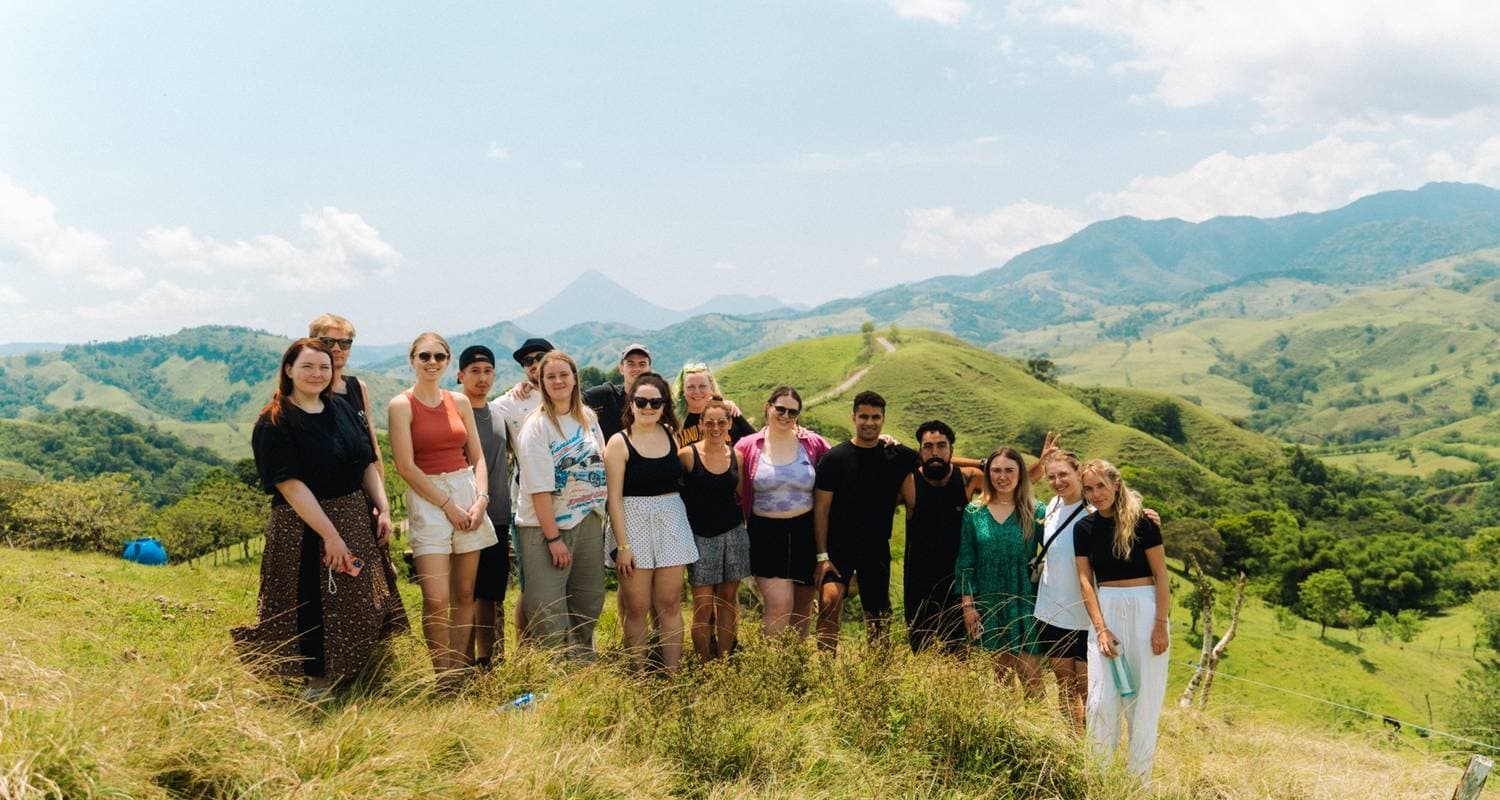
Costa Rica Adventure
10 days · TruTravels
4.8· 575 reviews✓ Instant confirmationtour from €1,610
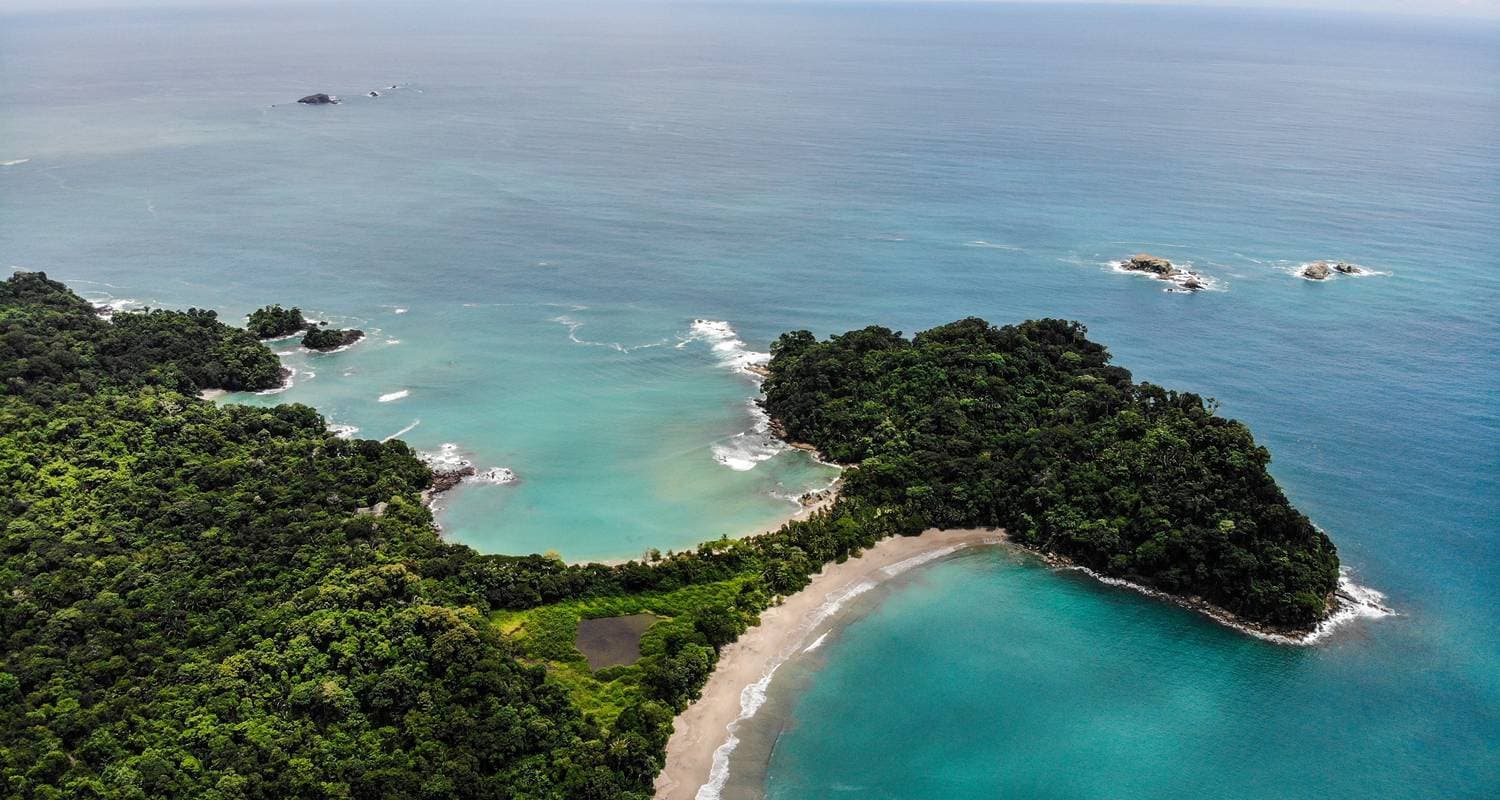
Costa Rica Quest
9 days · G Adventures
4.6· 215 reviews✓ Instant confirmationtour from €1,213
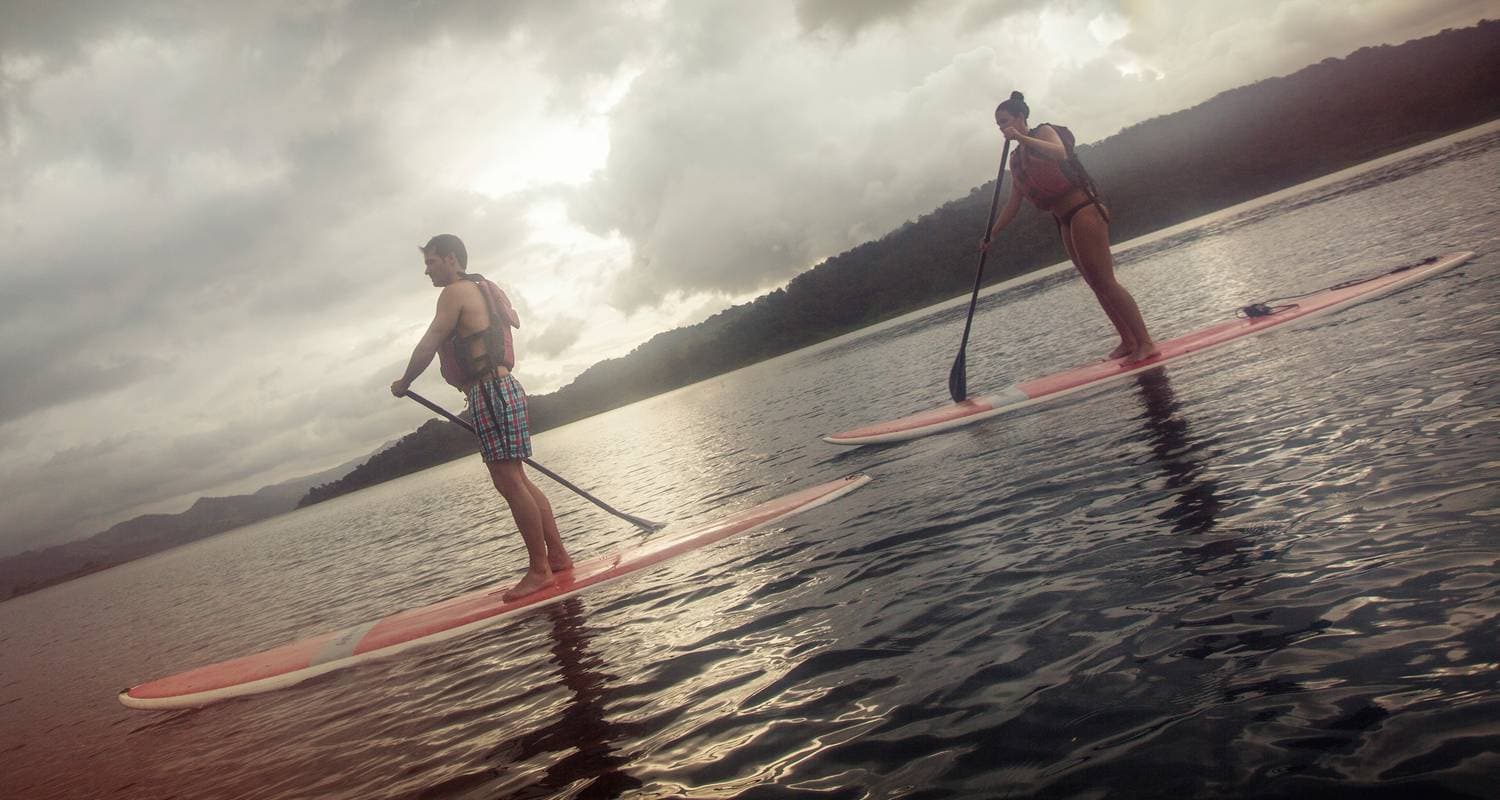
Costa Rica Adventure
16 days · G Adventures
4.7· 156 reviews✓ Instant confirmationtour from €1,839
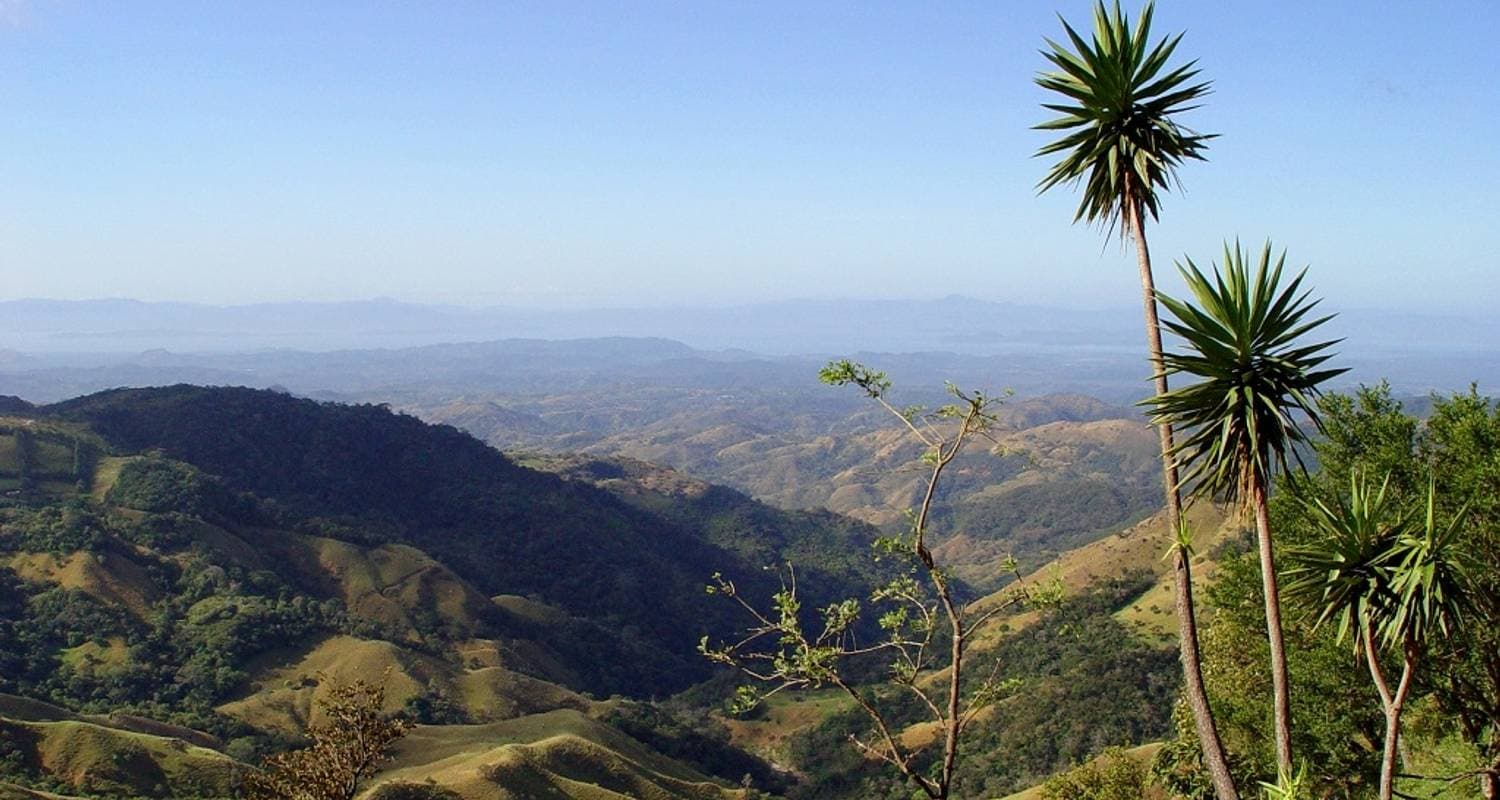
Essential Costa Rica - Package with Manuel Antonio National Park
10 days · Destination Services Costa Rica
4.3· 145 reviews✓ Instant confirmationtour from €1,817

Costa Rica Wildlife Tour
15 days · Explore!
4.5· 90 reviews✓ Instant confirmationtour from €3,597
Costa Rica Classic 12 Day - One Life Adventures
12 days · One Life Adventures
4.9· 72 reviews✓ Instant confirmationtour from €2,277
The classic 10-day Costa Rica route
Most first-timers trace the same loop: San José → La Fortuna (Arenal) → Monteverde → Manuel Antonio → Guanacaste beach → back to San José or out via Liberia. It works because every stop feels genuinely different from the last, and the distances between them look short on the map.
The catch is the clock. Costa Rica's roads are slower than they look. San José to La Fortuna is just 125km but eats three to four hours. La Fortuna to Monteverde is only 80km as the crow flies, yet it's 3.5 to 4.5 hours because you wind around Lake Arenal on mountain roads (or take the quicker jeep-boat-jeep combo: a van to the lake, a 25-minute boat across, a van up the far side, about three hours door to door). Monteverde to Manuel Antonio is four to five hours. Manuel Antonio to Guanacaste, five to six.
Give yourself two nights in La Fortuna (hot springs, an Arenal hike, the hanging bridges, one rafting or canyon day), two in Monteverde (cloud-forest walks, a zip-line, a night hike), two in Manuel Antonio (beach and national park), and two or three on the Guanacaste coast to slow down. San José is mostly a gateway, so one night at the start and one at the end is plenty. Tours built on this template run €1,600-€2,100 per person.
If you've only got a week, drop Guanacaste and fly out of Liberia from the Manuel Antonio side on the short Quepos-Liberia domestic hop (€120-€160).
Style split: guided, self-drive, or all-inclusive
Three clear options, each with a personality of its own.
Fully guided small-group tours (ten to sixteen people) are the lowest-friction way to go. Intrepid's Classic Costa Rica (fifteen days, €2,100 before flights), G Adventures' Costa Rica Quest (nine days, €1,200) and Costa Rica Adventure (sixteen days, €1,850), and Exodus's similar routes handle every transfer, all your beds, the park entries and a local guide throughout. Ideal if it's your first time in Central America, you're travelling solo, or you simply don't want to fuss over logistics.
Self-drive is the default for US travellers and works a treat here. Enterprise, Alamo, Budget and Adobe (a sound local outfit) all keep fleets at SJO and LIR. Reckon on €45-€80 a day for a small SUV, which you'll want for the unpaved roads around Monteverde and some beach access. Mandatory third-party insurance adds €15-€25 a day and can't be waived with your credit-card cover. A ten-day self-drive with mid-range hotels comes to €1,400-€1,900 per person before flights.
The all-inclusive Caribbean-style resorts (Riu, Dreams, Secrets) cluster on Guanacaste's Papagayo peninsula. Fine if all you want is a beach week with the odd day trip. A poor call if you came to see actual Costa Rica, since the big national parks, the cloud forest and the wildlife sit a four-to-six-hour drive away. Think of an all-inclusive as something to tack on after a tour, not as a stand-in for one.
Activity tiers: real adventure vs scenic filler
Costa Rica markets everything as adventure, so it pays to be honest about what's genuinely active and what's family sightseeing.
Scenic and family-friendly (do it once, get the photo): zip-lining and the hanging-bridge walks turn up on every itinerary and at every resort. Fun, safe, two or three hours, under €60. The sloth-spotting walks in Manuel Antonio and La Fortuna are easy and a real hit with kids. The hot springs around Arenal (Tabacón, Baldí) are relaxation, not adventure.
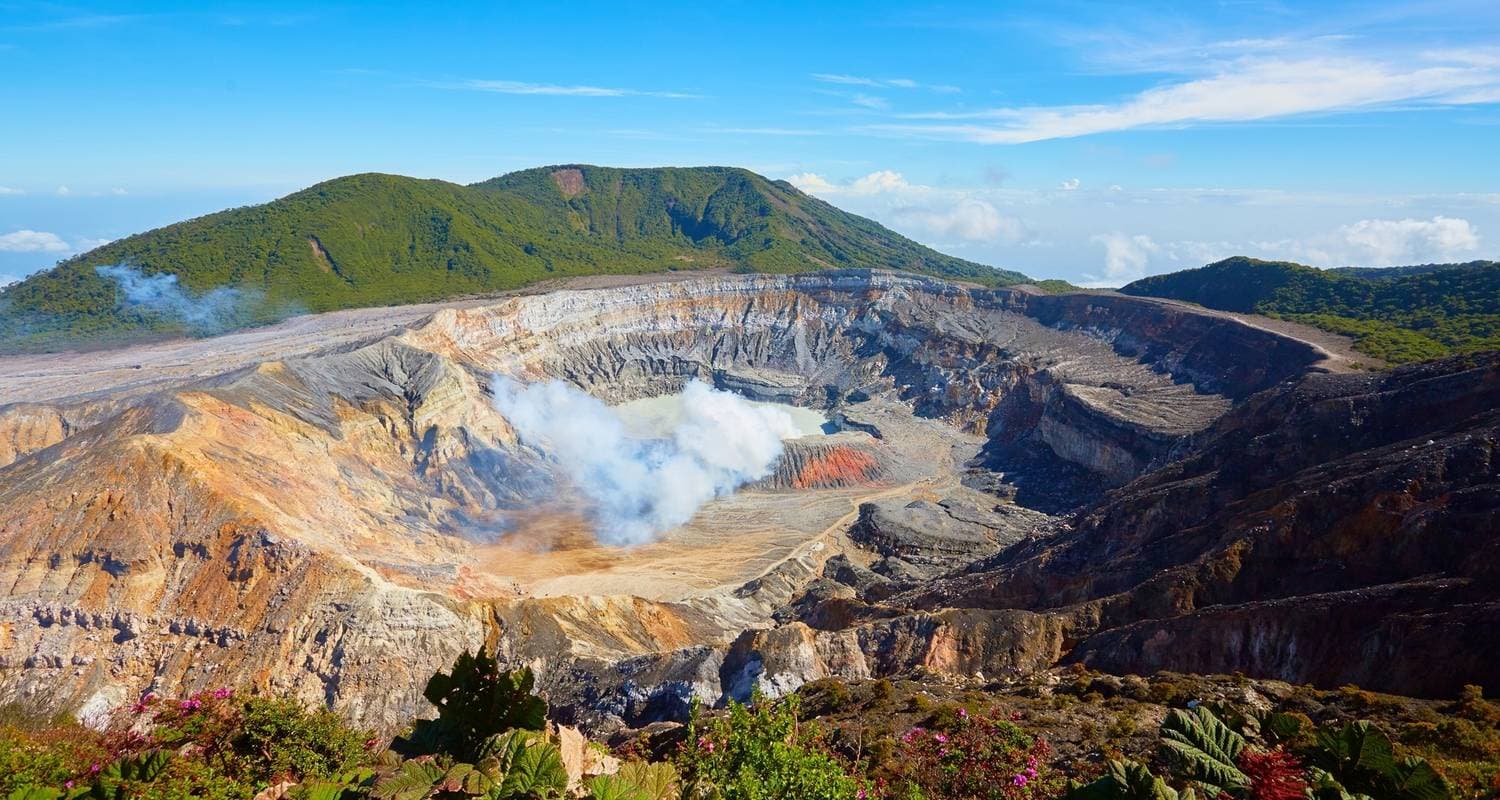
The real adventure: white-water rafting the Pacuare River (Class III-IV, a full day out of Turrialba, €95-€130) is the genuine article, properly wild water and a highlight of any trip. Surfing lessons at Nosara or Tamarindo have beginners up on the board within a couple of sessions; week-long surf camps run €700-€1,100. Hiking Arenal itself has been restricted since the 2010 eruption, so you can't climb the cone, but the 1968 lava-flow trails on its flanks are easy two-to-three-hour walks with fine views. Cerro Chato, the neighbouring cone, is officially closed, though Chorro Falls and the national-park loops cover much the same ground.
For wildlife above all: turtle-nesting at Tortuguero on the Caribbean side runs July to October (green turtles), with leatherbacks in March to May. You can only reach Tortuguero by boat or small plane, so it's a two-to-three-night side trip that adds €250-€400. Corcovado on the Osa Peninsula is the heavyweight for rainforest biodiversity, jaguars, tapirs and all four monkey species, but the logistics are real (a charter flight, or a long bus and boat) and it only fits a fourteen-day trip.
Best time to visit and what each season looks like
The dry season runs mid-December through April. This is the peak: dependable sunshine on the Pacific side, clearer views off Monteverde, easier going on the unpaved roads. Prices climb 20-30%, and Christmas-to-New-Year and Easter week book out six months or more ahead. February and March give you the best mix of dry weather and slightly thinner crowds.
The green season runs May through November. Cheaper, quieter, and honestly more beautiful, with everything turned a saturated green. The rhythm is the thing to understand: mornings are usually sunny and clear, with the rain rolling in as afternoon downpours that last one to three hours, so you can plan around it. September and October are the wettest on the Pacific coast, and some beach towns half-shut. The Caribbean side (Tortuguero, Puerto Viejo) keeps a different calendar entirely: September and October are actually its driest stretch, handy if you want both coasts in one trip.
The highlands (Monteverde, Chirripó, San Gerardo de Dota) stay cool all year at 10-18°C, and the cloud forest earns its name most afternoons whatever the season. Pack layers.
Flight prices from Europe peak from mid-December into early January and again over the July-August family rush. The February-March shoulder and October to early November are the cheapest windows, often €150-€250 below peak. Booking three to five months out is usually enough from North America; give it five to seven from Europe for the best fares.
Flights, airports and what happens after you land
Two international airports, and the choice between them matters.
San José (SJO) is the main hub and where the vast majority of tours begin. For US travellers this is one of the easiest, shortest international trips around: Miami is barely 3 hours out, and direct flights from JFK, EWR, IAD, ATL, CLT, BOS, DFW, IAH and ORD run roughly US$350-$650 round-trip, less in the green-season shoulder. Same time zone as US Central, too, so no jet lag to shake off. From Canada, Air Canada and WestJet fly Toronto and Montréal direct in 5 to 6 hours (C$500-$850 return), with heavy winter capacity. From Europe there's nothing direct save Iberia's Madrid-SJO (ten hours, €600-€900); otherwise you connect via Miami, Atlanta, Houston or Madrid, for a total travel time of thirteen to seventeen hours and off-peak fares of €650-€1,050. From Australia it is the honest long-haul, with no direct route: you connect through a US gateway (LA, Dallas or Houston) for 18 to 22 hours of total travel and round-trips of roughly A$2,200-$3,400.
Liberia (LIR) serves the Guanacaste coast. Direct from many US hubs in winter (United, American, JetBlue, Delta, Southwest, Alaska) and from Toronto on Air Canada and WestJet; from Europe and Australia you connect through a US gateway. Worth it if your trip leans towards the beaches rather than the central loop, or if you want to fly into one airport and out of the other (most car-rental firms and operators allow this for a modest drop-off fee of €60-€100). Whatever your home airport, the live bundle prices the flight from there in your own currency right beside the tour, so you see the full per-person total before you commit.
Land at SJO and you're twenty minutes from the city centre and 3.5 hours from La Fortuna. If your tour kicks off the next day, most operators throw in an airport pickup and a night at a hotel near the airport (Alajuela, far nicer than downtown). Rental pickup at either airport is straightforward, but allow 45 to 60 minutes for the paperwork and insurance. And don't plan a long drive the same day you land if your flight gets in after 3pm; the rural roads are unlit, and driving them in the dark isn't a good idea.
Ready to price your trip?
Enter your origin airport and month — we'll search live flight and tour prices and give you one bundled total per person.
Find combosCommon questions
How much does a Costa Rica tour cost with flights?
All-in from Europe, €2,000-€2,700 per person for nine to ten days. That covers a small-group or partly guided tour (€1,200-€1,800, with your beds, transport, park entries and some meals), return flights via Iberia from Madrid or a US connection (€650-€1,050 off-peak), and another €300-€450 for lunches, dinners, optional activities and tips. From the US East Coast the all-in slides to €1,800-€2,400, since the flights are shorter and cheaper. Book flights three to five months out for the best fares, and longer still for the Christmas or Easter windows.
Self-drive or guided tour — which is better for Costa Rica?
Self-drive suits confident drivers who want the freedom: pickup at SJO or LIR is easy with Enterprise, Alamo or Adobe, the roads are mostly well-signed, and a small SUV handles the unpaved stretches around Monteverde. Reckon on €45-€80 a day plus the mandatory insurance. Guided small-group tours (Intrepid, G Adventures, Exodus) take the logistics off your plate entirely, come with a local naturalist guide who'll spot wildlife you'd otherwise walk straight past, and cost about the same once you've added up car, insurance and single-room supplements. First-timers, solo travellers and families with young kids tend to prefer guided; returning visitors and confident drivers lean towards self-drive.
Which national park is best for first-time visitors?
Manuel Antonio is the standard first park, and for good reason: it's small, well-trailed, and within ninety minutes you'll have ticked off capuchin and squirrel monkeys, two- and three-toed sloths and iguanas, with a genuinely lovely beach waiting at the end. Pair it with a morning at Arenal Volcano National Park for the lava-flow trails and a day in the Monteverde Cloud Forest for a wholly different ecosystem. If you've got fourteen days and want serious wildlife, add Corcovado on the Osa Peninsula, four monkey species, tapirs and rare scarlet macaws, though it's a step up logistically.
Dry season or green season — which should I book?
The dry season (mid-December to April) gives you the most reliable weather, the clearest views and the easiest driving, at a 20-30% premium. The green season (May to November) is cheaper, quieter and lusher to look at; the rain comes as predictable afternoon storms rather than all-day drizzle, so you can keep your activities to the mornings. September and October are the wettest on the Pacific but the driest on the Caribbean, which matters if Tortuguero's on the list. For the best value with decent weather, aim for late April to early May, or late October to early November.
Is Costa Rica safe and suitable for families?
Yes to both. Costa Rica is one of the safest countries in Latin America, and the tour-circuit regions (Arenal, Monteverde, Manuel Antonio, Guanacaste, Osa) are very low-risk. Petty theft is the one thing to watch, so don't leave valuables in a parked rental car, especially at trailheads. For families, the mix of short drives, varied days out (wildlife, zip-lines, hot springs, beaches), English-speaking guides and a mild year-round climate makes it one of the strongest adventure destinations for kids of seven and up. Intrepid Family and G Adventures family departures run dedicated Costa Rica itineraries paced for mixed ages.
What should I pack for Costa Rica?
Light, quick-dry clothing for the lowlands (San José, the beaches, Manuel Antonio), where it runs 26-32°C all year. A warm layer and a waterproof jacket for Monteverde and the highlands, where the cloud forest drops to 12-15°C. Proper hiking shoes or trail runners rather than trainers, because the trails get muddy. Pack insect repellent with DEET or picaridin, reef-safe sunscreen (required in some parks), a dry bag for rafting or boat transfers, and a small torch for the night walks. Bring a refillable water bottle too, since the tap water is safe almost everywhere. Leave the dressy clothes at home; nowhere here calls for them.
Related destinations
- Peru Multi-Day Tours with Flights from €1,900Machu Picchu at sunrise, the Sacred Valley, an Amazon lodge.…
- Mexico Multi-Day Tours with Flights from €1,600Mexico City and Teotihuacán, the Yucatán with Chichén Itzá a…
- Argentina Multi-Day Tours with Flights from €1,900Tango in Buenos Aires, the thunder of Iguazu, Malbec in Mend…
Related tour styles
Pick by trip length
Plan this trip from your city
- Multi-Day Tours from New York with Flights IncludedMulti-day tours from New York with flights included — one US…
- Multi-Day Tours from Los Angeles with Flights IncludedPackage tours from Los Angeles with flights included — one U…
- Multi-Day Tours from Sydney with Flights IncludedLeaving Australia means a long-haul flight whether you like …
- Multi-Day Tours from Toronto with Flights IncludedPearson is Canada's biggest long-haul hub, and with a weak l…
- Multi-Day Tours from London with Flights IncludedBuilt for London travellers: LHR for long-haul, LGW for Euro…
Deeper reading
- The Perfect 10-Day Costa Rica Itinerary (Route, Day by Day)Ten days is the Costa Rica sweet spot: Arenal's volcano, Mon…
- How Much Does a Costa Rica Tour Cost? The Honest All-In NumberTen days in Costa Rica runs roughly €1,800–€3,200 (≈$1,957–$…
- The Best Time to Visit Costa Rica (Month-by-Month, 2026)Dry season buys you dependable sun and the easiest driving. …