
The Best Time to Visit Morocco (Month-by-Month, 2026)
March-May and Sep-Nov are the sweet spots. Summer bakes Marrakech and the desert. Winter Atlas snow is underrated.
By Adam, founding editor · Updated 18 June 2026
- ✓Best months: April, May, October, November
- ✓Avoid for Sahara overnights: Jun-Aug (45°C+) and Dec-Feb (freezing nights)
- ✓Ramadan 2026: approximately 17 Feb - 18 March
- ✓Christmas/NY and Easter: 20-30% price premium
- ✓Atlantic coast mild year-round (Essaouira 17-26°C)
- ✓Marrakech RAK is LCC-heavy — flash fares from €40-€80 return
The best time to visit Morocco is mid-March to late May and mid-September to late November. Those two shoulder windows are when everything lines up: easy medina wandering in Marrakech and Fez, desert nights in Merzouga you'd actually want to sleep through, and green Atlas valleys with the snow gates open. Summer, June to August, shoves Marrakech past 40°C and the Sahara past 45°C, which is a feat of endurance rather than a holiday. Winter trades the heat for cold desert nights and a genuinely snowbound High Atlas, which is either a headache or a quiet thrill depending on what you've planned. What follows is Morocco month by month, with honest temperatures, the way tour prices move, how busy it gets, where Ramadan 2026 sits, and flight notes for the four airports you might land at. Choose your month on the numbers, not the daydream.
The Morocco tours worth timing right
Prices are tour-only — add flights for the real total. You book the tour itself on TourRadar.
Exotic Morocco (4 Star Hotels)
10 days · Travel Talk
4.8· 352 reviewstour from €2,038
Morocco Kasbahs & Desert
8 days · G Adventures
4.7· 295 reviews✓ Instant confirmationtour from €799
Spain, Portugal & Morocco
16 days · Cosmos
4.8· 194 reviews✓ Instant confirmationtour from €3,017
Timeless Morocco
9 days · Timeless Tours
4.6· 193 reviews✓ Instant confirmationtour from €1,890
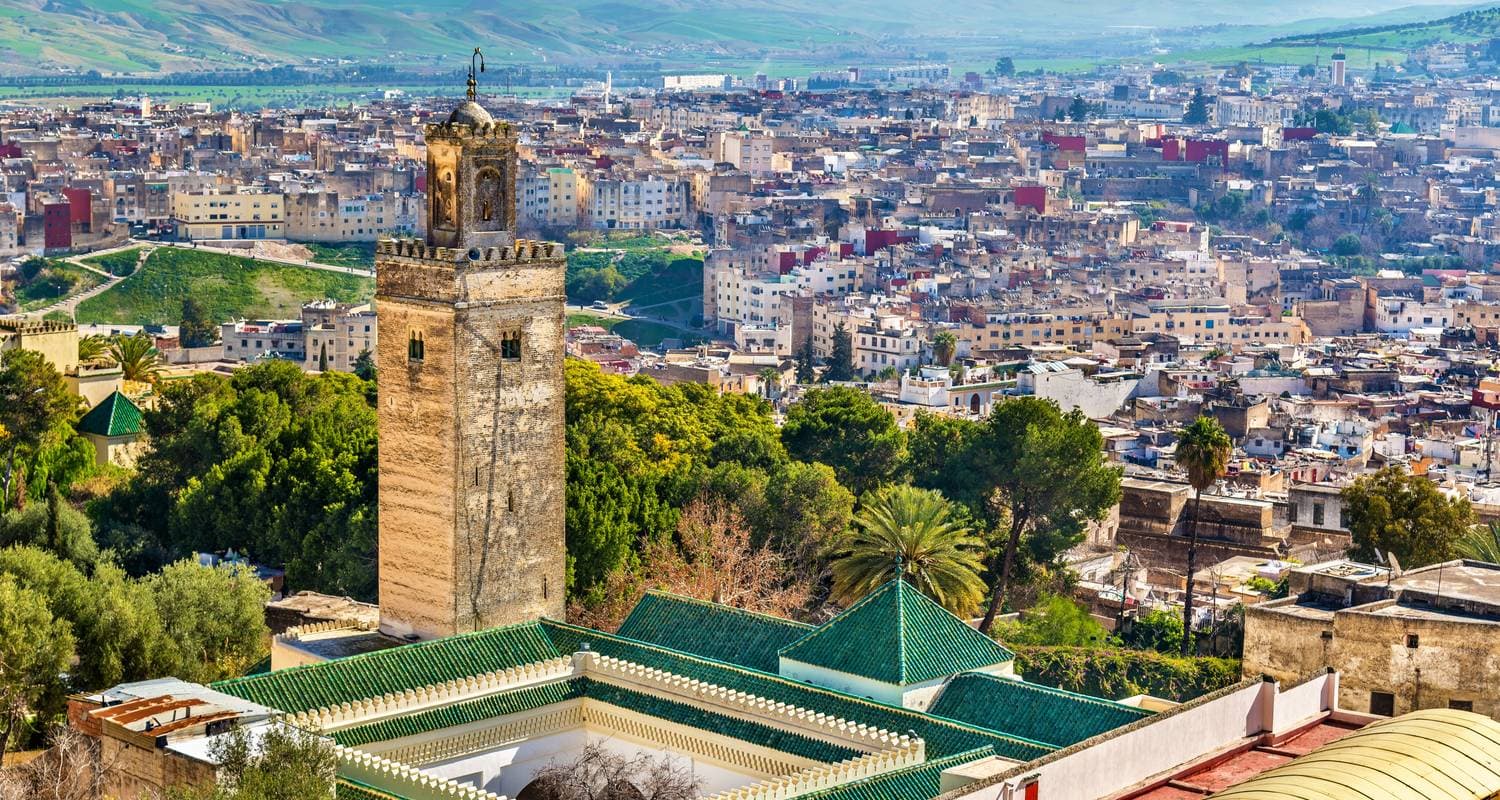
Highlights of Morocco
15 days · G Adventures
4.5· 184 reviews✓ Instant confirmationtour from €1,287
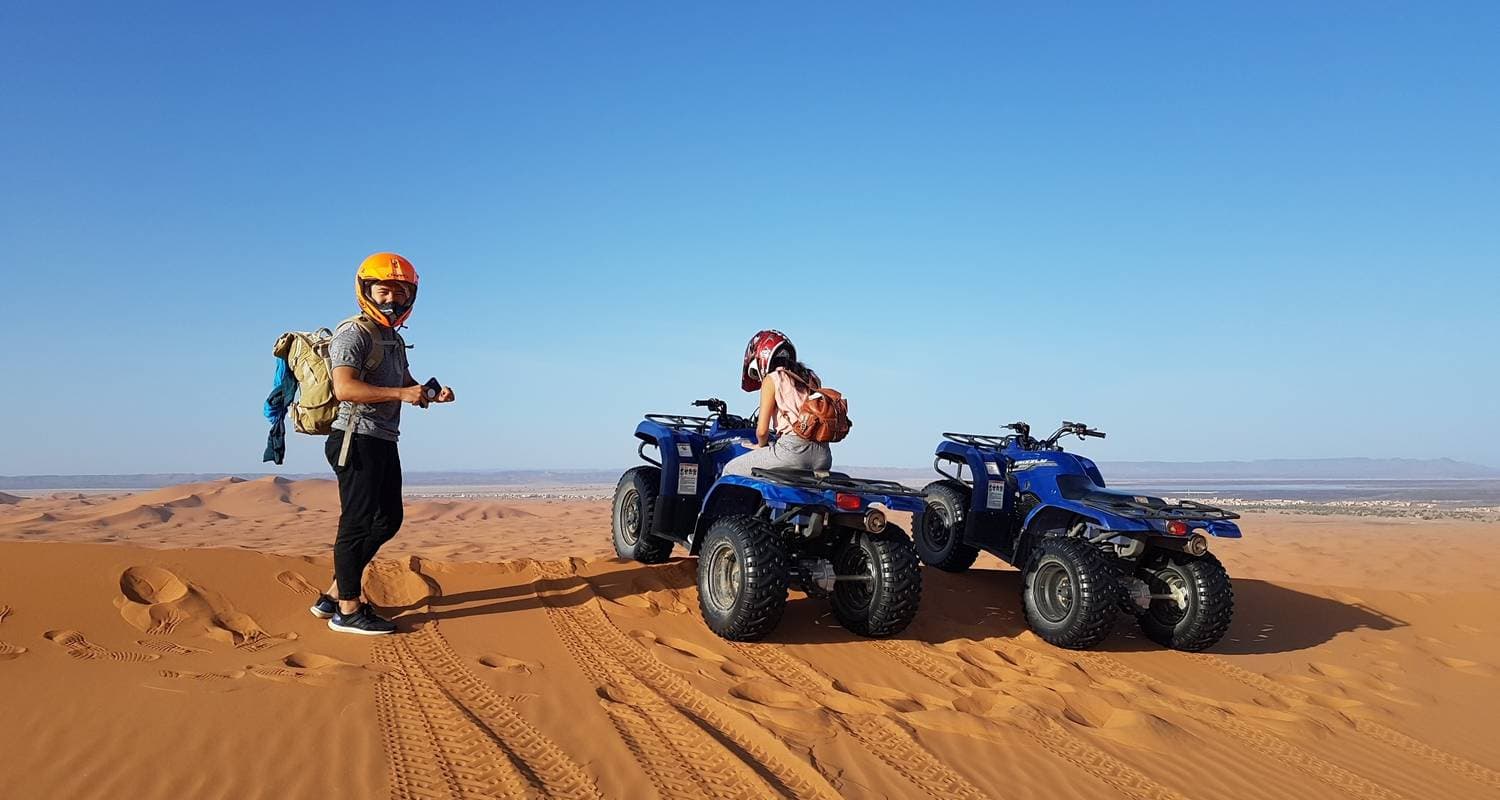
5 day trip: Sahara Fun Outdoor Experience
5 days · TouaregTrails
5.0· 172 reviews✓ Instant confirmationtour from €937
Morocco's four climate zones (they do not move in sync)
Morocco is not one climate. It is four, and a tour that crosses the country will touch at least three of them inside a single week. Planning around one tidy 'average' temperature is exactly how people end up shivering in Merzouga the same week they're mopping their brow in Marrakech.
Atlantic coast (Essaouira, Rabat, Asilah, Casablanca): mild all year, courtesy of the ocean. Summer highs sit at a breezy 22-26°C while Marrakech bakes at 40°C, and winter lows rarely slip below 10°C. The catch is the wind — Essaouira in particular blows reliably from April to September, which delights kitesurfers and exasperates anyone hoping to lie still on a towel. Rain bunches up from November to March.
Central plains (Marrakech, Fez, Meknes): a proper continental swing. Summers run hot and dry, 36-42°C in July and August. Winters are cool, with 18-20°C days and 5-8°C nights. Spring and autumn, at 22-28°C, are the obvious sweet spots.
Atlas Mountains (Imlil, Ouarzazate, Toubkal, the Middle Atlas): altitude rewrites the rules. Summer days are a pleasant 20-26°C while the cities cook, and winter brings real snow above 1,800m, with High Atlas passes sometimes closed December to March. Ski Oukaimeden runs January to March, if that surprises you.
Sahara (Merzouga, Zagora, M'Hamid): extreme at both ends. Summer highs of 45-48°C, winter nights below freezing. Only March-May and September-November are kind enough for an overnight camel trek and a night under canvas.
Month by month: what Morocco actually looks like
January: Marrakech 18-20°C, Fez 15-17°C, Essaouira 17-19°C. 60-80mm rain in the north. Tour prices at a winter low, 15-25% below normal. Quiet except New Year week.
February: Marrakech 20-22°C, Fez 17-19°C. Almond blossom in the Anti-Atlas. Ramadan 2026 begins around Feb 17. Prices still low, crowds thin.
March: Marrakech 23-26°C, Fez 20-23°C, Essaouira 19-21°C. Ramadan runs through roughly Mar 18. Sweet spot begins late in the month. Prices normal.
April: Marrakech 26-29°C, Fez 23-26°C. Peak comfort across the country. Prices rise 10-15%. Easter week is a spike.
May: Marrakech 29-33°C, Essaouira 21-23°C. Last of the truly pleasant weather inland before the heat arrives. Normal pricing.
June: Marrakech 34-38°C, Fez 32-36°C. Prices drop 15-25%. Sahara already too hot for overnight camping.
July-August: Marrakech 38-42°C, Fez 36-40°C, Sahara 45-48°C. Coastal resorts full with domestic tourism. Inland tours reduced. Prices down 25-35% but the heat is a real constraint.
September: Marrakech 32-36°C early, 28-32°C late. Heat easing. Prices still discounted first half.
October: Marrakech 26-30°C, Fez 24-28°C. Our joint pick with April. Normal pricing, excellent weather.
November: Marrakech 22-25°C, Fez 19-22°C. Quiet, warm days, cool evenings. Great value.
December: Marrakech 19-22°C, Fez 16-19°C. Rainier in the north. Christmas-NY premium of 20-30%.
The Sahara paradox: only two short windows actually work
The biggest planning blunder on a Morocco trip is assuming the Sahara is good to go all year. It isn't. Merzouga and Zagora sit in a climate that swings harder than just about anywhere else you'll pass through.
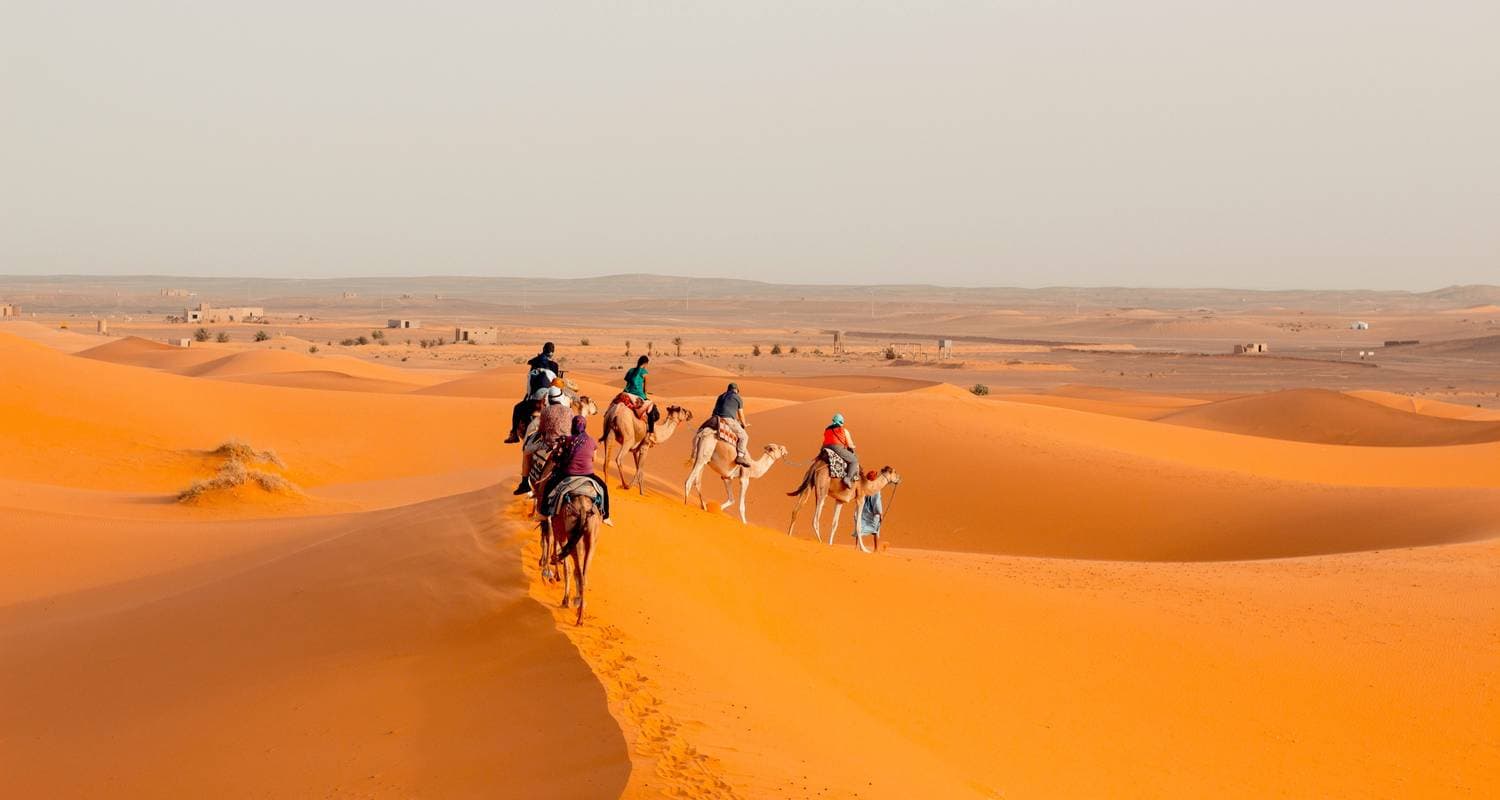
The summer truth: from June through August, daytime highs in the Erg Chebbi and Erg Chigaga dunes routinely hit 45-48°C, and tent interiors push past 50°C. Camel treks stand down from late morning to late afternoon because neither the animals nor their riders can cope, and the sand itself is too hot to cross barefoot. Most reputable desert camps wind down or shut entirely from late June to late August.
The winter truth: December through February, daytime highs are a lovely 18-22°C, but overnight lows tumble to 2-5°C and can touch -2°C on a clear January night. Camps hand out heavy blankets, but few are heated, so anyone who skipped the down jacket, thermals, hat and gloves is in for a long, cold night. First-timers get caught out by this every year.
The two windows that work: mid-March to late May and mid-September to late November. Daytime highs of 25-32°C, overnight lows of 12-18°C, clear skies and barely a breeze — perfect for an overnight camel trek and a sky full of stars. Unsurprisingly, these are the months operators line up their flagship Sahara itineraries.
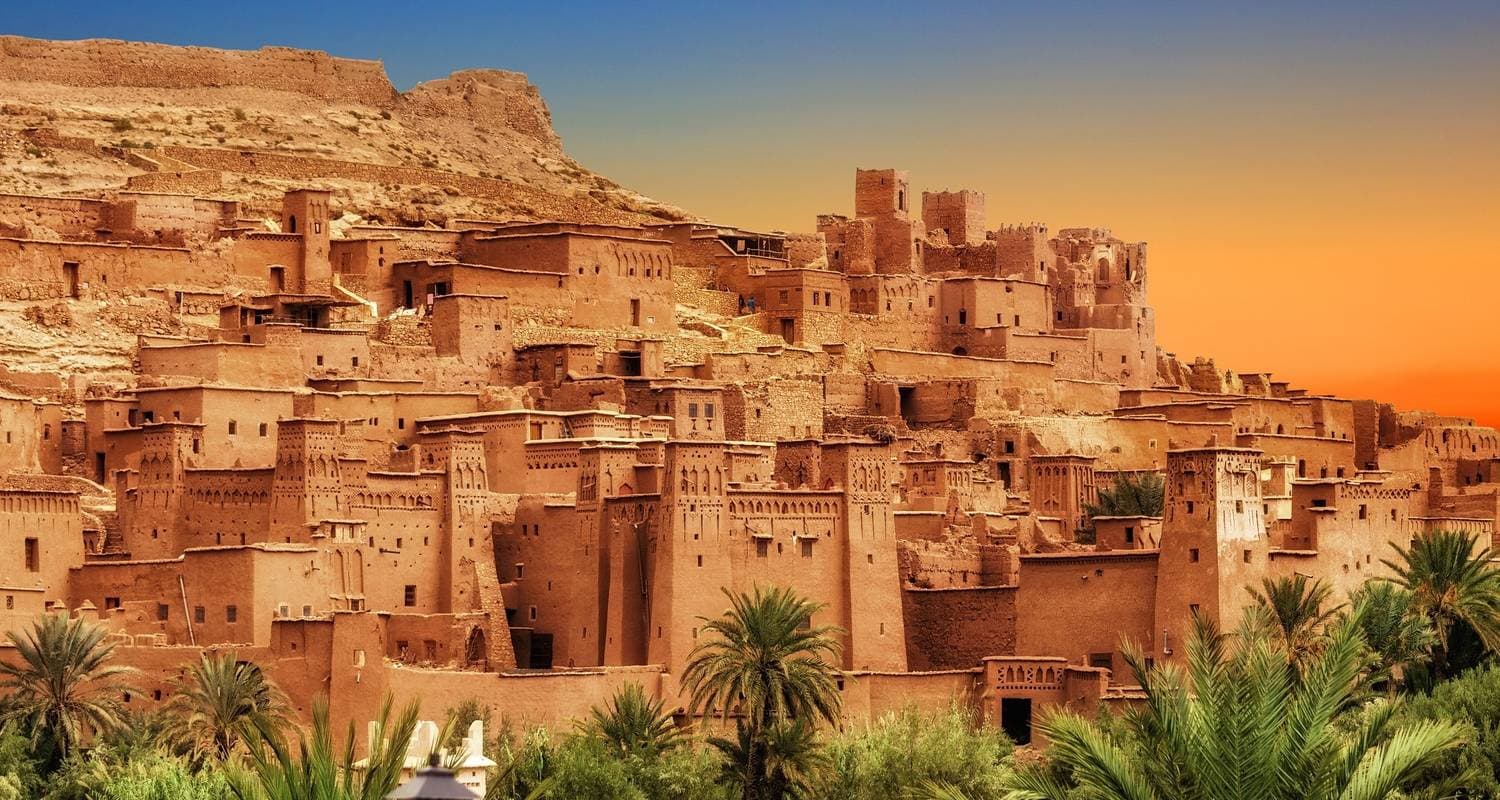
If your dates are pinned to summer or deep winter, do yourself a favour and swap the desert overnight for a day trip to Ait Benhaddou or a detour into the Middle Atlas cedar forests, rather than forcing a desert night that was never going to be good.
Ramadan in 2026: sites stay open, evenings get better
Ramadan in 2026 runs roughly 17 February to 18 March, with the exact start hanging on the moon sighting and Eid al-Fitr arriving around 19-20 March. Morocco is a Muslim-majority country that keeps right on welcoming travellers through it, with a few predictable adjustments worth knowing.
What shifts: cafés and restaurants away from the tourist zones and hotels often close through daylight, reopening near sunset. Some medina shops open late and shut for iftar. Your guides and drivers are fasting, which most carry off without a flicker, though it can take the edge off energy on a long desert-drive day. Alcohol is harder to come by outside licensed hotel bars. The medinas move slowly by day and come alive after dark.
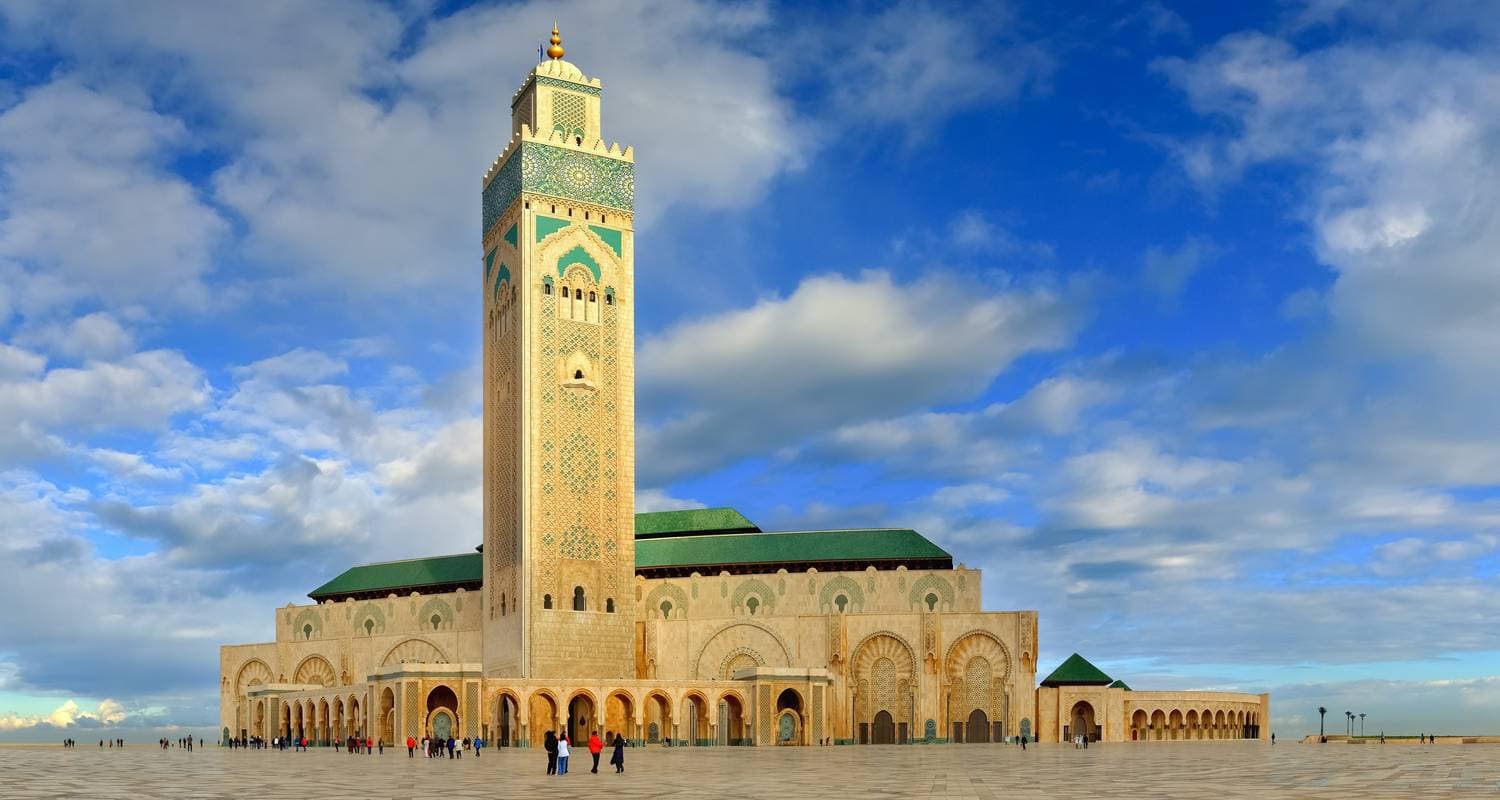
What doesn't shift: every major site stays open — the Hassan II Mosque, Bahia Palace, the Saadian Tombs, Jemaa el-Fnaa, the Fez medina, Volubilis, the desert camps, the Atlas treks. Hotels serve full menus all day, international flights keep their usual schedules, and domestic Royal Air Maroc flights run as normal.
The upside is real. Tourist numbers ease 10-15%, operator pricing softens 5-10%, and the post-sunset iftar mood is one of the most memorable things about the Moroccan year. Jemaa el-Fnaa after iftar is an event all of its own: communal food stalls, families out late, the markets humming until one or two in the morning.
So Ramadan is no automatic avoid. For plenty of travellers it is the quietest, best-value and most culturally rich window the calendar offers.
Flight timing: four airports, very different pricing
Morocco gives you four airports to weigh up when you bundle the flight with the tour, and they don't price alike.
Marrakech (RAK) is the low-cost capital of North Africa. easyJet, Ryanair, Wizz Air and Transavia all pile in from the UK, Ireland, France, Germany, Spain, Italy, the Benelux and Central Europe. From London, Dublin, Paris, Madrid or Milan, expect returns around €60-€120 from October to April, €120-€220 in the June-August peak, and €40-€80 when a flash sale lands. Book 6-10 weeks ahead for the keenest fares; leave it late and it's a gamble.
Casablanca (CMN) is Royal Air Maroc's hub and the main long-haul door in. Fewer budget carriers, more full-service ones, with European returns around €150-€280. From North America (JFK, YUL, YYZ, IAD), direct RAM flights run €500-€900 return. This is your best landing spot if the tour kicks off in Fez or the north.
Fez (FEZ) is flown by Ryanair, Air Arabia Maroc and TUI on a seasonal basis. The schedule is slimmer, but it's a gift if your trip opens with imperial-city days and you'd rather skip the transfer from Casablanca or Marrakech. Fares track RAK, with a little less flash-sale action.
Agadir (AGA) leans charter and low-cost, built around Atlantic-coast beach holidays. Handy if your tour tacks on an Essaouira-to-Agadir coastal stretch.
Travellers from North America and Australia generally route via a European or Gulf hub (or direct Royal Air Maroc into Casablanca from the US East Coast), swapping the cheap European fares for higher long-haul ones — around US$500-900 from North America and A$1,800-2,600 from Australia. Multiday.tours prices the flight live from your own airport in your own currency.
For the classic Marrakech-Sahara-Fez loop, flying into RAK and out of FEZ (or the other way round) often beats a round-trip on price and spares you a seven-hour backtrack.
Ready to price your trip?
Enter your origin airport and month — we'll search live flight and tour prices and give you one bundled total per person.
Find combosFAQs
What is the best month to visit Morocco?
April and October are the two strongest months for most travellers. Marrakech sits at 26-30°C, Fez at 24-28°C, Essaouira at 20-22°C, and the Sahara is as comfortable as it gets for an overnight camel trek. Prices are at their normal level, crowds stay manageable, and the Atlas trekking trails are fully open. Forced to pick one, April just shades it for spring wildflowers in the valleys and warmer Atlantic water, while October hands you slightly cheaper flights.
Is it too hot to visit Morocco in summer?
For Marrakech, Fez and especially the Sahara in July and August, yes, for most people. Marrakech routinely hits 38-42°C and the Erg Chebbi dunes climb to 45-48°C, so tour itineraries trim or drop the overnight desert stays. The Atlantic coast — Essaouira, Asilah, Oualidia — stays a pleasant 22-26°C thanks to the cold Canary Current, which means a coast-focused or Atlas-focused summer trip still works nicely. Inland imperial-city touring in peak summer, though, is an endurance test rather than a holiday.
When is the cheapest time to visit Morocco?
Late June through August. Tour prices fall 25-35% against the normal April-May and October-November rates, and budget flights from Europe often dip below €80 return (long-haul travellers from North America and Australia route via a European or Gulf hub and pay more, but still catch the seasonal low). The price you pay is heat: Marrakech at 38-42°C, the Sahara above 45°C, and most overnight desert camps reduced or closed. Ramadan (February-March in 2026) is a quieter second value window with 5-10% tour discounts and no heat penalty, and early December, before the Christmas spike, is another calm, keenly priced slot.
Will Ramadan 2026 affect my Morocco tour?
Barely, for most itineraries. Every major site, hotel, desert camp and international flight runs as normal through Ramadan (roughly 17 February to 18 March 2026). Expect some cafés outside the tourist zones to close in daylight, the medinas quieter by day and livelier after sunset, and your guides fasting. The post-iftar mood, especially in Marrakech's Jemaa el-Fnaa, is one of the most memorable things about the Moroccan year. Tourist numbers and prices both ease 10-15%.
Can I do a Sahara overnight camel trek in winter?
Yes, as long as you pack for it. December through February, daytime highs in Merzouga are a pleasant 18-22°C, but overnight lows at the camp fall to 2-5°C and can hit -2°C on a clear January night. Camps hand out heavy blankets but are rarely heated, so bring a warm down jacket, thermals, a hat and gloves. If cold-weather camping isn't your thing, push the Sahara overnight to March-May or September-November and spend the winter dates on Atlas skiing, Essaouira or the imperial cities instead.
Should I fly into Marrakech or Casablanca?
It comes down to your itinerary. Marrakech RAK is the cheaper, better-connected option for European low-cost carriers (easyJet, Ryanair, Wizz, Transavia), with flash fares from €40-€80 return. Casablanca CMN is the Royal Air Maroc hub and the natural long-haul arrival from North America or the Gulf, though European budget airlines price higher into CMN than RAK. For the classic Marrakech-Sahara-Fez loop, flying into RAK and out of Fez (FEZ) often beats a round-trip and saves you a long transfer. Most Multiday.tours Morocco combos show you both options.
Watching a trip?
Once a month: where all-in prices actually dropped, from your airport. No spam, unsubscribe anytime.
Related destinations
- Morocco Multi-Day Tours with Flights from €700Nights in the Merzouga dunes, mornings lost in the Fes medin…
- Egypt Multi-Day Tours with Flights from €1,300Sail the Nile, stand at the pyramids, sleep out under the Wh…
- Turkey Multi-Day Tours with Flights from €1,000Cappadocia balloons at sunrise, the Blue Mosque at dusk, Pam…
Related tour styles
Pick by trip length
Plan this trip from your city
- Multi-Day Tours from London with Flights IncludedBuilt for London travellers: LHR for long-haul, LGW for Euro…
- Multi-Day Tours from Dublin with Flights IncludedPackage tours from Dublin with flights included — one total …
- Multi-Day Tours from New York with Flights IncludedMulti-day tours from New York with flights included — one US…
- Multi-Day Tours from Toronto with Flights IncludedPearson is Canada's biggest long-haul hub, and with a weak l…
- Multi-Day Tours from Sydney with Flights IncludedLeaving Australia means a long-haul flight whether you like …