
Jordan Multi-Day Tours with Flights from €900
Petra, Wadi Rum and a long float on the Dead Sea, bundled with your flight into Amman or Aqaba at one live price.
Edited by Multiday.tours editor
- ✓7-8 day Jordan tours from €900 before flights
- ✓Return flights from Europe to Amman €220-€400 in shoulder season
- ✓Best months: March-May and September-November
- ✓Jordan Pass covers visa fee + unlimited Petra entries for ~€70
- ✓Two full days recommended at Petra, one night minimum in Wadi Rum
- ✓Pairs naturally with Egypt for a 14-17 day Middle East combo
Jordan folds the three things most people come to the Middle East for into a single week: two days clambering around Petra, a night under the stars in Wadi Rum, and a slow afternoon bobbing on the Dead Sea. Typical small-group tours run 5 to 10 days and land between €900 and €1,500 per person before flights, with 7 to 8 days the natural sweet spot. Add a return flight from Europe and most travellers spend €1,200 to €1,900 all in. Below we lay out what a classic Jordan tour covers, how it pairs with Egypt for a longer Middle East trip, the real cost of small-group versus private, and which months and airports actually make sense.
The tours doing the heavy lifting here
Prices are tour-only — add flights for the real total. You book the tour itself on TourRadar.

Jordan Discovery
9 days · Explore!
4.5· 368 reviews✓ Instant confirmationtour from €1,527
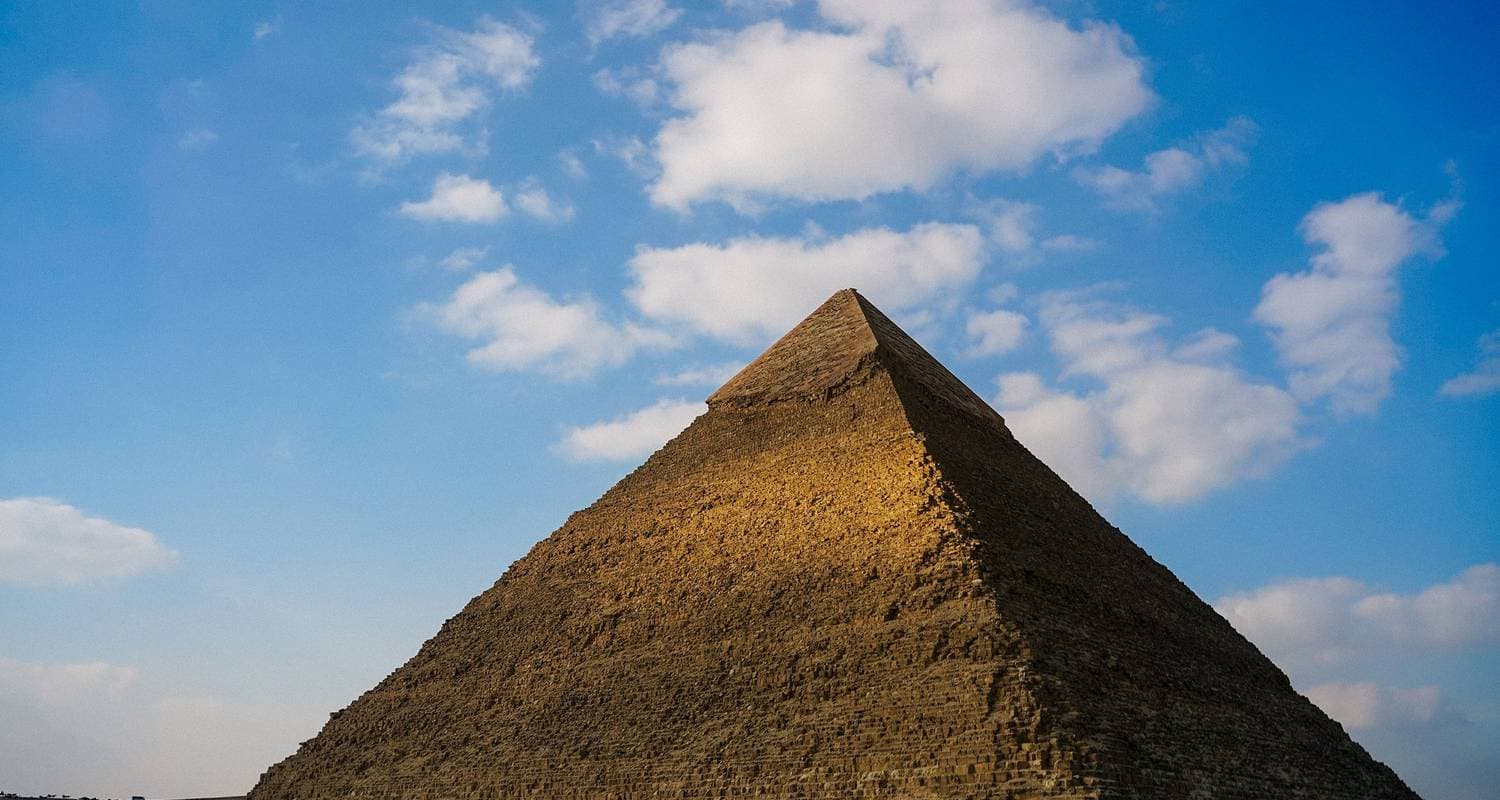
Experience Egypt & Jordan – 5* Cruise
15 days · Timeless Tours
4.5· 194 reviews✓ Instant confirmationtour from €2,146
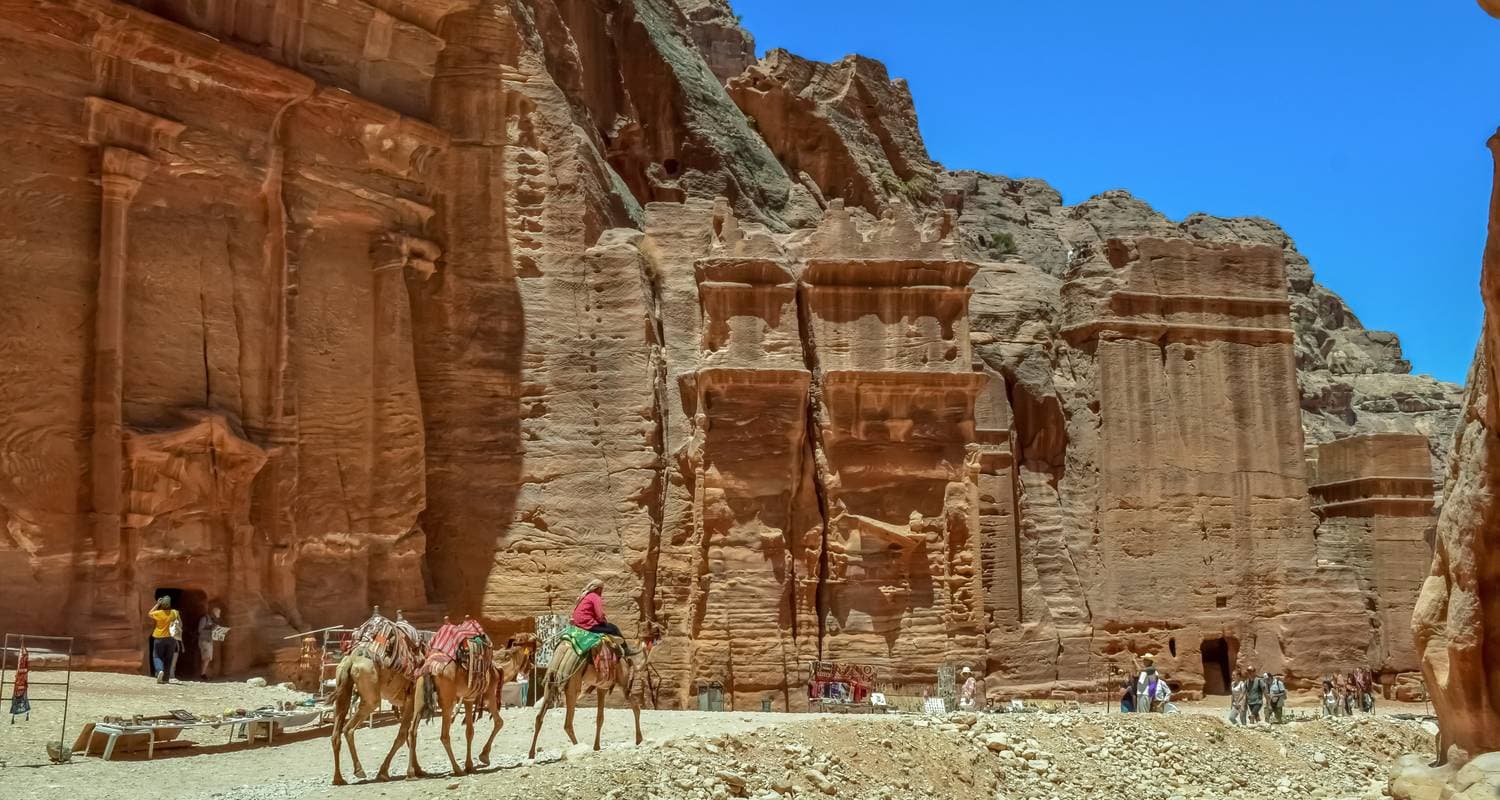
Highlights of Jordan
8 days · G Adventures
4.7· 97 reviews✓ Instant confirmationtour from €1,471

10 Day 9 Night Jordan Tour Highlights (CT-JHT-017)
10 days · Jordan Horizons Tours
5.0· 55 reviewstour from €1,472

Timeless Egypt & Jordan
15 days · Timeless Tours
4.4· 54 reviews✓ Instant confirmationtour from €1,848
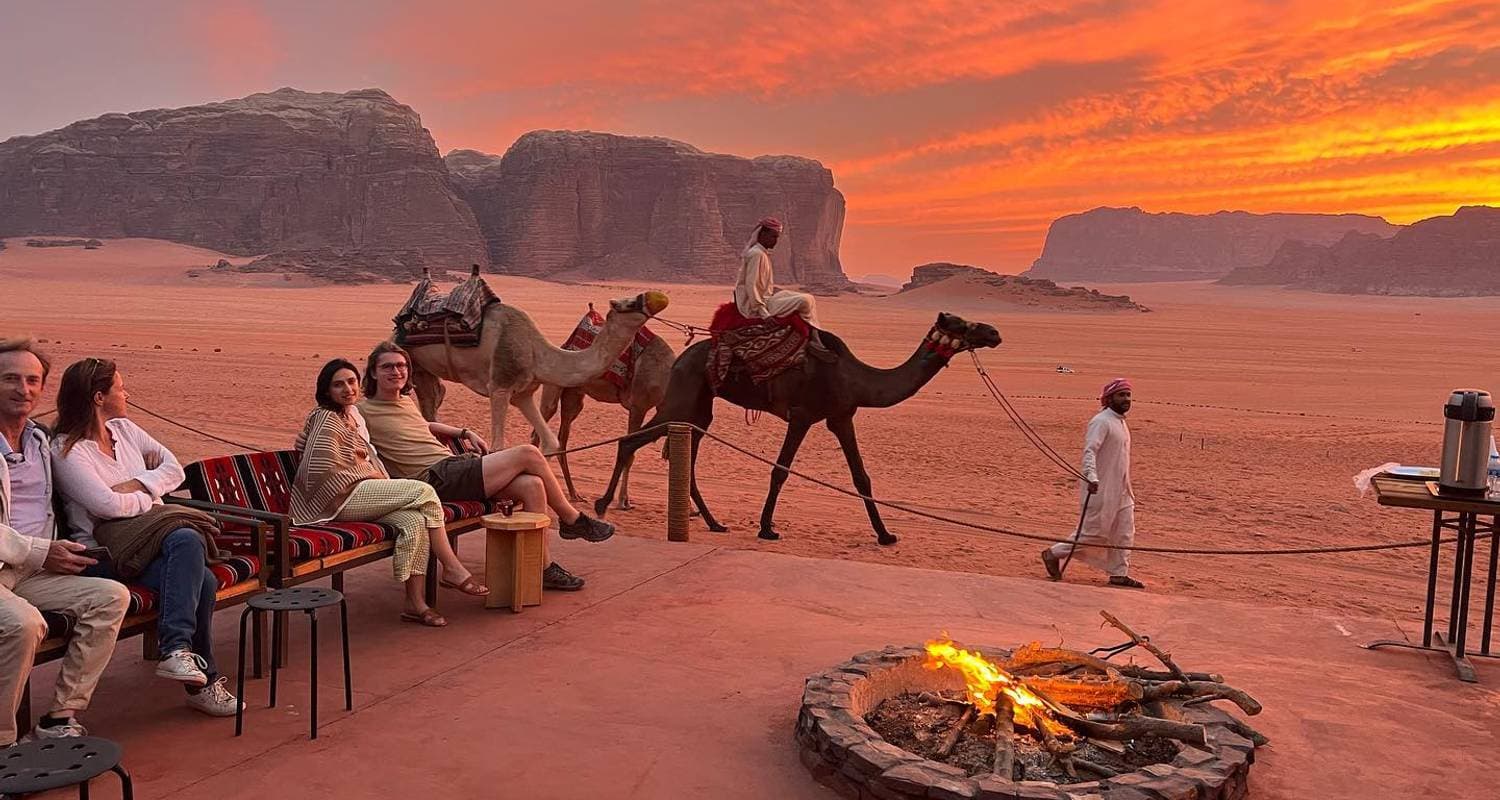
Jordan Group Tours by Locals | 5★ Hotels & Expert Guides
5 days · Trip500
4.6· 43 reviews✓ Instant confirmationtour from €1,003
The 8-day Jordan classic: what you actually see
Most 8-day Jordan tours follow the same spine, simply because it works. You land in Amman and spend a day on the citadel, the Roman theatre and the downtown souk, then drive 45 minutes north to Jerash for a half-day at one of the best-preserved Roman provincial cities anywhere. Night two is usually back in Amman or down at the Dead Sea.
Day three is a Dead Sea float, plus Mount Nebo and the mosaic map at Madaba on the way south along the King's Highway. Days four and five are the main event: two full days at Petra. One day covers the Siq, the Treasury and the main trail up to the Monastery; the second is for the High Place of Sacrifice, the Royal Tombs at golden hour, and the quieter back routes the day-trippers never find.
Day six is Wadi Rum: a 4x4 afternoon through the red dunes, sunset on a canyon ridge, then dinner and a night in a Bedouin desert camp. Domes with private bathrooms run €30-€60 over the traditional goat-hair tents. Day seven is usually a Red Sea stop in Aqaba for snorkelling before flying home from AQJ, or the drive back to Amman for a final night.
Prices on Multiday.tours for this itinerary sit at €900 to €1,500 before flights, depending on hotel grade and operator.
Jordan + Egypt combo tours: 14 to 17 days
Jordan and Egypt pair naturally, and most major operators sell a combined itinerary. The standard combo runs 14 to 17 days: roughly 7 days in Egypt for Cairo, Luxor, Aswan and a Nile cruise, then 6 to 8 days in Jordan for Amman, Petra, Wadi Rum and often the Dead Sea.
The border crossing tends to happen one of two ways. Either you fly Cairo to Amman on a short hop (roughly €120-€180 one way, 1h40m) that most operators fold into the tour price, or you cross overland at the Wadi Araba/Yitzhak Rabin border south of Aqaba with a brief transit through Israel's Eilat. Fewer tours use that route in 2026, and it comes with extra paperwork.
Plan on €2,200 to €3,400 per person for 14 days small-group, plus €350 to €550 for return flights from Europe into Cairo and out of Amman (open-jaw tickets are easy to price on Multiday.tours). That covers guide, Nile cruise, internal flight, all hotels, most breakfasts and some dinners. Add roughly €80 for an Egypt e-visa and the Jordan entry (free if you buy the Jordan Pass, more on which below).
This is the trip to do if you've got three weeks and want two genuine bucket-list destinations without paying twice over for long-haul flights.
Small-group vs private driver vs the Jordan Pass
Small-group Jordan tours (10-16 people) are the default and the easiest way to cover the country. Intrepid, G Adventures, Exodus and On The Go all run reliable 7 to 9 day itineraries in the €900-€1,600 range before flights, with a full-time local guide and a mix of three and four-star hotels. Intrepid and G Adventures skew younger and more active, while Exodus and On The Go draw a slightly older crowd into comfier hotels.
Private driver tours are surprisingly affordable in Jordan. Two people can often hire a car, driver and English-speaking guide for €150-€220 a day all in, which splits to €75-€110 each. Over 8 days that's €600-€900 per person on top of hotels (another €400-€700), so €1,000-€1,600 for a fully bespoke trip at your own pace. Well worth it for families or groups of four.
The Jordan Pass is the best-value thing in the country, bar none. It costs around €70 (JOD 70-80), waives the JOD 40 tourist visa, and covers unlimited entries to Petra plus 40 other sites including Jerash, Wadi Rum and the Amman Citadel. You do have to stay at least three nights in Jordan to qualify. Most tours leave the pass out of the headline price but will pick it up for you on arrival, so check your inclusions.
Best time to visit Jordan and what it costs you
Jordan has a genuinely short ideal window. March to May and September to November are the sweet spots, with daytime highs of 22-28°C and cool evenings. Petra is comfortable to walk all day, Wadi Rum nights are crisp but not freezing, and the Dead Sea is swimmable. These are the months to book.
June to August is brutally hot. Petra and Wadi Rum regularly hit 38-42°C, there's no shade on most of the trails, and the stone throws the heat straight back at you. Tour prices drop 20-30% in summer, but the experience suffers badly for it. This is the one major destination where we'll actively tell you to skip peak summer.
December to February brings the opposite problem. Days in Petra are mild and pleasant at 12-18°C, but desert nights in Wadi Rum routinely drop to -2 to 4°C, and the camps are warmed by little more than a stove and extra blankets. Some travellers love the quiet and the snow-dusted mornings; others find the night cold a deal-breaker. Pack a proper sleeping-bag liner and thermal layers if you're going in winter.
April and October are the peak booking months, with tours selling out 3-4 months ahead and flight prices from Europe creeping from €220 to €400 return. February and early November are the quieter bargains within the good-weather window.
Getting to Jordan from wherever you start
Queen Alia International in Amman (AMM) is the main gateway and handles most of the long-haul traffic, with King Hussein in Aqaba (AQJ) a useful second door if your trip leans on Wadi Rum and the south.
From the US, the standout is Royal Jordanian's nonstop from New York JFK to Amman (around 11 hours); Chicago gets a seasonal nonstop too. From everywhere else you connect once through a European or Gulf hub (London, Frankfurt, Istanbul, Doha, Dubai) — the Gulf carriers (Qatar, Emirates, Etihad) usually price best from the middle of the country and the West Coast. Expect roughly US$800-$1,300 return from the East Coast, US$1,000-$1,600 from the West, and 14-18 hours door to door via the layover.
From Australia, Sydney and Melbourne route through a single Gulf hub — Doha on Qatar, Dubai on Emirates, Abu Dhabi on Etihad — for a total of 20-23 hours flying. Reckon on roughly A$1,800-$2,700 return.
From Canada, Toronto and Montreal connect through a European or Gulf hub (Royal Jordanian's Montreal-Amman service runs at times, otherwise Air Canada or a partner). Budget roughly C$1,200-$1,900 return and 14-17 hours via the stop.
From the UK and Europe, you've the easiest run. Royal Jordanian flies direct from London, Paris, Amsterdam, Frankfurt, Madrid and Rome in 4h30m-5h15m; budget routes go via Istanbul on Turkish or Athens on Aegean, saving €60-€120 at the cost of 3-5 extra hours. Return fares from most capitals sit at €220-€380 in the March-May and September-November sweet spot, jumping to €400-€600 around Easter, Christmas and the October Petra peak. Aqaba (AQJ) also takes Ryanair's seasonal direct routes from Athens, Milan, Vienna and Warsaw at €80-€180 return — a genuine steal if you're starting at Petra.
Aqaba is an hour from Wadi Rum and two from Petra, against four and three from Amman, so an open-jaw (into AMM, out of AQJ, or the reverse) saves a long drive whatever your origin and adds little over a simple return. The Multiday.tours bundle prices the flight live from your own home airport in your own currency, beside the tour, so you can weigh up both airports before booking.
Ready to price your trip?
Enter your origin airport and month — we'll search live flight and tour prices and give you one bundled total per person.
Find combosCommon questions
How many days do I need in Jordan?
Seven or eight days is the right length for a first visit. That gives you a night in Amman, a Jerash day trip, two full days at Petra (which genuinely need two, since day-trippers miss two thirds of the site), a night in a Wadi Rum desert camp, a Dead Sea float, and a buffer day on top. Five days is doable but squeezes Petra down to one rushed visit. Ten days lets you add Aqaba for Red Sea snorkelling, Dana Biosphere Reserve for hiking, or the Crusader castles at Karak and Shobak.
How much does an 8-day Jordan tour cost with flights?
Reckon on €1,200-€1,900 per person all in from most European cities. That covers a small-group tour (€900-€1,500 including guide, Wadi Rum overnight, all hotels and most breakfasts), return flights from Europe to Amman or Aqaba (€220-€400), the Jordan Pass (€70), tips (€50-€80) and spending money for lunches, dinners and extras (€200-€350). Private driver tours for two work out much the same per person once you split the driver cost. Luxury hotel upgrades at the Dead Sea or Petra add €400-€1,000.
Is Petra worth two days or can I do it in one?
Two days is the right answer if you care about Petra at all. One day gets you the Siq, the Treasury, the Street of Facades and the 800-step climb up to the Monastery, and that alone is 8-10km of walking. A second day covers the High Place of Sacrifice trail, the Royal Tombs at sunset, Little Petra, and the quieter paths most one-day visitors never reach. The Jordan Pass makes that second entry free anyway. If you genuinely only have one day, start at 6am and give the Monastery climb a miss.
Is Jordan safe for tourists in 2026?
Yes. The Irish, UK and US foreign ministries all classify Jordan as exercise-normal-precautions for the places tours actually go: Amman, Petra, Wadi Rum, the Dead Sea and Aqaba. The avoidance advice is limited to the Syrian and Iraqi border zones in the far north and east, which no tour route goes anywhere near. Tourism is a huge slice of the economy and the sites are well-policed. Your everyday concerns here are the sun, the heat and Petra's uneven trails, not security. Do check your government's current travel advice before booking.
Should I combine Jordan with Egypt or Israel?
Egypt is the more common combo in 2026 and the one most major operators sell as a single package. The Cairo-Amman flight is 1h40m and usually bundled into the tour price, and fourteen to seventeen days covers both countries properly. Israel combos exist via the Wadi Araba crossing at Eilat, but fewer Western operators run them in the current climate, and the double-entry paperwork can complicate onward travel to some Arab countries. If you're picking just one, Egypt is the easier pairing.
What should I pack for a Jordan tour?
Real hiking shoes for Petra, where the ground is loose gravel and stone steps rather than tidy footpath. Light, long layers for the sun and for modesty at religious sites. A warm layer and a sleeping-bag liner if you're doing Wadi Rum from November to March, when the desert nights turn genuinely cold. A wide-brim hat, sunscreen and sunglasses for the daytime. Swimwear plus flip-flops for the Dead Sea, where the stones are sharp and the salt finds every cut. Bring €80-€120 in cash for tips, Bedouin camp extras and the souks; cards cover the hotels and most restaurants.
Related destinations
- Egypt Multi-Day Tours with Flights from €1,300Sail the Nile, stand at the pyramids, sleep out under the Wh…
- Turkey Multi-Day Tours with Flights from €1,000Cappadocia balloons at sunrise, the Blue Mosque at dusk, Pam…
- Morocco Multi-Day Tours with Flights from €700Nights in the Merzouga dunes, mornings lost in the Fes medin…
Related tour styles
Pick by trip length
Plan this trip from your city
- Multi-Day Tours from New York with Flights IncludedMulti-day tours from New York with flights included — one US…
- Multi-Day Tours from Los Angeles with Flights IncludedPackage tours from Los Angeles with flights included — one U…
- Multi-Day Tours from Sydney with Flights IncludedLeaving Australia means a long-haul flight whether you like …
- Multi-Day Tours from Toronto with Flights IncludedPearson is Canada's biggest long-haul hub, and with a weak l…
- Multi-Day Tours from London with Flights IncludedBuilt for London travellers: LHR for long-haul, LGW for Euro…